Tag Archives: life

Advice on Being a Grandparent: Don’t Give Advice!

It’s been over a year since Arthur’s birth on July 22, 2025 — and I still smile when I see how my home has morphed into a grandma’s house. A little here, a little there: one purchase, one donated castoff, one lucky discovery at a time. The metal wagon with fat wheels, perfect for storing toys in the garage and then hauling them around the yard, was my best “alley find” yet.

The metamorphosis of what had functioned as our empty-nest house in the city, 40 miles from the small town where my husband and I raised our children, has happened gradually, mirroring the time it has taken me to evolve from anxious grandparent to active, engaged Grandma.

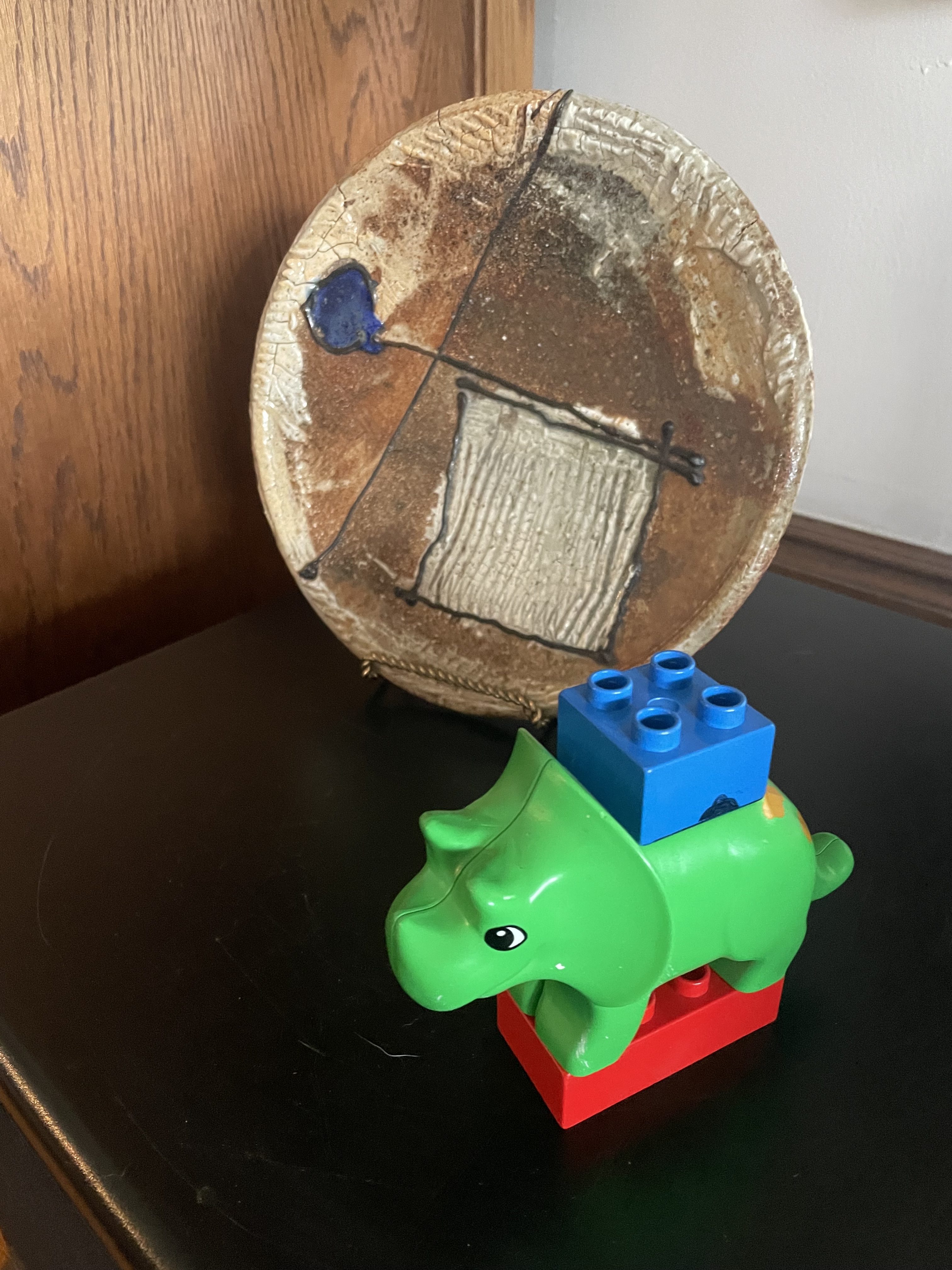
A green Duplo dinosaur adorned with red and blue Duplo blocks — saved from our own boys’ childhoods — has replaced the decorative candle in the living room. The plants on a window ledge in my workout area in the basement have made way for Fisher Price toys that a friend passed along once her grandkids had outgrown them.
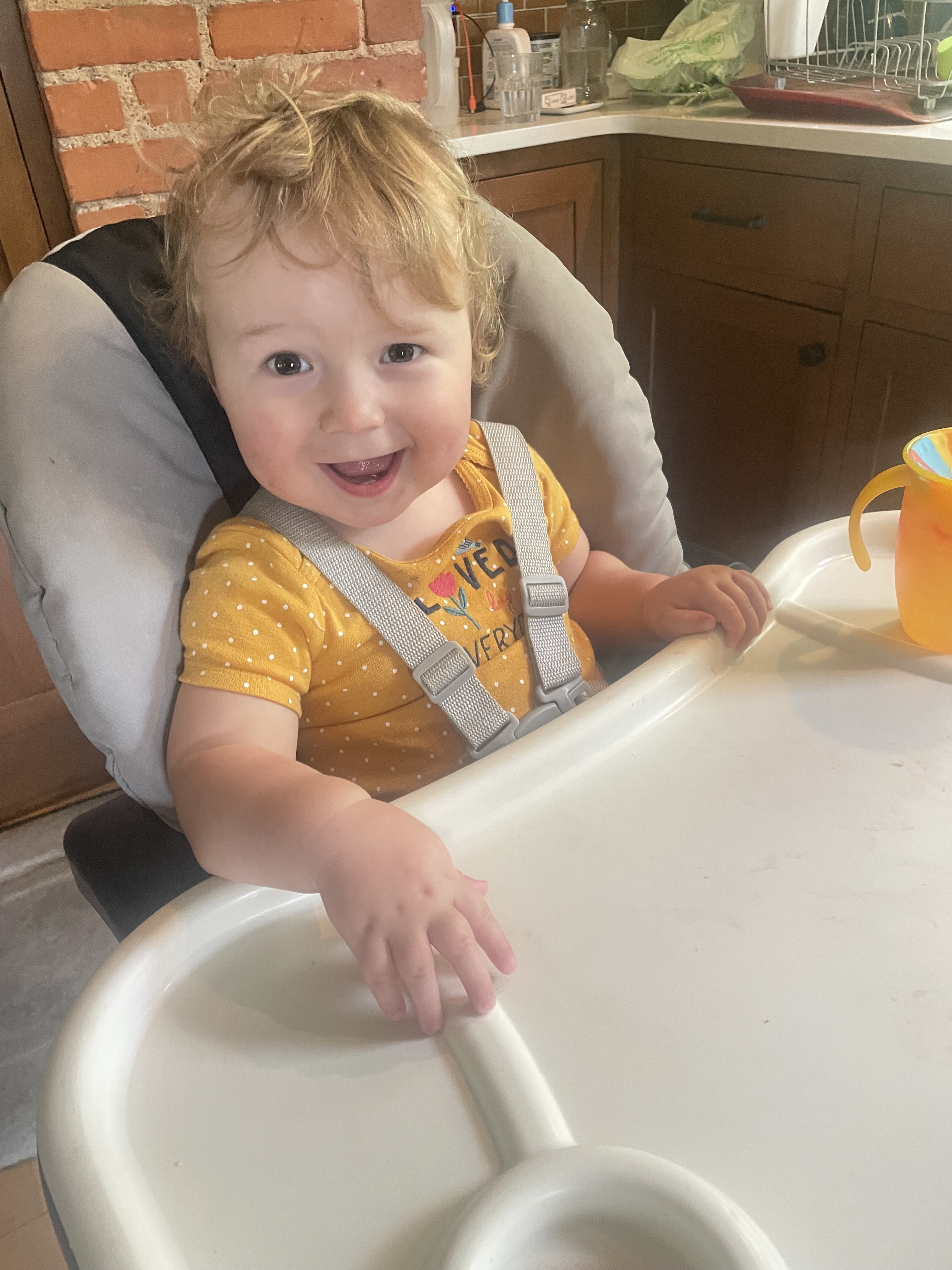
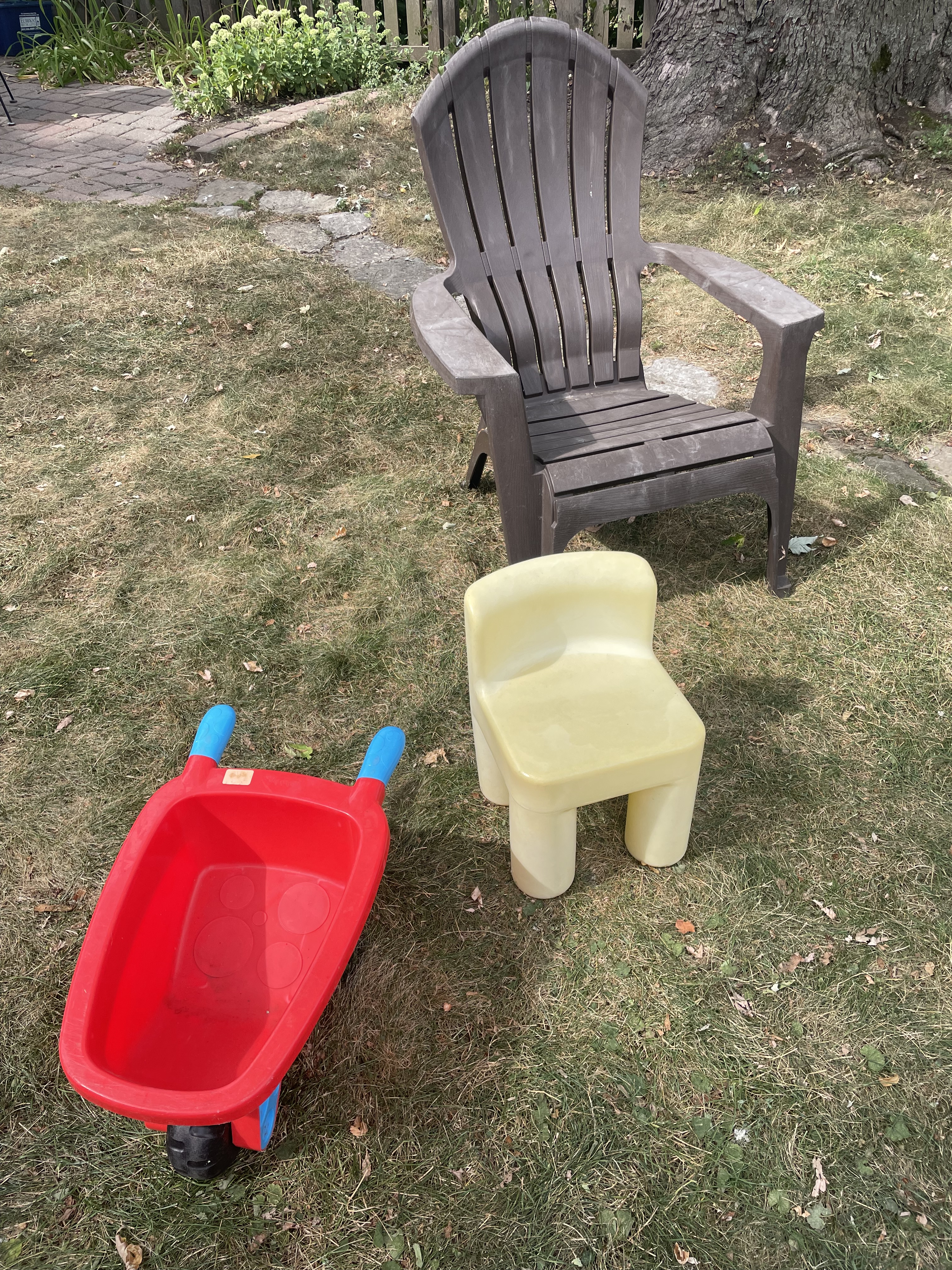
Because my husband and I had children in our 30s, which our son did as well, we haven’t had to invest much in baby supplies. At 75 and 69, respectively, we are old for first-time grandparents. Friends and neighbors who have been on this path for years are only too happy to offload old toys, a plastic backyard chair, a baby-sized comforter, even a crib. For the essentials — a highchair and a three-wheeled Thule jogging stroller, my proudest purchase and a delightful way for Arthur and his athletic grandmother to spend time together — Facebook Marketplace has been a godsend.

“Don’t buy any toys without checking with the parents,” said Mary Carlsen, a professor emerita of social work and family studies at St. Olaf College, whom I knew as a “soccer mom” way back when. “Young people have strong opinions about them these days.” That prompted me to lay out the various toys and thick-page books I had accumulated so my son and daughter-in-law could review them and approve.

A more broad-based version of that advice came from my neighbor Kate Barr, who has two grandchildren. “As [your children] learn to be parents, I advocate that you follow their lead on parenting,” she said, in response to a query that I emailed to experienced grandparents two days before Arthur’s birth. “I’ve never been in the ‘grandmother who spoils the grandkid’ camp.”

“It’s hard to remember sometimes to respect boundaries and not just step in and take over. These are your kids’ kids, not your kids.”

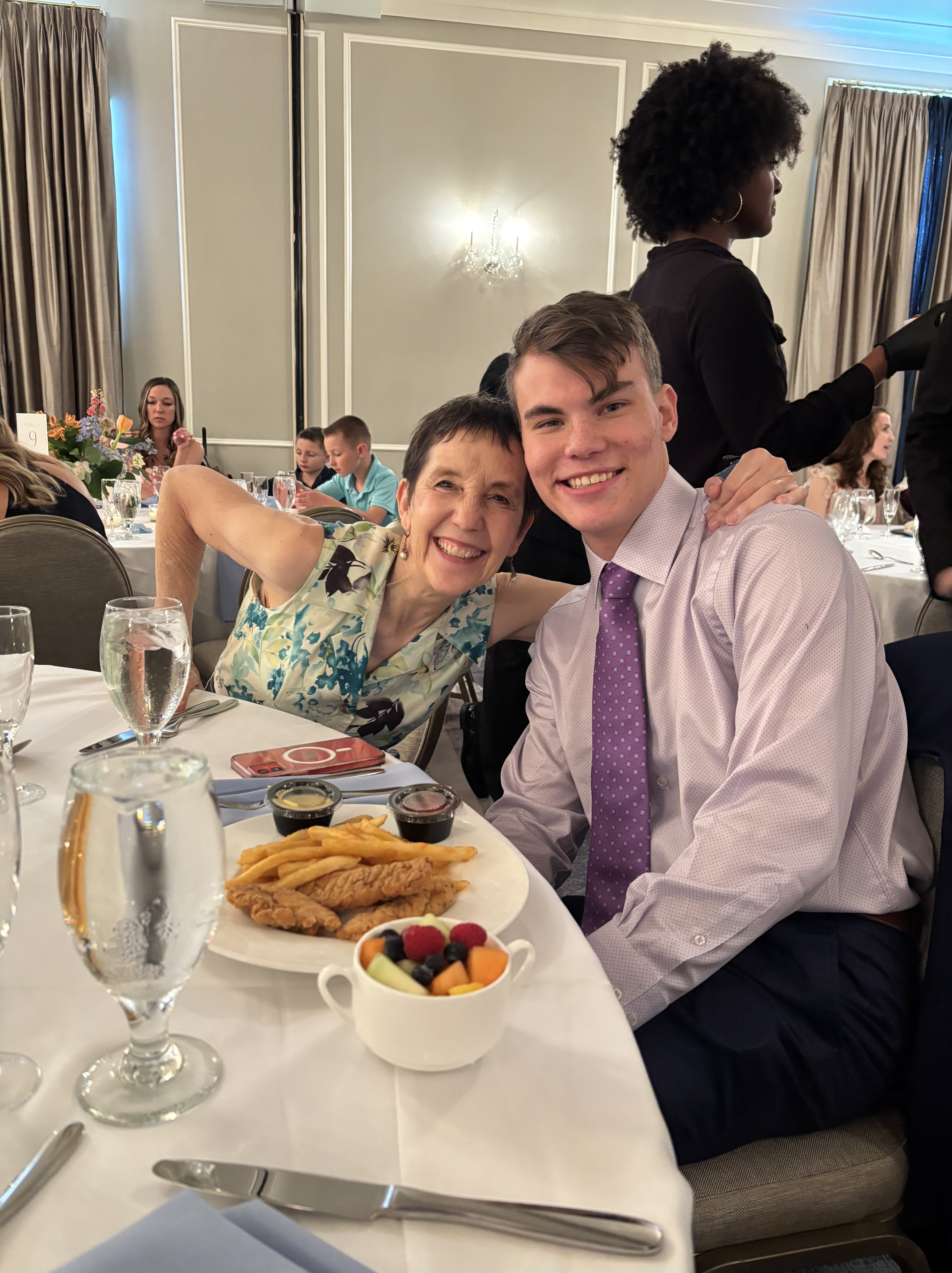
Our son insisted that the four older adults who would routinely provide care for Arthur — his dad and me, along with his mother-in-law and her youngest sister, Aunt Carol — take a grandparenting class at a center in Edina where Nate and his wife had taken a daylong parenting class.

“I had no idea there were grandparent classes,” said my childhood friend Janey Gislason, who helped us through the birth of both our sons. “I didn’t know that was a thing.”

Neither did I. But in hindsight, it makes sense; our younger son was 30 when Arthur was born, which meant I hadn’t fed or changed a baby in nearly three decades. At the time, however, I viewed it as a cheeky demand, one I would not have presumed to make of my own parents — who raised five children — or of my stepmother, who was the most caring and competent grandparent of them all.

I detailed in my blog’s New Year’s letter back in January some of what the class taught us about how parenting trends have changed:

  • No baby blankets for sleeping, due to fears of suffocation. Instead, you zip the baby into a “sleeping sack” that costs up to $45.
  • No stuffed animals in the crib, which had helped my son (and me, so many decades ago) feel nurtured and secure.
  • Although Arthur initially resisted “tummy time,” it was required to help him “develop the muscles of the head, neck and upper back.” I never did intentional tummy time when my boys were babies, and they’re both huge and healthy. But no matter. As one of my sisters succinctly put it: “Learn to know which subjects to keep your mouth shut about.”

A year later, as I reviewed the notes I took in class, one comment from the teacher stood out: “About half the people in any class have been ‘voluntold’ to come,” she said to a round of laughter. At the time, I rolled my eyes. Now I get it.

Millennial adults aren’t having children until their late 30s and early 40s, and they have fewer than the Midwestern, middle-income, small-town families in which my husband and I were raised. Do you value each child more when you don’t have as many? Are you more careful with each precious package because babies’ arrivals are now carefully planned around work and other “adulting” considerations?

Whatever the social or emotional reasons, the power dynamic has shifted between parents and their grown children. The wisdom and expertise that I sought from my own parents, the idea that our baby’s grandparents had something to teach us — Mom urging me to soothe Sam and Nate by holding them cheek to cheek against my face, Dad advising me on circumcision for the boys — is as outdated as a copper penny. And worth about as much.

Our children are in charge. “If I want to be allowed any alone time with grandbaby — without his parents hovering over me like prison guards — I need to at least pretend that I share their worries and fears,” quips one of my former colleagues, like me a first-time grandmother.

“As the child gets a little bit older, find something to do that’s just yours alone to do with your grandchild. That will create special memories.”

None of us gets out of childhood and adolescence without having survived at least one family tragedy. For my husband, it was his mother’s death from cancer when he was 12; for me, it was my parents announcing their pending divorce on my 14th birthday. For my daughter-in-law, Tess, it was her father’s drowning when she was just 13.

And yet her family has endured, in a way that mine did not after the divorce blew it all to pieces. Three of her mother’s four sisters live nearby, whereas mine reside in separate time zones. The aunts and uncles and cousins all celebrate Christmas and Thanksgiving with white elephant exchanges and other traditions, along with holiday cookie bakes, game nights and an annual summer gathering at her mother’s log cabin lake home in northern Minnesota.

Arthur, of course, has become part of it all — including a multi-generational celebration of his first birthday at the lake this past July. My son sent photos. I have had to work to sidestep jealousy, an ugly emotion that makes me feel inadequate and insecure, and elicits painful memories of how my own extended family has either scattered or died, including, many years ago, the one sibling who lived in town.

Again, I have turned to friends and loved ones for perspective:

  • “The more people who love that child, the better chance he has in a frightening world,” my friend Helene Haapala told me. That advice made so much sense, and her compassion struck me so deeply, that I have taken to whispering to Arthur: Do you know how many people love you?
  • “At times it can be hard to have a relationship with the other grandparents,” my friend and neighbor Noelle Jacquet-Morrison wrote in response to my emailed query. “Trust yourself. You will be amazing and amazed at what you can do.”
  • “Start your own traditions,” my friend David Fortney advised. I took part in Tess’s family Christmas last year when her mother kindly invited me because my husband was out of town, but I don’t want to always be a guest at other families’ celebrations. This December, I am going to drive my dog to Colorado to spend Christmas with my widowed sister, and I want to establish December 29 — my late brother’s birthday — as the day we celebrate the holidays with Arthur and his folks.

“Focus on your own relationship with your grandchild, and let the other grandparents focus on theirs,” says an article from the grandparenting website “More Than Grand.” “Be the best grandparent you can be, whatever your circumstances, and you will be a loved and important part of your grandchild’s team.”
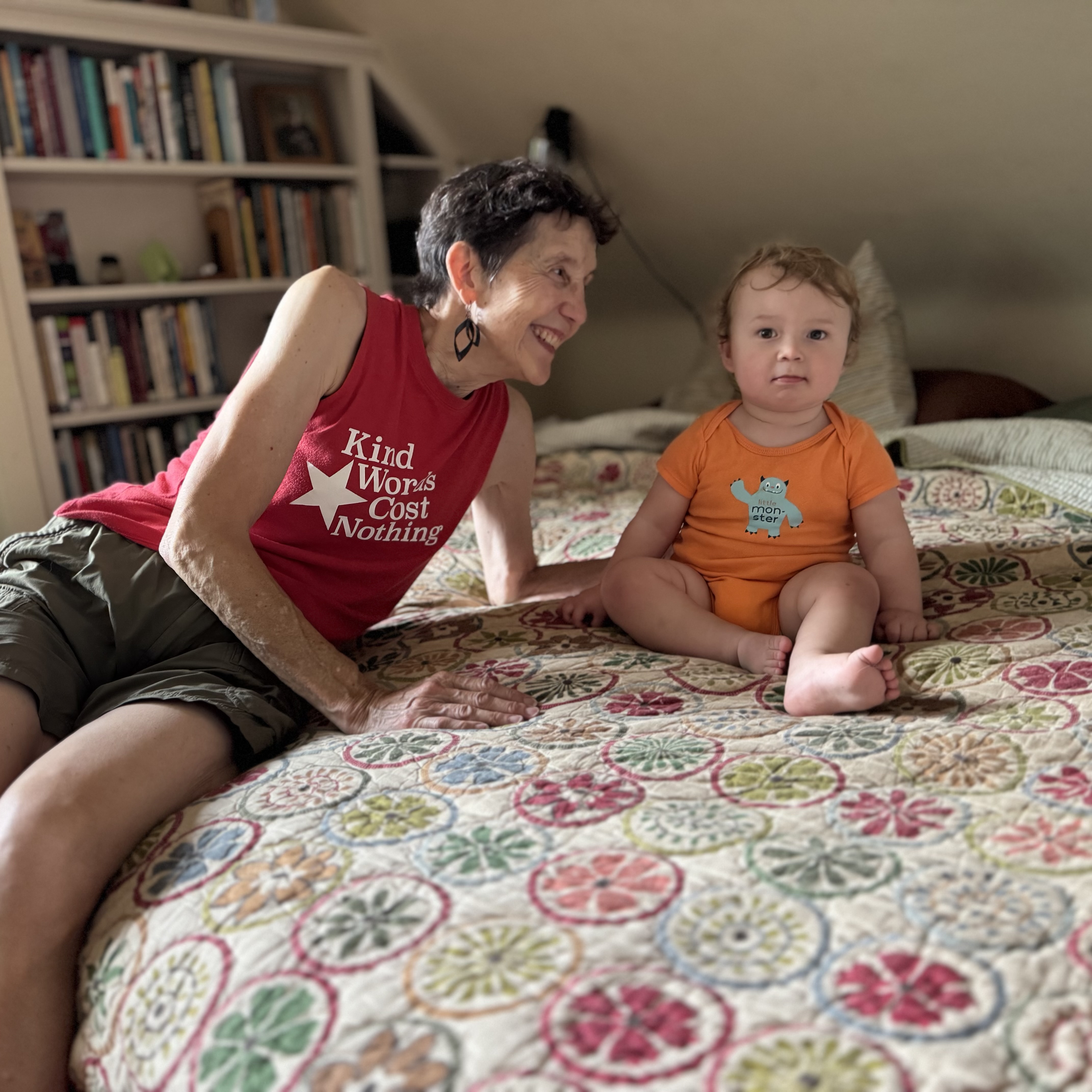
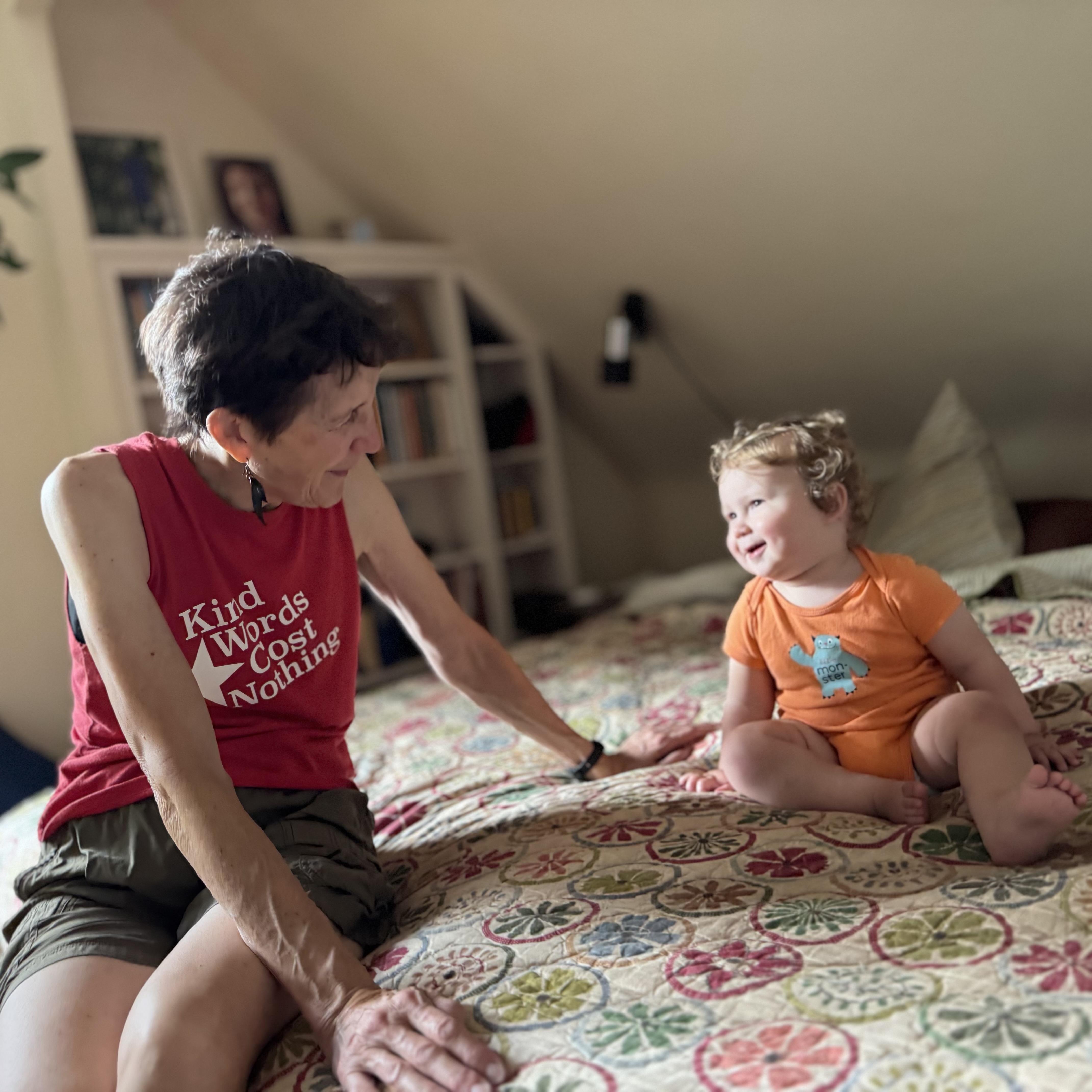
Through the eyes of a grandchild, you get to see the world anew. I arrange to have Arthur spend one day a week at our house, during which we visit the public library, go on stroller rides to look for flowers, share blueberry scones from a nearby bakery and watch WNBA games on TV as he eventually nods off on my lap.

Here’s what I have to offer him: homemade eggs and hugs, goofball games and laughter, music on the stereo and movement outdoors. Like the Duplo bricks I gather from our yard and living room once Arthur has gone home, those are the building blocks of a grandparental bond, an evolving relationship. Our relationship, and the joy it brings to both of us.

Happy New Year: No Fakery, No Frills

If I were writing a traditional New Year’s letter — the greetings that few people send anymore, now that photo-filled Shutterfly and Snapfish cards have replaced the lengthy recountings of successes and celebrations — I would focus on what went well in 2025. Like a Facebook post, my letter would paint a colorful picture of the past 12 months that is exuberant but only partly true.

Because it wouldn’t describe what has been difficult. Or sad. What has made me feel old and out of touch. Where I’ve been wrong, or felt wronged, or made decisions that I regret. The letter would broadcast, even brag, rather than reflect.

Photo by Annie Spratt on Unsplash

As I write this, I’ve been home alone for two weeks over the Christmas holiday, mothering a tripod cat and two dogs who demand multiple walks a day. Outings with friends and a Christmas Eve gathering with my daughter-in-law’s extended family have been welcome distractions, but mostly I have kept my own company.

“I won’t feel happy all the time this holiday season,” a commentator wrote in a reflection about the 60th anniversary of “A Charlie Brown Christmas,” the timeless tale of an awkward boy who manages “to find hope” amid a season of mixed blessings. Author Abigail Rosenthal describes Charlie Brown as “anxious and depressed,” employing a lingo that today’s readers will understand. I find him to be honest and touchingly human, unafraid to acknowledge that this weighted holiday carries more expectations — whether religious or secular — than people can possibly achieve.

In that spirit, here’s what 2025 has really felt like for me. How it’s been, rather than what I want you to believe.

The first grandchild

How could the birth of Arthur on July 22nd be anything but a blessing? My younger son is a proud and attentive father; the growing baby came nine days early, and was a full pound and a half smaller than his dad, making labor and delivery relatively smooth; and he is healthy, alert and well loved. We are lucky.

One of the first times I fed him, as Arthur was transitioning to a bottle, I thought of malnourished babies in Gaza. When I left my son’s house, exhausted, after a five-hour babysitting shift, I wondered how overwhelmed, under-resourced single parents manage. Reviewing the photos I take every time I see Arthur, I push away thoughts of all that could go wrong, recalling my sister’s warning when I was pregnant with my first son: Once you have a child, you are always vulnerable.

What you love, you can lose. As a grandmother, in a role consistently described as relaxed and carefree (“you get to send the kids home!”), I didn’t anticipate feeling so unsure of myself, so afraid.

Heeding advice from my peers who became grandparents at a younger age, I have sought to be a helpful, loving presence. But transitioning from Mom to Grandma hasn’t come easily or naturally — I hadn’t held a baby in 30 years — and I’ve had to learn when to bide my time and bite my tongue.

“Do the dishes,” one young mother advised my older son as he prepared for his first visit with his nephew.

A traditional New Year’s letter would extol only the joys of being a grandma, and there are many. But it wouldn’t describe the generational tensions between how we Baby Boomers, the original helicopter parents, raised our kids and what our Millennial offspring expect today:

  • My son insisted that any relative who wanted to be responsible for Arthur’s care enroll in a grandparenting class at Amma Parenting, a women-owned center in an upscale suburb of Minneapolis where he and his partner had taken a daylong parenting class.
  • Given that my sons were circumcised right after birth, which my father recommended, I had to learn the particulars of cleaning an uncircumcised baby boy — and hide my dismay when my son described the procedure as genital mutilation.
  • I’ve abandoned the multicolored, gender-neutral baby blanket I was knitting because babies no longer sleep with blankets. Who knew? Recounting to my son how we tucked him in with a “blanky” and stuffed animals, I was startled by his abrupt response: “Arthur could suffocate.” Today’s babies wear a sleep sack and lie in a barren crib to prevent SIDS, the sudden infant death syndrome that took my husband’s second oldest brother.

What sometimes feels like zealous and unnecessary instruction — how to hold the baby, clean his bottles, push his stroller on a bumpy sidewalk — actually ensures that his parents will entrust me with Arthur’s care. In moments of insecurity, I wonder whether my son found me inadequate as a mother. Or has parenting just progressed and changed?

The only truth that matters is this: If I want a loving, respectful relationship with my grandson, I must set aside my ego and adapt. Healthy aging requires a willingness to learn from our grown children — as well as from our past mistakes.

A period of adjustment

My retirement in September and a deeper dive into volunteering are the other big news for my New Year’s greeting. As with the birth of my grandson, many hearty congratulations have come my way.

But for what? I enjoyed my career. I found purpose in work. It lifted me out of a difficult period in my 20s when I was floundering and making risky, unhealthy choices. And, combined with my husband’s astute investing, the income got both of our sons through college and allowed us to help with down payments on their homes.

Now, as a healthy (so far) retiree of comfortable means, I am supposed to build a life of leisure, which runs contrary to my nature. Friends urge me to travel and read more books; and though I am doing more of each — including a first-time trip to London last April — I am noticing a cautiousness that has stifled me throughout adulthood, a tendency to default to the familiar.

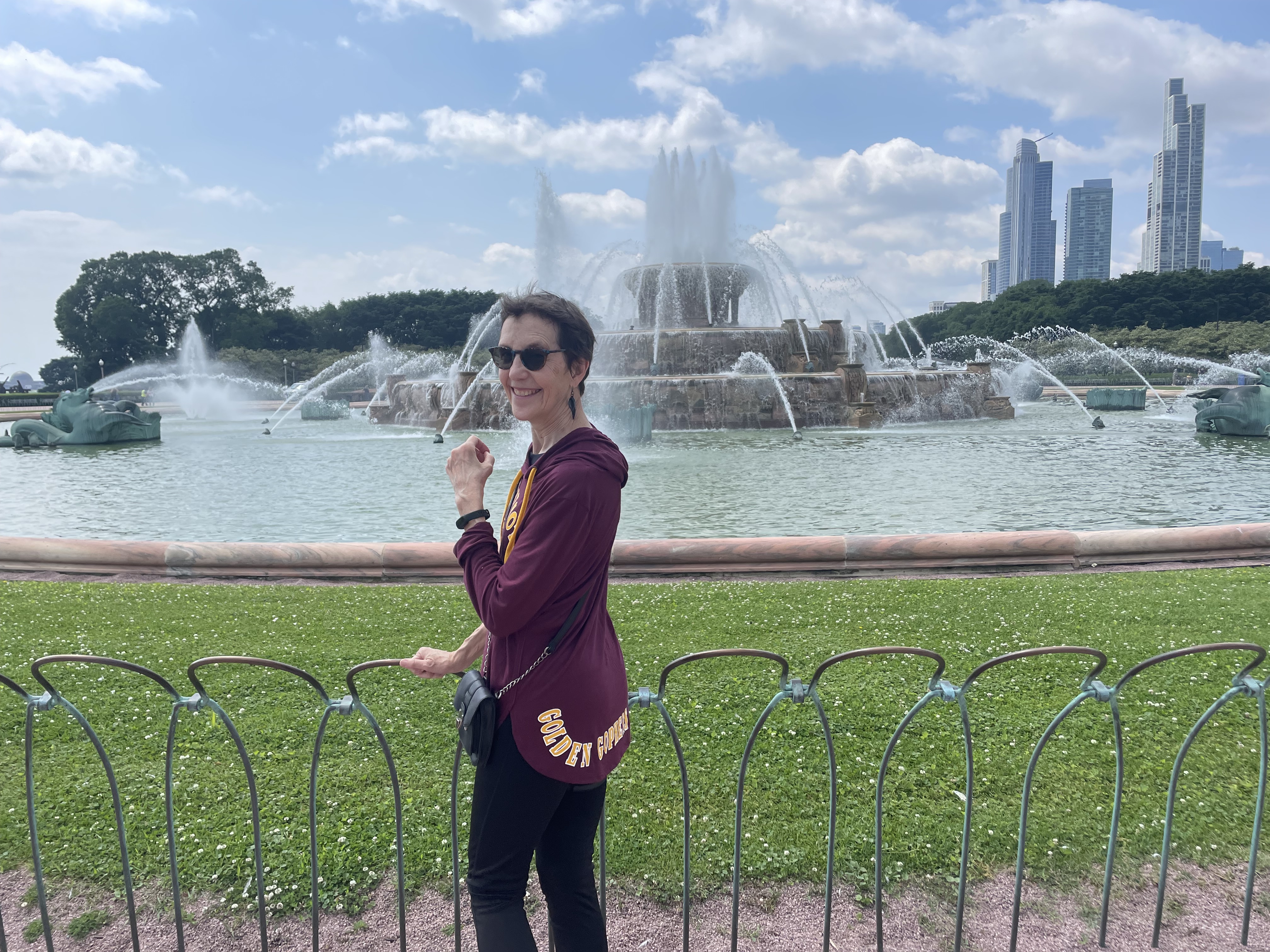
A leisurely ride on Amtrak to visit friends in Chicago and a stop in North Carolina last spring for my niece’s wedding enroute to see my older son in London were enjoyable, relationship-building experiences. But they didn’t stretch me. I didn’t challenge myself to take a solo train trip, which I promised myself I’d do after retirement. I didn’t immerse myself in a different culture or venture on a Civil Rights tour of the south, which long has intrigued me.

Even the warm-weather bike rides that I have loved for decades were on familiar pathways this past year. I never found time to haul my hybrid or road bike to trails and small towns throughout Minnesota, chatting with the locals along the way.

As for reading, it’s way past time to set aside the white women’s fiction that I enjoy and toe-dip into stories that will take me to new places, written by people whose backgrounds and perspectives differ from my own. Here again, I am learning from my younger son, who reads books only by authors from other cultures or with identities he doesn’t share as a middle-class, cisgender white male.

Reading widely means moving beyond your usual comfort zone to understand different human experiences and ideas. 

I thought retirement, given enough resources, would help me feel safe and secure. But challenge and ambition are what I always sought at work. Four months into freeing myself from paid employment, I recognize that the price of less stressful living can be sameness and stagnation — especially at an age when society wants to warehouse seniors into dorm-like housing, walling them off from a community that could enrich elders’ lives and, in turn, benefit from their experience.

Not for me. Not yet. I am determined to live larger in 2026. How’s that for a New Year’s resolution?

Travel as a Practice for Retirement

A version of this story appeared on June 10, 2025, in Next Avenue, a national publication for older adults published online by Twin Cities PBS.

When I left full-time work in September 2022, two months after turning 65, people naturally asked me how I liked retirement. Once I’d barked out my disdain for the R-word — chin lifted, spine stiffening — they learned not to inquire again.

In fact, the anxiety masked as rigidity was less about them than me: Retirement is a daunting prospect for us Baby Boomers who link our identity and sense of self with work.

I still don’t call myself “retired,” even though I work only a quarter-time job and a handful of contract gigs. But that’s about to change. I’ve given notice at my job, and my first grandchild is on the way, along with some shared responsibility for infant care.

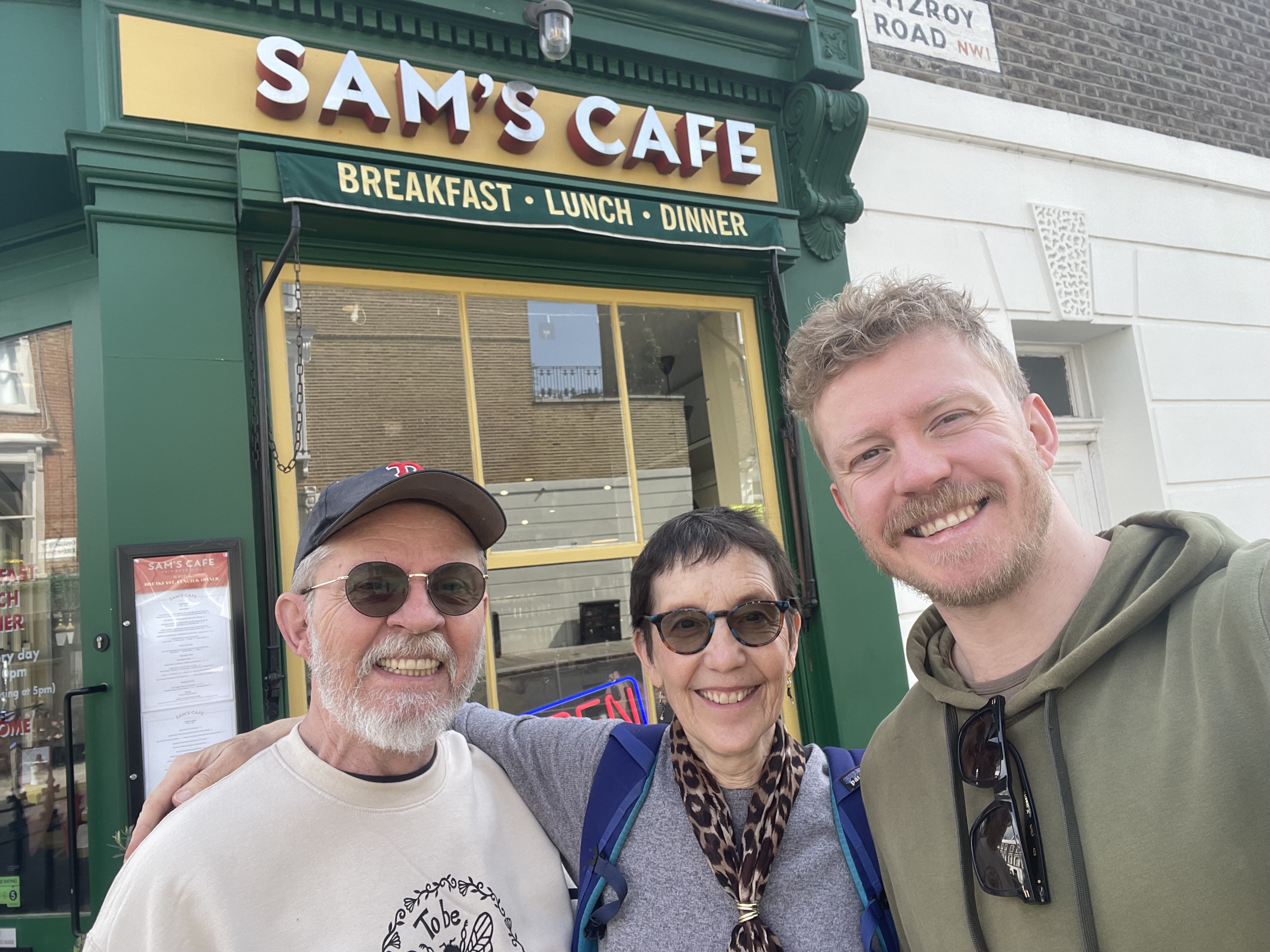
Husband, David Studer, and our older son, Sam Studer, who is at London Film School

Since my husband and I had planned an overseas excursion this past April to visit our older son, who is studying at London Film School, I decided to approach the trip — only my second time in Europe — as practice for the less structured, more selfless life that is awaiting me.

Here’s what I learned.

Lesson 1: Lose Track of Time

We go-getter careerists live and breathe by our agendas. This holds true for me even 32 months after leaving full-time work. My quarter-time job, my freelance assignments, even fitness classes and coffee dates with friends: All fill my calendar at least a month or two out from where I stand today.

The decision to avoid sticking to a rigid schedule in London, aside from ticketed events and planned outings with our son, was an exercise in letting go — both a relief and a discipline all its own. As we planned the trip, I insisted on only one “anchor activity” a day, forcing a spontaneity I rarely allow myself to experience.

My favorite times were early mornings, while my husband was still asleep. With no deadlines to hit or dogs to be walked, I wrote in my journal. Sent postcards back home to friends. Read the library book I had downloaded on my iPad.

I refused to check work emails, relying on the out-of-office message that told people I was away, and tried to sit with the discomfort of being unproductive. The clock dictates my day, and it took effort to silence the pragmatic voice that drives me, even on weekends: “It’s 10 a.m., and you’ve accomplished nothing.”

So what? No one was monitoring my output or keeping score on how deeply I dug into London’s vast cultural scene. Free to let the days and evenings take their course, I felt how nourishing a less hectic life can be. No coincidence, I slept longer and more deeply in a stranger’s British flat than I ever do at home in my own bed.

Lesson 2: Get Out in the World

As luxurious as it was to hang out some mornings, I also had days when I left my night-owl husband sleeping at the Airbnb and struck out on my own. March and April are London’s least rainy months, and a stretch of sunny weather made it a joy to start the day walking the streets or seeing the view atop an iconic, red double-decker bus.

Pro-tip: Google Maps and the Transit app were my best sources of navigation, but I also felt more comfortable being out alone in the daytime once I’d been in town long enough to learn my way around.

One of my fears about full-on retirement is losing regular contact with younger colleagues and allowing my world to shrink. It’s become tempting as I age to stay home with a good book and a homecooked meal, or to settle in with my pets and watch Netflix or women’s basketball and tell myself that is enough. Or that it’s safer.

So, following the lead of a widowed friend who goes alone to movies and concerts and routinely travels on his own, I spent the better part of one morning at the Tate Britain — one bus ride away — browsing the museum store, strolling through galleries and relaxing outside the cafeteria with my book. Yes, I was alone, but I was also among people.

Given my career in journalism and communications, I can easily strike up conversations with strangers, even in a city with thick English accents. The trip showed me how to carry my professional skills into retirement, when I no longer can wrap myself in the security blanket of a title and role, with a ready answer to the question: What do you do?

Lesson 3: Dress to Please Yourself

During my decades as a business reporter and later a marketing-and-communications director, I dressed up every day. Looked and acted the part of a career woman. I enjoyed shopping and the creativity of assembling a wardrobe — mixing and matching outfits, coordinating earrings, scarves and shoes — but toward the end of my career, especially after COVID, “dressing for success” felt like donning a costume. It wasn’t me!

In London, I had no one to dress for but myself. My comfort, the weather and how far I would likely walk that day dictated what I wore. That meant:

  • Comfortable shoes with heel support and a roomy toe box for the 17,062 steps I averaged during my nine days abroad.
  • Little to no eye makeup, even for “Carmen” at the Royal Opera House, because it could smudge in the wind and cold.
  • Refreshing my short razor haircut the day before we left, so I could fluff it with my fingers after wearing a hat for warmth or sun protection.
  • Ditching the more fashionable purse for a sturdy backpack, both to free my arms while walking and to discourage bag snatchers.

Now that I operate from a home office, I rarely dress up anymore. “Athletic casual” is how my younger son defines my style. Retirement allows that freedom — to quit comparing myself with younger women and dress for the age and body type I am today. And for movement, the best antidote to low energy and stiff joints.

Lesson 4: Keep Learning

My gradual glidepath to retirement these past two and a half years has given me time to adjust, both financially and emotionally. Of course, I worry: Will we have enough money? Who will I be without work? Will volunteering and family life fulfill the sense of purpose that a career has given me for decades?

A trip to London is not exactly high adventure for a white American with English roots. Still, I find it fitting that a foreign country became my place to try out a different way to live. Retirement is a bold undertaking, a journey toward a different land. My passport — my practice in the coming months — will be to remember and refresh these lessons learned.