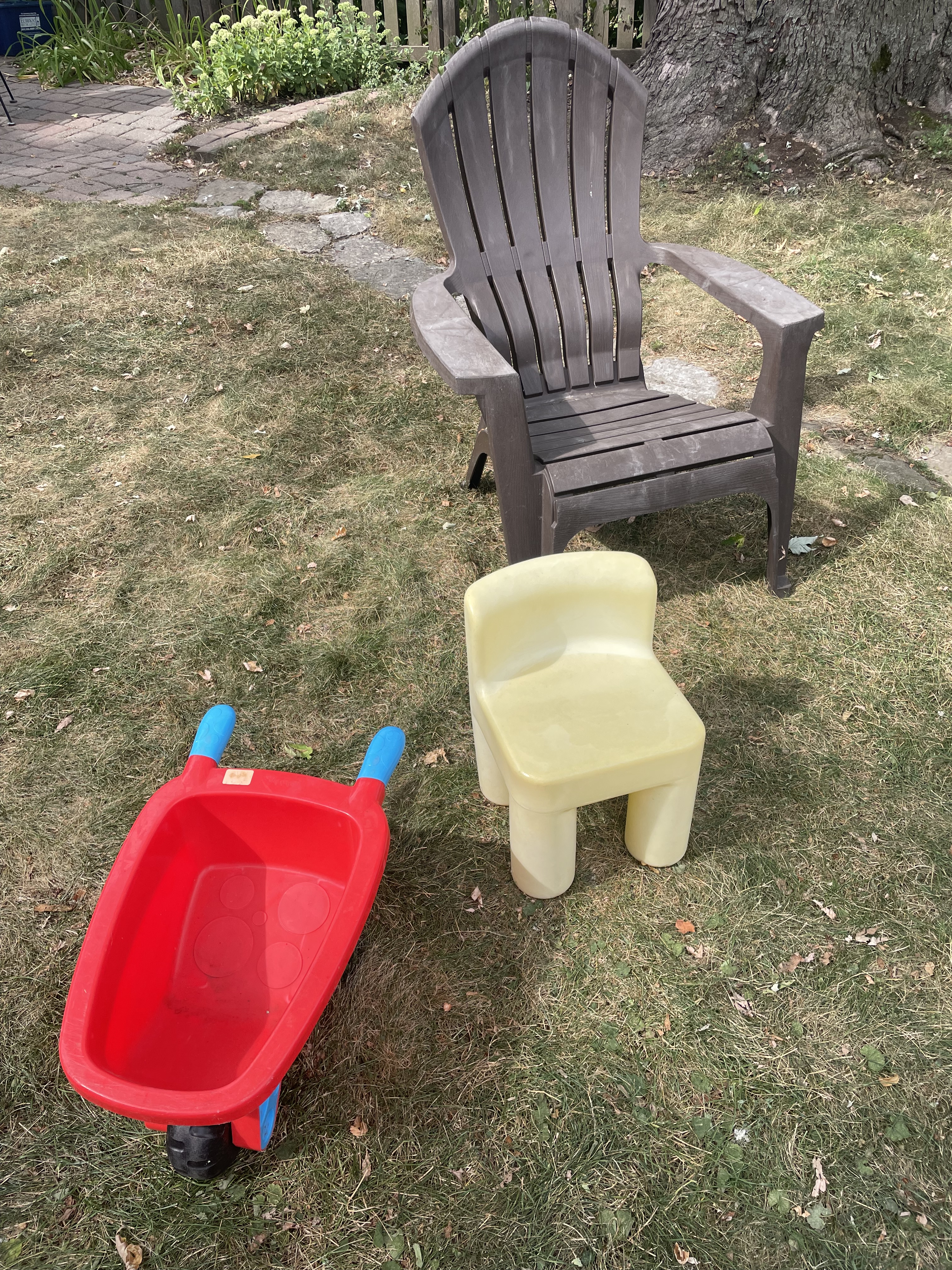
It’s been over a year since Arthur’s birth on July 22, 2025 — and I still smile when I see how my home has morphed into a grandma’s house. A little here, a little there: one purchase, one donated castoff, one lucky discovery at a time. The metal wagon with fat wheels, perfect for storing toys in the garage and then hauling them around the yard, was my best “alley find” yet.
The metamorphosis of what had functioned as our empty-nest house in the city, 40 miles from the small town where my husband and I raised our children, has happened gradually, mirroring the time it has taken me to evolve from anxious grandparent to active, engaged Grandma.
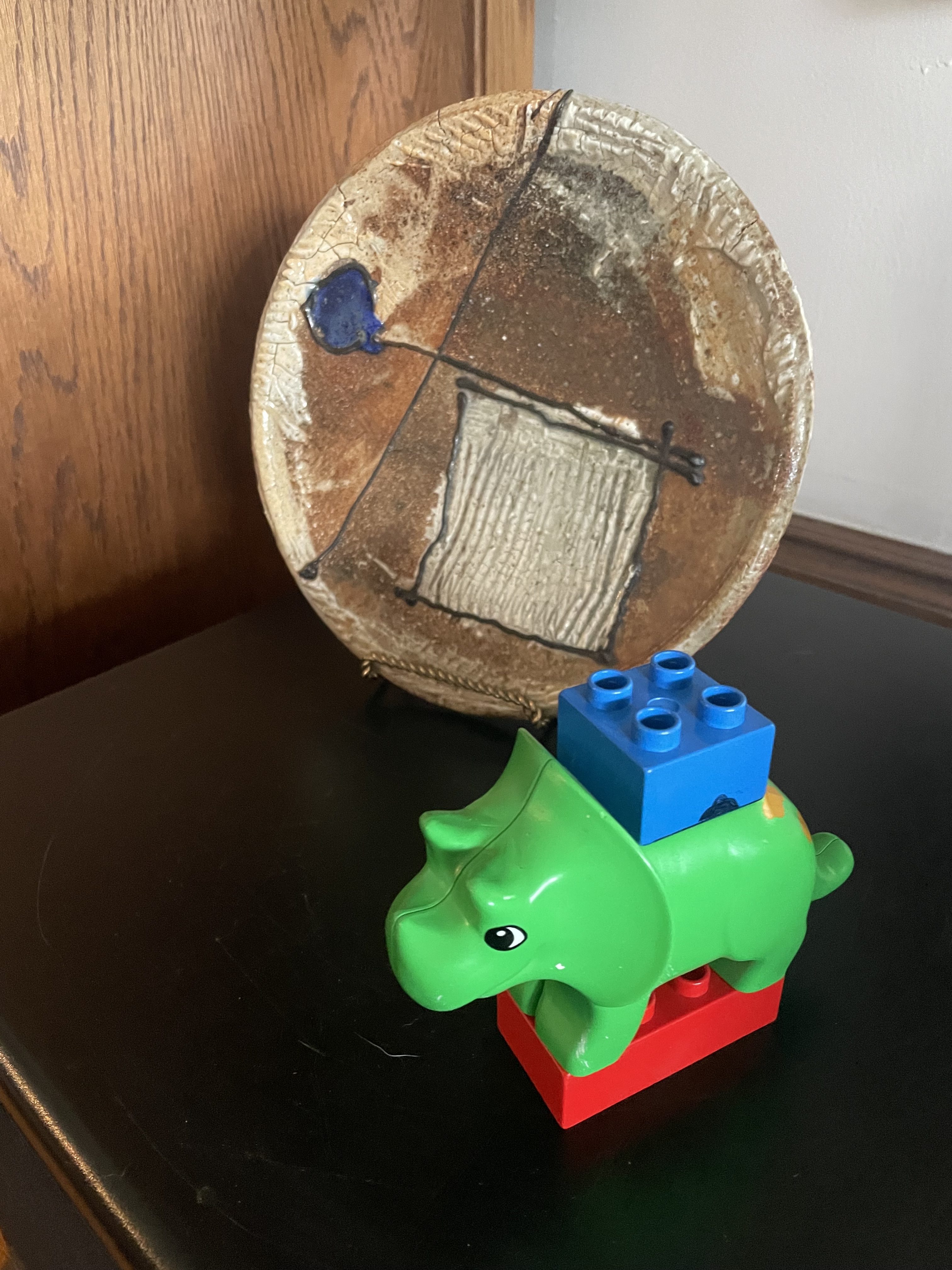
A green Duplo dinosaur adorned with red and blue Duplo blocks — saved from our own boys’ childhoods — has replaced the decorative candle in the living room. The plants on a window ledge in my workout area in the basement have made way for Fisher Price toys that a friend passed along once her grandkids had outgrown them.
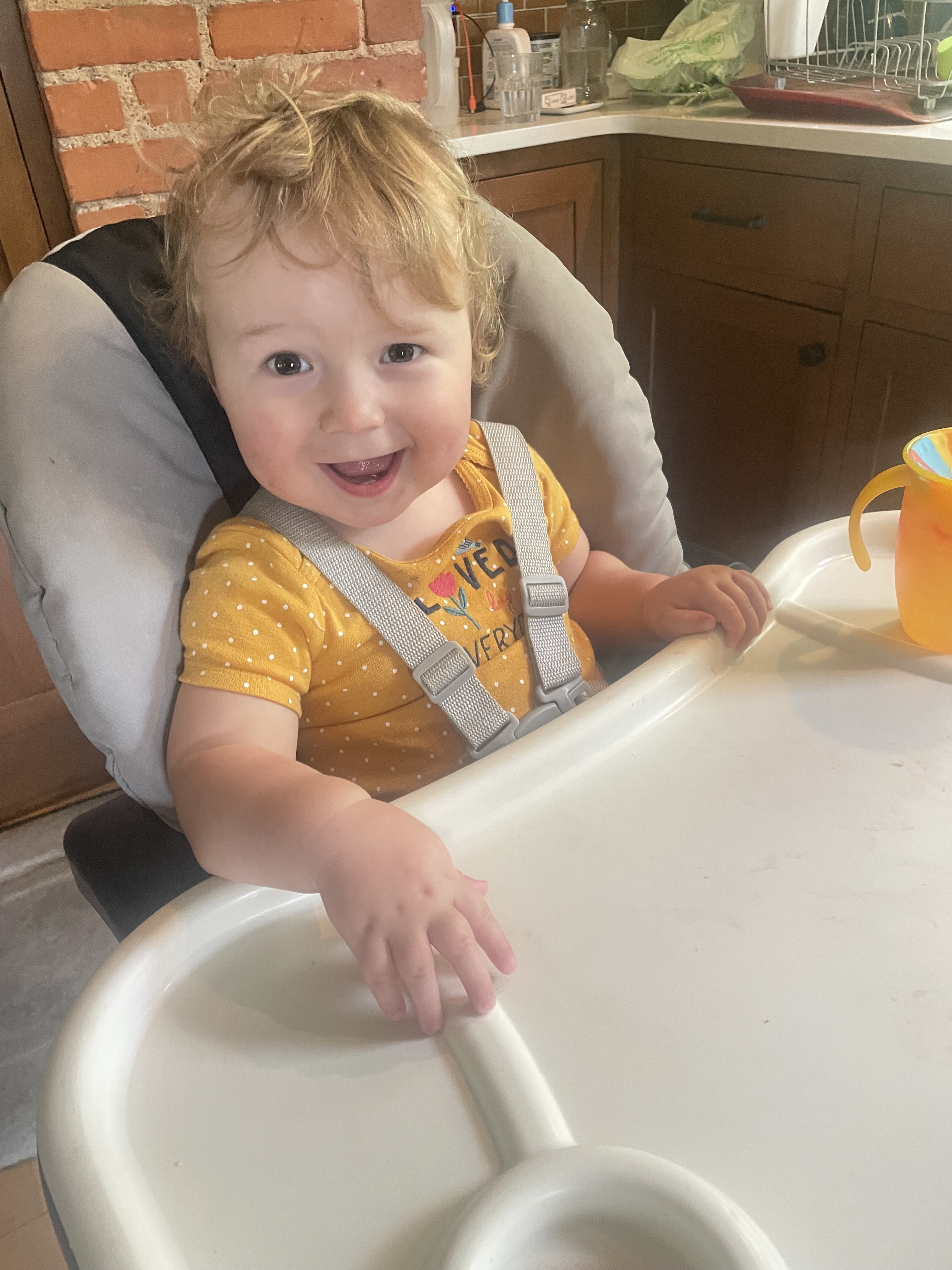
Because my husband and I had children in our 30s, which our son did as well, we haven’t had to invest much in baby supplies. At 75 and 69, respectively, we are old for first-time grandparents. Friends and neighbors who have been on this path for years are only too happy to offload old toys, a plastic backyard chair, a baby-sized comforter, even a crib. For the essentials — a highchair and a three-wheeled Thule jogging stroller, my proudest purchase and a delightful way for Arthur and his athletic grandmother to spend time together — Facebook Marketplace has been a godsend.
“Don’t buy any toys without checking with the parents,” said Mary Carlsen, a professor emerita of social work and family studies at St. Olaf College, whom I knew as a “soccer mom” way back when. “Young people have strong opinions about them these days.” That prompted me to lay out the various toys and thick-page books I had accumulated so my son and daughter-in-law could review them and approve.
A more broad-based version of that advice came from my neighbor Kate Barr, who has two grandchildren. “As [your children] learn to be parents, I advocate that you follow their lead on parenting,” she said, in response to a query that I emailed to experienced grandparents two days before Arthur’s birth. “I’ve never been in the ‘grandmother who spoils the grandkid’ camp.”
“It’s hard to remember sometimes to respect boundaries and not just step in and take over. These are your kids’ kids, not your kids.”
Our son insisted that the four older adults who would routinely provide care for Arthur — his dad and me, along with his mother-in-law and her youngest sister, Aunt Carol — take a grandparenting class at a center in Edina where Nate and his wife had taken a daylong parenting class.
“I had no idea there were grandparent classes,” said my childhood friend Janey Gislason, who helped us through the birth of both our sons. “I didn’t know that was a thing.”
Neither did I. But in hindsight, it makes sense; our younger son was 30 when Arthur was born, which meant I hadn’t fed or changed a baby in nearly three decades. At the time, however, I viewed it as a cheeky demand, one I would not have presumed to make of my own parents — who raised five children — or of my stepmother, who was the most caring and competent grandparent of them all.
I detailed in my blog’s New Year’s letter back in January some of what the class taught us about how parenting trends have changed:
- No baby blankets for sleeping, due to fears of suffocation. Instead, you zip the baby into a “sleeping sack” that costs up to $45.
- No stuffed animals in the crib, which had helped my son (and me, so many decades ago) feel nurtured and secure.
- Although Arthur initially resisted “tummy time,” it was required to help him “develop the muscles of the head, neck and upper back.” I never did intentional tummy time when my boys were babies, and they’re both huge and healthy. But no matter. As one of my sisters succinctly put it: “Learn to know which subjects to keep your mouth shut about.”

A year later, as I reviewed the notes I took in class, one comment from the teacher stood out: “About half the people in any class have been ‘voluntold’ to come,” she said to a round of laughter. At the time, I rolled my eyes. Now I get it.
Millennial adults aren’t having children until their late 30s and early 40s, and they have fewer than the Midwestern, middle-income, small-town families in which my husband and I were raised. Do you value each child more when you don’t have as many? Are you more careful with each precious package because babies’ arrivals are now carefully planned around work and other “adulting” considerations?
Whatever the social or emotional reasons, the power dynamic has shifted between parents and their grown children. The wisdom and expertise that I sought from my own parents, the idea that our baby’s grandparents had something to teach us — Mom urging me to soothe Sam and Nate by holding them cheek to cheek against my face, Dad advising me on circumcision for the boys — is as outdated as a copper penny. And worth about as much.
Our children are in charge. “If I want to be allowed any alone time with grandbaby — without his parents hovering over me like prison guards — I need to at least pretend that I share their worries and fears,” quips one of my former colleagues, like me a first-time grandmother.
“As the child gets a little bit older, find something to do that’s just yours alone to do with your grandchild. That will create special memories.”
None of us gets out of childhood and adolescence without having survived at least one family tragedy. For my husband, it was his mother’s death from cancer when he was 12; for me, it was my parents announcing their pending divorce on my 14th birthday. For my daughter-in-law, Tess, it was her father’s drowning when she was just 13.
And yet her family has endured, in a way that mine did not after the divorce blew it all to pieces. Three of her mother’s four sisters live nearby, whereas mine reside in separate time zones. The aunts and uncles and cousins all celebrate Christmas and Thanksgiving with white elephant exchanges and other traditions, along with holiday cookie bakes, game nights and an annual summer gathering at her mother’s log cabin lake home in northern Minnesota.
Arthur, of course, has become part of it all — including a multi-generational celebration of his first birthday at the lake this past July. My son sent photos. I have had to work to sidestep jealousy, an ugly emotion that makes me feel inadequate and insecure, and elicits painful memories of how my own extended family has either scattered or died, including, many years ago, the one sibling who lived in town.
Again, I have turned to friends and loved ones for perspective:
- “The more people who love that child, the better chance he has in a frightening world,” my friend Helene Haapala told me. That advice made so much sense, and her compassion struck me so deeply, that I have taken to whispering to Arthur: Do you know how many people love you?
- “At times it can be hard to have a relationship with the other grandparents,” my friend and neighbor Noelle Jacquet-Morrison wrote in response to my emailed query. “Trust yourself. You will be amazing and amazed at what you can do.”
- “Start your own traditions,” my friend David Fortney advised. I took part in Tess’s family Christmas last year when her mother kindly invited me because my husband was out of town, but I don’t want to always be a guest at other families’ celebrations. This December, I am going to drive my dog to Colorado to spend Christmas with my widowed sister, and I want to establish December 29 — my late brother’s birthday — as the day we celebrate the holidays with Arthur and his folks.
“Focus on your own relationship with your grandchild, and let the other grandparents focus on theirs,” says an article from the grandparenting website “More Than Grand.” “Be the best grandparent you can be, whatever your circumstances, and you will be a loved and important part of your grandchild’s team.”
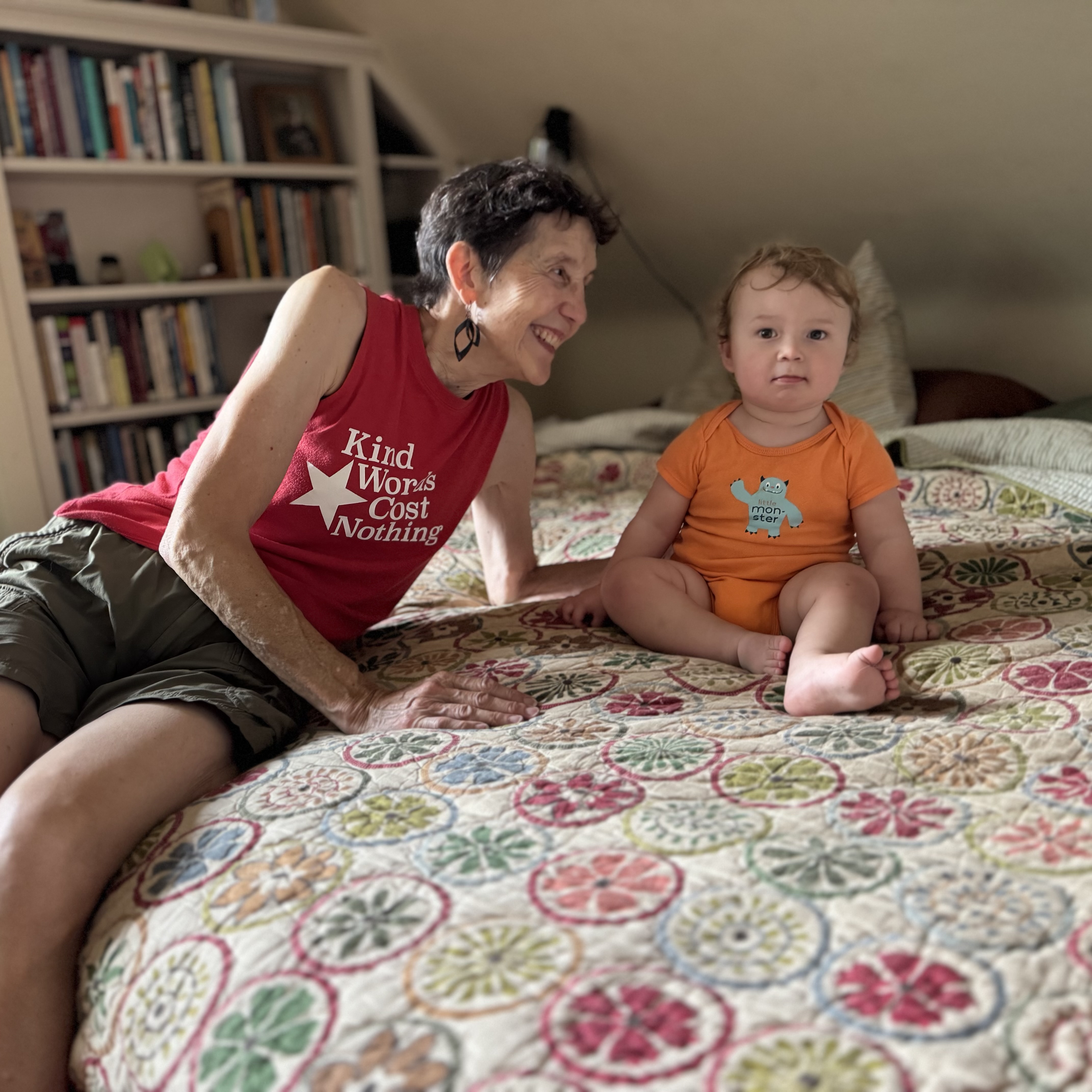
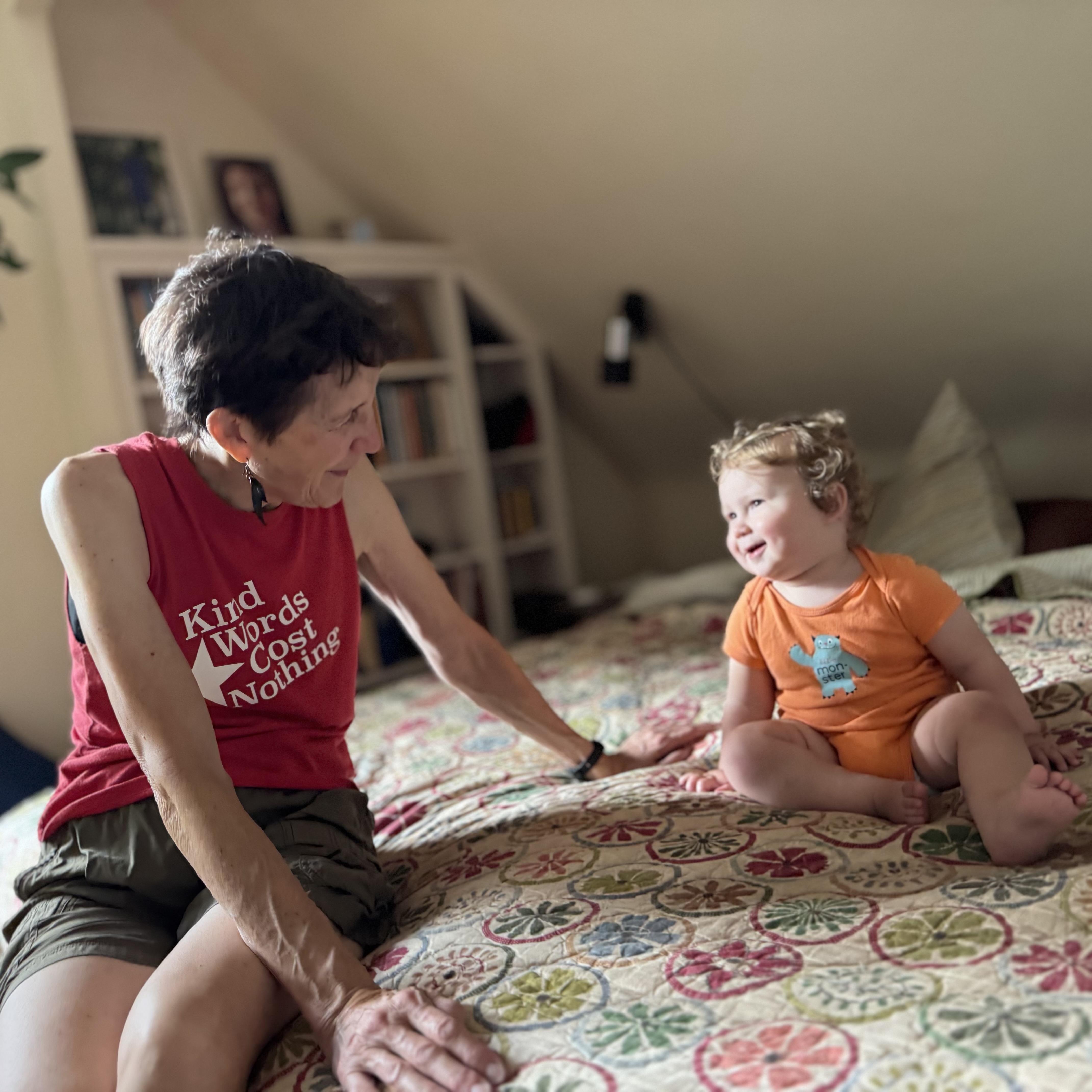
Through the eyes of a grandchild, you get to see the world anew. I arrange to have Arthur spend one day a week at our house, during which we visit the public library, go on stroller rides to look for flowers, share blueberry scones from a nearby bakery and watch WNBA games on TV as he eventually nods off on my lap.
Here’s what I have to offer him: homemade eggs and hugs, goofball games and laughter, music on the stereo and movement outdoors. Like the Duplo bricks I gather from our yard and living room once Arthur has gone home, those are the building blocks of a grandparental bond, an evolving relationship. Our relationship, and the joy it brings to both of us.