Happy New Year: No Fakery, No Frills

If I were writing a traditional New Year’s letter — the greetings that few people send anymore, now that photo-filled Shutterfly and Snapfish cards have replaced the lengthy recountings of successes and celebrations — I would focus on what went well in 2025. Like a Facebook post, my letter would paint a colorful picture of the past 12 months that is exuberant but only partly true.

Because it wouldn’t describe what has been difficult. Or sad. What has made me feel old and out of touch. Where I’ve been wrong, or felt wronged, or made decisions that I regret. The letter would broadcast, even brag, rather than reflect.

Photo by Annie Spratt on Unsplash

As I write this, I’ve been home alone for two weeks over the Christmas holiday, mothering a tripod cat and two dogs who demand multiple walks a day. Outings with friends and a Christmas Eve gathering with my daughter-in-law’s extended family have been welcome distractions, but mostly I have kept my own company.

“I won’t feel happy all the time this holiday season,” a commentator wrote in a reflection about the 60th anniversary of “A Charlie Brown Christmas,” the timeless tale of an awkward boy who manages “to find hope” amid a season of mixed blessings. Author Abigail Rosenthal describes Charlie Brown as “anxious and depressed,” employing a lingo that today’s readers will understand. I find him to be honest and touchingly human, unafraid to acknowledge that this weighted holiday carries more expectations — whether religious or secular — than people can possibly achieve.

In that spirit, here’s what 2025 has really felt like for me. How it’s been, rather than what I want you to believe.

The first grandchild

How could the birth of Arthur on July 22nd be anything but a blessing? My younger son is a proud and attentive father; the growing baby came nine days early, and a full pound and a half smaller than his dad, making labor and delivery relatively smooth; and he is healthy, alert and well loved. We are lucky.

One of the first times I fed him, as Arthur was transitioning to a bottle, I thought of malnourished babies in Gaza. When I left my son’s house, exhausted, after a five-hour babysitting shift, I wondered how overwhelmed, under-resourced single parents manage. Reviewing the photos I take every time I see Arthur, I push away thoughts of all that could go wrong, recalling my sister’s warning when I was pregnant with my first son: Once you have a child, you are always vulnerable.

What you love, you can lose. As a grandmother, in a role consistently described as relaxed and carefree (“you get to send the kids home!”), I didn’t anticipate feeling so unsure of myself, so afraid.

Heeding advice from my peers who became grandparents at a younger age, I have sought to be a helpful, loving presence. But transitioning from Mom to Grandma hasn’t come easily or naturally — I hadn’t held a baby in 30 years — and I’ve had to learn when to bide my time and bite my tongue.

“Do the dishes,” one young mother advised my older son as he prepared for his first visit with his nephew.

A traditional New Year’s letter would extol only the joys of being a grandma, and there are many. But it wouldn’t describe the generational tensions between how we Baby Boomers, the original helicopter parents, raised our kids and what our Millennial offspring expect today:

  • My son insisted that any relative who wanted to be responsible for Arthur’s care enroll in a grandparenting class at Amma Parenting, a women-owned center in an upscale suburb of Minneapolis where he and his partner had taken a daylong parenting class.
  • Given that my sons were circumcised right after birth, which my father recommended, I had to learn the particulars of cleaning an uncircumcised baby boy — and hide my dismay when my son described the procedure as genital mutilation.
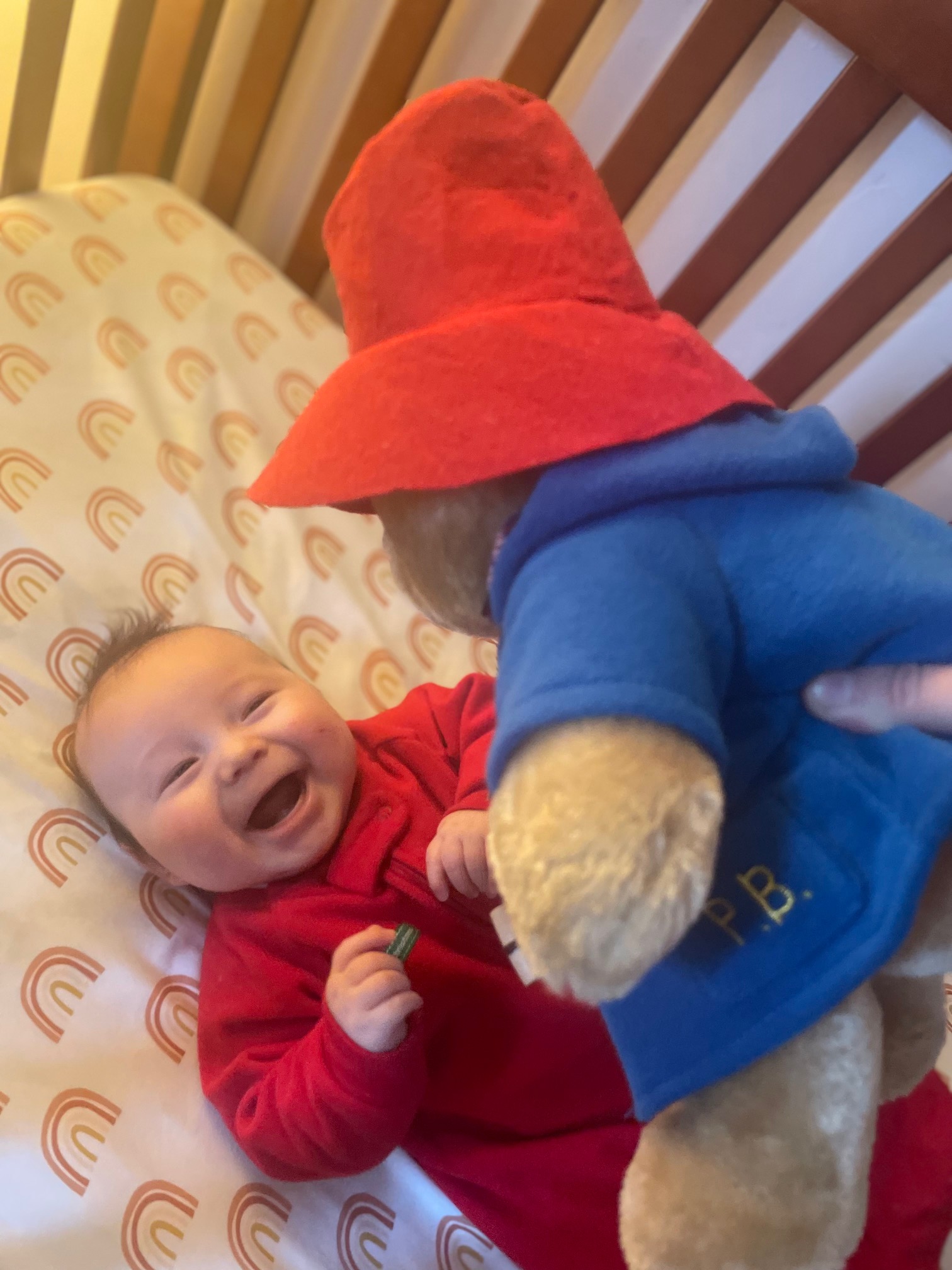
  • I’ve abandoned the multicolored, gender-neutral baby blanket I was knitting because babies no longer sleep with blankets. Who knew? Recounting to my son how we tucked him in with a “blanky” and stuffed animals, I was startled by his abrupt response: “Arthur could suffocate.” Today’s babies wear a sleep sack and lie in a barren crib to prevent SIDS, the sudden infant death syndrome that took my husband’s second oldest brother.

What sometimes feels like zealous and unnecessary instruction — how to hold the baby, clean his bottles, push his stroller on a bumpy sidewalk — actually ensures that his parents will entrust me with Arthur’s care. In moments of insecurity, I wonder whether my son found me inadequate as a mother. Or has parenting just progressed and changed?

The only truth that matters is this: If I want a loving, respectful relationship with my grandson, I must set aside my ego and adapt. Healthy aging requires a willingness to learn from our grown children — as well as from our past mistakes.

A period of adjustment

My retirement in September and a deeper dive into volunteering are the other big news for my New Year’s greeting. As with the birth of my grandson, many hearty congratulations have come my way.

But for what? I enjoyed my career. I found purpose in work. It lifted me out of a difficult period in my 20s when I was floundering and making risky, unhealthy choices. And, combined with my husband’s astute investing, the income got both of our sons through college and allowed us to help with down payments on their homes.

Now, as a healthy (so far) retiree of comfortable means, I am supposed to build a life of leisure that runs contrary to my nature. Friends urge me to travel and read more books; and though I am doing more of each — including a first-time trip to London last April — I am noticing a cautiousness that has stifled me throughout adulthood, a tendency to default to the familiar.
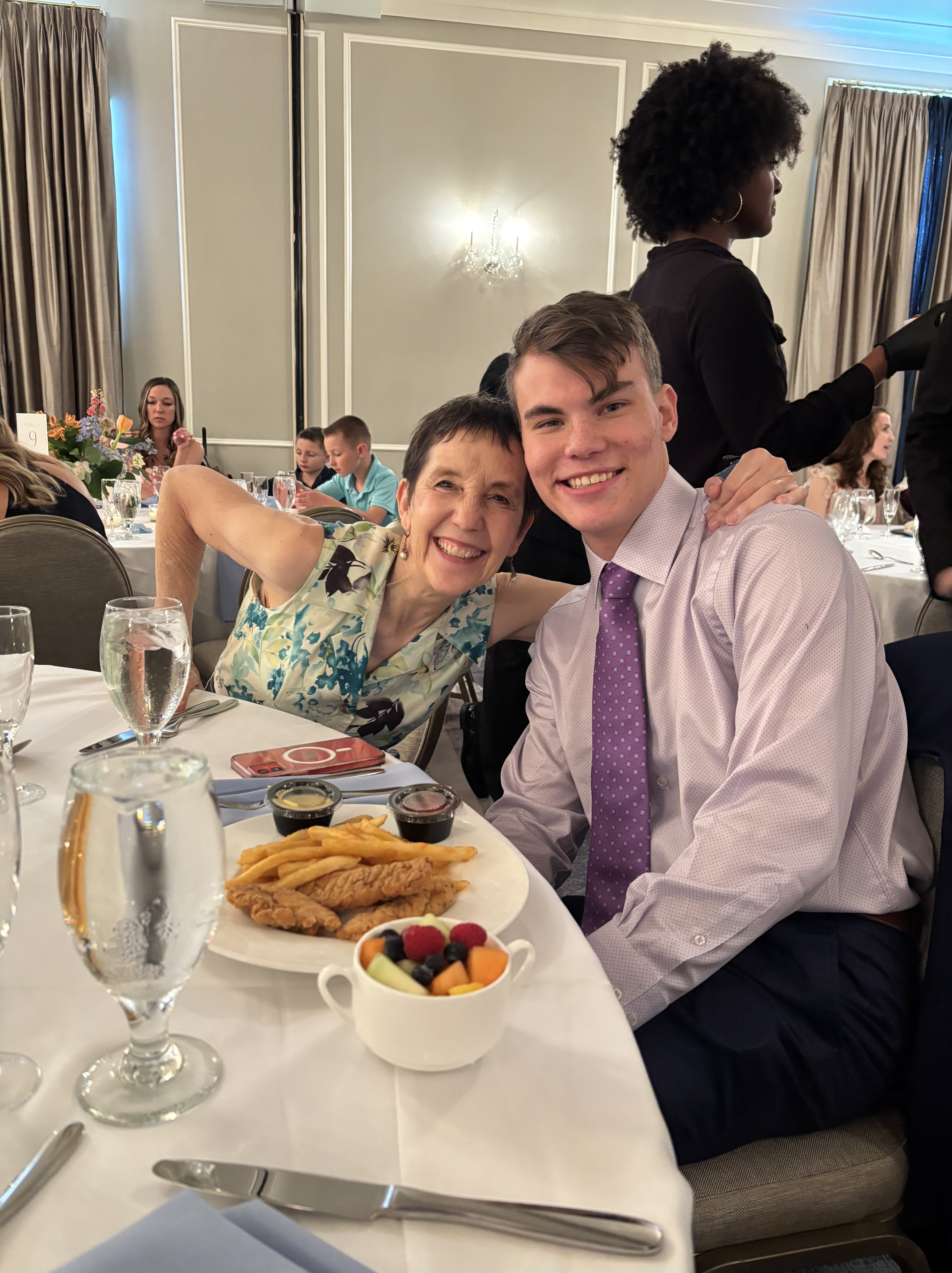
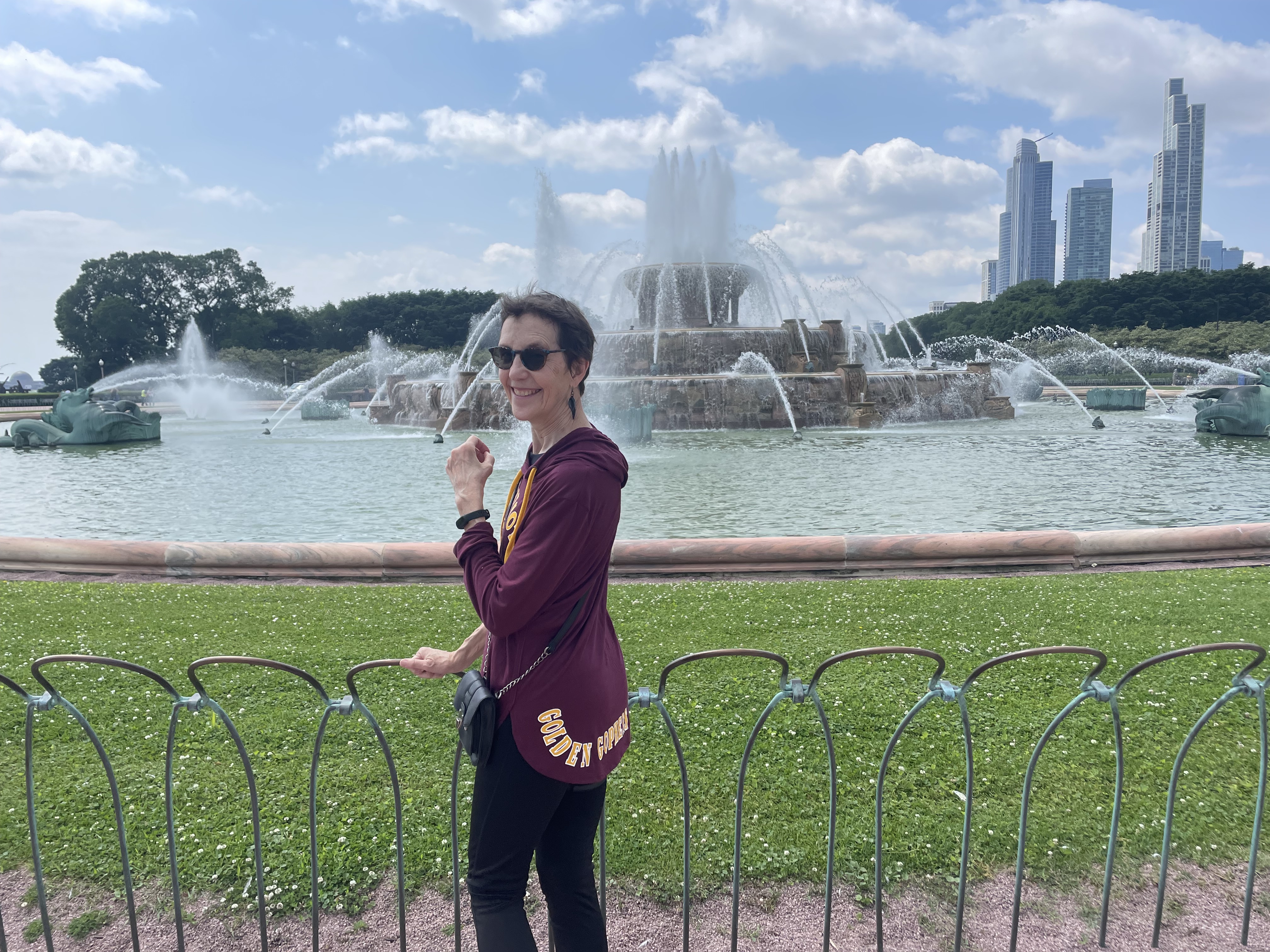
Exploring that at the end of a busy year seems more meaningful than showing off a travelogue of photos.

A leisurely ride on Amtrak to visit friends in Chicago and a stop in North Carolina last spring for my niece’s wedding enroute to see my older son in London were enjoyable, relationship-building experiences. But they didn’t stretch me. I didn’t challenge myself to take a solo train trip, which I promised myself I’d do after retirement. I didn’t immerse myself in a different culture or venture on a Civil Rights tour of the south, which long has intrigued me.

Even the warm-weather bike rides that I have loved for decades were on familiar pathways this past year. I never found time to haul my hybrid or road bike to trails and small towns throughout Minnesota, chatting with the locals along the way.

Reading widely means moving beyond your usual comfort zone to understand different human experiences and ideas. 

As for reading, it’s way past time to set aside the white women’s fiction that I enjoy and toe-dip into stories that will take me to new places, written by people whose backgrounds and perspectives differ from my own. Here again, I am learning from my younger son, who reads books only by authors from other cultures or with identities he doesn’t share as a middle-class, cisgender white male.

I thought retirement, given enough resources, would help me feel safe and secure. But challenge and ambition are what I always sought at work. Four months into freeing myself from paid employment, I recognize that the price of less stressful living can be sameness and stagnation — especially at an age when society warehouses seniors into dorm-like housing, walling them off from a community that could enrich elders’ lives and, in turn, benefit from their experience.

Not for me. Not yet. I am determined to live larger in 2026. How’s that for a New Year’s resolution?
Can a Mobile App Improve Seniors’ Mobility?

I first went to a physical therapist two decades ago, in my 40s, when I injured my shoulder in yoga. Young, fit and overly sure of myself — a runner and bicyclist, an aerobics instructor — I didn’t do the exercises with any consistency, and I live with that mistake to this day.

After visiting a different PT twice in my early 60s for a pulled hamstring and another shoulder injury, I figured out that physical therapy, like yoga, only pays off with regular practice. If you commit to performing the highly specific, often tedious exercises every day — or nearly so — your body will heal and feel better. Otherwise, you likely will remain in pain.

Given that reality, how practical is the growing trend of providing physical therapy not in a clinical setting but via a mobile app that people can access at home?

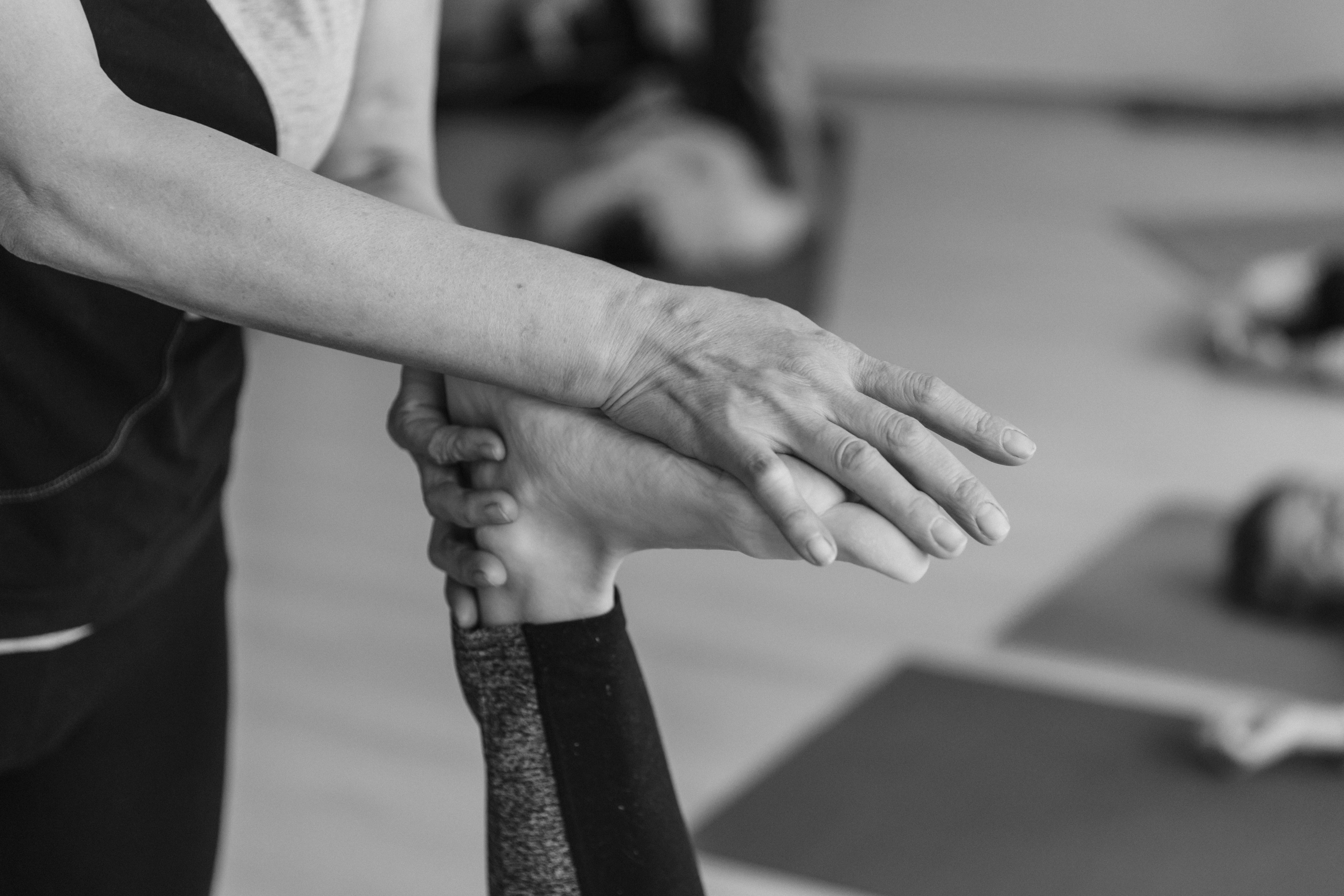
Physical therapy traditionally has been hands-on. Photo by Raspopova Marina on Unsplash

My experience as a physically active 68-year-old woman dealing with the normal wear and tear of aging proves that it can, indeed, work. Hinge Health, a San Francisco–based company whose services are free through my Medicare Advantage plan, has been nothing short of a godsend for my stiff neck and perpetually impinged left shoulder.

Initially, I was skeptical whether video visits with a PT and a health coach could possibly be effective. But I was so tired of shoulder pain, which was hindering my spring bike riding, that I decided to try it last May.

“People come to us with a wide range of goals,” says Doctor of Physical Therapy Melanie Cosio, based in Mobile, Alabama, and serving members (the word Hinge Health prefers to “patients”) across the country. “We often see people getting ready for a surgery, whether sports-related or they slipped and fell at their house.”

She sees plenty of older people like me, who’ve been athletic our whole lives and — seemingly out of nowhere — are now more prone to injury or sudden aches and pains. “They want to stay on top of their mobility,” says Dr. Mel, as the program calls her.

Hinge Health also serves older adults who may be housebound, lack access to in-person appointments or want a daily dose of motivation, backed by scientific research. “Hinge Health gets us into people’s homes, no matter how rural they are,” she explains. “The connection I can make via video is really impactful. We’re also making programs that are easy to digest and access from someone’s phone.”

“Our stretching and strengthening exercises help your body get more resilient and train your nervous system to better cope with pain.”

Hinge Health mobile app, education library

Traditional physical therapy states that movement is medicine. Hinge Health translates that time-honored philosophy into a 21st century AI-powered program that potentially reaches more people and keeps them exercising longer.

Rewards, including free exercise gear and performance badges, are woven throughout the program. Key to why Hinge Health works, however, is reliance on the foundations of successful physical therapy — motivation, consistency and education — but with a modern, more accessible twist.

Daily texts provide chipper reminders to “exercise for better sleep and a more vibrant you,” “keep marching forward” and “get up and glow.” Those prove to be more motivational than annoying. In fact, the messages work to plant a seed: I’d better do this today if I want to hit my weekly goal.

The daily playlists are no more than 11 minutes, and each session earns points that eventually push you to the next level, with progressively harder exercises. At the end of each session, you can indicate whether a particular movement was too hard or too easy, and the system will adjust your playlist’s difficulty.

An assigned physical therapist and health coach are within easy reach through the app and typically respond within a day. More immediately, Hinge Health’s TrueMotion® AI technology, or “real-time feedback,” lets you track through your smartphone whether you’re performing the exercises correctly.

“Laser beams of light are being shot so they can monitor where you are,” explains Tony Schmitz, a Hinge Health member from St. Paul, Minnesota. “It’s a little Wizard of Oz-ish: Who’s behind the curtain, really? Maybe it’s all AI and there is no person.”

More enticing for me than the technology was the free equipment. Hinge Health sent a phone stand when I finally enrolled last spring, after my insurance provider, Blue Cross Blue Shield of Minnesota, mailed out two invitation letters (“move better and feel better with online physical therapy”). A set of resistance bands, which I had never used in weight-training workouts before, and a yoga mat soon followed. I even got an electronic muscle- and nerve-stimulating device called Enso 3, once I had demonstrated that I was serious about the Hinge Health program.

“They’ve really dialed this in,” says Schmitz, 72, an author, retired journalist and self-described gym rat who’s endured a series of health challenges and now practices his Hinge Health exercises every day. “They’re giving you this stuff early on to really get the hook in. Mission accomplished.”

“It’s possible to retrain your pain system by considering all the factors that may contribute to your pain: sleep, stress, relationships and worries.”

Hinge Health mobile app, “Pain Is Your Protector”

Founded in 2014 and holding a “moderate buy” consensus rating on the New York Stock Exchange (HNGE), Hinge Health serves 1.5 million people through 2,350 client companies and over 50 health plans. The program focuses on musculoskeletal care, with the low back, knees, shoulders, neck and hips being the most common areas treated.

Given how strongly Blue Cross Blue Shield promoted the program, I found it odd that the company refused to comment for an article I wrote about Hinge Health in Next Avenue, an online magazine produced by Twin Cities PBS for people 50 and older. After being turned down for an interview, I asked the media relations team via email: “Could anyone explain how Blue Cross selects the clients to target for Hinge Health? For example, I got two unsolicited letters, possibly because I had used PT before.”

No response may indicate an answer. On November 21, two weeks before the open-enrollment period ends for 2026 Medicare plans, Blue Cross Blue Shield of Minnesota announced that “high cost pressures across all Medicare programs” were forcing the insurance giant to cut its SilverSneakers benefits at two of the Twin Cities’ most popular workout facilities, Life Time and YMCA of the North. The loss of free memberships will affect 26,000 seniors, according to the Minnesota Star Tribune.

Even if Blue Cross discontinues its sponsorship of Hinge Health, I’ve learned enough to do the exercises on my own and to recognize that a home-based routine of physical therapy augments more rigorous workouts outdoors or at a health club.

Photo by Delaney Van on Unsplash

The program’s wholistic approach includes an emphasis on education. A new article appears at the end of each daily playlist focusing on sleep tips, mindful eating, building goals and habits, breathing and meditation, and mental health. One article features author and podcast star Brené Brown and “Atomic Habits” author James Clear describing how all-or-nothing perfectionism can undermine new habits. Instead, “plan for failure,” the article says. Don’t beat yourself up if you fall short of a particular goal. Reset, reevaluate and try again.

My biggest learning from Hinge Health is that the pain in my body gets fed in my brain. Emotions affect it, especially fear. I’ve learned how to carefully, mindfully move toward my shoulder pain (and my emotional pain, for that matter) rather than freezing up or backing away.

“Pain typically goes a lot deeper than the physical pain that someone’s in,” explains Dr. Mel, the PT with whom I work. “Knowing that pain is multifaceted, we encourage people to move. It’s often the best way to support healing.”

Maintaining health becomes more challenging and time-consuming as we age — whether building muscle mass and strengthening thinning bones or figuring out how to consume enough fiber and protein. Hinge Health asks members to articulate a North Star goal when they enroll. Mine is simple but not always easy: Keep moving well, and well into old age.

Age Can Help Us Resist Tribal Thinking

“I’ve learned how to say ‘no.’”

“I no longer spend time with people who drain my energy or don’t interest me.”

“I’ve quit over-filling my calendar.”

“I am trying to focus on what matters in the time I have left.”

Declarations like these are common among young-old women like me, who built careers in an era with few social supports, who have raised children or seen their parents to their graves, who once viewed multi-tasking as a virtue and wore their stress on their sleeves. Women who led purposeful lives for decades.

Photo by Mehdi Merzaie on Unsplash

Now, many of us achievers in our 60s are seeking how best to spend our golden years — how to make a difference and live a life of meaning while our health still holds. For me, that means becoming more discerning about where I choose to volunteer and when to stand up for my point of view.

Since retiring, finally, in September, I’ve been digging deeper into the causes I already support — reproductive rights and food insecurity — and investigating where else I want to spend my time. That has brought me up against a different sort of challenge: Where to turn and what to say when my views run counter to the ethics of my chosen community and the causes and political leaders I support. Where can I safely speak my truth?

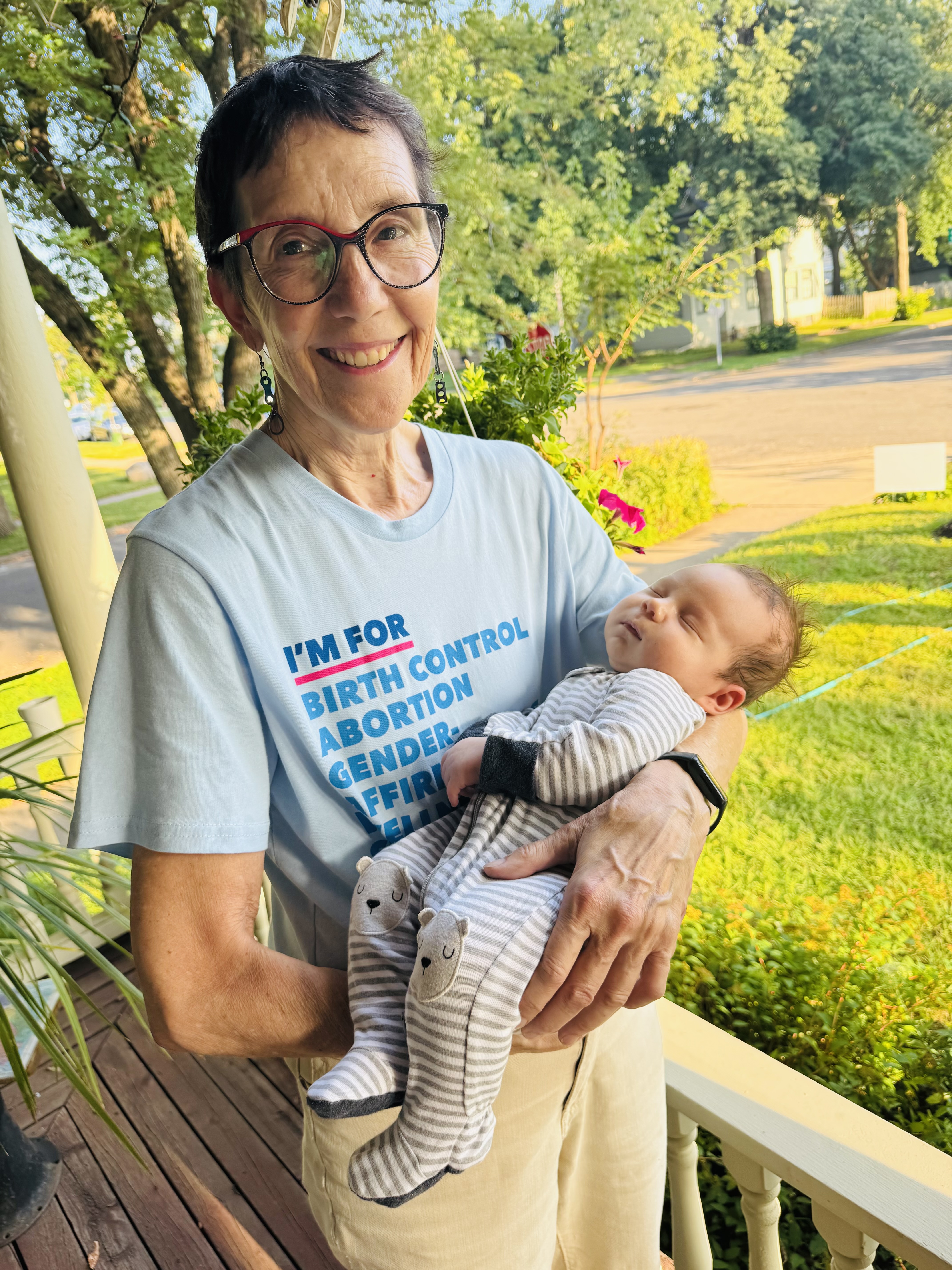
Case in point: I was delighted to volunteer for Planned Parenthood North Central States’ first booth at the Minnesota State Fair on Labor Day earlier this year. But I was mortified when I picked up my light-blue T-shirt in advance and saw the list down the front of what the organization — and supposedly the wearer — stands for. “I’m for birth control, sex education and gender-affirming care” all ring true for me. I can wear that across my chest in public.

But “I’m for abortion”? No, I don’t promote it. What I have marched, volunteered and donated money for since the days when we thought Roe v. Wade would never fall is the protection and expansion of abortion rights. That’s the language I wanted on the T-shirt. When I proposed that to the young staff member in charge of our booth, she said the movement wants to remove any stigma or sense of shame from the practice of abortion. I see her point, but I also saw the quickly averted glances while I walked around the fairgrounds. And Planned Parenthood needs supporters these days, not skeptics.

More significant than what others thought of me is how the T-shirt made me feel. I wore it home, forgot to change and let my husband take a photo of me holding our infant grandson beneath the words “I’m for abortion.” After that, I just gave the shirt away.

An agnostic seeking answers

Binary thinking dominates our yes-or-no, right-or-wrong, polarized society. Am I willing to lurk in the shadows between the black and white, or can I dare to lead a life in living color? By speaking up about my nuanced views on, say, trans women in sports — or countering a local activist whom I believe is unfairly maligning a mayoral candidate in our upcoming election — might I be banished from my tribe, the network of colleagues and left-leaning friends that I have cultivated since my 20s?

I am trying to find the line between honesty and provocation, between truth telling and egocentric mansplaining (yes, women do it, too). Recently, I had a chance to test this out.

“Dear Neighbors,” began the note, delivered quietly to my mailbox on a sunny fall day. “I belong to a community organizing group called Isaiah. Your yard signs have encouraged me to think that you might be interested in one or both of these community events.”

The yard signs that I had out on my corner lot included:

  • “All Are Welcome Here” by my well-tended Little Free Library;
  • A “Vote Yes” sign for the public-school referendum in St. Paul, where we homeowners already are overtaxed but feel obliged to support our underfunded schools; and
  • A “Safer Summit” sign to promote a multi-million-dollar off-road bike trail on the city’s signature street, which many who live on Summit Avenue ardently oppose.

My neighbor, whom I don’t know well, had the courtesy to sign her pitch. She is among a handful of people who have pointed me toward the good work Isaiah does in our community, including its calls for a transition to clean energy and “dignified wages” for childcare professionals. Still, as an unchurched agnostic — one who believes in a higher power but doesn’t claim to know its shape or origin — I resist Isaiah’s religious orientation.

I emailed my neighbor a week or so later. No liberal can rightly argue with racial and economic equality, I told her, and Isaiah’s call for a “collective voice” is a smart strategy that conservatives have long employed — but I can’t move past the organization’s faith-based roots. I signed off by urging the woman to “keep up the good fight.”

As of this writing, she has not responded, and that’s unfortunate, because it shuts down any opportunity for mutual understanding.

Tribal thinking discourages dialogue

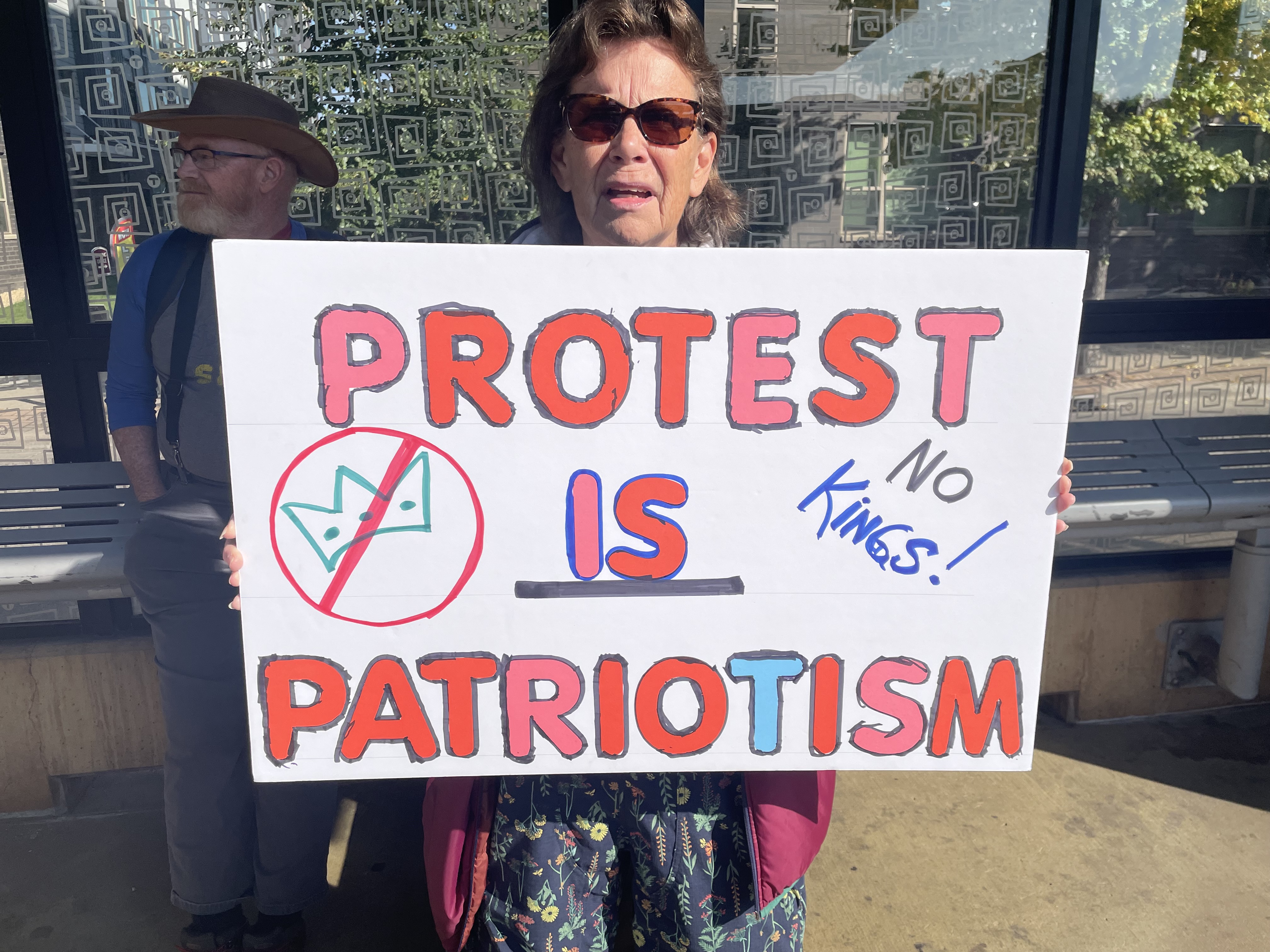
“Speak your mind, even if your voice shakes,” goes a famous quote by Gray Panthers founder Maggie Kuhn. I didn’t think about my personal safety when I took the light-rail train to Minneapolis on a sunny Saturday morning in October to join 100,000 people in a No Kings rally. Opposing the policies of Donald Trump felt that important.

Nor did I hesitate recently to display a yard sign calling on the City of Saint Paul to reinstitute its common-sense restrictions on student housing in our neighborhood, even though people with whom I often politically align oppose it. The state’s largest private university is five blocks away. Having served as that institution’s director of neighborhood relations for eight years, I know firsthand that the Student Housing Overlay District — since undone by a pro-density City Council — saved this area from being overrun by noise, trash, property crimes and ill-kept rentals.

Age has granted me more freedom to speak my truth. I’m less fearful about what other people think, or at least I can dial back my anxiety more quickly. I no longer have employers to please or any fear about my causes blowing back on them (which volunteering with Planned Parenthood did when I worked for a Catholic institution).

But I still can’t shake the niggling insecurity that speaking out on hot topics may alienate some members of my tribe or get me pilloried on social media.

Part of that fear relates to the reality that my views are moderating with age, even as my party moves farther left. Thirty days into the government shutdown — and in full support of keeping healthcare costs within reach for all Americans — I think the Democrats, my party, have played their hand and lost. Congress needs to do the people’s business again or give up their own paychecks in solidarity with sidelined workers.

Must I blast that out on social media and then fervently check my feeds to see who “likes” me and who doesn’t? As courageous as I like to think I am, that isn’t how I want to expend my energy.

“Humans, like animals, are pack animals,” says a January 2025 article in Psychology Today called “Tribalism: How to Be Part of the Solution, Not the Problem.” People naturally want to align with a group, to feel less alone, which is why demonstrations like No Kings are momentarily empowering — even if no lasting change takes place.

The article challenges us, however, not to let the emotional exhilaration of tribalist belonging overtake research and rational thought. Among the “difficult questions” that author John G. Cottone, Ph.D., asks readers to explore are these:

  • “Do I know how to recognize the propaganda of my own tribe, and resist it when I see it?”
  • “Do I pursue multiple perspectives on important issues with intellectual honesty — or do I only solicit my own tribe’s political perspective?”
  • “Do I have compassion for everyone on the road of truth, even those who are walking today where I walked yesterday?”

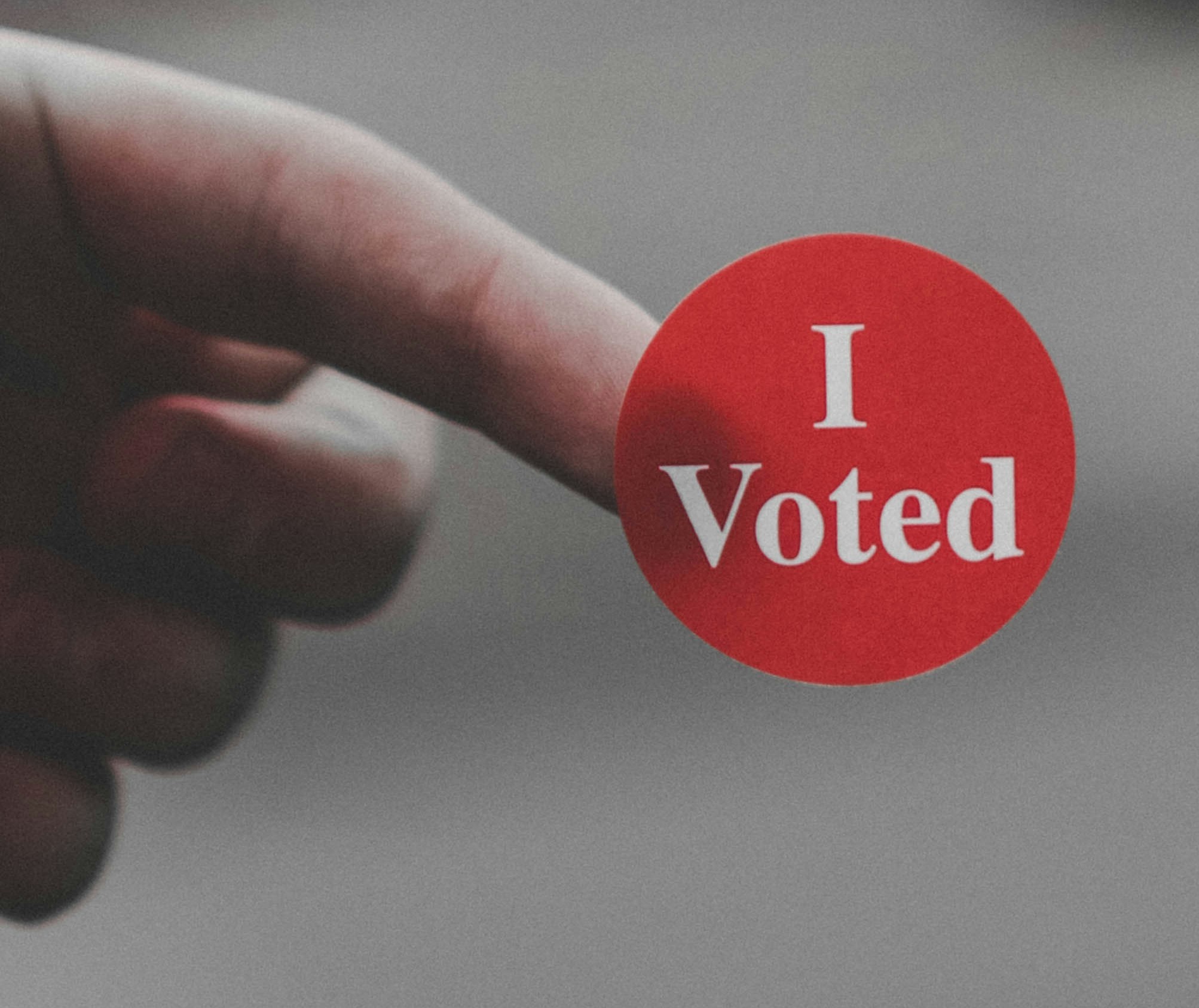
As I prepare to vote in my city’s off-year election — casting a ballot for mayor and the school funding initiative, as well as monitoring the contentious Minneapolis mayoral race across the river — I won’t be in full alignment with the bike-riding, urbanist activists, my tribal pack, who are posting lengthy arguments on Bluesky and Facebook about how they plan to vote and why.

Disagreeing with people with whom you normally align is uncomfortable, uneasy. But in this case, speaking out will mean casting a secret ballot and having the confidence to recognize where and how to use my voice.