Category Archives: Retirement

How You’ll Know When It’s Time to Let Go

Ego, irritation and exhaustion are the watchwords of this story — the emotional and physical habits that work against us as we age. TLDR is the cheeky abbreviation for “too long, didn’t read” (yes, I learned that from a Millennial), so if you’re stopping here, try to guard against:

  • Self-importance (the conviction that only you know what’s best).
  • Sanctimoniousness (feeling thwarted when others counter what you believe to be right).
  • Overdoing it (because you believe you can control the outcome).

I want to tamp down these tendencies in the autumn of my life. Quitting work at age 68 may help me do that.

Image by freepik

I have talked about retirement so often in this blog that my friends and family just dismiss me: You love being busy. You’ll never quit working. The first statement is true. The second has changed, which I never anticipated during my decades as a careerist.

At the end of August, after months of hand-wringing and internal debate, I finally left the last of my part-time jobs. I embraced the word “retirement,” even as I struggle still with what it means.

Getting there has been a journey:

  • Three years ago, in September 2022, I resigned from full-time employment after I turned 65 and archly declared that no one should view me as “retired,” given the two part-time positions I’d taken on.
  • Six months later, in March 2023, I described those jobs as a “glidepath” toward retirement and interviewed two peers who were taking similar approaches.
  • A year into the gig work, in September 2023, I described how part-time professional work pulls more on your intellect and energies than a job you leave behind once the shift is over.
  • In July 2024, more than a year before official retirement, I wrote about the decision to draw Social Security at age 67. It was another step closer to the inevitable. And toward acceptance.

Finally, this past February, I gave six months’ notice and developed systems that would make the transition easier for my successor. Here’s how I reconciled my instinctive desire to keep working — despite the privilege of financial security — with the reality that it was time to move on.

The first half of life is devoted to forming a healthy ego, the second half is going inward and letting go of it.

Swiss psychiatrist and psychologist Carl Jung

Once ego takes over

My final job was as managing editor of Streets.mn, an online publication that advocates for “people-centered communities”: bike and pedestrian infrastructure, public transportation, vibrant public spaces and more abundant housing throughout Minnesota. The quarter-time position was the only paid job within the volunteer-based organization. I worked with board members who had full-time responsibilities elsewhere, with unpaid contributors who had little professional writing experience, and with copy editors who were donating their time and had varying degrees of commitment to learning the fine points of AP Style.

The work was rewarding and challenging — a big stretch for a part-time gig, with the responsibility of publishing a new piece of well-reported content every weekday. The board would warn me from time to time that donations were down and cut my hours for several months at the end of 2024. And yet I remained motivated and immensely proud of the work, getting to my computer every workday before 6 a.m. to ensure we met the 7 a.m. publication deadline.

Dedication morphed into ownership as I passed the three-year mark. I thought less about what “we” were accomplishing, together, with this reputable publication and more about how “I” had transformed it into a well-oiled machine.

My successor approaches the role differently and is contributing her own strengths. In the four weeks since I left, I have ceased to check the website every morning and note the copy-editing changes I would have made. (A friend challenged me to stop; just stop.) Time to separate, to let go and, for my own peace of mind, to abandon the notion that my way is the only and obvious answer.

Endings are a little overrated. When the ending is here, it’s here, and you just move forward.

WNBA all-star Diana Taurasi, who retired in 2025 at age 42

Restless, irritable and discontent

My insider joke, more relevant a year ago, was that I didn’t want to become the Joe Biden of Streets.mn — the oldest person in the room at board meetings, writers’ gatherings and readers’ happy hours; the leader who couldn’t accept that she was aging out.

Collaborating with younger people helps keep me mentally fresh. I’ve recognized that since I turned 60. Still, as my quit date got closer, little irritants kept popping up that I could only attribute to a generational divide:

  • A Macalester College student who wrote for us occasionally texted me after our coffee meeting to suggest I use AI editing to reduce my workload — apparently unaware of all the years of experience and mentorship it required for me to get good at this.
  • A guest on a Streets.mn podcast episode declared that “all cops suck” in Minneapolis, and the host agreed, as though it’s a verified fact. I don’t believe that to be true, nor is it my experience with police. But maybe those are the uninformed musings of an older white woman.
  • Though I often told writers that an editor’s job is “to make you look good,” I grew weary of polishing stories that lacked focus or solid reporting. I wondered whether my obsession with word choice, fact-checking and well-crafted sentences was outdated in an era when fewer people read books — or read, period — and when TikTok users see “celebrities” and “influencers” as a legitimate source of news.

A former college professor, a woman whose work was her calling, told me she knew it was time to retire when she got tired of dealing with students. Exactly.

We do best when we learn how to have both work and rest in our lives.

Women Rowing North (2019), by Mary Pipher

The body’s wisdom

I kept notes during the first month of my retirement to track how this life change feels physically and emotionally. I was sick the first few days: stomach problems, little appetite, a newfound love of naps. After consulting WebMD and freaking out at the possibilities, I came to recognize that my malady was pure exhaustion.

I am grateful every day that I enjoy such good health at 68. I can’t imagine life without biking, walking, yoga classes, physical mobility. Yes, these are the “golden years.” But how long can they last?

Two weeks ago, my cousin had to cancel our plans to meet at the Minnesota Landscape Arboretum, and I had an entire day unscheduled. I cooked and listened to podcasts, took a bath and read, baked spoonbread in two pans and shared one with a neighbor who has suffered a broken collarbone. I never allow myself this luxury of time.

“When transitions happen and identities change, one of our great challenges is to find a new sense of meaning and purpose in our lives,” writes psychologist Mary Pipher in the 2019 book Women Rowing North, which is written for the phase of life I’m entering.
This is my chance, finally, to put family first. To cultivate and honor friendships, the intentional family that has stood by me. To spend time with my first grandchild and be present for my grown sons. To retire not only from a career but from achievement and doing, from broadcasting accomplishments on LinkedIn, from filling up my calendar because it helps me feel important.

Time is fleeting. That’s a reality for everyone, but only in old age do you know it to be true.
Travel as a Practice for Retirement

A version of this story appeared on June 10, 2025, in Next Avenue, a national publication for older adults published online by Twin Cities PBS.

When I left full-time work in September 2022, two months after turning 65, people naturally asked me how I liked retirement. Once I’d barked out my disdain for the R-word — chin lifted, spine stiffening — they learned not to inquire again.

In fact, the anxiety masked as rigidity was less about them than me: Retirement is a daunting prospect for us Baby Boomers who link our identity and sense of self with work.

I still don’t call myself “retired,” even though I work only a quarter-time job and a handful of contract gigs. But that’s about to change. I’ve given notice at my job, and my first grandchild is on the way, along with some shared responsibility for infant care.

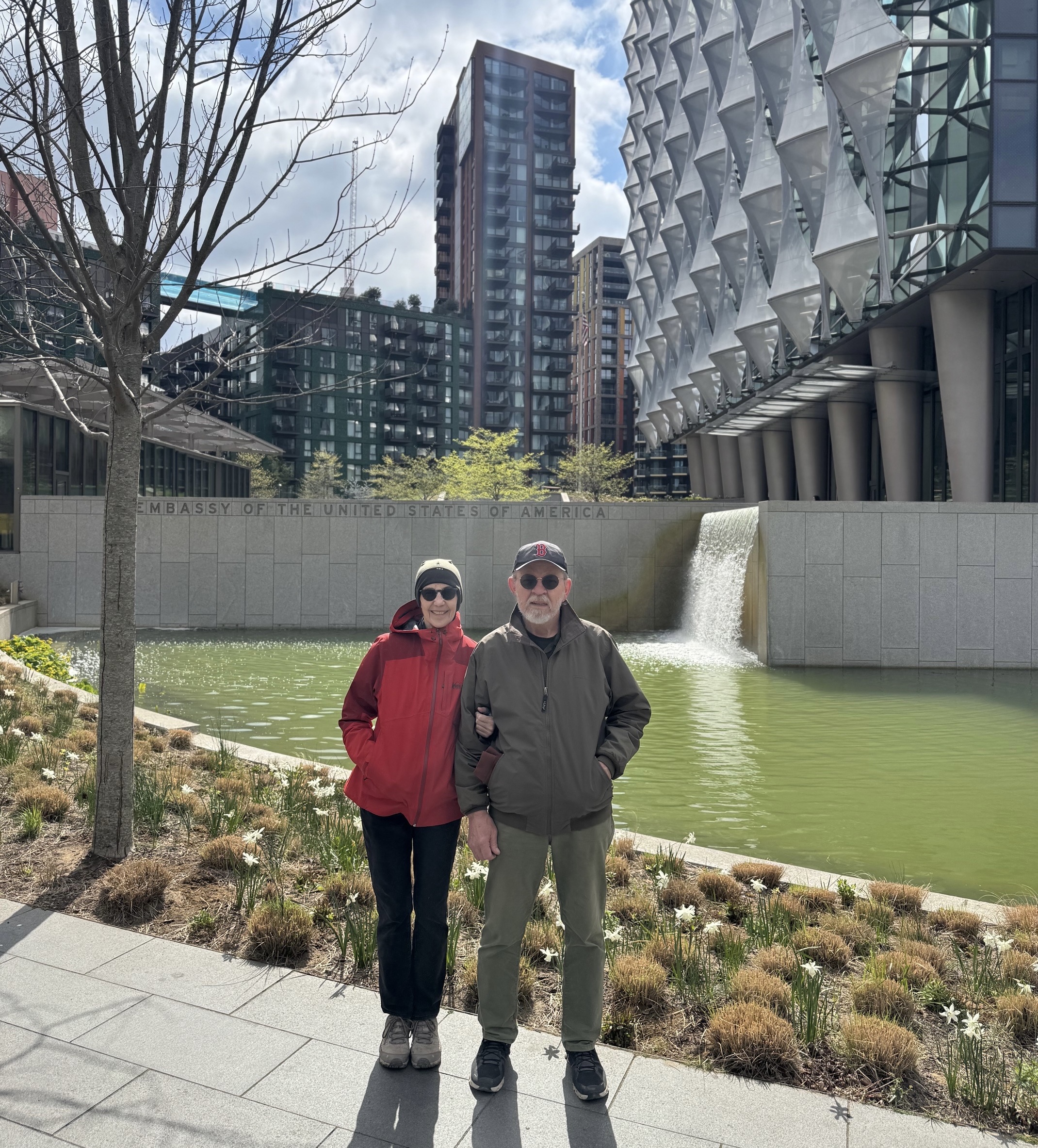
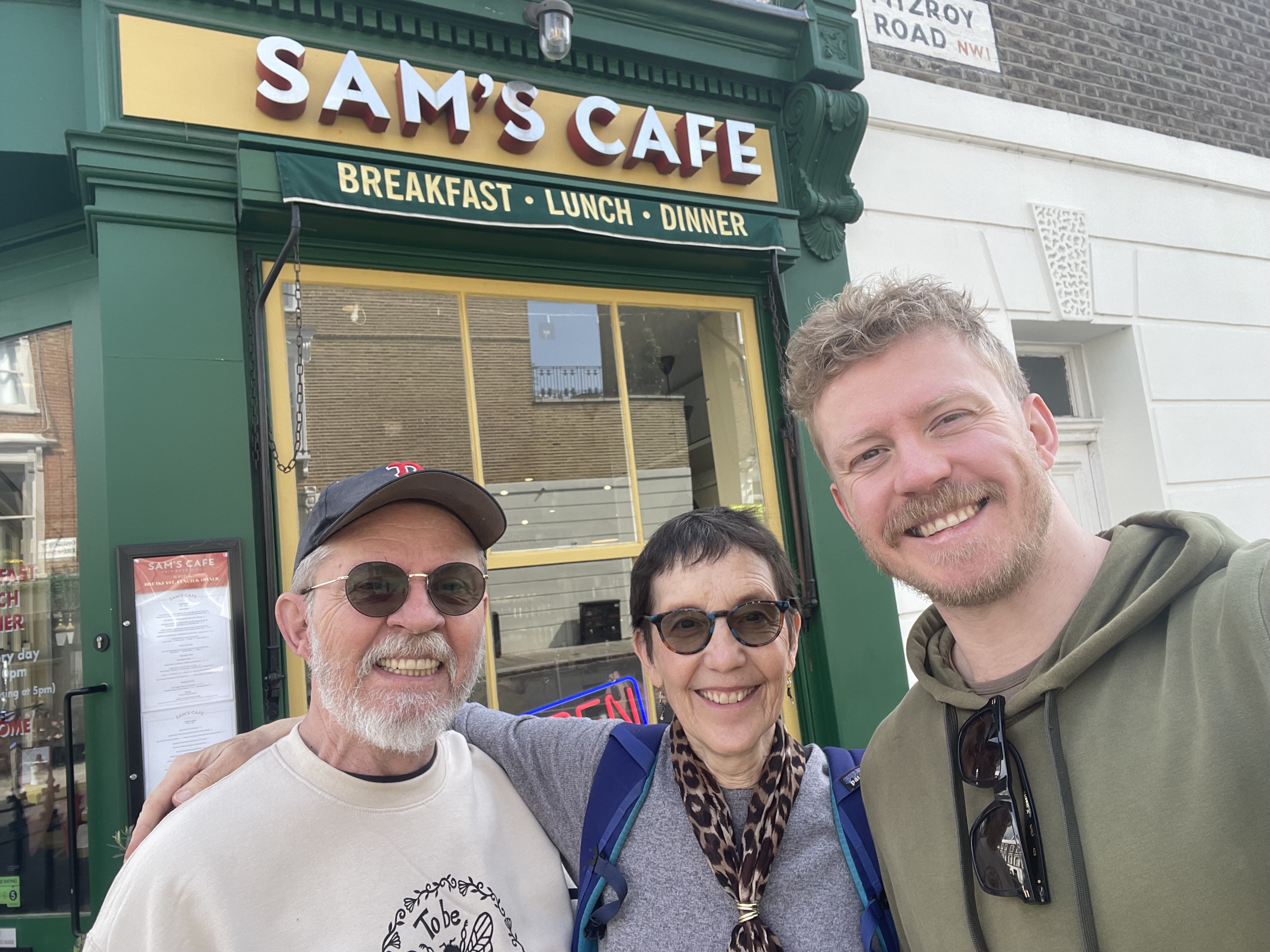
Husband, David Studer, and our older son, Sam Studer, who is at London Film School

Since my husband and I had planned an overseas excursion this past April to visit our older son, who is studying at London Film School, I decided to approach the trip — only my second time in Europe — as practice for the less structured, more selfless life that is awaiting me.

Here’s what I learned.

Lesson 1: Lose Track of Time

We go-getter careerists live and breathe by our agendas. This holds true for me even 32 months after leaving full-time work. My quarter-time job, my freelance assignments, even fitness classes and coffee dates with friends: All fill my calendar at least a month or two out from where I stand today.

The decision to avoid sticking to a rigid schedule in London, aside from ticketed events and planned outings with our son, was an exercise in letting go — both a relief and a discipline all its own. As we planned the trip, I insisted on only one “anchor activity” a day, forcing a spontaneity I rarely allow myself to experience.

My favorite times were early mornings, while my husband was still asleep. With no deadlines to hit or dogs to be walked, I wrote in my journal. Sent postcards back home to friends. Read the library book I had downloaded on my iPad.

I refused to check work emails, relying on the out-of-office message that told people I was away, and tried to sit with the discomfort of being unproductive. The clock dictates my day, and it took effort to silence the pragmatic voice that drives me, even on weekends: “It’s 10 a.m., and you’ve accomplished nothing.”

So what? No one was monitoring my output or keeping score on how deeply I dug into London’s vast cultural scene. Free to let the days and evenings take their course, I felt how nourishing a less hectic life can be. No coincidence, I slept longer and more deeply in a stranger’s British flat than I ever do at home in my own bed.

Lesson 2: Get Out in the World

As luxurious as it was to hang out some mornings, I also had days when I left my night-owl husband sleeping at the Airbnb and struck out on my own. March and April are London’s least rainy months, and a stretch of sunny weather made it a joy to start the day walking the streets or seeing the view atop an iconic, red double-decker bus.

Pro-tip: Google Maps and the Transit app were my best sources of navigation, but I also felt more comfortable being out alone in the daytime once I’d been in town long enough to learn my way around.

One of my fears about full-on retirement is losing regular contact with younger colleagues and allowing my world to shrink. It’s become tempting as I age to stay home with a good book and a homecooked meal, or to settle in with my pets and watch Netflix or women’s basketball and tell myself that is enough. Or that it’s safer.

So, following the lead of a widowed friend who goes alone to movies and concerts and routinely travels on his own, I spent the better part of one morning at the Tate Britain — one bus ride away — browsing the museum store, strolling through galleries and relaxing outside the cafeteria with my book. Yes, I was alone, but I was also among people.

Given my career in journalism and communications, I can easily strike up conversations with strangers, even in a city with thick English accents. The trip showed me how to carry my professional skills into retirement, when I no longer can wrap myself in the security blanket of a title and role, with a ready answer to the question: What do you do?

Lesson 3: Dress to Please Yourself

During my decades as a business reporter and later a marketing-and-communications director, I dressed up every day. Looked and acted the part of a career woman. I enjoyed shopping and the creativity of assembling a wardrobe — mixing and matching outfits, coordinating earrings, scarves and shoes — but toward the end of my career, especially after COVID, “dressing for success” felt like donning a costume. It wasn’t me!

In London, I had no one to dress for but myself. My comfort, the weather and how far I would likely walk that day dictated what I wore. That meant:

  • Comfortable shoes with heel support and a roomy toe box for the 17,062 steps I averaged during my nine days abroad.
  • Little to no eye makeup, even for “Carmen” at the Royal Opera House, because it could smudge in the wind and cold.
  • Refreshing my short razor haircut the day before we left, so I could fluff it with my fingers after wearing a hat for warmth or sun protection.
  • Ditching the more fashionable purse for a sturdy backpack, both to free my arms while walking and to discourage bag snatchers.

Now that I operate from a home office, I rarely dress up anymore. “Athletic casual” is how my younger son defines my style. Retirement allows that freedom — to quit comparing myself with younger women and dress for the age and body type I am today. And for movement, the best antidote to low energy and stiff joints.

Lesson 4: Keep Learning

My gradual glidepath to retirement these past two and a half years has given me time to adjust, both financially and emotionally. Of course, I worry: Will we have enough money? Who will I be without work? Will volunteering and family life fulfill the sense of purpose that a career has given me for decades?

A trip to London is not exactly high adventure for a white American with English roots. Still, I find it fitting that a foreign country became my place to try out a different way to live. Retirement is a bold undertaking, a journey toward a different land. My passport — my practice in the coming months — will be to remember and refresh these lessons learned.

Ready or not: Here comes retirement!

It happened gradually, and it happened overnight. Over the course of two years — and then seemingly without warning — I have become ready, finally, to embrace retirement. Not to cease being physically active (ever!) or contributing as a volunteer. Not even to give up my quarter-time gig as an editor and nurturer of younger writers.

Instead, after more than 40 years of seeking identity and purpose and meaning through work, I have stopped defining myself as a careerist. As “what I do.” The question to answer now is: Who am I?

“Seasons change, people grow together and apart, life moves on. You will be OK, embrace it.”

— “Words From a Wanderer,” by Alexandra Elle

When I left full-time work in September 2022, at age 65, I would visibly stiffen whenever people asked me about “retirement.” Indeed, I defiantly declared in a blog post that my two part-time jobs qualified me as working — still in the game! —  especially since the positions utilized my skills and had professional sounding titles, which felt important to me then. I also defined retirement, in part, as the decision to draw Social Security, and I aimed to avoid that until I hit my full retirement age of 66 years and 6 months.

Fast-forward to today:

  • I left one of my two part-time gigs in early June, the one that paid better but was more chaotic and uncertain.
  • I opted to begin drawing Social Security when I turned 67, on July 4, and will receive my first check in August.
  • I have become more particular about the freelance work I will accept, turning down a potential offer that would have paid well for at least a year but had aspects that run counter to my values.

Back in February, I woke up earlier than usual on the morning I was set to give notice at my second job. As I sipped my café au lait before sunrise, I listened to a podcast about emotional intelligence in retirement. The speakers urged listeners to name their feelings and even state them aloud, like a 6-year-old: I feel sad. No, not that. I found a letter from the Social Security Administration in a neglected pile of mail, and I recognized a different feeling: I feel scared.

As well as humbled, helpless, hopeful. What comes next?

Where do aging people find community?

Twice last week, on consecutive days, I had rich conversations with women about loneliness and the meaning of friendship, about where we seek and find community now that our networks are shrinking, and our family responsibilities — whether raising children or caring for aging parents — are largely done.

One talk was with my widowed sister, who hasn’t worked in years (the workplace being a hub of socializing and people contact) and who recently moved from her familiar neighborhood. She plays Mahjong with her former neighbors and recently joined a cards group. That squares with advice in a New York Times article back in May, which cited research showing that adults on either end of the age spectrum may be vulnerable to loneliness — and can offset it by volunteering and joining groups.

My second discussion was with a longtime friend who is planning to retire early next year. I told her about the “Women in Retirement” group I had visited recently after months of finding excuses not to go. “The women all looked so old when I walked in,” I said, and then we laughed, knowing full well that the image I carry of myself in my head is not the one that looks back at me in photographs.

Starting from young adulthood, self-reported loneliness tends to decline as people approach midlife only to rise again after the age of 60.

The Loneliness Curve,” New York Times, May 21, 2024

Both conversations revolved around the gap between our own perceptions of our energy and vitality — the contributions we still hope to make in the world — and the diminishing way that people perceive us, if they think of us at all. My sister’s young adult grandkids see her as “an old lady,” she says, and rarely are in touch. My friend and I, who met 40 years ago in a newsroom, discussed the coming loss of a collegial community at work, even in a part-time job like mine.

Friendship was the topic at the “Women in Retirement” group last week, with a focus on the axiom that we have friends for a reason, friends for a season and friends for life (credit a poem by Brian A. “Drew” Chalker). My small coterie of friends for life — the handful of people who know me as myself, not within a role or professional position — are friends I made back in my 20s and 30s.

Am I still capable of forging and investing in such deep and trusting friendships, or has it become easier to blanket myself in the comfort of people I’ve known for years? Time will tell; and time, I now recognize, in one of aging’s many insights, is an ever-diminishing commodity.

How do we reconcile our shifting energies?

During the four decades when I worked full time, full-bore — setting the “gold standard” for work ethic, one of my managers used to say — I had a standard answer when people asked where I was going on vacation: “Off the clock.” I’ve lived by a calendar and to-do lists for so long that I don’t know how else to operate. The part-time job, the one or two freelance gigs I always have going, the uptick in volunteering: All add up to days that feel nearly as full as the 50-hours-a-week career.

But guess what? It’s catching up to me. At 67, I no longer can summon the energy of a 45-year-old. So: Why do I still take so much pride in staying busy? I hear my late mother posing a question that annoyed me at the time: “You’re always running, Amy. What are you running from, I wonder.” Some part is habit. Some is trying to remain relevant (as though a person my age can do that in our ageist society). Some is denial. An even bigger part is fear.

Photo by Patrick Hendry on Unsplash

Professor and historian Heather Cox Richardson recently observed that “democracy is a process, and it’s never finished.” I feel the same way about retirement. To concede that my work life — and productivity, as I’ve defined it — is behind me, to accept that family, friends and volunteering are what can bring me peace and purpose, is to take a giant leap into the unknown.

“There is always something truly restorative, really, finally comforting, in learning what is true. In coming to the end of an illusion, a false hope,” wrote Sue Miller in her 1995 novel “The Distinguished Guest,” which I just finished. If I sit still long enough, I can name the illusion, even as I wince at its futility and hubris — the conceit that I could outrun and outwit age.