Category Archives: Family

Can a Dog Person Learn to Love a Cat?

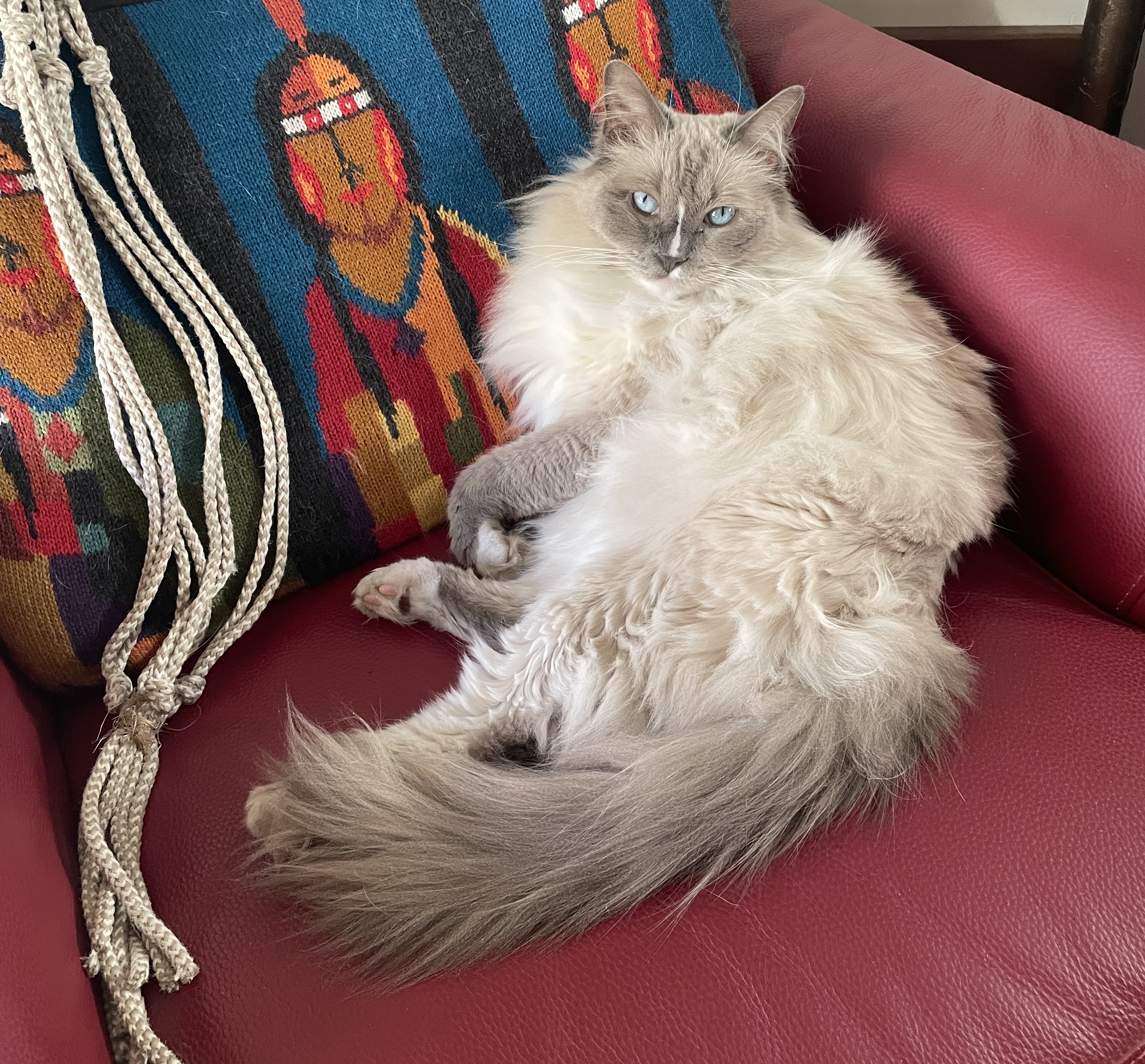
I gained what I thought was going to be temporary custody of a cat last August, when my older son, Sam, left Minneapolis for film school in London. I’m allergic to cats, and after the first of two painful sinus surgeries when I was 33, an ENT specialist told me to get rid of the cat I had and never own another one. But here we are.
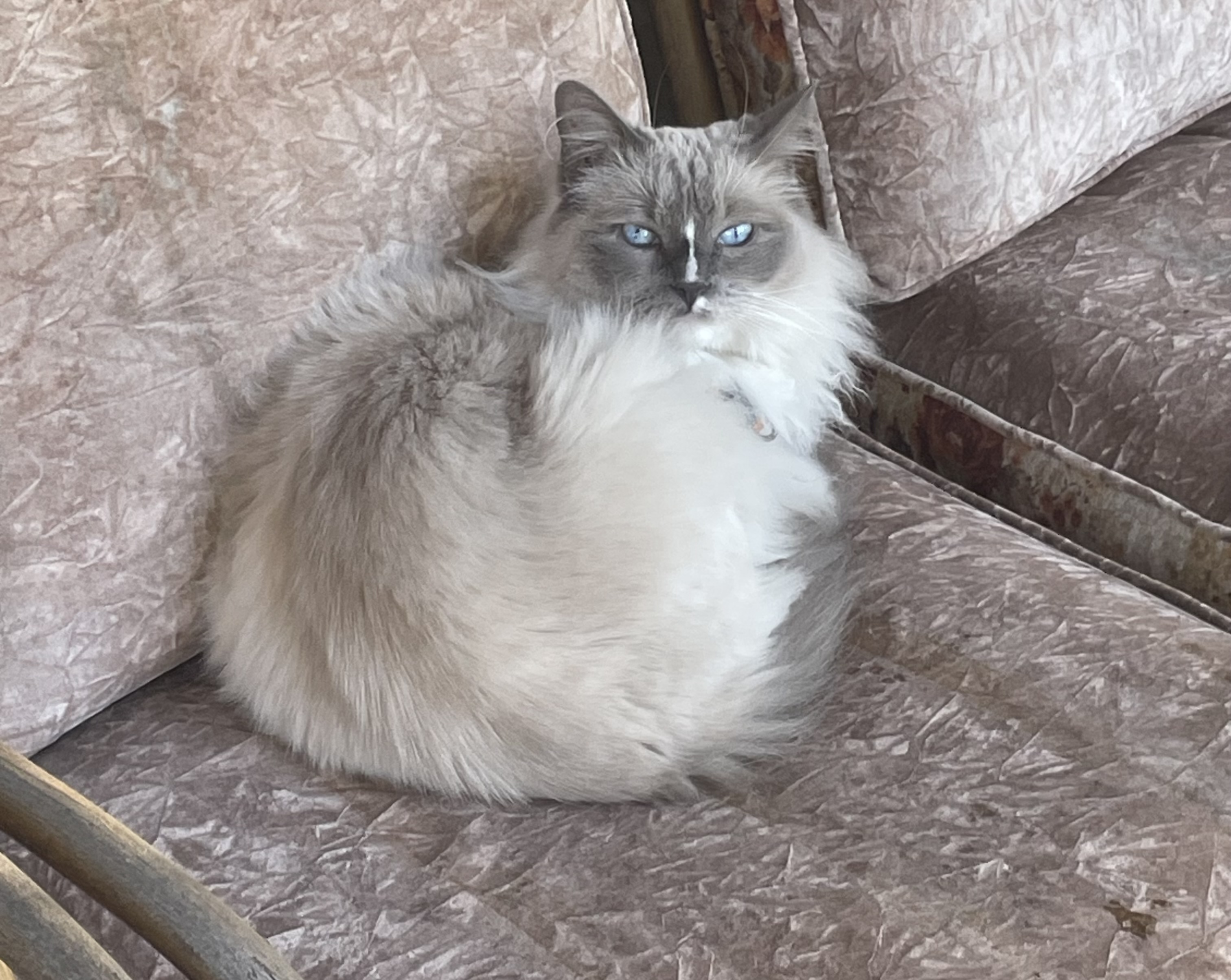
The plan was for Q.D. — Quaid Douglas (my son’s riff on the Arnold Schwarzenegger character, Douglas Quaid, in the 1990 version of “Total Recall“) — to stay at our house through the fall, and then my husband, David, would fly the cat to London in early December, when Sam was on break from school.

Months later, after learning how difficult English authorities make it to bring a pet into their country, Q.D. is part of the household. He has navigated a relationship with our two run-the-show dogs, all the more remarkable because Q.D. was born a tripod, with only a flipper for his right front leg. He’s quit running away from David, and now that I have newly prescribed medication for my allergies, I am happy to have him hang with me wherever I am working, cooking, reading or doing yoga (he likes to lick my feet).

Still, as easygoing as Q.D. (sounds like “cutie”) seems to be, I steadfastly remain a dog person. I happily walk Mia and Gabby every morning, whatever the weather. I am comforted when Mia sleeps with me or when either dog shows affection. I find dogs more interesting than cats.

So, when J.D. Vance’s past remarks about “weird” and “miserable” childless cat ladies resurfaced during the last presidential cycle — inspiring an amusing New Yorker cover and accusations of “sexist tropes” — I started wondering: What do people, women especially, see in cats?

The articulate, effusive responses I got to that question revealed a side of friends and colleagues I had never seen. As one woman said: “Cat people do not get asked enough to talk about their cats.”

Cats know their own minds

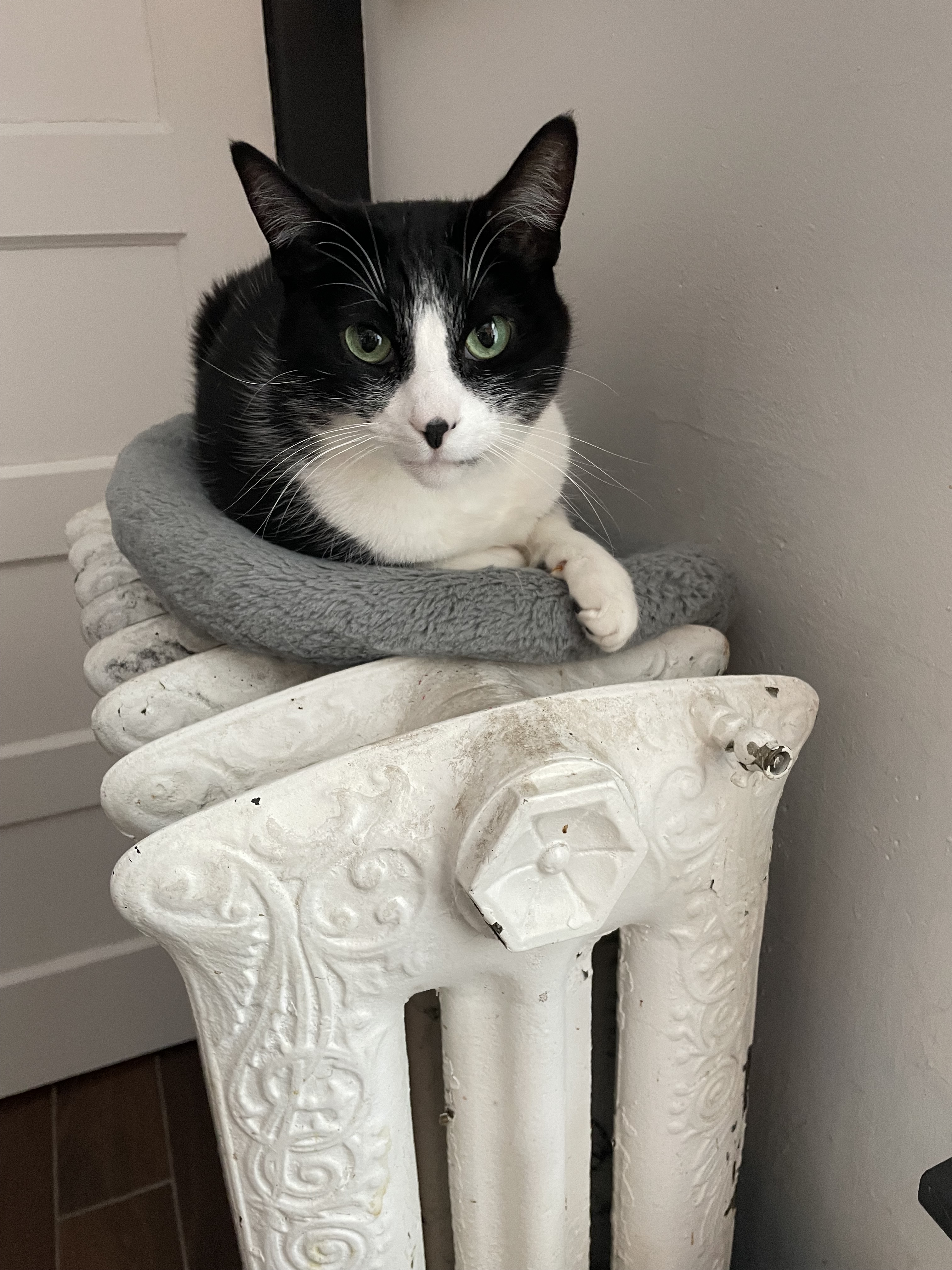
This theme came up several times, starting with my childhood friend Janey, who recently has had to put down two elderly cats. “They choose you as the owner,” she told me, and I wasn’t sure what that meant until Q.D. started waking me at 5 a.m. to feed him or showing up when I was sitting in the basement to watch TV.

Once he got over losing Sam, Q.D. recognized which member of the household was more likely to feed him, rub his tummy and comb out his Ragdoll fur, and he attached himself to me.

“I admire cats for their independence,” said my sister Debbie, who has four cats, including a former feral cat named Oscar Wild. “I think they see us as living with them, not the other way around, and although they can be affectionate and loyal, their goal is to get me to do what they want.”

That struck me as hyperbole until I realized, some days later, that I had begun to stop every week at an Aldi on my way back from Meals on Wheels because the store carries affordable cans of tuna that the cat will eat. Q.D. likes to go outside early in the morning, and so even if I have work or other chores to do, I now station myself at the table by the back door so I can hear his meow when he wants to come back in.

“You can’t train a cat,” says Alisa from my weekly women’s group, “but you can adjust your lifestyle so that the cat is happy enough that you improve each other’s lives.”
Cats are different from dogs

Though I didn’t request comparisons to dogs, I got a lot of them when I asked folks about why they like cats. Forget Democrats and Republicans, or urban and rural. Society tries to divide us between cat people and dog people, though I carry the traits of both, according to a recent Web MD survey.

“I heard somewhere that the difference between dogs and cats is that dogs are trainable,” Alisa wrote in an elegant ode to her cats. “Dogs are food motivated, they have empathy — they’ll adjust themselves to please you. Adopting a cat is like inviting a wild animal to your home. The correct perspective for this endeavor is to not have expectations.”

My longtime friend Elizabeth is staunchly pro-cat and still grieving the loss of her beloved Lily to cancer. What I perceive to be exuberance in dogs, she finds gross and and over-eager. “Unlike dogs, cats don’t slobber or sniff your crotch or knock you over, behaviors I have never gotten used to in dogs, apologies to dog lovers,” she wrote.

Peggy, a former journalism colleague, has had eight cats — “a long line of cats” — and initially chose them over dogs because they better accommodated her erratic schedule as a young reporter. “My soul cat was Rascal, two cats back,” she explained. “This can happen with cats or dogs — that one pet you link souls with in some not understandable way. He was the kind of cat of whom people say, ‘He’s like a dog.’ Which offers a window into how cats and dogs are stereotyped.”

Like all of the cat lovers I queried, Elizabeth is fascinated by these “regal beasts” and their “lion-ish” qualities to a degree that eludes me, perhaps because Q.D. is a skittish, shy loner. “When people say cats are aloof, I say, yes, they can be,” she said. “But like any pet, they all have their personalities, and the joy of having them as family members is discovering who they are. Dog lovers are correct: Cats are in charge. The only way to bond with them is to respond to them as they wish to be treated.”
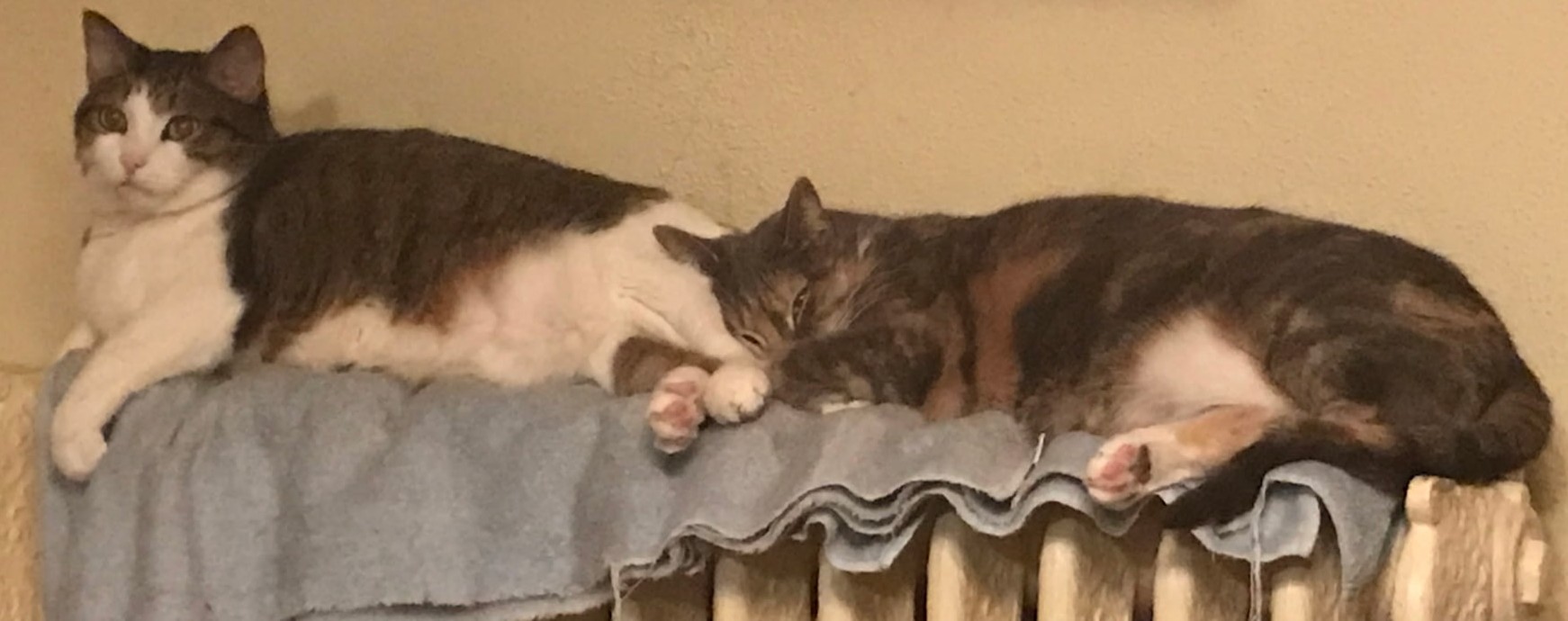
Mosley and Lily, my friend Elizabeth’s late cats.

I don’t want to work that hard for an animal’s attention. Dogs are blessedly simplistic, which suits my already hectic life. Creatures of habit, they are satisfied with the daily pleasures of evening meals and morning walks. They come to me, rather than requiring me to analyze how we should interact.

Not so with cats. “Being a cat roommate or caregiver honestly feels like a better title than just owner,” says Stina, my colleague at Streets.mn, “and I’m definitely not a cat parent. We are roommates, but she doesn’t clean or pay rent.”

Cats get you through

I didn’t think to ask people why they have pets, but the stories they told me point toward an answer: We enjoy the companionship and loyalty, be it the unconditional love of a dog or the more complicated affections of a cat. Several people described how cats had gotten them through difficult life stages.

Stina, 32, talked about the compromised cat, Stevie, she adopted during her 20s. “I had lost my sense of purpose,” she said. “I was partying a lot and working entirely too much, and I decided to adopt a senior cat to force myself to be home more and slow down. Stevie was missing half her teeth, had some cognitive delays and a gravelly meow.  She got me out of my depressive episodes, because I knew that Stevie needed me. My role was to give her the best end-of-life care she could get.”

She has since rescued Cali, a calico cat, whose temper — “hissing, spitting, biting, snarling” — had discouraged potential adopters for four months. Once Stevie, the senior cat, died, Stina decided to take a chance on Cali. It took months, but the cat who initially refused to meet her gaze eventually slept on Stina’s pillow and nestled on her shoulder.
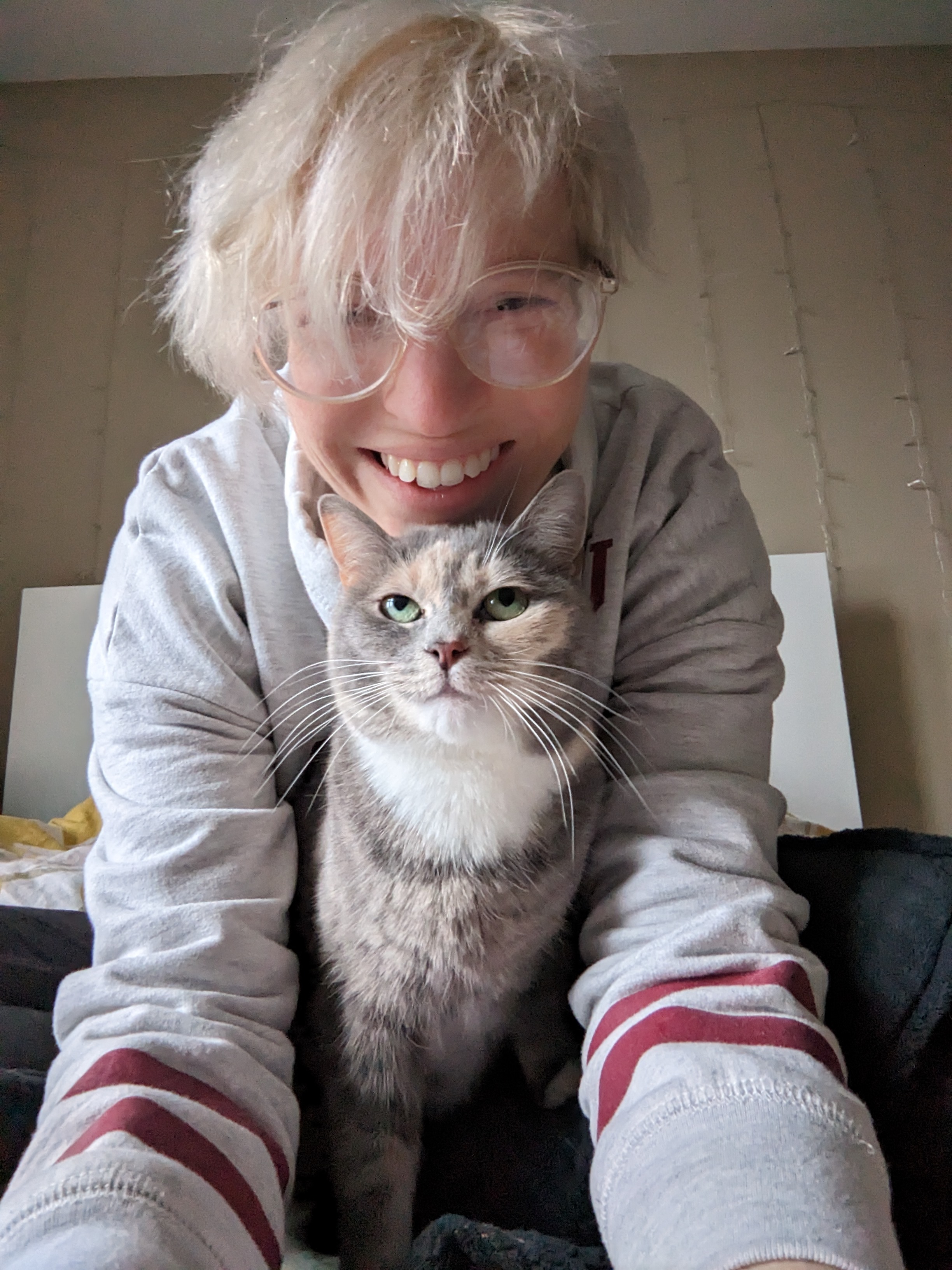
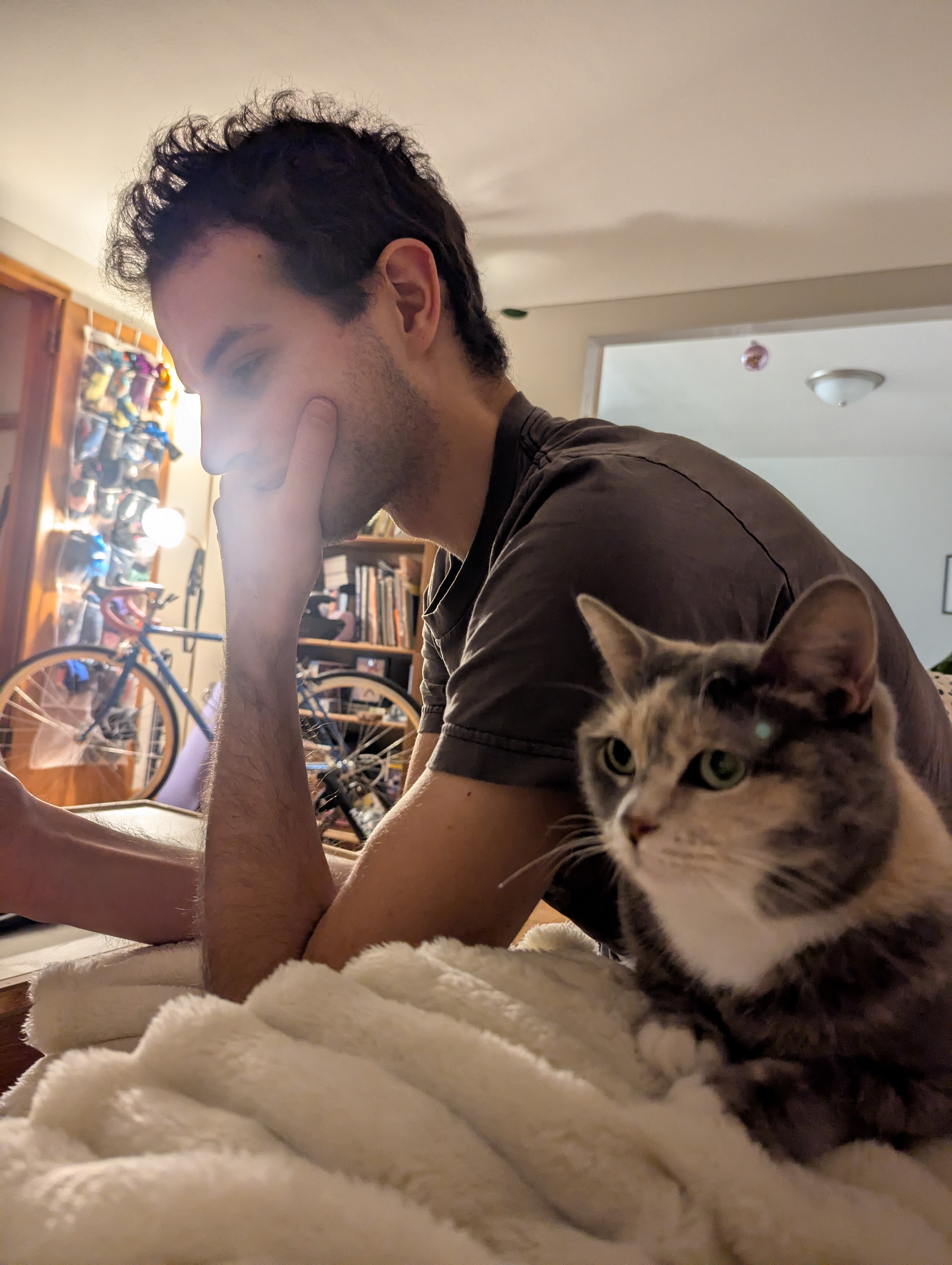
“Maybe it was a trauma bond, maybe we just needed time,” Stina mused. “But in being trusted by her, I learned to trust myself. She taught me that I can be both fiercely independent and soft and cuddly.”

Amity, whom I know from social media, promises on Instagram: “You will see cat pics. Maybe social justice. Or public transit. Mostly cat.” Her cat, jokingly renamed Chad “for my asshole co-worker” during the COVID lockdown, is getting her through a rough patch in her marriage.

“My husband and I are separated, and Chad is here for me all the time now,” Amity said. “I come home from work and my place doesn’t feel empty, because there’s a 12-pound beast at the front door meowing for food. I can’t really explain it; my apartment would feel less like a home without him.”

And then with cats, there’s the matter of convenience. “I’m a dog person from childhood. But with a busy lifestyle, and preferring animals that can largely take care of themselves, I am also a cat person,” wrote Melissa, a committed community activist.

Maybe I don’t have to choose between my dogs and the cat, the animals I know and the one I am still learning. Instead of picking a favorite type of pet, I could allow all three to help me navigate some exciting but scary changes in the year ahead.

“You turn around one day, and you’re old,” I told a colleague, a man barely half my age, as we discussed my difficult decision to leave a part-time job that I have really enjoyed during my post-career period of semi-retirement.

“Your peers are retiring,” I said, “and family obligations — whether an aging husband or a coming grandchild — continue to reshape what will be expected of you.”

My younger son’s baby is due on July 31, and I’ll be leaving the job in August. What a summer it will be! On those days when I feel incompetent, when I’ve forgotten how to calm a screaming infant or can’t differentiate a perennial from a weed in the neglected garden, I can turn to the beings who make me feel needed and loved.

And who maybe will teach me how to play again. To take life (and myself) just a little less seriously.


All Is Calm . . . Now That It’s All Over

It’s early Christmas morning. The only other being awake in a house now occupied by more animals than people is Q.D., the three-legged cat that my older son left behind when he went off to graduate school in London. My dog is still asleep in the large bedroom down the hall, and my husband’s dog, Gabby, is on a couch in the basement.

She’ll stop by soon and start angling for a walk: nudging my hand, doing down-dog on the wooden floor.

Meanwhile, my coffee mug warms my arthritic left hand. No workaday traffic desecrates the dark silence outside. As I balance the checkbook at my computer, a daily habit I learned from my mother, I notice how much money I have spent at grocery stores the past few days, preparing to host a dinner on Christmas Eve and a lunch today, making my deliciously caloric “soccer mom bars” as treats for my neighbors and the beleaguered postal carrier.

Even though I lead the holiday preparations in our household, I’ve never wanted my sons to assume that the annual traditions are necessarily women’s work. That was the norm during my childhood — women in the kitchen, men watching football on TV — and it has soured me on Thanksgiving, especially, for years (not that I care a whit about watching football).

“Cooking is a gift to people,” I like to tell my sons, hoping they will recognize (and one day emulate) the effort as an expression of love, a service to friends and family.

In fact, my favorite presents this holiday season have been consumables: the hearty loaf of zucchini bread that my friend brought over for Christmas Eve dinner, the tray of delicate Scandinavian cookies that my neighbor bakes each year, the bag of coffee beans with oversized mugs from the friendly folks next door.

Despite the undeniable magic of the day itself, barely a week ago I was feeling burdened by Christmas — weighed down with the expectations that come from marketing and media illusions of what the holiday should be, feeling wistful about the many extended family members who are gone. Wondering why my husband and I — neither of whom count ourselves as Christians — continue to put ourselves through this year after year.

We are often referred to not as citizens but consumers. So it’s really important to put the brakes on consumption through practices like gratitude and reciprocity.

Author and scientist Robin Wall Kimmerer

One morning in early December I recycled a pile of year-end appeals from homegrown organizations that all do good work. Every last one is worth supporting:

  • Gillette Children’s in St. Paul, which offers “specialized care to help children with cerebral palsy live fuller lives.” My uncle was chief medical officer there for years.
  • Friends of the Saint Paul Public Library, which helps to “ensure strong public investment in our Library.” There’s a branch three blocks from my house, and I routinely check out books on Libby, the digital app.
  • History Theatre, where I’ve seen numerous education-focused plays staged by local actors with regional topics, often with discussion and “reflection” sessions afterward.
  • Minneapolis Institute of Art, where I enjoy the monthly book-inspired public art tours and appreciate the mission to “make art available to all.”

“It’s giving season!” the MIA postcard declares. Indeed. Two days after Christmas, a plethora of emails continues, wringing the most from tax-related year-end appeals.

Although the health of the U.S. economy is measured against growth — how much we produce and consume in a capitalist society — “giving,” I have come to realize, doesn’t have to equal shopping. Three years ago, I started a tradition among my siblings, asking that we forego the exchange of material gifts in favor of contributing to one another’s chosen nonprofit organizations.

Mine was my local Animal Humane Society this year. AHS has provided me with three loving dogs over the past decades, and I value the organization’s efforts to educate current and potential pet owners.

  • My sister in Maryland chose Laurel Cats, which rescues and rehabilitates abandoned felines. “As the ongoing housing crisis continues in our community, families are facing eviction, and pets continue to be left behind in record numbers,” the newsletter declares, describing a pregnant cat abandoned before a snowstorm.
  • My dog-loving sister in suburban Denver again chose the Colorado Pet Pantry, which donates pet food to shelters and food shelves so people in financial stress can keep their beloved dogs and cats.
  • My stepsister in my hometown of Mankato, Minnesota, each year selects Vine: Faith in Action, a community center that “offers a one-stop shop for aging adults.” She knows older people who have moved to Mankato “primarily because of what we have to offer them.”
  • This year, my brother chose the Trustees in Boston, an environmental organization that protects “exceptional and special places” throughout Massachusetts, where he and his wife raised their sons.

One sibling chose not to donate to my nonprofit this year, and that’s OK. I love to buy people presents — the floor of my office closet is filled with gifts I buy throughout the year, waiting for just the right occasion to bestow them. But to spend money for the sake of it, when you don’t feel inspired to do so, contradicts my growing belief that Christmas should be more about choice than obligation.

One of the great gifts you can give another person is the gift of seeing them, the gift of paying attention.

New York Times columnist David Brooks

In the unhurried hush between Christmas and New Year’s, when the flurry of cooking and cleaning and wrapping presents is over but deadlines and other to-dos remain around the corner, I am thinking about what went right this holiday season.

It was doing the unexpected: foregoing a church service on Christmas Eve in favor of seeing a preview of the new Bob Dylan film, A Complete Unknown, and then discussing that and so many other topics over dinner with my husband and a friend. It was texting loved ones on Christmas morning rather than mailing holiday cards that would have gotten clogged up in the postal system anyway. It was staying out of cheaper suburban big-box stores and patronizing local shops that lend character to my urban neighborhood.

I’ve also been analyzing what didn’t work, like insisting that my younger son and his partner spend time with us on Christmas Day when they’d already had two gatherings with her extended family the day before. Next year, I plan to suggest that we celebrate instead on Sunday, December 28, the day after her birthday.

In mid-December a favorite podcast of mine, “The Opinions,” asked listeners to submit “what brought you joy in 2024.” It was the big things, to be sure: the elevation of Kamala Harris as the Democratic candidate for president, her choice of my state’s ebullient, unpolished governor as her running mate. But in the dark of December, it’s been appreciating what I have, not what I long for — whether that’s better relationships with certain family members or the impossible belief that I should have vanquished all my insecurities by this age.

I restarted the gratitude practice this week that I learned when I first got sober, ticking off five things I am thankful for during my morning dog walk.

Today it’s these:

  1. A warm, comfortable home in a cold, four-season state with a growing population of unsheltered people.
  2. A sister who helped me recognize how holiday traditions and expectations change once adult children have families of their own.
  3. The anticipation of a walk-and-talk this afternoon with a dear friend, who lately is witness to her husband’s failing health.
  4. Physical mobility, even with an aging, sometimes aching body.
  5. The determination, next year, to craft a meaningful Christmas that leans less into what is supposed to be than what feels right, what evolves — and, yes, what brings joy, to me and others.
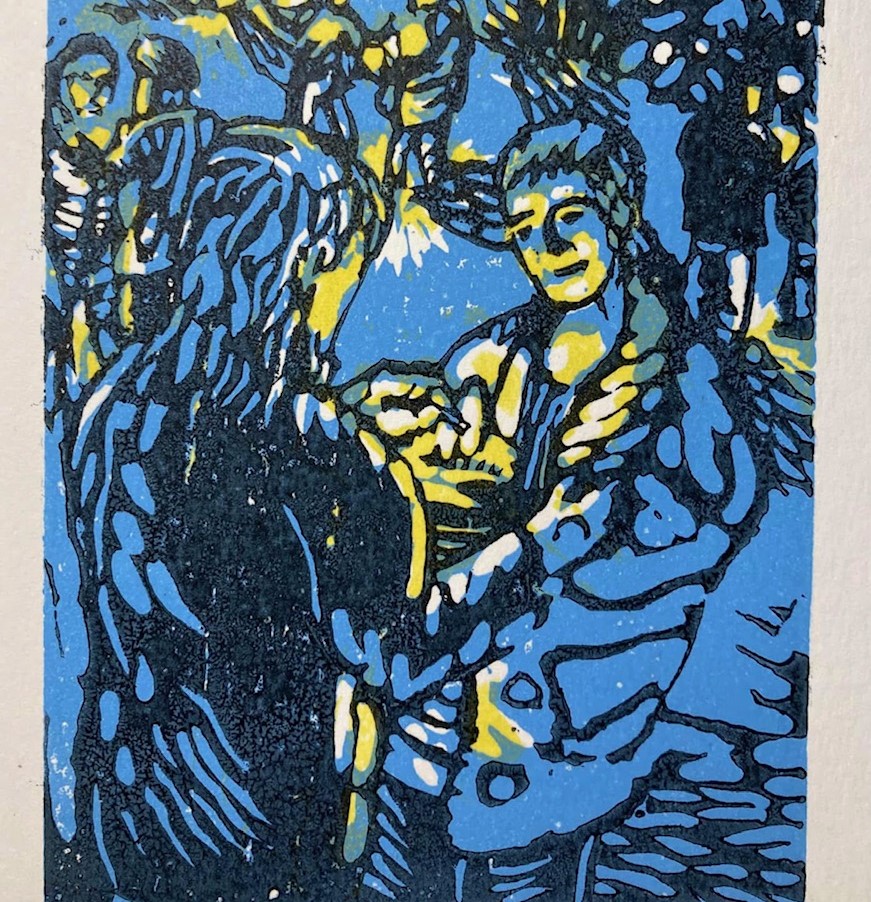
Artwork by Ed Steinhauer

Evolving Reflections on ‘Home’

My husband and I raised our two sons in Northfield, Minnesota — a progressive, two-college town where I always felt safe, where we rarely locked the side door off the driveway at night, where our kids rode their bikes freely around town. Back when we sold our family home in 2013, I wanted to write an ode to the place where I had lived for 20 years, the longest stretch of my lifetime.

That house was home, full of two decades’ worth of meaning and memories, family and friends, a center of activity for sleepovers and potlucks, where boisterous boys and loving dogs (rest in peace, Skip and Lucy) were a dominant, delightful presence.

The small-town house in Northfield, Minnesota, where our two sons grew up: 20 years of memories. Photo by Amy Gage

No one else in the family seemed to share my nostalgia for the white Dutch Colonial with a three-season front porch, a black roof and red trim, built in 1900 within eyesight of Old Main at St. Olaf College. It “looked appropriate” to see two little girls dash out the front door, my younger son said after he showed the house to his girlfriend during a trip back to town. That was all he would concede.

Eventually, I moved on, too, giving my heart to the smaller, 1906-era empty-nest house my husband and I have now in St. Paul, with a quaint wraparound porch that I fell for on sight. My shifting allegiances make me wonder: Is it the house itself that makes a home? Much as I love the expanded, updated kitchen in my current place and the egress window in the basement that fills my workout room with natural light, are those amenities what have bonded me to this place? Or could I comfortably, given time, call any place home?

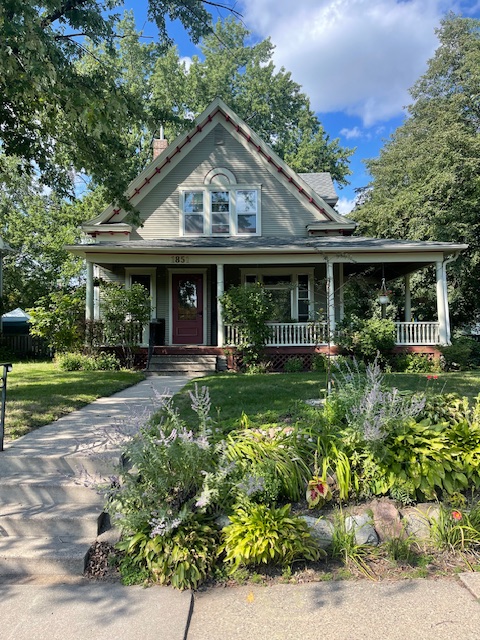
Our city house today: walking distance to a library, four bus lines and two colleges, and a short bike ride to the Saint Paul Grand Round. Photo by David Studer

I’ve always reveled in the creative expression of home, the furniture and wall hangings and house plants that reflect my moods and tastes. These days, I am grateful not only for the safety and security I feel at home but for the privilege of being able to afford a house at all.

I root where I am planted. Whether it’s an upper duplex in northeast Minneapolis, a rental house on the edge of Indian Mounds Park in St. Paul or the first house that my husband and I purchased, and subsequently detached from when two teenagers burned a cross on the front lawn of a Black family down the street: Home is structure for me, a physical location, a place where I can put my stamp and comfortably be myself.

I had breakfast recently with a friend who had returned from a summer in Finland, her home country. She talked about the relatives she visited, described a mass transit system that allowed her and her wife to get along without a car, spoke fondly of the concerts they attended and the greater sense of ease in a society less gun crazy and politically polarized than ours.

“So, where is home,” I asked her.

“Home is where your people are,” she said.

My people, literally defined — the family I was raised in — are either dead or have moved away. My three surviving siblings are scattered around the country (the brother who died in 1988 lived just blocks from where I am now). At 67, I have few older relatives left in Minnesota. My mother, father and stepmother died in fairly quick succession, and all during autumn, in 2015, 2017 and 2018. In fact, my only extended family in a state where people are known for staying put is one sister-in-law in Minneapolis, an uncle who spends half the year in Florida, a first cousin in a far southern suburb and another first cousin about two hours north, a DFLer who keeps up the good fight in what is now solid red Trump country.

After seeing my older son off to London for graduate school in August, I feel lucky to have my younger son and his partner just a 10-minute bike ride away.

I describe my closest friends as “intentional family” — the folks who are no blood relation but with whom I share a history, the ones who hung with me through the messes and mistakes of young adulthood. After a 40-year career, I rarely go anywhere in St. Paul or Minneapolis without running into some colleague or connection. I worked with my next-door neighbor at St. Catherine University, shared a cubicle with the neighbor behind me for seven years in a newsroom and knew the woman who lives kitty-corner from my house at Minnesota Public Radio, when I was an editor on its magazine.

So, yes, as my friend says, people constitute “home.” My friendly neighborhood — with its walkability to mass transit, college campuses, and both fun and functional shopping — also enhances my sense of community. I thrive on the convenience of urban living, especially at an age when I feel less inclined to drive and more inclined to do good for the planet.

My parents divorced when I was 14. My childhood home was sold and my foundation ripped away at too tender an age for an awkward, uncertain girl. Perhaps that accounts for my love of home now, my reluctance to travel much with my long-retired husband. As my own career winds down, I have a growing desire just to stay home. To cook and tackle projects. To read and chat with neighbors.

To redefine my purpose and until then, to be still.

When my husband presses me about why I won’t travel more, I hardly know how to begin explaining. Our six-year age difference and our differing parental roles, which made sense when the kids were young, have now become a chasm in our respective wants and needs. As a largely on-site parent, he worked at home; even when he earned a part-time paycheck, he was the one in town while I commuted to my family-wage job.

He loved being Mr. Mom, “but there were no breaks or paid vacations.” And even though I did enjoy raises and paid time off and validations for a job well done, I also spent years leaving home five days a week, including on mornings when I longed to stay back with the little boy in the footie pajamas who held his arms out as I headed to the car.

Being at home now is sustaining; it slows me down, allowing a reset from 40 years of pushing into the wind. There is much of the world I haven’t seen, large swaths of this country I’ve yet to cover. I dream about taking a train somewhere all by myself.

But for today, the simple pleasures of tucking in with a dog and a good book, learning how to cook tofu or repotting plants in my backyard while listening to a podcast are as much adventure as I want or need. Give it time, I tell my husband. This, too, shall pass.