Category Archives: Family

Evolving Reflections on ‘Home’

My husband and I raised our two sons in Northfield, Minnesota — a progressive, two-college town where I always felt safe, where we rarely locked the side door off the driveway at night, where our kids rode their bikes freely around town. Back when we sold our family home in 2013, I wanted to write an ode to the place where I had lived for 20 years, the longest stretch of my lifetime.

That house was home, full of two decades’ worth of meaning and memories, family and friends, a center of activity for sleepovers and potlucks, where boisterous boys and loving dogs (rest in peace, Skip and Lucy) were a dominant, delightful presence.

The small-town house in Northfield, Minnesota, where our two sons grew up: 20 years of memories. Photo by Amy Gage

No one else in the family seemed to share my nostalgia for the white Dutch Colonial with a three-season front porch, a black roof and red trim, built in 1900 within eyesight of Old Main at St. Olaf College. It “looked appropriate” to see two little girls dash out the front door, my younger son said after he showed the house to his girlfriend during a trip back to town. That was all he would concede.

Eventually, I moved on, too, giving my heart to the smaller, 1906-era empty-nest house my husband and I have now in St. Paul, with a quaint wraparound porch that I fell for on sight. My shifting allegiances make me wonder: Is it the house itself that makes a home? Much as I love the expanded, updated kitchen in my current place and the egress window in the basement that fills my workout room with natural light, are those amenities what have bonded me to this place? Or could I comfortably, given time, call any place home?
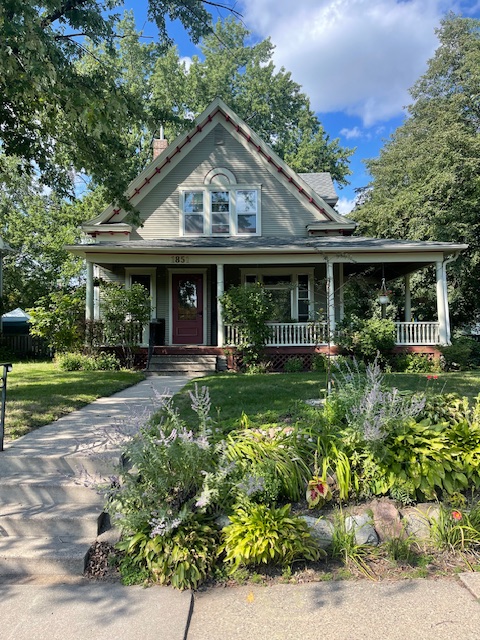
Our city house today: walking distance to a library, four bus lines and two colleges, and a short bike ride to the Saint Paul Grand Round. Photo by David Studer

I’ve always reveled in the creative expression of home, the furniture and wall hangings and house plants that reflect my moods and tastes. These days, I am grateful not only for the safety and security I feel at home but for the privilege of being able to afford a house at all.

I root where I am planted. Whether it’s an upper duplex in northeast Minneapolis, a rental house on the edge of Indian Mounds Park in St. Paul or the first house that my husband and I purchased, and subsequently detached from when two teenagers burned a cross on the front lawn of a Black family down the street: Home is structure for me, a physical location, a place where I can put my stamp and comfortably be myself.

I had breakfast recently with a friend who had returned from a summer in Finland, her home country. She talked about the relatives she visited, described a mass transit system that allowed her and her wife to get along without a car, spoke fondly of the concerts they attended and the greater sense of ease in a society less gun crazy and politically polarized than ours.

“So, where is home,” I asked her.

“Home is where your people are,” she said.

My people, literally defined — the family I was raised in — are either dead or have moved away. My three surviving siblings are scattered around the country (the brother who died in 1988 lived just blocks from where I am now). At 67, I have few older relatives left in Minnesota. My mother, father and stepmother died in fairly quick succession, and all during autumn, in 2015, 2017 and 2018. In fact, my only extended family in a state where people are known for staying put is one sister-in-law in Minneapolis, an uncle who spends half the year in Florida, a first cousin in a far southern suburb and another first cousin about two hours north, a DFLer who keeps up the good fight in what is now solid red Trump country.

After seeing my older son off to London for graduate school in August, I feel lucky to have my younger son and his partner just a 10-minute bike ride away.

I describe my closest friends as “intentional family” — the folks who are no blood relation but with whom I share a history, the ones who hung with me through the messes and mistakes of young adulthood. After a 40-year career, I rarely go anywhere in St. Paul or Minneapolis without running into some colleague or connection. I worked with my next-door neighbor at St. Catherine University, shared a cubicle with the neighbor behind me for seven years in a newsroom and knew the woman who lives kitty-corner from my house at Minnesota Public Radio, when I was an editor on its magazine.

So, yes, as my friend says, people constitute “home.” My friendly neighborhood — with its walkability to mass transit, college campuses, and both fun and functional shopping — also enhances my sense of community. I thrive on the convenience of urban living, especially at an age when I feel less inclined to drive and more inclined to do good for the planet.
My parents divorced when I was 14. My childhood home was sold and my foundation ripped away at too tender an age for an awkward, uncertain girl. Perhaps that accounts for my love of home now, my reluctance to travel much with my long-retired husband. As my own career winds down, I have a growing desire just to stay home. To cook and tackle projects. To read and chat with neighbors.

To redefine my purpose and until then, to be still.

When my husband presses me about why I won’t travel more, I hardly know how to begin explaining. Our six-year age difference and our differing parental roles, which made sense when the kids were young, have now become a chasm in our respective wants and needs. As a largely on-site parent, he worked at home; even when he earned a part-time paycheck, he was the one in town while I commuted to my family-wage job.

He loved being Mr. Mom, “but there were no breaks or paid vacations.” And even though I did enjoy raises and paid time off and validations for a job well done, I also spent years leaving home five days a week, including on mornings when I longed to stay back with the little boy in the footie pajamas who held his arms out as I headed to the car.
Being at home now is sustaining; it slows me down, allowing a reset from 40 years of pushing into the wind. There is much of the world I haven’t seen, large swaths of this country I’ve yet to cover. I dream about taking a train somewhere all by myself.

But for today, the simple pleasures of tucking in with a dog and a good book, learning how to cook tofu or repotting plants in my backyard while listening to a podcast are as much adventure as I want or need. Give it time, I tell my husband. This, too, shall pass.

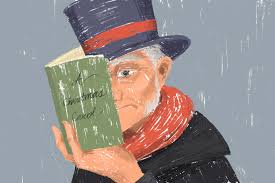
Christmas doesn’t matter anymore, but it’s still important

Christmas is upon us, and I am barely present for it this year.

Amid health scares, a whole lot of winter weather and adapting to my shift from full-time career to part-time work from home, my husband and I never bothered to buy a tree. In years past we got a free Douglas fir from a colleague at my workplace, but since leaving there I can’t justify the effort — or the money — to purchase a tree, cajole my husband into setting it up, decorating it and then reverse-ordering those tasks once the needles start to hit the floor in January.

The rituals don’t mean as much without children in the house, and the dogs are indifferent.

I’m giving gift certificates and cash to my two grown sons, and my husband and I agreed to forego material gifts in favor of joint outings during the week I am off between Christmas and New Year’s. Being tourists in our city, we call it, eating in restaurants we haven’t tried, visiting museums we never get to and haunting antique stores for just the right find.

As I did last year, I asked my siblings to forego their thoughtful but unnecessary gifts of chocolate, cheese and boxed fruit in favor of donating to one of my two favorites causes — reproductive freedom (Planned Parenthood North Central States) and hunger relief (Keystone Community Services). And I, in turn, donated to causes of theirs.

No, I’m not a Scrooge or a Grinch. I keep my wraparound porch trimmed with colored lights throughout the year and remain susceptible to the emotional uplift of “Silent Night” or “Hark the Herald Angels Sing,” hymns I well remember from my Methodist upbringing. But neither do I celebrate Christmas as a religious holiday any longer. (“I’m a Unitarian, not a Trinitarian,” I explained recently to a friend.)

And so in a year when I have turned 65, undergone a life-shifting career change and been hit with a medical diagnosis that forces me to reshape my approach to exercise, eating and self-care, I have neither the time nor the energy — nor the desire — to invest in the secular rituals that inspire many people to overspend, overconsume and overdo throughout the month of December.

Christmas Eve, our usual family gathering time, will be at the house that my younger son and his partner purchased earlier this year. “I can’t celebrate Christmas without a tree,” he told me recently at our monthly family dinner. So, I suggested that he host. “It’s their turn,” I told one of my older sisters, who likewise has ceded most holiday celebrations to her grown kids. My role is to cook chicken wild rice soup and bake spoon bread — and then allow a new tradition to unfold.

Aging changes the holiday season, or at least it has for me. I don’t need anything, so why ask for gifts? What I want (earrings, snowshoes, warm leggings, winter gloves), I would rather buy myself.

I am earning less than when I was working full time, which has me looking askance at all the stuff we distract ourselves with, the needless crap that eventually will end up in a landfill, like the Roomba hitting my feet during a recent meeting at a coffee shop. How hard is it to sweep the wooden floor?

I’ve recycled a dozen holiday catalogs that have shown up at my house unbidden, unwanted. Filled with cardigans, scarves, wool socks, monogrammed bathrobes, DVD collections of classic TV shows, dog- or cat-themed throw pillows and flowing tops without a waistline, the catalogs are clearly targeting women of a certain age and era.

Bathtub reading, if nothing else, worth browsing for the amusing T-shirts:

  • The Proper Term for ‘Senior’ Women Should Be Queen-Agers (Acorn)
  • Don’t Rush Me. I’m Waiting for the Last Minute
  • Never trust an atom. They make up everything.
  • I don’t mind getting older but my body is taking it badly.
  • I’m silently correcting your grammar. (Signals)
  • Moses was the first person with a tablet, downloading data from the cloud
  • 90 Percent of Being Married Is Yelling ‘What?’ From Other Rooms.
  • Underestimate me. That’ll be fun.
  • I sometimes wonder what happened to people who have asked me for directions (Shop PBS)
  • Don’t look back. You’re not going that way.

It’s all fine. It’s fun. But it’s a waste. The catalogs are full of the nothing-you-need stuff that make gift stores so seductive. How much will you pay for a scented candle or a pound of specially wrapped coffee beans that weighs only 12 ounces?

And yet: I was moved to tears a week ago during a Christmas concert at a historic Catholic church when my son’s partner, Tess, who has been singing since childhood, performed with the all-female Partners in Praise choir. They concluded the evening by walking down the aisle and stopping along the way to place a hand on the shoulder of a loved one. While the soprano and alto voices sang the Irish hymn “May the Road Rise Up to Meet You,” I felt tears spontaneously streaming down my face. Not because Tess’ voice was beautiful, though it is. Not because I was witness to how much she loves my son, and he her.

No, I wept for the little boys who are grown up men now, who have their own homes, their own lives. I cried for all the people who aren’t here anymore, the parents and sibling and sister-in-law and friends whom I can’t call up to talk to — though I long to have those conversations — and whom I, as an unconventional believer, am unsure I will ever see again.

Christmas is quieter than it used to be, and so I tell myself that is what I want. I say that I’m relieved not to navigate the politics and resentments of divorced parents and multiple households to visit, the strains of putting on a meaningful celebration for small children all while working and commuting and having too little time and money.

When I walk the half mile to Grand Avenue on Sunday morning and board the #63 bus that will take me to Unity Church-Unitarian for the “Small Wonders” service that acknowledges Christmas Day, I will be by myself. But I won’t be alone.

My mom, my stepmother, my father, my son’s godmother Peggy, my friend D.L., my beloved older brother, Fred: All will be with me — in my mind, if nowhere else. And that will be Christmas enough for me.

Why Old Women Make the Best Cooks

When the pandemic first hit in March 2020 and my office shut down, and everyone was scared to go outside, when a vaccine hadn’t been discovered yet and the retail shops and restaurants all had closed — with one diner and two coffeehouses in my neighborhood now permanently shuttered — I had no choice but to cook. I had to feed my family. I had to keep myself occupied, “busy” being my default way to cope.

Cooking became a way to exert control in a world that, overnight, morphed into a Twilight Zone episode. While other people drank more alcohol or gained 30 pounds or drove their pickups and SUVs faster, I knit scarves for friends and family members, discovered new streaming services. And cooked.

Red lentil soup from a Beth Dooley recipe in the “Taste” section of my local newspaper, a consistently reliable source of recipes. Sweet potato-apple stew from the New York Times cooking app (the most creative bottom line–builder a national news organization has discovered). Chicken wild rice soup from an amalgamation of recipes in a 20-year-old cookbook that parents at Greenvale Elementary School compiled and sold as a fundraiser when my younger son was there.

Now, as we face down the third or fourth variant in the third or fourth year of COVID-19, bars and restaurants are open again. Coffeehouses are crowded. And I am still cooking, this time because inflation has me earning less in real dollars than I have in years.

Although I have two dozen cookbooks, a recipe box with index cards from the 1980s, a drawer full of torn out recipes that I swear I’ll sort one day and that veritable New York Times cooking app, well worth the $40 annual fee, I turn most often to the white, three-ring notebook that I began assembling during those first weeks of the pandemic.

At 65, I am creating a newfangled version of an old-fashioned cookbook and finally teaching myself — trusting myself — to cook.

Cooking is an act of showing up in the world, of caring for ourselves and for others.

Beth Dooley, The Perennial Kitchen

My younger son has grown up to be body conscious, like I am — particular and intentional about what he eats. My older son, a weightlifter, seems perpetually pleased to be offered food. “Are you hungry?” has become my default greeting when he stops by.

Cooking and baking are gifts, meant to be shared. I keep homemade muffins on hand during the winter so I can thank the neighbor across the street when he clears our driveway with his snowblower. I dropped off a package of bars to the neighbor behind us as a small “thank you” for hosting a backyard gathering with homemade carrot cake, complete with sugared carrot shavings, to celebrate my 65th birthday on July 4. When I make beef stew in the crockpot with extra vegetables and more seitan than stew meat, I always package up a big serving for my younger son.

My neighbor Martha McCartney made my favorite carrot cake, complete with sugared carrot shavings, to help me celebrate turning 65.

My father was an attorney, and I remember my mother hosting dinner parties for his clients, “back when lawyers couldn’t advertise,” she liked to say. Beef stroganoff and duck with orange sauce were two favorite entrées. We kids would gather at the top of the stairs and sometimes sneak down for treats: bowls of salted mixed nuts, relish trays with olives and sliced radishes and tiny pickles, strawberry sauce made with berries from my father’s garden served over cheese blintzes from the Lincoln Del.

Those are happy memories, tinged with nostalgia and regret, from the years before my parents’ marriage fell apart in the early 1970s. My mother lost interest in being either a wife or a housewife and quit cooking, deeming it — incorrectly, I believe — as one of the societal norms oppressing women. I was a teenager then, living at home, and still wince at her embrace of Hamburger Helper, Jell-O with canned fruit cocktail and other convenience foods marketed as liberation, in keeping with the times.

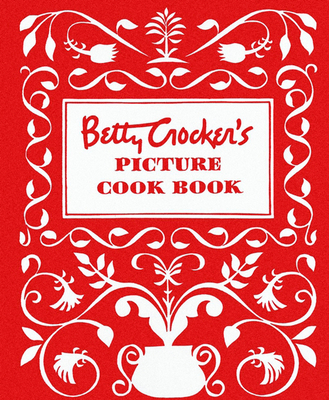
The Betty Crocker Cookbook was first published in 1950 and has sold more than 75 million copies.

If you can read, you can cook, the saying goes. And that’s how I started:

  • Reading recipes, especially in the venerable Betty Crocker Cookbook.
  • Following directions on packages of Kraft Macaroni & Cheese.
  • Gingerly using spices, based on whether I liked their smell.

Eventually I became a mother, in my early 30s, and had to learn to cook for kids. I dubbed myself a “housewife cook” back in those busy, money-conscious years — fully invested in my career but anxious also to be a Mom. Relying on advice from the likes of Working Mother magazine, I hid shredded carrots in spaghetti for extra nutrition, engaged the boys at my elbow when I baked banana muffins so they would be invested in the outcome, made grilled cheese sandwiches in a specially coated pan so the bread would turn a perfect golden brown.

Being a housewife cook means making do with what’s on hand, experimenting with ingredients that might go together, never creating a dish the same way twice. It’s the “no-recipe recipes” now made famous by Sam Sifton in New York Times Cooking, encouraging people “to improvise in the kitchen” and be less bound to precisely written recipes.

Leave it to a man to monetize a practice that women have been engaging in for years. “My grandmother, like many of her generation, was famous for the pseudo-recipe, a little of this, maybe some of that,” explains my sister-in-law Nicole, herself an accomplished cook. “Even the handwritten cards are near impossible to use to replicate anything without trial and error.”

That’s why old women make the best cooks — and conversationalists. Time has taught us the value of being fearless.

Cook a recipe once and you’re playing a cover song. Cook it four or five times, though, and you’re playing a new arrangement.

Sam Sifton, New York Times

As an old woman now myself, I’ve learned that experimentation in the kitchen is often worth the risk, and way cheaper than eating in restaurants. You put apples in the steel cut oatmeal because you need to use them up or chopped kale in the wild rice soup to justify the butter and whole milk that render it creamy and delicious. Preparing an egg dish for Sunday brunch means reviewing a recipe and the contents of the fridge, and then vamping. No cottage cheese on hand? Try ricotta, and it works!

That’s why I am creating my three-ring-binder cookbook, with printed recipes in plastic sleeves, to capture the improvisations that have made recipes my own. Even so, I leave room to write notes for ongoing adjustments and adaptations, much like The Best of Byerly’s cookbook full of neat, penciled notations I found at a library sale. That the Byerly’s cookbook is now online is more convenient, but a digital version will never tell me that Parmesan Dijon Chicken is “easy” and “very good” or that the cayenne pepper in the Shrimp Creole should be cut back.

“I don’t consider cookbooks as static things,” said a reader recently in an online discussion in Carolyn Hax’s intelligent advice column in the Washington Post. “In my mind they are meant to be notated, spilled on, dog eared.”

Every cookbook I own tells a story of relationships that influence my cooking: who passed it on or gave it to me as a gift.

When I asked my siblings about their own use of recipes, my sister Debbie pointed me toward a piece in The Atlantic sharply critical of Sam Sifton’s “no-recipe recipes” trend. In “When Did Following Recipes Become a Personal Failure,” from April 2021, writer Laura Shapiro claims that Sifton’s call to “make the act of cooking fun” recreates the Happy Housewife stereotype that duped middle-class white women of my mother’s era.

Sure, I can call myself a “housewife” cook because I never was a housewife. But I can enjoy the creativity and selflessness of putting together meals in my kitchen not only because I want to eat good tasting, healthful food but because I want others to enjoy it, too. Nothing about that threatens the feminist or careerist mindsets that have defined me.

I like the efficiency of managing a kitchen. Cooking, grocery shopping, putting my hands in sudsy water make me feel safe, make my life feel ordered, help me stay on top of the chaos that COVID and rising crime rates and visible climate change induce. Cooking and sharing food connects me with generations of women — my stepmother, Dorothy, my Aunt Mary, my sister-in-law Peggy, all of them gone — who cooked for me and my family, who opened their kitchens in all their messy, miraculous, sometimes maddening glory. And who, in the process, showed me their humanity. And their heart.