
A version of this story appeared on June 10, 2025, in Next Avenue, a national publication for older adults published online by Twin Cities PBS.
When I left full-time work in September 2022, two months after turning 65, people naturally asked me how I liked retirement. Once I’d barked out my disdain for the R-word — chin lifted, spine stiffening — they learned not to inquire again.
In fact, the anxiety masked as rigidity was less about them than me: Retirement is a daunting prospect for us Baby Boomers who link our identity and sense of self with work.
I still don’t call myself “retired,” even though I work only a quarter-time job and a handful of contract gigs. But that’s about to change. I’ve given notice at my job, and my first grandchild is on the way, along with some shared responsibility for infant care.
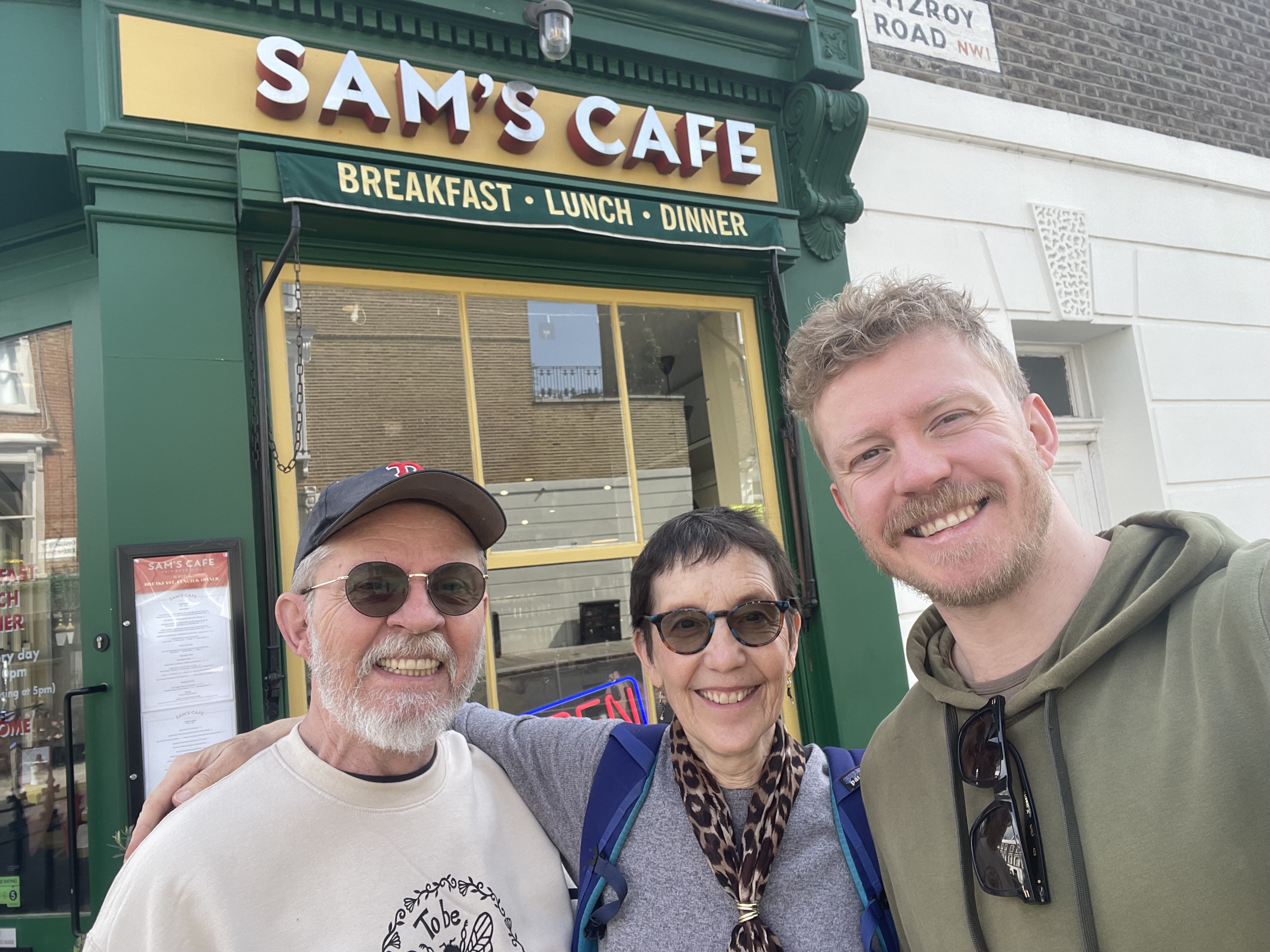
Since my husband and I had planned an overseas excursion this past April to visit our older son, who is studying at London Film School, I decided to approach the trip — only my second time in Europe — as practice for the less structured, more selfless life that is awaiting me.
Here’s what I learned.
Lesson 1: Lose Track of Time
We go-getter careerists live and breathe by our agendas. This holds true for me even 32 months after leaving full-time work. My quarter-time job, my freelance assignments, even fitness classes and coffee dates with friends: All fill my calendar at least a month or two out from where I stand today.
The decision to avoid sticking to a rigid schedule in London, aside from ticketed events and planned outings with our son, was an exercise in letting go — both a relief and a discipline all its own. As we planned the trip, I insisted on only one “anchor activity” a day, forcing a spontaneity I rarely allow myself to experience.
My favorite times were early mornings, while my husband was still asleep. With no deadlines to hit or dogs to be walked, I wrote in my journal. Sent postcards back home to friends. Read the library book I had downloaded on my iPad.


I refused to check work emails, relying on the out-of-office message that told people I was away, and tried to sit with the discomfort of being unproductive. The clock dictates my day, and it took effort to silence the pragmatic voice that drives me, even on weekends: “It’s 10 a.m., and you’ve accomplished nothing.”
So what? No one was monitoring my output or keeping score on how deeply I dug into London’s vast cultural scene. Free to let the days and evenings take their course, I felt how nourishing a less hectic life can be. No coincidence, I slept longer and more deeply in a stranger’s British flat than I ever do at home in my own bed.
Lesson 2: Get Out in the World
As luxurious as it was to hang out some mornings, I also had days when I left my night-owl husband sleeping at the Airbnb and struck out on my own. March and April are London’s least rainy months, and a stretch of sunny weather made it a joy to start the day walking the streets or seeing the view atop an iconic, red double-decker bus.
Pro-tip: Google Maps and the Transit app were my best sources of navigation, but I also felt more comfortable being out alone in the daytime once I’d been in town long enough to learn my way around.
One of my fears about full-on retirement is losing regular contact with younger colleagues and allowing my world to shrink. It’s become tempting as I age to stay home with a good book and a homecooked meal, or to settle in with my pets and watch Netflix or women’s basketball and tell myself that is enough. Or that it’s safer.


So, following the lead of a widowed friend who goes alone to movies and concerts and routinely travels on his own, I spent the better part of one morning at the Tate Britain — one bus ride away — browsing the museum store, strolling through galleries and relaxing outside the cafeteria with my book. Yes, I was alone, but I was also among people.
Given my career in journalism and communications, I can easily strike up conversations with strangers, even in a city with thick English accents. The trip showed me how to carry my professional skills into retirement, when I no longer can wrap myself in the security blanket of a title and role, with a ready answer to the question: What do you do?
Lesson 3: Dress to Please Yourself
During my decades as a business reporter and later a marketing-and-communications director, I dressed up every day. Looked and acted the part of a career woman. I enjoyed shopping and the creativity of assembling a wardrobe — mixing and matching outfits, coordinating earrings, scarves and shoes — but toward the end of my career, especially after COVID, “dressing for success” felt like donning a costume. It wasn’t me!
In London, I had no one to dress for but myself. My comfort, the weather and how far I would likely walk that day dictated what I wore. That meant:
- Comfortable shoes with heel support and a roomy toe box for the 17,062 steps I averaged during my nine days abroad.
- Little to no eye makeup, even for “Carmen” at the Royal Opera House, because it could smudge in the wind and cold.
- Refreshing my short razor haircut the day before we left, so I could fluff it with my fingers after wearing a hat for warmth or sun protection.
- Ditching the more fashionable purse for a sturdy backpack, both to free my arms while walking and to discourage bag snatchers.

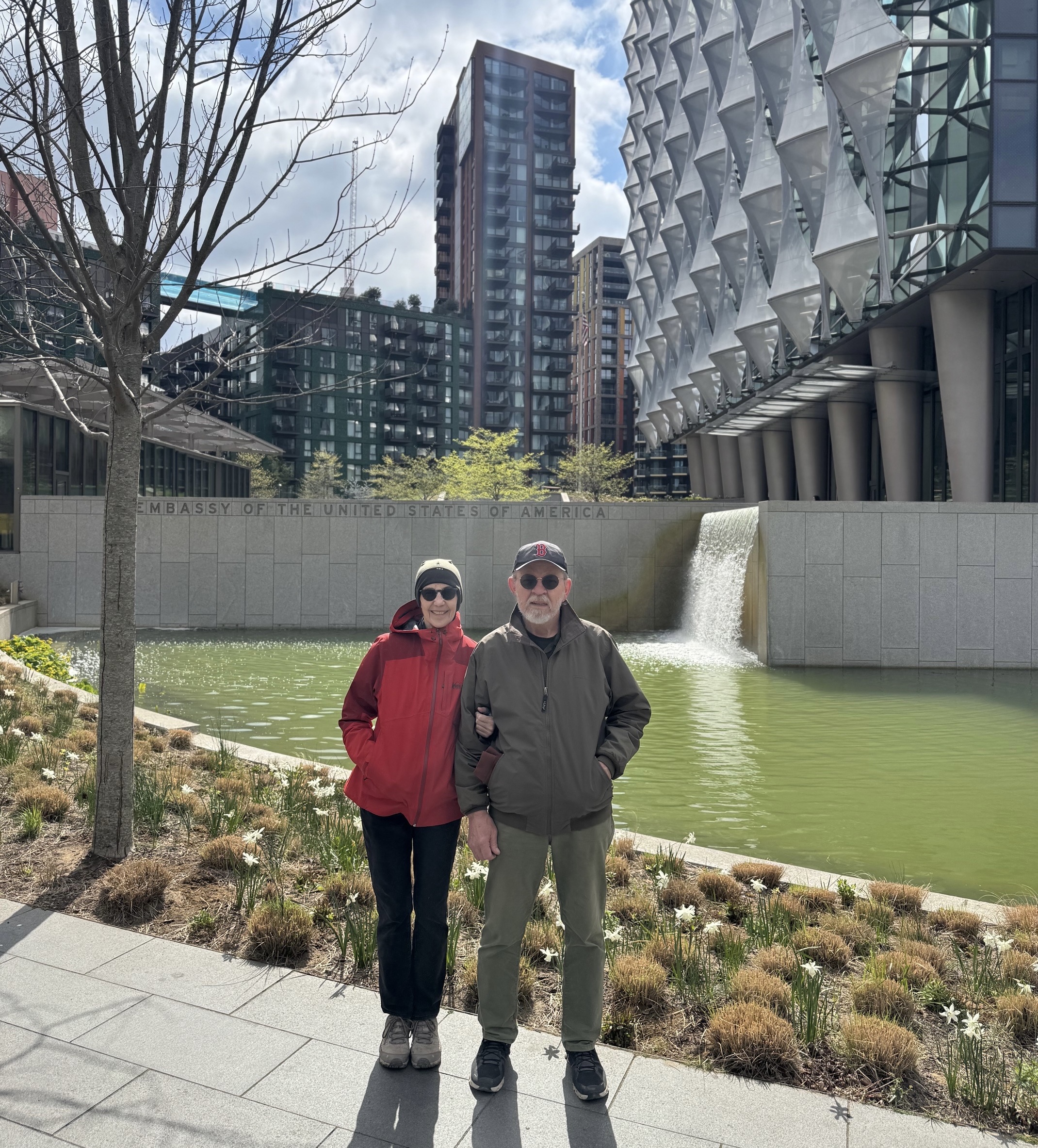
Now that I operate from a home office, I rarely dress up anymore. “Athletic casual” is how my younger son defines my style. Retirement allows that freedom — to quit comparing myself with younger women and dress for the age and body type I am today. And for movement, the best antidote to low energy and stiff joints.
Lesson 4: Keep Learning
My gradual glidepath to retirement these past two and a half years has given me time to adjust, both financially and emotionally. Of course, I worry: Will we have enough money? Who will I be without work? Will volunteering and family life fulfill the sense of purpose that a career has given me for decades?
A trip to London is not exactly high adventure for a white American with English roots. Still, I find it fitting that a foreign country became my place to try out a different way to live. Retirement is a bold undertaking, a journey toward a different land. My passport — my practice in the coming months — will be to remember and refresh these lessons learned.


 The Middle Stages: Between Midlife and Old Age