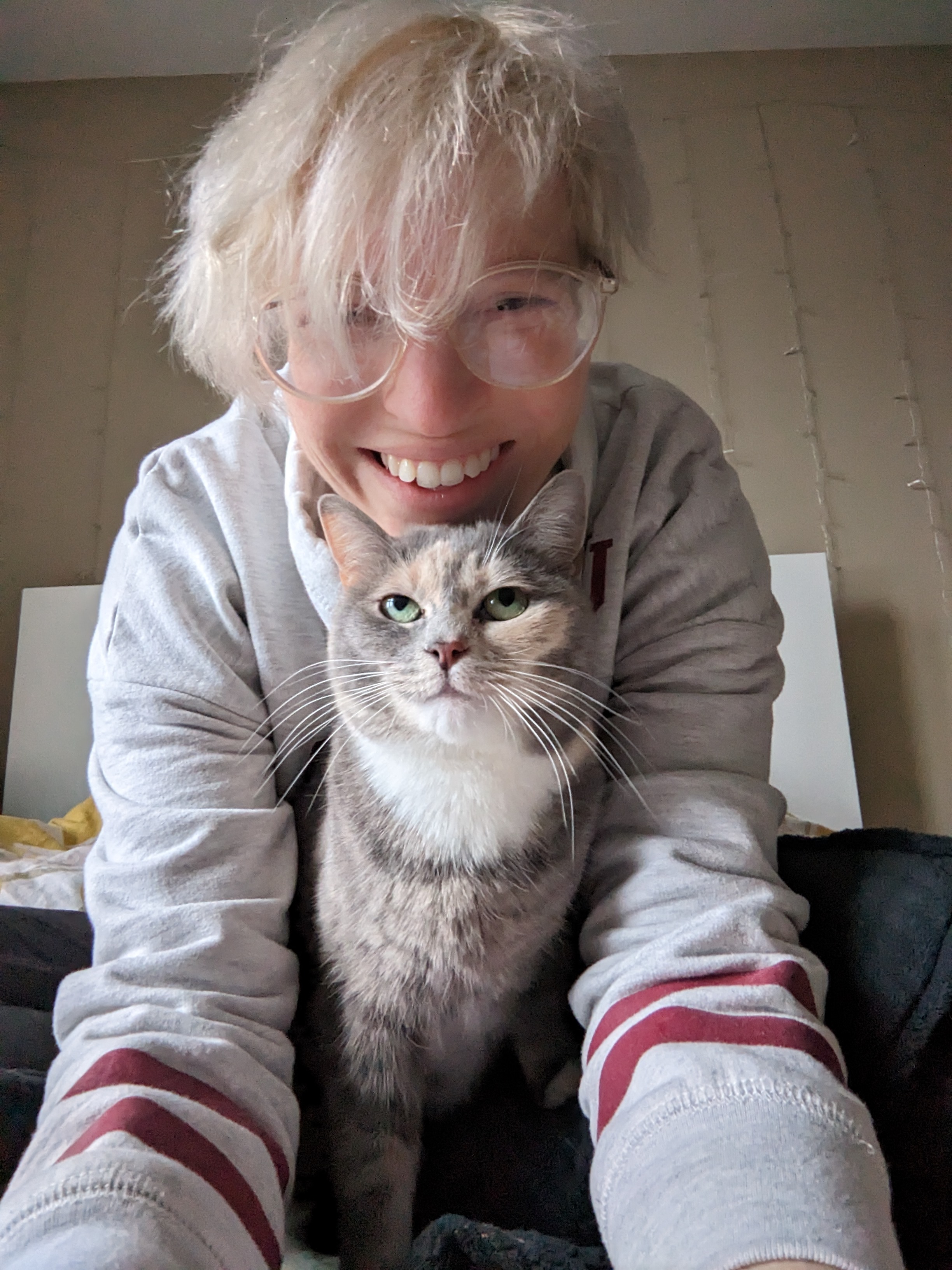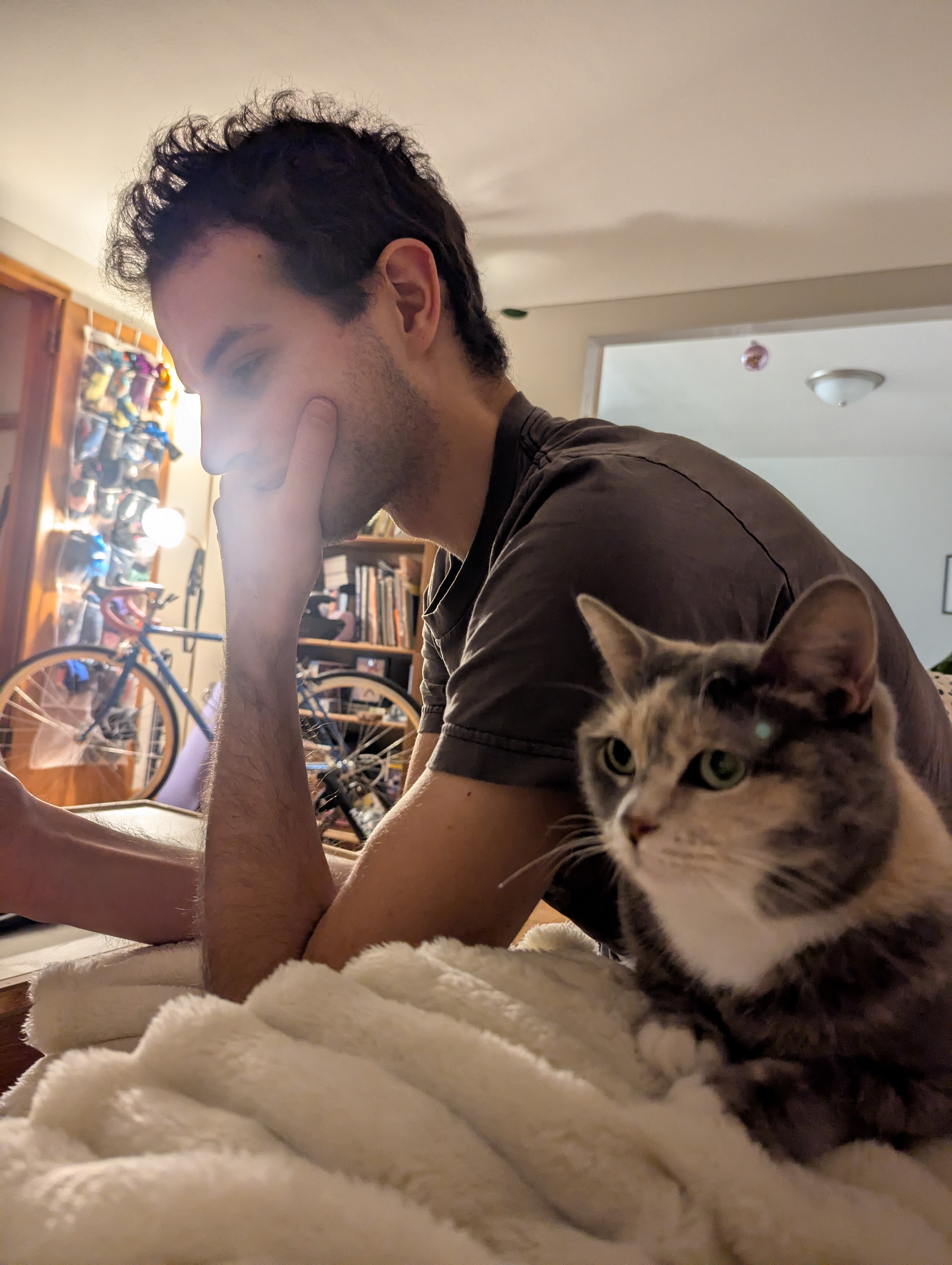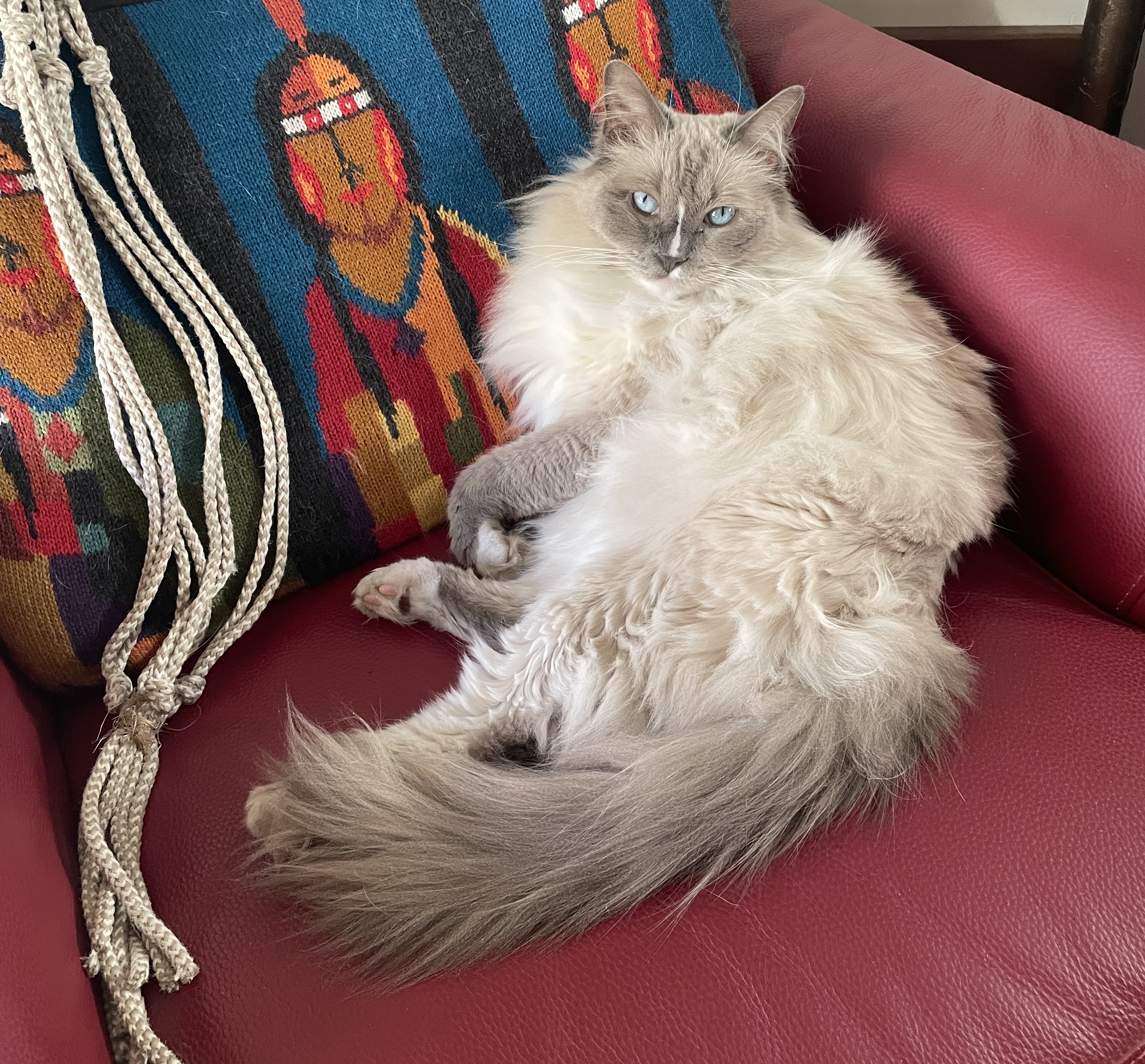
Can a Dog Person Learn to Love a Cat?

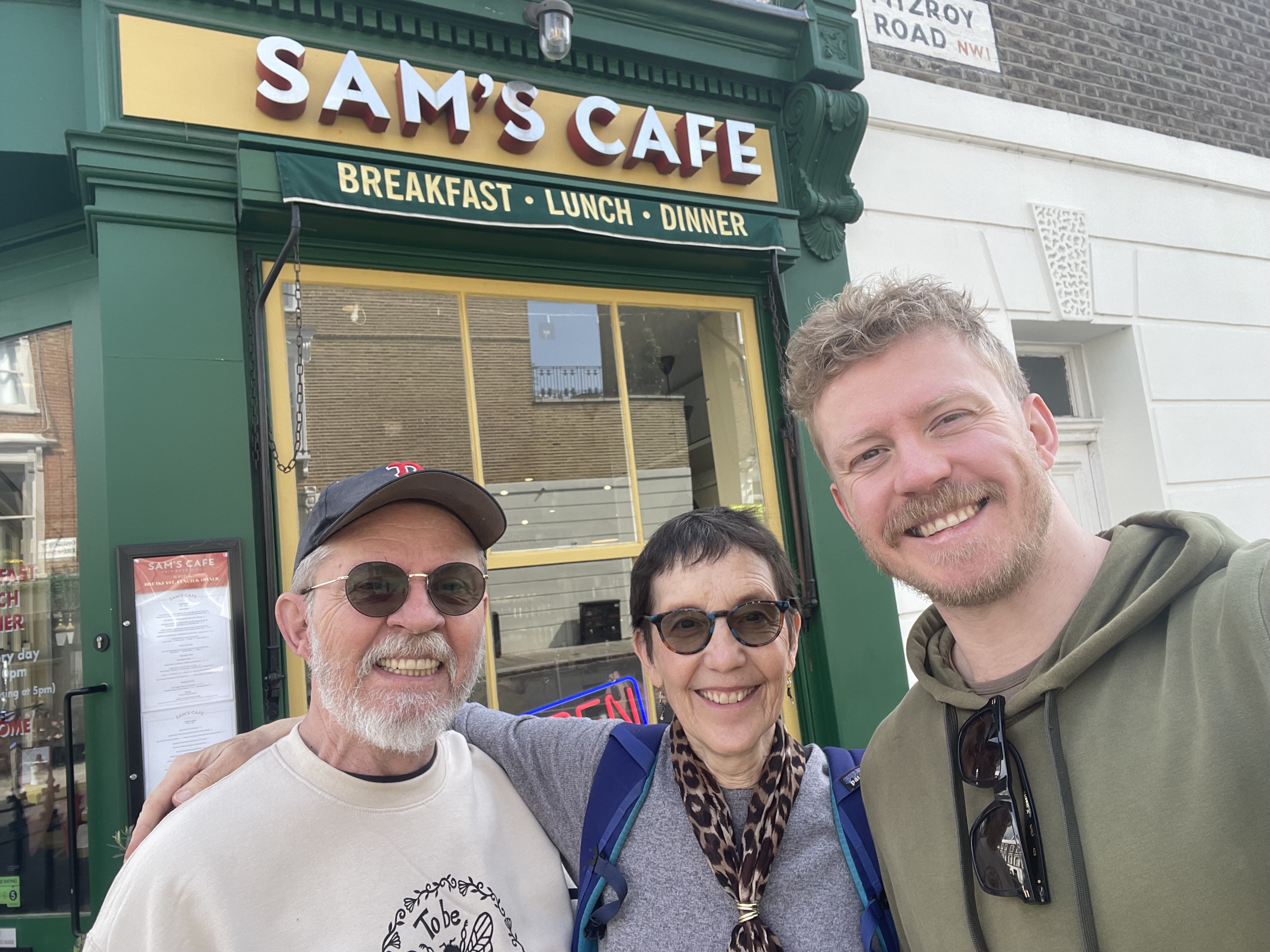
I gained what I thought was going to be temporary custody of a cat last August, when my older son, Sam, left Minneapolis for film school in London. I’m allergic to cats, and after the first of two painful sinus surgeries when I was 33, an ENT specialist told me to get rid of the cat I had and never own another one. But here we are.

The plan was for Q.D. — Quaid Douglas (my son’s riff on the Arnold Schwarzenegger character, Douglas Quaid, in the 1990 version of “Total Recall“) — to stay at our house through the fall, and then my husband, David, would fly the cat to London in early December, when Sam was on break from school.

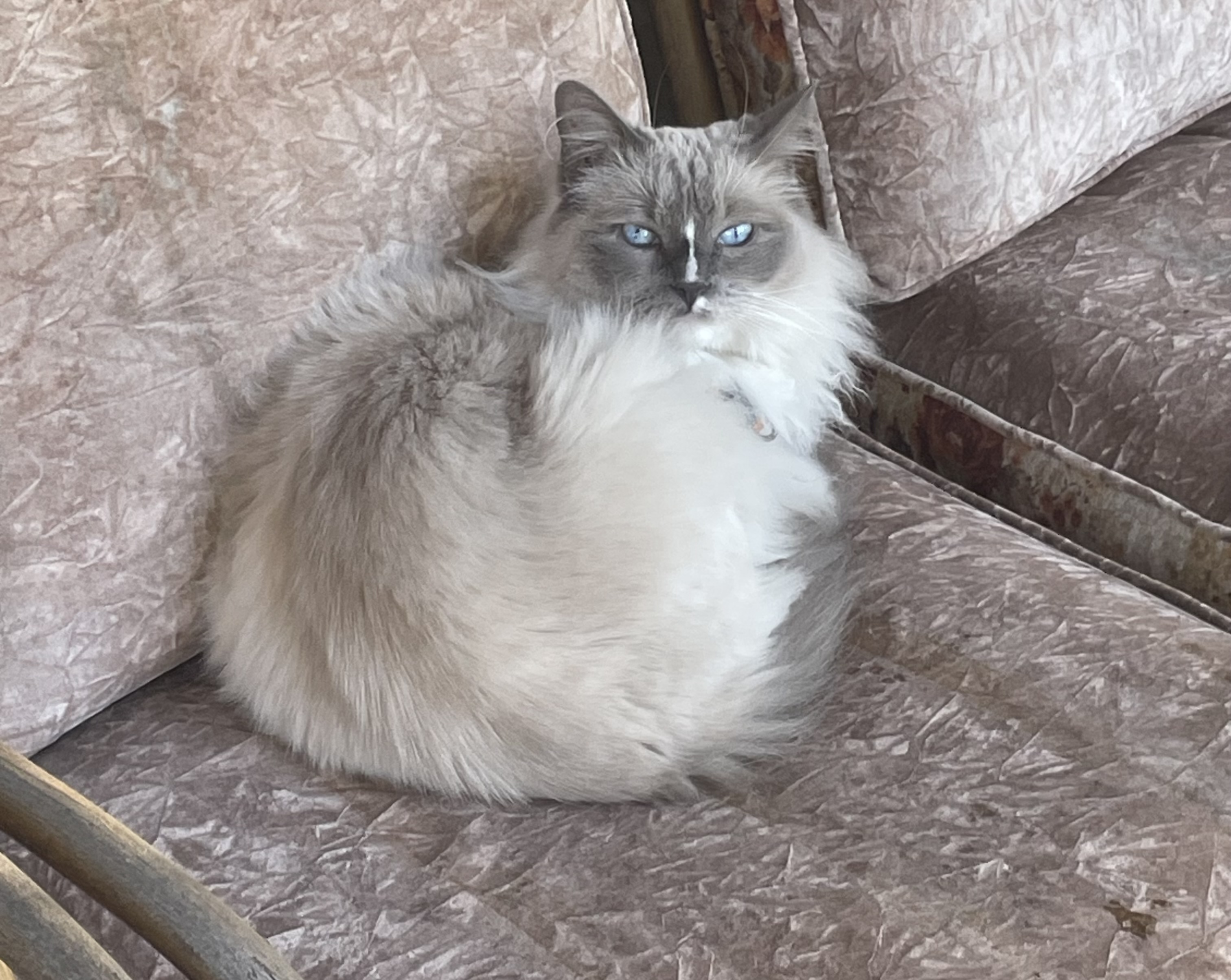
Months later, after learning how difficult English authorities make it to bring a pet into their country, Q.D. is part of the household. He has navigated a relationship with our two run-the-show dogs, all the more remarkable because Q.D. was born a tripod, with only a flipper for his right front leg. He’s quit running away from David, and now that I have newly prescribed medication for my allergies, I am happy to have him hang with me wherever I am working, cooking, reading or doing yoga (he likes to lick my feet).

Still, as easygoing as Q.D. (sounds like “cutie”) seems to be, I steadfastly remain a dog person. I happily walk Mia and Gabby every morning, whatever the weather. I am comforted when Mia sleeps with me or when either dog shows affection. I find dogs more interesting than cats.

So, when J.D. Vance’s past remarks about “weird” and “miserable” childless cat ladies resurfaced during the last presidential cycle — inspiring an amusing New Yorker cover and accusations of “sexist tropes” — I started wondering: What do people, women especially, see in cats?

The articulate, effusive responses I got to that question revealed a side of friends and colleagues I had never seen. As one woman said: “Cat people do not get asked enough to talk about their cats.”

Cats know their own minds

This theme came up several times, starting with my childhood friend Janey, who recently has had to put down two elderly cats. “They choose you as the owner,” she told me, and I wasn’t sure what that meant until Q.D. started waking me at 5 a.m. to feed him or showing up when I was sitting in the basement to watch TV.

Once he got over losing Sam, Q.D. recognized which member of the household was more likely to feed him, rub his tummy and comb out his Ragdoll fur, and he attached himself to me.

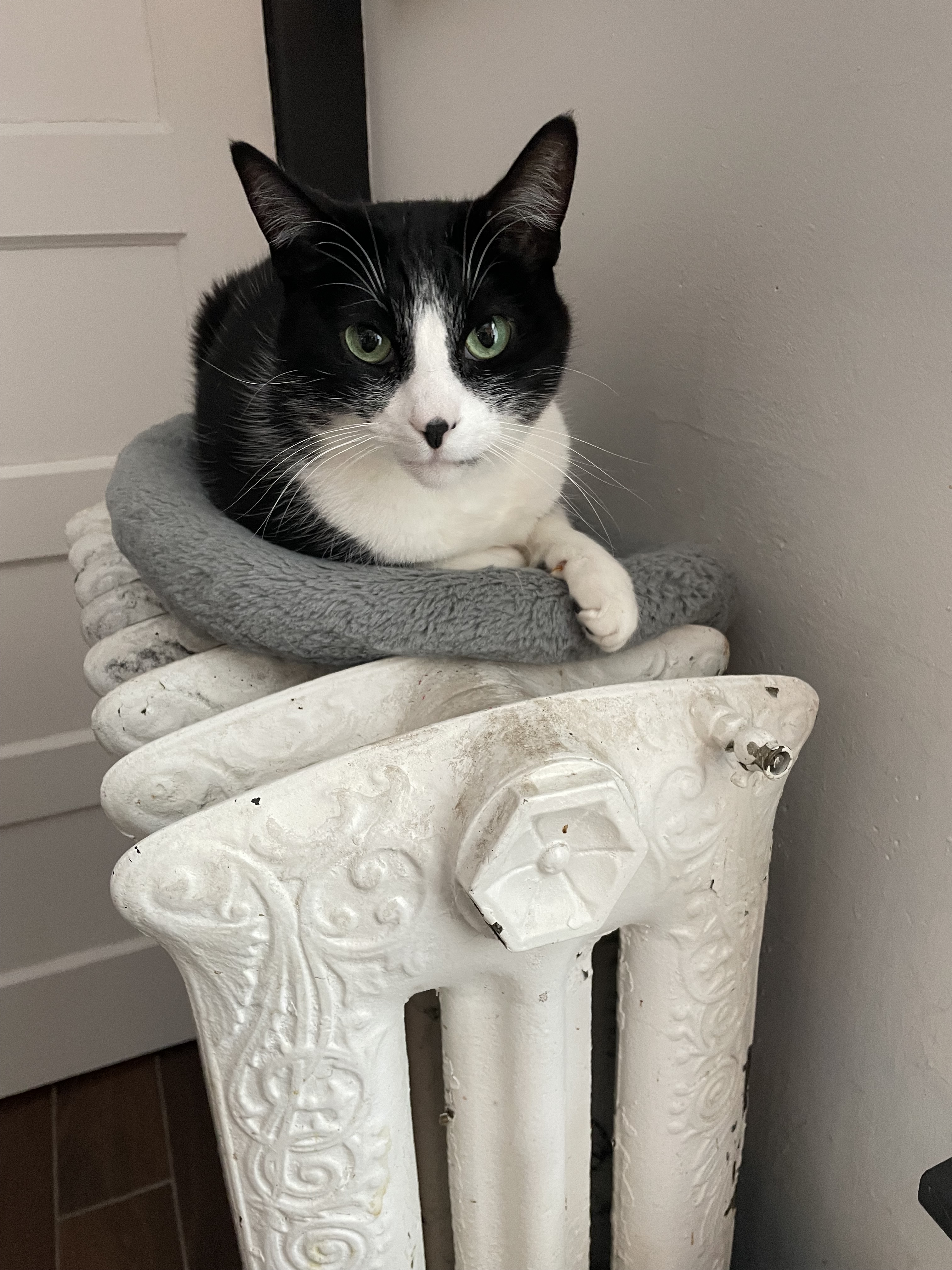
“I admire cats for their independence,” said my sister Debbie, who has four cats, including a former feral cat named Oscar Wild. “I think they see us as living with them, not the other way around, and although they can be affectionate and loyal, their goal is to get me to do what they want.”

That struck me as hyperbole until I realized, some days later, that I had begun to stop every week at an Aldi on my way back from Meals on Wheels because the store carries affordable cans of tuna that the cat will eat. Q.D. likes to go outside early in the morning, and so even if I have work or other chores to do, I now station myself at the table by the back door so I can hear his meow when he wants to come back in.

“You can’t train a cat,” says Alisa from my weekly women’s group, “but you can adjust your lifestyle so that the cat is happy enough that you improve each other’s lives.”

Cats are different from dogs

Though I didn’t request comparisons to dogs, I got a lot of them when I asked folks about why they like cats. Forget Democrats and Republicans, or urban and rural. Society tries to divide us between cat people and dog people, though I carry the traits of both, according to a recent Web MD survey.

“I heard somewhere that the difference between dogs and cats is that dogs are trainable,” Alisa wrote in an elegant ode to her cats. “Dogs are food motivated, they have empathy — they’ll adjust themselves to please you. Adopting a cat is like inviting a wild animal to your home. The correct perspective for this endeavor is to not have expectations.”

My longtime friend Elizabeth is staunchly pro-cat and still grieving the loss of her beloved Lily to cancer. What I perceive to be exuberance in dogs, she finds gross and and over-eager. “Unlike dogs, cats don’t slobber or sniff your crotch or knock you over, behaviors I have never gotten used to in dogs, apologies to dog lovers,” she wrote.

Peggy, a former journalism colleague, has had eight cats — “a long line of cats” — and initially chose them over dogs because they better accommodated her erratic schedule as a young reporter. “My soul cat was Rascal, two cats back,” she explained. “This can happen with cats or dogs — that one pet you link souls with in some not understandable way. He was the kind of cat of whom people say, ‘He’s like a dog.’ Which offers a window into how cats and dogs are stereotyped.”

Like all of the cat lovers I queried, Elizabeth is fascinated by these “regal beasts” and their “lion-ish” qualities to a degree that eludes me, perhaps because Q.D. is a skittish, shy loner. “When people say cats are aloof, I say, yes, they can be,” she said. “But like any pet, they all have their personalities, and the joy of having them as family members is discovering who they are. Dog lovers are correct: Cats are in charge. The only way to bond with them is to respond to them as they wish to be treated.”

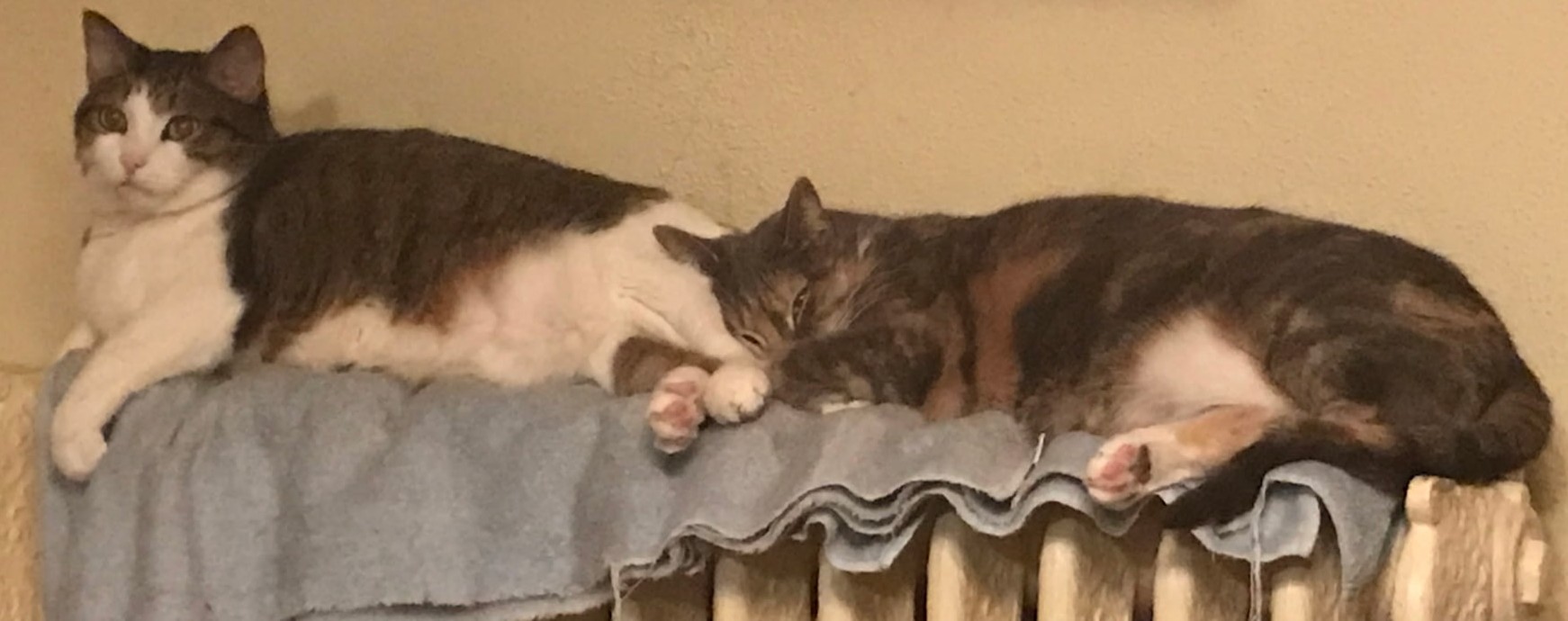
Mosley and Lily, my friend Elizabeth’s late cats.

I don’t want to work that hard for an animal’s attention. Dogs are blessedly simplistic, which suits my already hectic life. Creatures of habit, they are satisfied with the daily pleasures of evening meals and morning walks. They come to me, rather than requiring me to analyze how we should interact.

Not so with cats. “Being a cat roommate or caregiver honestly feels like a better title than just owner,” says Stina, my colleague at Streets.mn, “and I’m definitely not a cat parent. We are roommates, but she doesn’t clean or pay rent.”

Cats get you through

I didn’t think to ask people why they have pets, but the stories they told me point toward an answer: We enjoy the companionship and loyalty, be it the unconditional love of a dog or the more complicated affections of a cat. Several people described how cats had gotten them through difficult life stages.

Stina, 32, talked about the compromised cat, Stevie, she adopted during her 20s. “I had lost my sense of purpose,” she said. “I was partying a lot and working entirely too much, and I decided to adopt a senior cat to force myself to be home more and slow down. Stevie was missing half her teeth, had some cognitive delays and a gravelly meow.  She got me out of my depressive episodes, because I knew that Stevie needed me. My role was to give her the best end-of-life care she could get.”

She has since rescued Cali, a calico cat, whose temper — “hissing, spitting, biting, snarling” — had discouraged potential adopters for four months. Once Stevie, the senior cat, died, Stina decided to take a chance on Cali. It took months, but the cat who initially refused to meet her gaze eventually slept on Stina’s pillow and nestled on her shoulder.

“Maybe it was a trauma bond, maybe we just needed time,” Stina mused. “But in being trusted by her, I learned to trust myself. She taught me that I can be both fiercely independent and soft and cuddly.”

Amity, whom I know from social media, promises on Instagram: “You will see cat pics. Maybe social justice. Or public transit. Mostly cat.” Her cat, jokingly renamed Chad “for my asshole co-worker” during the COVID lockdown, is getting her through a rough patch in her marriage.

“My husband and I are separated, and Chad is here for me all the time now,” Amity said. “I come home from work and my place doesn’t feel empty, because there’s a 12-pound beast at the front door meowing for food. I can’t really explain it; my apartment would feel less like a home without him.”

And then with cats, there’s the matter of convenience. “I’m a dog person from childhood. But with a busy lifestyle, and preferring animals that can largely take care of themselves, I am also a cat person,” wrote Melissa, a committed community activist.

Maybe I don’t have to choose between my dogs and the cat, the animals I know and the one I am still learning. Instead of picking a favorite type of pet, I could allow all three to help me navigate some exciting but scary changes in the year ahead.

“You turn around one day, and you’re old,” I told a colleague, a man barely half my age, as we discussed my difficult decision to leave a part-time job that I have really enjoyed during my post-career period of semi-retirement.

“Your peers are retiring,” I said, “and family obligations — whether an aging husband or a coming grandchild — continue to reshape what will be expected of you.”

My younger son’s baby is due on July 31, and I’ll be leaving the job in August. What a summer it will be! On those days when I feel incompetent, when I’ve forgotten how to calm a screaming infant or can’t differentiate a perennial from a weed in the neglected garden, I can turn to the beings who make me feel needed and loved.

And who maybe will teach me how to play again. To take life (and myself) just a little less seriously.

Why Seniors Should Ride Mass Transit

Before we get rolling, understand that my recommendations will apply to older people only if they are physically mobile and relatively fit — and lucky enough to live in a city or community where mass transit is readily available. Being a regular exerciser would be a plus, but what I’m proposing will help people of any age get there.

And my proposal is this: Ditch the car or SUV as often as you reasonably can and commit to trying what we multi-modal enthusiasts call active transportation. That means getting around by foot, bike, bus or train — or some combination of the four — as often as you can.

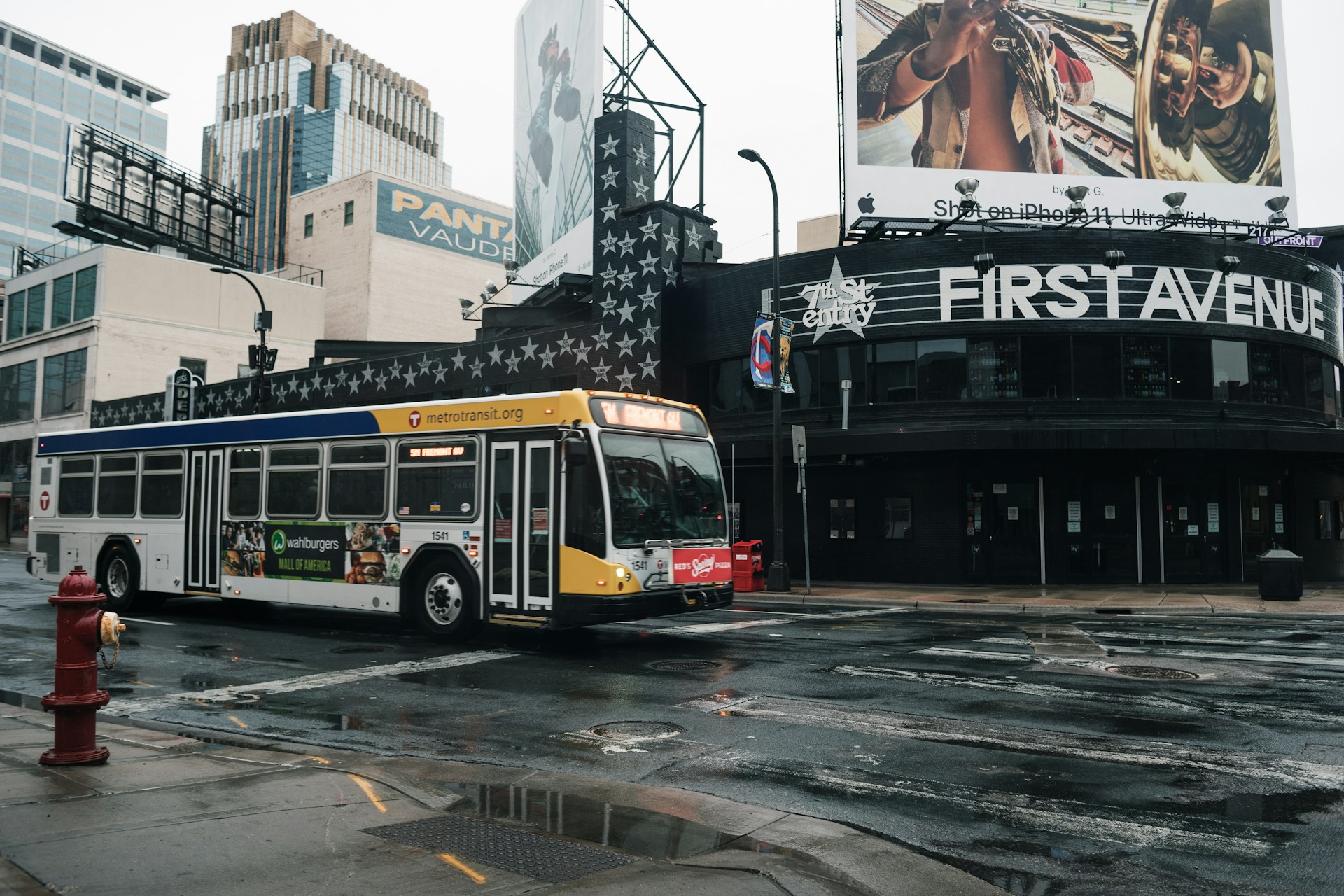
I use the term “senior” because that is how Metro Transit, my system in the Twin Cities, defines the fare structure for people who are 65 and older. As of January 1 of this year, the bus fare for any senior — call yourself “older,” an “elder” or “young-old,” if you prefer — has dropped to a buck a ride, including during the weekday “rush hours” that COVID rendered almost meaningless.

“We’ve seen travel patterns change,” says Lesley Kandaras, general manager of Metro Transit, who rode every bus and train route during her first year on the job. “We no longer have those weekday peaks of ridership in the early morning and the late afternoon.”

A Metro Transit bus in downtown Minneapolis. Photo by weston m on Unsplash

Transit fares includes a transfer window of two and a half hours, meaning I can meet a friend for a leisurely coffee or attend a yoga class and swing by the grocery store afterward and still get back home on only a dollar.

You can’t drive that cheaply. More importantly, driving robs you of exercise, contemplative time and contact with the outside world, all of which I find to be essential as I age. For those who balk, who say they don’t have time to ride a bus or train, who claim that driving is simply faster and more convenient, I agree with you. It’s why almost 92% of all households in America have at least one vehicle (the most popular being some type of truck).

But consider the following reasons — beyond the obvious value to our warming climate — why active transportation will help sustain you in body, mind and spirit.

No. 1: You exercise more.

I spent a total of $4 the other day riding the bus to and from my volunteer gig at Planned Parenthood North Central States (Route 63 there and 87 back) and then to the iconic Riverview Theater in Minneapolis to see the Oscar-winning “Anora” (don’t bother) with a friend (Route 21).

One route is half a mile from my house, the other five blocks and the third barely two blocks. I’d have saved 60 to 90 minutes of travel time had I driven. But I’d have walked far fewer steps than the 15,000 I amassed that day, and I would have missed the chance to really see my city: to greet people on the sidewalk, chat with a bus driver, notice the colorful murals on the sides of old buildings. To be present in a way you can’t be in a car.

Half of all Americans fail to get the recommended 30 minutes a day of physical activity, according to the National Library of Medicine, and those numbers decrease for both aerobic and muscle-strengthening exercises as women and men age. Using transit can help, because it invariably involves walking: to and from the stops and, in my case, to the next stop — or the one beyond that — if the bus or train is running late.

No. 2: You forge your independence.

My husband and I deliver Meals on Wheels every Friday, and we see plenty of old people who no longer have the physical capability to leave their apartment without assistance.

I remember this well with my own parents: Mom eventually was confined to a room, and my dad, though never wheelchair-bound, gradually lost the ability to pursue the activities he enjoyed, including jogging, golfing, skiing and even walking outdoors. Much as I fear losing my mobility, I recognize the time will come when I no longer can stride to the train station or run to a waiting bus.

That’s why I am grateful to be able to use mass transit now. It keeps me healthy and helps me feel part of the world at an age — post-career — when people’s worlds start to shrink. I feel more independent the less I rely on a car, and I get to meet people I otherwise might not encounter, including the folks I chatted with (below) during opening day festivities for the Gold Line bus rapid transit that now serves downtown St. Paul and the eastern suburbs.

No. 3: You engage with the elements

Why live in Minnesota if you shrink from each season’s particular joys and challenges? Earlier this year, on the coldest day of winter, the dental receptionist and mammogram technician were astonished that I had bused to my healthcare appointments. I was equally mystified why they would scrape their windshields and drive on icy roads.

To prove my point, I drew up a list of practical tips for riding mass transit, whether the weather is below zero or cresting 100 degrees. Chief among them: Learn the tools to plan your travel. (ProTip: The Transit app is great!)

How people dress for a bus ride when it’s minus 4 degrees.
  1. Exchange mobile numbers with whomever you will be meeting. Buses and trains, at least in my town, often run slightly off schedule.
  2. Protect yourself from crime by investing in a sturdy backpack so you can walk with your arms free and keep valuables out of sight. I’ve been annoyed by loud music and occasional public drinking on a bus, but no one has ever threatened me. The light-rail trains can be intimidating to ride, with less access to a driver. But Metro Transit has reduced trains to two cars — removing the middle car, where drug use was often visible — and begun employing trip agents who check fares and provide a reassuring unarmed presence.
  3. Pack a water bottle, Kleenex (especially useful in cold temperatures) and sunscreen, important in any season. An extra hat or scarf during the winter and a bill cap to shield your face from summer sun are also useful.
  4. Catch up on your reading. I often stuff newspapers inside my backpack, and I read my digital subscription for the New York Times or a book I’ve downloaded on my iPhone.

No. 4: You get to practice patience.

Transit ridership falls off after age 55, according to Metro Transit research, and is miniscule for people 75 and older. But that 20-year window is a time when many of us, if we’re lucky, still have relatively good health. Kandaras, the general manager, hasn’t researched the question of why seniors stop riding transit, “but we want to make it more attractive to adults who are older,” she says.

I can think of several incentives to get my peers out of their vehicles:

  • The reality that driving gets harder as your reaction time slows, and people seem to be driving ever faster these days.
  • It feels good not to be contributing to the carbon emissions that are killing our planet. In fact, says Kandaras, one group of older adults “said to hit home with climate.”
  • Mass transit is more calming than driving. You can read, or just watch the world go by.

That last reason is the most compelling for me. After an adult lifetime of pushing, achieving, trying to live up to expectations, doing what, in hindsight, feels like too much — likely because I no longer can multitask — I appreciate the chance to sit back and relax while I get where I need to go.

“Leave the driving to us,” the old Greyhound Lines slogan said. It was coined in 1956, the year before I was born, when the U.S. automobile market was starting to boom. Turns out, the slogan was meant to woo people who had the option to drive, which is exactly what transit agencies must do if they want to return to pre-pandemic ridership levels.

Mass transit will never win in an argument about convenience, especially among middle-class people who own a car and, therefore, have choices. But peace of mind? Any of us, at any age, could use more of that.

Dry January: Don’t Confuse It with Sobriety

I had never paid attention to Dry January, now winding to a close as “Feb Fast” winds up, until a colleague reached out before the New Year to tell me he was “sober curious” and intended to stop drinking for a month. He had seen my reference in an earlier blog post to being sober and was looking for support and affirmation, which I happily provided.

That’s what those of us in the recovery community are called to do.

Since then, I’ve been awash in information about Dry January, from recipes for mocktails — my own go-to is orange juice and club soda — to guidance about how to “cut down” if you’d rather not quit outright (“Not Drunk, Not Dry,” a New York Times headline calls it) and what to tell people who wonder why you’re not drinking. Apparently “that’s my business” doesn’t suffice, especially at a work function.

“If you decide to quit alcohol for a month but still have the identity of a drinker, then any change can feel unsustainable.”

Amid all the podcasts and magazine articles and the interesting statistics — one third of adult Americans participate in “some form” of Dry January, according to Newsweek, while nearly half of young adults try to abstain — have come two serious, significant milestones:

  • The U.S. surgeon general issued a report in early January linking any use of alcohol to a greater risk for cancer. That led one wine aficionado (otherwise called an oenophile, which I won’t pretend I can pronounce) to decry the warning as a “very unnuanced, binary solution to what feels like a very nuanced problem.”
  • I celebrated 15 years of sobriety on January 10, 2025, a hard-won victory for which I am humbled and grateful — and, yes, not a little bit proud. Acknowledging and accepting myself as a problem drinker (say it, an alcoholic) remains a daily practice of outreach and introspection. And it is something entirely different than gritting your teeth and giving up alcohol for a month or a few weeks, or even a year. Trust me, I tried.

“If you decide to quit alcohol for a month but still have the identity of a ‘drinker’— physically, emotionally, mentally, spiritually and relationally — then any change can feel dissonant and unsustainable as we’re only addressing a part of the problem,” wrote psychologist Amanda Charles in an article a year ago about why Dry January often fails.

Well-intentioned, likely health-conscious people equate not drinking with sobriety when they toss around terms like “sober curious” and “sober-ish.” They’re not aiming to be sober, with the lifelong dedication that requires; they just want to feel better for a while: to clear their head, lose some weight, improve their sleep. I applaud their efforts, even as I know firsthand that some of these temporary teetotalers are deluding themselves, unwilling or unable to face a larger problem.

Photo by M.S. Meeuwesen on Unsplash

I first talked about my sobriety publicly back in 2016, when I published a blog post at six years sober. My mother, who had seen me through outpatient treatment at Hazelden in 2010, had died the year before, and though I shared the post on Facebook, I didn’t point other family members to it. If any of them read it, they never said anything.

This year, I wanted to be different. More open, less ashamed.

I texted my three surviving siblings on the morning of my 15th year anniversary (the fourth sibling, my older brother, died of acute cocaine toxicity back in 1988, a tragedy that underscores the importance of my sobriety). My younger brother and I exchanged texts about the distinction between being dry — or clean, the more common term for drug users who are abstaining — and sober. “Clean is not using,” he said, repeating what an acquaintance of his younger son had told him. “Sober is more about making good decisions, if I recall.”

“Yes,” I replied, “and following the steps” — meaning the 12 Steps of Alcoholics Anonymous, a worldwide society that is becoming less secretive in a digital, more enlightened age. “The steps,” I told him, “are about owning our own shit, helping others and recognizing what we can and can’t control.”

If you can’t control or stop your drinking, you will have to set aside your ego and ask for help.

My shorthand, somewhat crude description speaks to a more eloquent and essential truth: If you can’t control or stop your drinking, which I could not — despite all the self-discipline in other areas of my life — you will have to set aside your ego and ask for help. It’s both the hardest and the best decision I’ve ever made.

That is where AA comes into play. The 12 Steps require chronic alcohol abusers to examine why they drank, whom their drinking harmed (for years, I fooled myself that my consumption hurt only me, even though I didn’t get sober until my sons were 15 and 18) and how they will live a moral, more honest life. My favorite is Step 10 — “We continued to take personal inventory and when we were wrong promptly admitted it” — because it helps me try to be a better person every day.

Photo by Fabian Moller on Unsplash

When my older sister praised me for helping others, I explained that unity, service and recovery are the three pillars of AA: “The first word in the first step is ‘we.’ No one gets sober alone,” I said, “or at least I couldn’t.”

Rather than viewing that as weakness, we have to learn to see humility as a necessary strength. My sponsor put it this way during one of our weekly phone calls: “If we could have put the pause on our drinking, we would have,” she said. “The great, great joy is in the connections we are now able to make. We learn how to be vulnerable and share our beautiful brokenness.”

The gift of being sober is so much more than putting down the bottle, and it’s something that Dry January alone will never teach you.