Tag Archives: wnba

Age Can Help Us Resist Tribal Thinking

“I’ve learned how to say ‘no.’”

“I no longer spend time with people who drain my energy or don’t interest me.”

“I’ve quit over-filling my calendar.”

“I am trying to focus on what matters in the time I have left.”

Declarations like these are common among young-old women like me, who built careers in an era with few social supports, who have raised children or seen their parents to their graves, who once viewed multi-tasking as a virtue and wore their stress on their sleeves. Women who led purposeful lives for decades.
Photo by Mehdi Merzaie on Unsplash

Now, many of us achievers in our 60s are seeking how best to spend our golden years — how to make a difference and live a life of meaning while our health still holds. For me, that means becoming more discerning about where I choose to volunteer and when to stand up for my point of view.

Since retiring, finally, in September, I’ve been digging deeper into the causes I already support — reproductive rights and food insecurity — and investigating where else I want to spend my time. That has brought me up against a different sort of challenge: Where to turn and what to say when my views run counter to the ethics of my chosen community and the causes and political leaders I support. Where can I safely speak my truth?

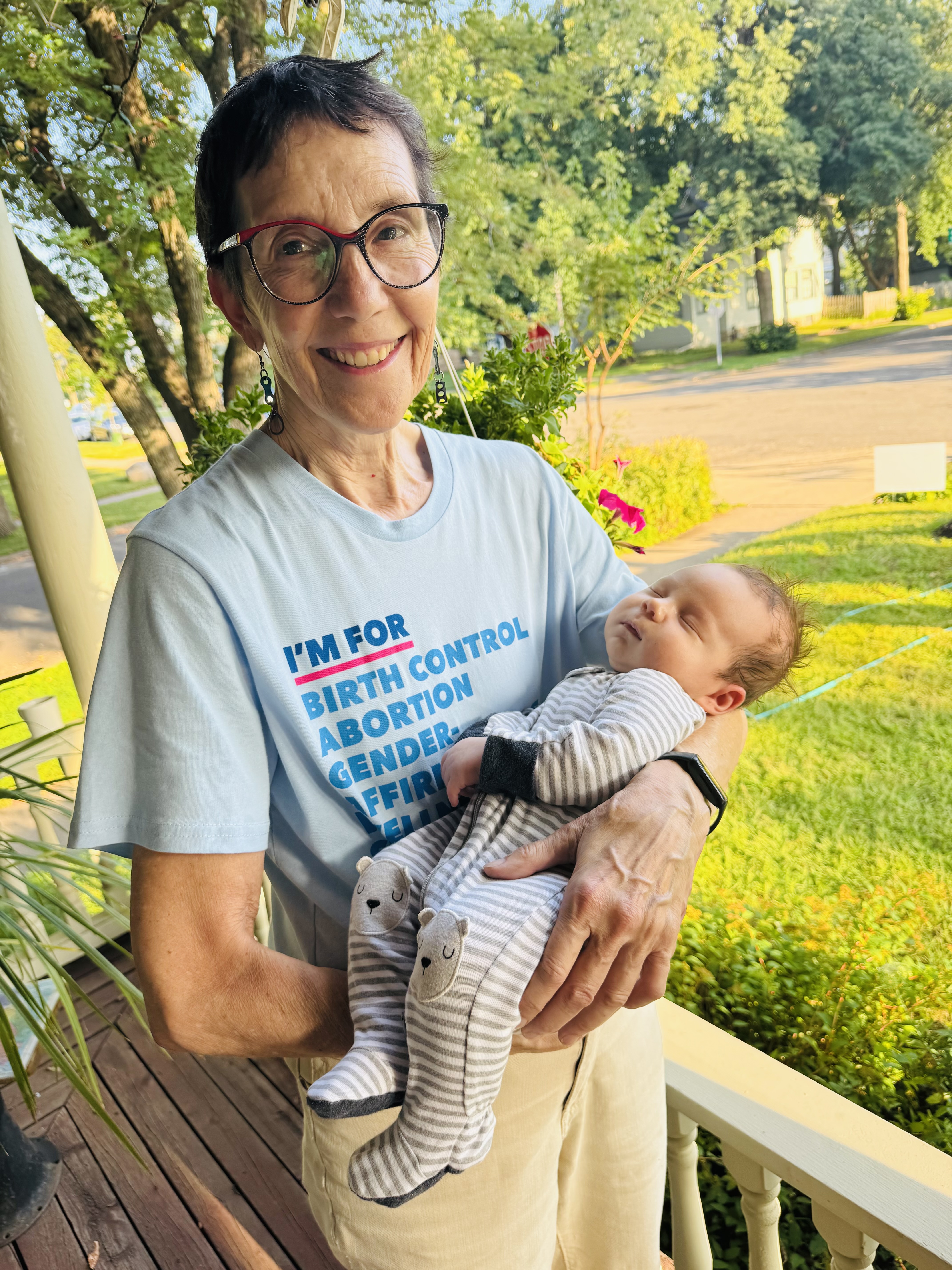
Case in point: I was delighted to volunteer for Planned Parenthood North Central States’ first booth at the Minnesota State Fair on Labor Day earlier this year. But I was mortified when I picked up my light-blue T-shirt in advance and saw the list down the front of what the organization — and supposedly the wearer — stands for. “I’m for birth control, sex education and gender-affirming care” all ring true for me. I can wear that across my chest in public.

But “I’m for abortion”? No, I don’t promote it. What I have marched, volunteered and donated money for since the days when we thought Roe v. Wade would never fall is the protection and expansion of abortion rights. That’s the language I wanted on the T-shirt. When I proposed that to the young staff member in charge of our booth, she said the movement wants to remove any stigma or sense of shame from the practice of abortion. I see her point, but I also saw the quickly averted glances while I walked around the fairgrounds. And Planned Parenthood needs supporters these days, not skeptics.

More significant than what others thought of me is how the T-shirt made me feel. I wore it home, forgot to change and let my husband take a photo of me holding our infant grandson beneath the words “I’m for abortion.” After that, I just gave the shirt away.
An agnostic seeking answers

Binary thinking dominates our yes-or-no, right-or-wrong, polarized society. Am I willing to lurk in the shadows between the black and white, or can I dare to lead a life in living color? By speaking up about my nuanced views on, say, trans women in sports — or countering a local activist whom I believe is unfairly maligning a mayoral candidate in our upcoming election — might I be banished from my tribe, the network of colleagues and left-leaning friends that I have cultivated since my 20s?

I am trying to find the line between honesty and provocation, between truth telling and egocentric mansplaining (yes, women do it, too). Recently, I had a chance to test this out.

“Dear Neighbors,” began the note, delivered quietly to my mailbox on a sunny fall day. “I belong to a community organizing group called Isaiah. Your yard signs have encouraged me to think that you might be interested in one or both of these community events.”

The yard signs that I had out on my corner lot included:

  • “All Are Welcome Here” by my well-tended Little Free Library;
  • A “Vote Yes” sign for the public-school referendum in St. Paul, where we homeowners already are overtaxed but feel obliged to support our underfunded schools; and
  • A “Safer Summit” sign to promote a multi-million-dollar off-road bike trail on the city’s signature street, which many who live on Summit Avenue ardently oppose.

My neighbor, whom I don’t know well, had the courtesy to sign her pitch. She is among a handful of people who have pointed me toward the good work Isaiah does in our community, including its calls for a transition to clean energy and “dignified wages” for childcare professionals. Still, as an unchurched agnostic — one who believes in a higher power but doesn’t claim to know its shape or origin — I resist Isaiah’s religious orientation.

I emailed my neighbor a week or so later. No liberal can rightly argue with racial and economic equality, I told her, and Isaiah’s call for a “collective voice” is a smart strategy that conservatives have long employed — but I can’t move past the organization’s faith-based roots. I signed off by urging the woman to “keep up the good fight.”

As of this writing, she has not responded, and that’s unfortunate, because it shuts down any opportunity for mutual understanding.
Tribal thinking discourages dialogue

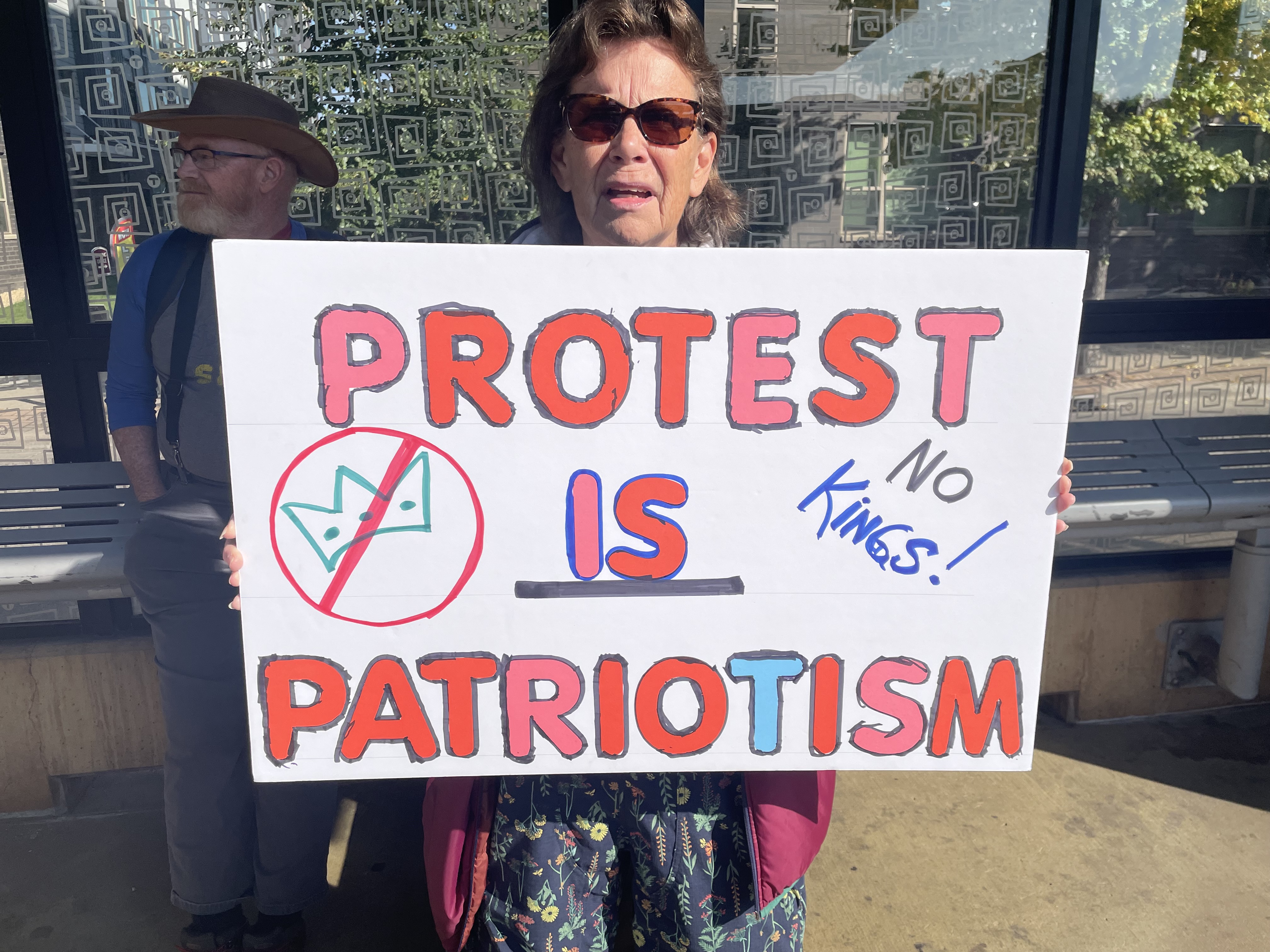
“Speak your mind, even if your voice shakes,” goes a famous quote by Gray Panthers founder Maggie Kuhn. I didn’t think about my personal safety when I took the light-rail train to Minneapolis on a sunny Saturday morning in October to join 100,000 people in a No Kings rally. Opposing the policies of Donald Trump felt that important.

Nor did I hesitate recently to display a yard sign calling on the City of Saint Paul to reinstitute its common-sense restrictions on student housing in our neighborhood, even though people with whom I often politically align oppose it. The state’s largest private university is five blocks away. Having served as that institution’s director of neighborhood relations for eight years, I know firsthand that the Student Housing Overlay District — since undone by a pro-density City Council — saved this area from being overrun by noise, trash, property crimes and ill-kept rentals.

Age has granted me more freedom to speak my truth. I’m less fearful about what other people think, or at least I can dial back my anxiety more quickly. I no longer have employers to please or any fear about my causes blowing back on them (which volunteering with Planned Parenthood did when I worked for a Catholic institution).

But I still can’t shake the niggling insecurity that speaking out on hot topics may alienate some members of my tribe or get me pilloried on social media.

Part of that fear relates to the reality that my views are moderating with age, even as my party moves farther left. Thirty days into the government shutdown — and in full support of keeping healthcare costs within reach for all Americans — I think the Democrats, my party, have played their hand and lost. Congress needs to do the people’s business again or give up their own paychecks in solidarity with sidelined workers.

Must I blast that out on social media and then fervently check my feeds to see who “likes” me and who doesn’t? As courageous as I like to think I am, that isn’t how I want to expend my energy.

“Humans, like animals, are pack animals,” says a January 2025 article in Psychology Today called “Tribalism: How to Be Part of the Solution, Not the Problem.” People naturally want to align with a group, to feel less alone, which is why demonstrations like No Kings are momentarily empowering — even if no lasting change takes place.

The article challenges us, however, not to let the emotional exhilaration of tribalist belonging overtake research and rational thought. Among the “difficult questions” that author John G. Cottone, Ph.D., asks readers to explore are these:

  • “Do I know how to recognize the propaganda of my own tribe, and resist it when I see it?”
  • “Do I pursue multiple perspectives on important issues with intellectual honesty — or do I only solicit my own tribe’s political perspective?”
  • “Do I have compassion for everyone on the road of truth, even those who are walking today where I walked yesterday?”

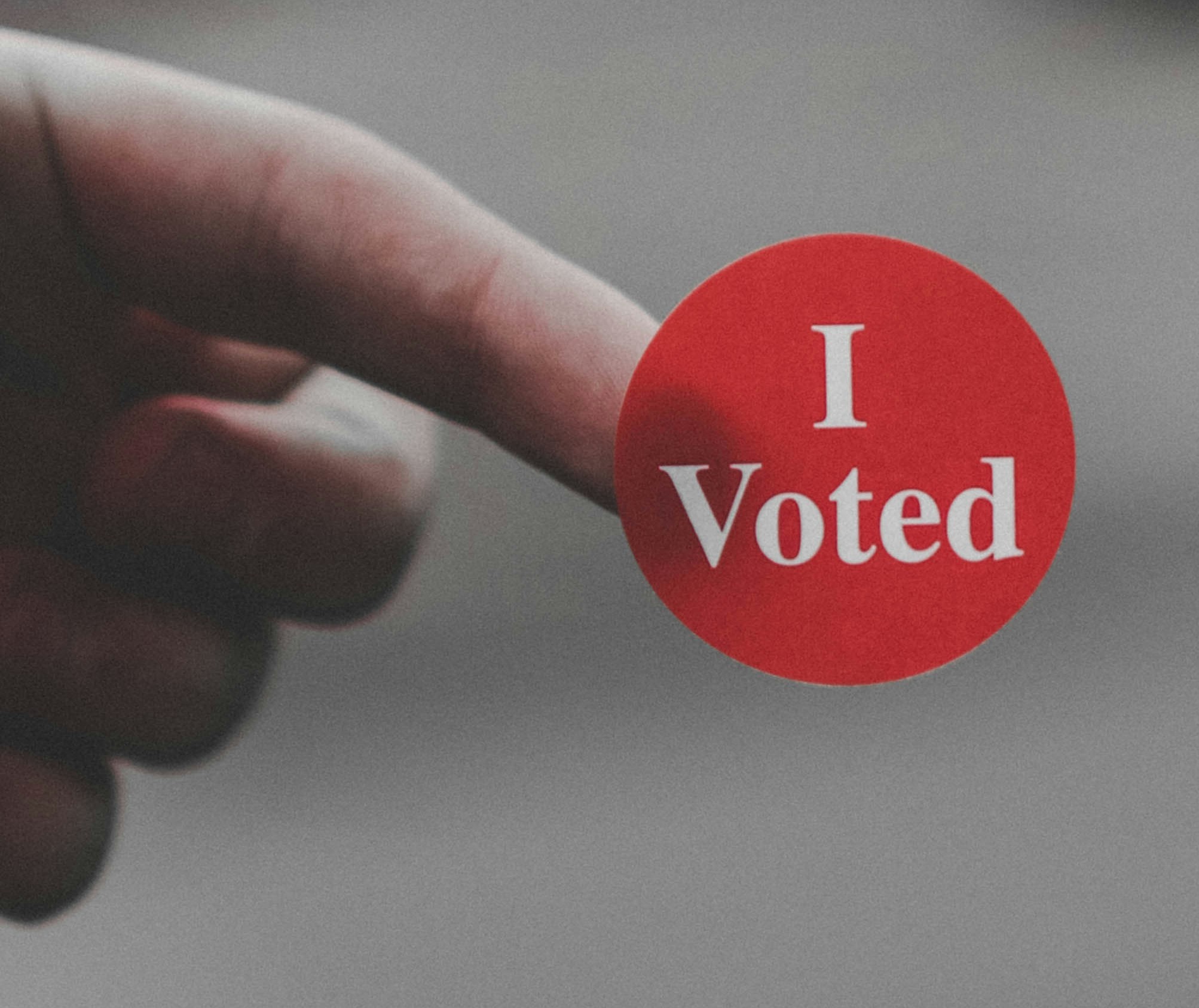
As I prepare to vote in my city’s off-year election — casting a ballot for mayor and the school funding initiative, as well as monitoring the contentious Minneapolis mayoral race across the river — I won’t be in full alignment with the bike-riding, urbanist activists, my tribal pack, who are posting lengthy arguments on Bluesky and Facebook about how they plan to vote and why.

Disagreeing with people with whom you normally align is uncomfortable, uneasy. But in this case, speaking out will mean casting a secret ballot and having the confidence to recognize where and how to use my voice.


How You’ll Know When It’s Time to Let Go

Ego, irritation and exhaustion are the watchwords of this story — the emotional and physical habits that work against us as we age. TLDR is the cheeky abbreviation for “too long, didn’t read” (yes, I learned that from a Millennial), so if you’re stopping here, try to guard against:

  • Self-importance (the conviction that only you know what’s best).
  • Sanctimoniousness (feeling thwarted when others counter what you believe to be right).
  • Overdoing it (because you believe you can control the outcome).

I want to tamp down these tendencies in the autumn of my life. Quitting work at age 68 may help me do that.


Image by freepik

I have talked about retirement so often in this blog that my friends and family just dismiss me: You love being busy. You’ll never quit working. The first statement is true. The second has changed, which I never anticipated during my decades as a careerist.

At the end of August, after months of hand-wringing and internal debate, I finally left the last of my part-time jobs. I embraced the word “retirement,” even as I struggle still with what it means.

Getting there has been a journey:

  • Three years ago, in September 2022, I resigned from full-time employment after I turned 65 and archly declared that no one should view me as “retired,” given the two part-time positions I’d taken on.
  • Six months later, in March 2023, I described those jobs as a “glidepath” toward retirement and interviewed two peers who were taking similar approaches.
  • A year into the gig work, in September 2023, I described how part-time professional work pulls more on your intellect and energies than a job you leave behind once the shift is over.
  • In July 2024, more than a year before official retirement, I wrote about the decision to draw Social Security at age 67. It was another step closer to the inevitable. And toward acceptance.

Finally, this past February, I gave six months’ notice and developed systems that would make the transition easier for my successor. Here’s how I reconciled my instinctive desire to keep working — despite the privilege of financial security — with the reality that it was time to move on.

The first half of life is devoted to forming a healthy ego, the second half is going inward and letting go of it.

Swiss psychiatrist and psychologist Carl Jung

Once ego takes over

My final job was as managing editor of Streets.mn, an online publication that advocates for “people-centered communities”: bike and pedestrian infrastructure, public transportation, vibrant public spaces and more abundant housing throughout Minnesota. The quarter-time position was the only paid job within the volunteer-based organization. I worked with board members who had full-time responsibilities elsewhere, with unpaid contributors who had little professional writing experience, and with copy editors who were donating their time and had varying degrees of commitment to learning the fine points of AP Style.

The work was rewarding and challenging — a big stretch for a part-time gig, with the responsibility of publishing a new piece of well-reported content every weekday. The board would warn me from time to time that donations were down and cut my hours for several months at the end of 2024. And yet I remained motivated and immensely proud of the work, getting to my computer every workday before 6 a.m. to ensure we met the 7 a.m. publication deadline.

Dedication morphed into ownership as I passed the three-year mark. I thought less about what “we” were accomplishing, together, with this reputable publication and more about how “I” had transformed it into a well-oiled machine.

My successor approaches the role differently and is contributing her own strengths. In the four weeks since I left, I have ceased to check the website every morning and note the copy-editing changes I would have made. (A friend challenged me to stop; just stop.) Time to separate, to let go and, for my own peace of mind, to abandon the notion that my way is the only and obvious answer.

Endings are a little overrated. When the ending is here, it’s here, and you just move forward.

WNBA all-star Diana Taurasi, who retired in 2025 at age 42

Restless, irritable and discontent

My insider joke, more relevant a year ago, was that I didn’t want to become the Joe Biden of Streets.mn — the oldest person in the room at board meetings, writers’ gatherings and readers’ happy hours; the leader who couldn’t accept that she was aging out.

Collaborating with younger people helps keep me mentally fresh. I’ve recognized that since I turned 60. Still, as my quit date got closer, little irritants kept popping up that I could only attribute to a generational divide:

  • A Macalester College student who wrote for us occasionally texted me after our coffee meeting to suggest I use AI editing to reduce my workload — apparently unaware of all the years of experience and mentorship it required for me to get good at this.
  • A guest on a Streets.mn podcast episode declared that “all cops suck” in Minneapolis, and the host agreed, as though it’s a verified fact. I don’t believe that to be true, nor is it my experience with police. But maybe those are the uninformed musings of an older white woman.
  • Though I often told writers that an editor’s job is “to make you look good,” I grew weary of polishing stories that lacked focus or solid reporting. I wondered whether my obsession with word choice, fact-checking and well-crafted sentences was outdated in an era when fewer people read books — or read, period — and when TikTok users see “celebrities” and “influencers” as a legitimate source of news.

A former college professor, a woman whose work was her calling, told me she knew it was time to retire when she got tired of dealing with students. Exactly.

We do best when we learn how to have both work and rest in our lives.

Women Rowing North (2019), by Mary Pipher

The body’s wisdom

I kept notes during the first month of my retirement to track how this life change feels physically and emotionally. I was sick the first few days: stomach problems, little appetite, a newfound love of naps. After consulting WebMD and freaking out at the possibilities, I came to recognize that my malady was pure exhaustion.

I am grateful every day that I enjoy such good health at 68. I can’t imagine life without biking, walking, yoga classes, physical mobility. Yes, these are the “golden years.” But how long can they last?

Two weeks ago, my cousin had to cancel our plans to meet at the Minnesota Landscape Arboretum, and I had an entire day unscheduled. I cooked and listened to podcasts, took a bath and read, baked spoonbread in two pans and shared one with a neighbor who has suffered a broken collarbone. I never allow myself this luxury of time.

“When transitions happen and identities change, one of our great challenges is to find a new sense of meaning and purpose in our lives,” writes psychologist Mary Pipher in the 2019 book Women Rowing North, which is written for the phase of life I’m entering.

This is my chance, finally, to put family first. To cultivate and honor friendships, the intentional family that has stood by me. To spend time with my first grandchild and be present for my grown sons. To retire not only from a career but from achievement and doing, from broadcasting accomplishments on LinkedIn, from filling up my calendar because it helps me feel important.

Time is fleeting. That’s a reality for everyone, but only in old age do you know it to be true.

‘Could’ve Been a Contender’: Why I Love Women’s Sports

It’s not just that I’ve jumped on the Caitlin Clark bandwagon, though I have — along with the 14,624 other people who filled the Barn at the University of Minnesota this week to watch her Iowa Hawkeyes take on my alma mater’s Golden Gophers.

Nor is it that I watched the U.S. Women’s National Team ascend the ranks in the “beautiful game” — a foreign sport, in my youth — in the 1990s and early 2000s, at the very time that my two sons were starting to excel at soccer.

It took 2 minutes and 12 seconds against Michigan to make women’s scoring history.

My father and older brother followed the Purple People Eaters–era Minnesota Vikings when I was a kid, back when the team played outdoors and years before one of the fearsome foursome became a state Supreme Court justice. I’ve watched wistfully from the sidelines while my siblings bond each year over their Fantasy Football League.

But now I, too, have found my sport to follow — women’s college basketball in the Midwestern-based Big 10 — and I’m finally feeling it. Here’s what the hoopla is all about!

I’d written off sports as just a guy thing, a way for men to connect and converse while revealing nothing of themselves. I saw the energy but missed the emotions beneath the surface. Following a team through highs and lows, through wins and losses, through “the thrill of victory and the agony of defeat” — to call up Jim McKay on ABC’s The Wide World of Sports — is a rush, a disappointment, a heady exhilaration, a shoulder-drooping drag.

It’s a slice of life in a single season.

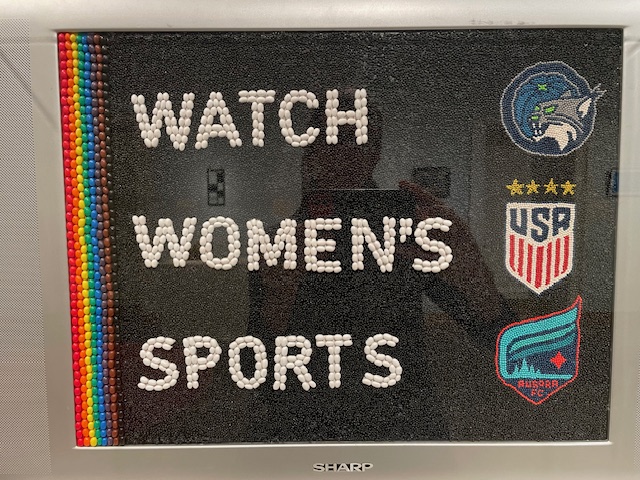
Kate Brenner-Adams’ crop art from the Minnesota State Fair photographed at the Minneapolis Institute of Art. “Sports are a microcosm of society,” she says, “therefore inherently political.”

As my career was winding down, my husband and I started going to the occasional Thursday morning concert at Orchestra Hall (the ones with free coffee, cellophane-wrapped doughnuts and an audience base that makes me feel young). Those are lovely and elegant, and they underscore my exposure to classical music as a kid.

But what I really enjoy are the rowdy, rollicking Gopher women’s basketball games that we began attending last year to see Lindsay Whalen coach and then committed to with season tickets this year, hoping that new coach Dawn Plitzuweit could coalesce the team.

David and I met at the University of Minnesota, and we followed the Gophers nominally when Whalen was an award-winning 5-foot-9 point guard and, of course, stuck with her storied pro career with the Minnesota Lynx. David says women play basketball the way he did, “below the rim.” (I firmly believe the NBA should raise the men’s rim, but that’s a different story.)

Basketball is not the only sport where fans are paying more attention to female athletes. Minnesota now has a team in the Professional Women’s Hockey League, and the Minnesota Aurora, a pre-professional soccer team, has been selling tickets and winning matches — all with an honorable and enviable mission: “to create pathways for women and girls to reach their potential, on and off the field.”

Women my age rarely had that chance. Title IX, which mandated equity in sports at institutions that receive federal funds, passed in 1972. I was 15 years old, a leggy, athletic girl who was a cheerleader and took dance lessons and loved to bike and was always a fast sprinter (“for a girl”) but who never was allowed to be an athlete, to play on a team.

I see them now in the stands, women like me in their 60s and 70s or even older, some with white hair and walkers. These are women who have lived through historic shifts in our society — abortion rights won and lost, better pay and political representation, the Violence Against Women Act extended to lesbians, immigrants and Native American tribal lands — and who are showing up and cheering loudly, despite being told for years that they were lesser, they couldn’t compete, they weren’t enough.

Following women sports, being a vocal and unabashed fan, lets us demonstrate that we still are standing strong.

Image courtesy of Reader’s Digest

I was working as a “Women in Business” columnist at the Saint Paul Pioneer Press in 1999, when Brandi Chastain kicked the winning goal for Team USA in the Women’s World Cup final at the Rose Bowl in Pasadena. My sister Debbie and her family were there. “I actually overheard somebody in the stadium say, ‘They play just like boys!’” she recalls now.

As one of few women on the newspaper’s business desk — and the only one who focused on women’s issues — I was the go-to when male colleagues wanted to get the “woman’s point of view.”

Sure enough, after the sports section displayed the infamous photo of Chastain on her knees, eyes closed, fists raised in the air after she had ripped off her soccer jersey in celebration, my editor called me over to his desk. Was her action unsportsmanlike, inappropriate, simply in poor taste? Or was it sexist that Chastain was getting grief for her exuberance when male players ripped off their jerseys all the time?

And then came the predictable: What do you think of this, Amy?

Newsweek celebrates Brandi Chastain and women’s soccer: July 19, 1999.

It was one of those rare moments when I had the perfectly timed response. Pausing to give the photo a once-over, I looked my male editor in the eye and said calmly: “Nice abs.” And then I turned and walked away.

Twenty-five years later, Target Center in Minneapolis is sold out for the Big 10 women’s basketball tournament in March, a women’s sports bar is opening in the Seward neighborhood several miles away and Brandi Chastain, now 55, has framed the famous sports bra, which hangs in her home. As for me? I barely know a fast break from a field goal, but I’m having the time of my life — watching young women excel at opportunities that were denied me, and supporting them every step of the way.