Tag Archives: sports

WNBA Reflects, Advances Gains for Women

The branded blue and green T-shirts are washed and folded, stored on a closet shelf for another year. The stylish waist-length sweatshirt with blue-and-white cuffs may come out for a college game, but the colors are wrong for the Golden Gophers women’s basketball team whose pre-season games will start up in November.

As the WNBA finals sprint to an exhilarating conclusion in the league’s 30th season, the first series ever to go to seven games, I am reflecting on the dashed dreams for this year’s Minnesota Lynx and how the chaos and camaraderie, the elation and energy, mirror the ups and downs of daily life.

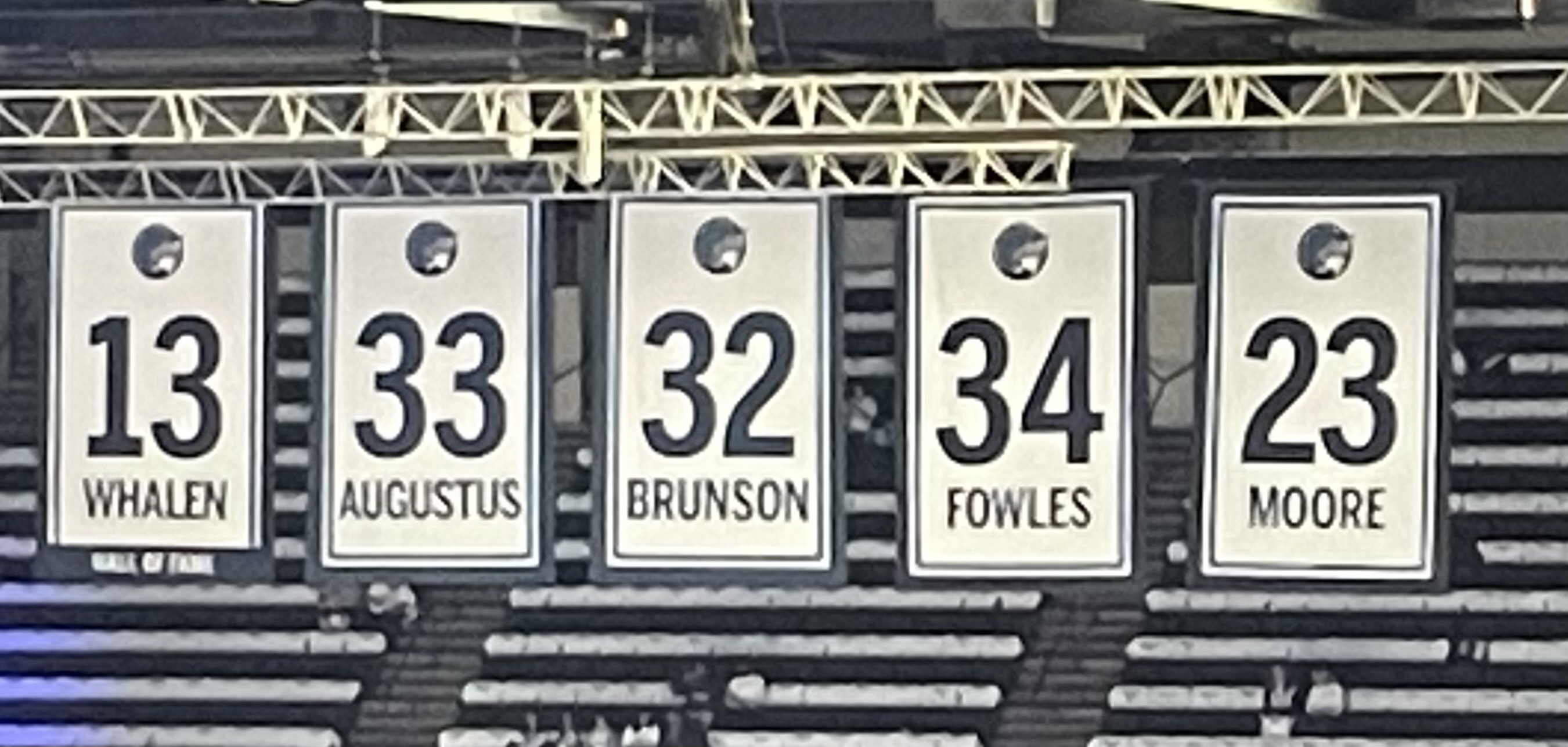
We began with high hopes last spring, confident in the ability of our storied coach and No. 2 draft pick Oliva Miles, who would win accolades all season; then suddenly, on a Tuesday evening in September, it was over. The top-ranked Minnesota Lynx would not be adding a fifth championship banner to the Target Center rafters, along with the five retired jersey numbers from past glory days.
Maybe folks who have followed sports for decades would have taken the loss more in stride. Experience would have told them that the emotional roller coaster (“the thrill of victory, and the agony of defeat,” as Jim McKay used to intone on ABC’s Wide World of Sports) is an inevitable part of following a favorite team.

But for me — and I suspect many older female fans for whom youth “sports” consisted of cheerleading and dance classes — the embarrassing, abrupt end to the Lynx’s season on September 29 was a crash, an unexpected comedown. The No. 1 seed among the WNBA’s 15 teams, the coach who earned top honors for an unprecedented fifth time, the comeback, however tentative, of our star player from double ankle surgery, the surge of “The Rookie,” also named to “best of” honors this year.

We had it all, but I never thought we’d win it all.

  • Too short a bench, given the loss of two starters (one to Dallas, one to Portland) and two key bench players (one to Seattle, another to Dallas), all due to wide-ranging free agency in 2025.
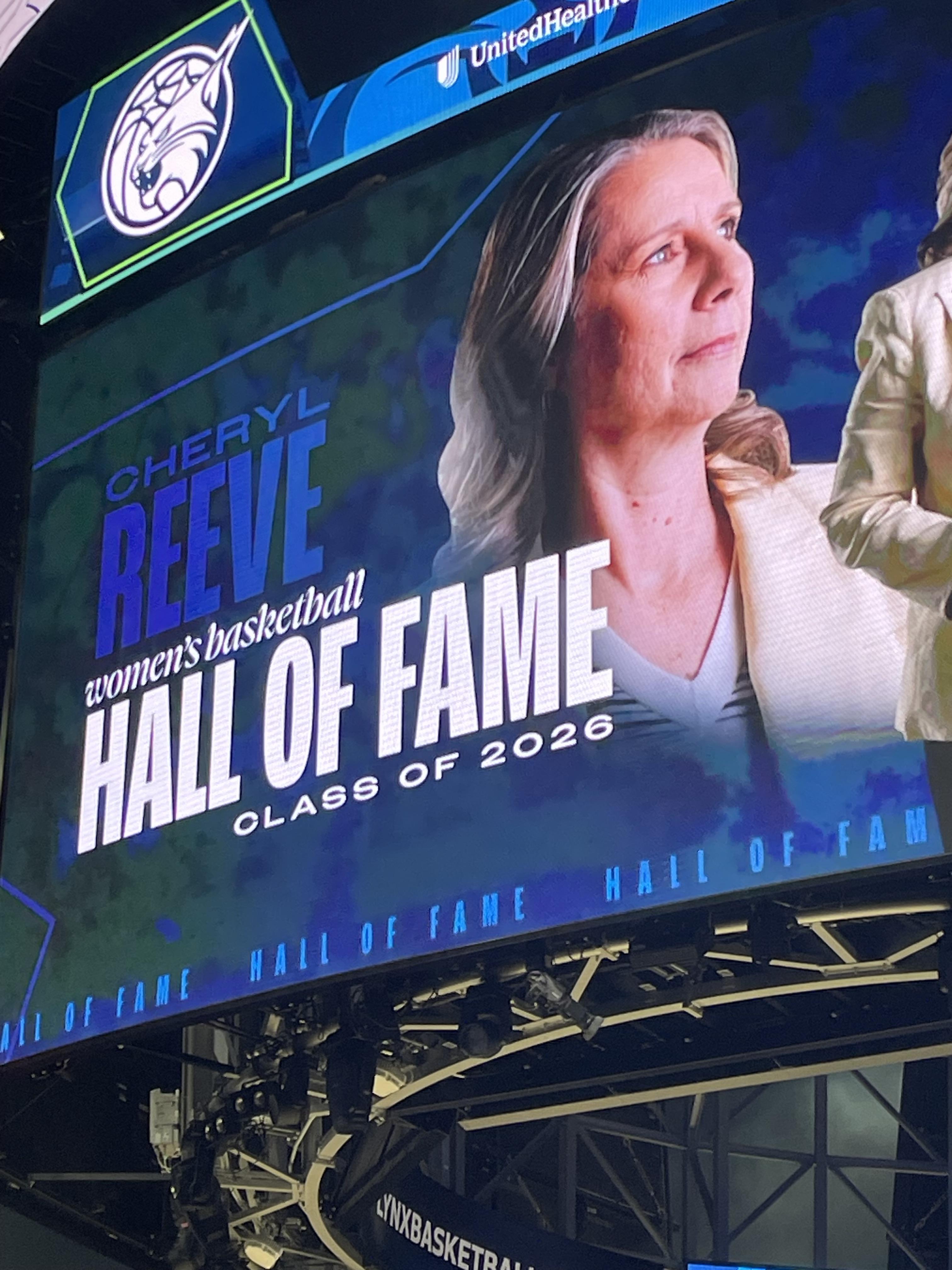
  • Too much of a tendency for Cheryl Reeve, our all-time winningest coach — another honor she garnered this season — to pick strategic, team-centered players rather than tall ones. (Think Angel Reese, whom the Lynx passed on back in 2024.)

I certainly expected to get past the first round, despite four losses in six games leading up to the playoffs. Despite the bad luck of having to face our nemesis in the 2024 finals as our first playoff opponent. In a bitter, controversial conclusion, the New York Liberty beat us in overtime of Game 5 in 2024 when Lynx star Napheesa Collier, then 28, talking about how “pressure was privilege,” was in her prime.

“Failure is the fuel that drives you forward.”

— Breanna Stewart

Instead, the eighth-seeded Liberty, powered by 6-4 guard and former UConn star Breanna Stewart, fresh off a triumphant Team USA win at the FIBA Women’s World Cup in Berlin, swept us in a three-game series: 91–75 at home and 87–71 in Brooklyn. Given New York’s height and depth — a 6-6 starting center, a 6-11 backup center, any number of bench players who can reliably make 3-point shots — we couldn’t touch them.

“Season ends in historic sweep,” my local paper’s headline declared the next day. “Lynx are first top seed to lose in opening round since WNBA went to current playoff format in 2022.”

The morning after the game, I had my regular monthly breakfast with a longtime friend, ironically at the very restaurant where my husband and I had watched the Lynx lose the night before. I was distracted and out of sorts, unable to listen well or, at times, even to follow the conversation.

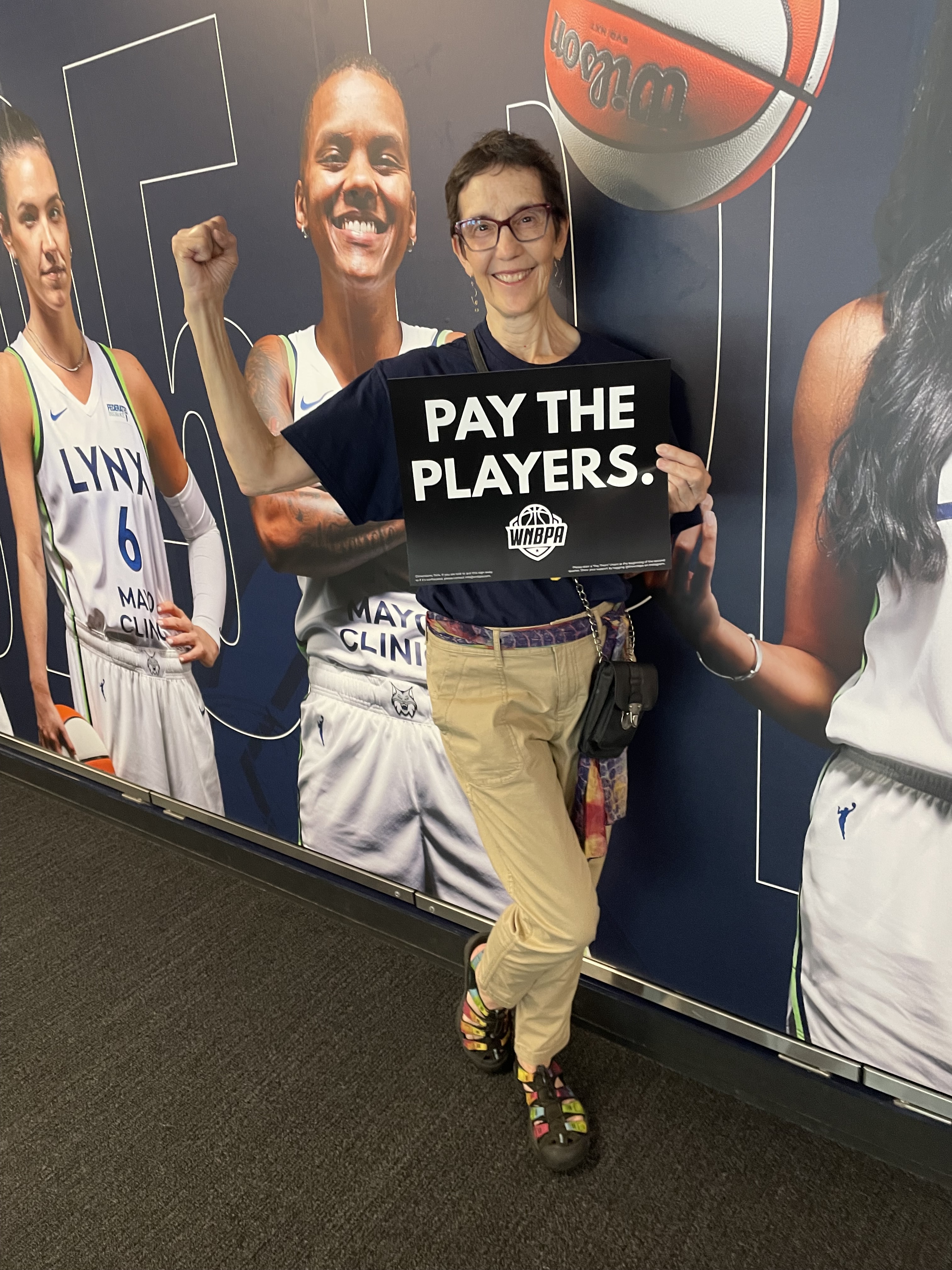
Why was I so off? Why did it matter so much? Because the Lynx and the WNBA represent more than basketball to their fans. These athletes matter because they’re making history — including standing firm on a 2026 collective bargaining agreement (CBA) that raises salaries, rewards retired veteran players and requires a pregnant player to consent before she’s traded, among other equity initiatives.

These athletes matter because of the strength and courage, the ferocity and gumption they display in every game: sacrificing their bodies to block a shot, faceplanting on the floor, trash talking an opponent to get inside her head (a skill that Reese, of the Atlanta Dream, claims can’t be taught). “When you can step out of your comfort zone and be uncomfortable, you see what you’re made of and who you are,” said legendary Seattle point guard Sue Bird before retiring in 2022. I wish I had been more encouraged to do that as a girl.
Whether fans are recent converts like me or loyal season-ticket holders who’ve hung in since arenas were half empty, we’re all taking notice of the game’s growing physicality and sharp competitive edge, as well as the star power of players who amplify their image on social media.

According to The Athletic’s “No Off-Season” podcast (which I use to boost my basketball IQ and follow teams beyond the Lynx), more than 91 million viewers tuned in for the 2026 season — doubling the WNBA’s television reach just a year before.

“With each generation, we push the game forward,” declared an ad for the “W,” as fans call it, before Game 4 of the finals featuring the Atlanta Dream and the Golden State Valkyries, widely considered the two strongest defensive teams. No more dank, inferior weight rooms, or playing games in school gymnasiums, or putting up with undersized arenas, like the Atlanta Dream’s Gateway Center that seats only 3,500 people.

The Dream’s home games for this year’s playoffs moved to the 17,000-seat State Farm Arena, home to the NBA’s Atlanta Hawks. And the arena filled. True, Game 6 had to be rescheduled from the evening to early afternoon, to accommodate the men’s team, and that caused some predictable cries of sexism. But when nearly five times as many fans get to experience the women’s game in person? I’ll take that as a win.

“Believe in yourself, even when others doubt you.”

— Candace Parker

My fervent following of women’s basketball has become a running joke among my friends. They’ve learned that a quick question will elicit a detailed, impassioned answer and that I’ll schedule our get-togethers around WNBA and NCAA women’s basketball. They understand that the game holds deeper meaning for me than sports, that I embrace it as a feminist, as a sure sign of women’s progress and as an athletic older woman who had too few opportunities — and too little daring — to play the game herself.

My health club has a special rate and restricted hours for seniors, which initially I resented. Now, as I have grown to accept my own advancing age and encroaching physical limitations, I embrace the chance to work out among my peers. Every time I’m strength training, I note the number of older women bucking the messages we were raised with — be skinny, be small, don’t sweat or take up space — by pushing ourselves to be as powerful as possible at our ages.

Female athletes inspired that.
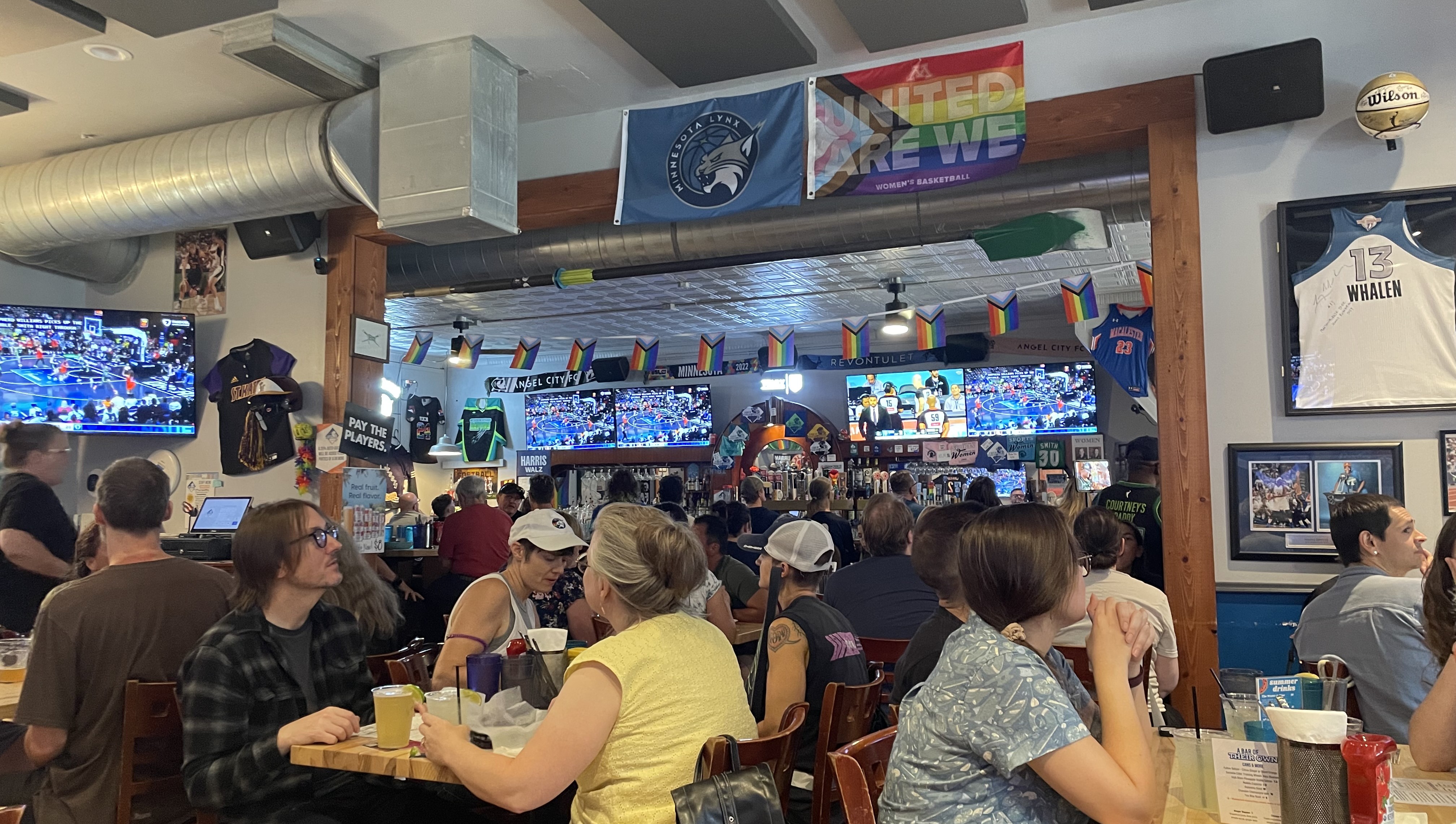
A Bar of Their Own in Minneapolis welcomes male customers but broadcasts only women’s sports.

Walk into A Bar of Their Own, the women’s sports bar on Franklin Avenue in Minneapolis, and you’ll see photos of Lynx assistant coach Lindsay Whalen, focused and intense, as a University of Minnesota record-setting point guard. There’s a muscular shot of former Lynx standout Maya Moore palming a basketball, strong deltoid muscles giving shape to her shoulders, in a pose that pays homage to Chicago Bulls great Michael Jordan. Both Hall of Fame athletes, Whalen and Moore stretch the boundaries of what being a woman means, from cautious and acquiescent femininity to the self-confidence, determination and consistent practice that being a competitor requires.

It’s tempting to write off sports figures as just that — people who entertain but don’t enlighten us. For the Minnesota Lynx, however, that isn’t true. I’ve cheered at games this past season that began with a moment of silence for Renee Good and Alex Pretti, the two Minnesota protesters gunned down by ICE agents during the racist and violent and offensively branded Operation Metro Surge in January. At another game we honored groundbreaking state Representative Karen Clark (DFL-Minneapolis), a fighter for marriage equality and many other progressive causes who was the first openly lesbian member to serve in the Minnesota Legislature.

We had a moment of silence in June 2025 when a madman impersonating a police officer murdered Minnesota House Speaker Melissa Hortman, her husband, Mark, and their family dog at the front door of their home.

“I want my legacy to be the joy I brought to others.”

— Caitlin Clark

The WNBA historically has spoken out on social issues, including Black Lives Matter, reproductive justice and this year, the question of whether trans women should be allowed to play collegiate and professional women’s sports. “Women’s sports itself remains somewhat of an act of protest, even after the passing of Title IX,” wrote San Francisco Guardian columnist Andrew Lawrence after Minneapolis police officers suffocated George Floyd on a public street in May 2020, which inspired protests throughout the league. “The WNBA has been fighting for respect since its inception.”

As a straight, white, cisgender senior enamored with a league built on the talents and tenacity of Black, queer women, I listen, I learn. I sometimes disagree or get discouraged. But I see hope in the faces of the little girls and young women in the arena who will pick up the basketball, carry the torch — and challenge themselves and our society in ways that my generation could only dream of.
You Can’t Know a Place Until You’ve Been There

Leading up to my vacation in mid-April — where my modest goals were to unplug, hike, read and relax — I loved watching people’s faces when I told them where I was going.

“Paducah.”

Is that in Kentucky?

“Yes, Mitch McConnell territory.”

So, what draws you there?

In truth, it was a friend recommending the arts scene and the National Quilt Museum that got me thinking about Paducah (and trying to talk my husband into it). He and I had debated about Memphis, Santa Fe and Asheville, North Carolina, but what we really wanted was a manageable, low-key place in which we could escape city traffic and return to our small-town roots — but still have some interesting things to do. If that meant two deep-blue Minnesota liberals would venture into solid red Kentucky, so be it.

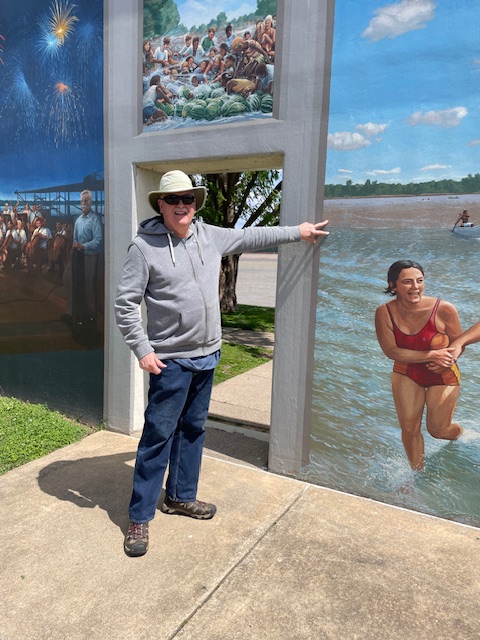
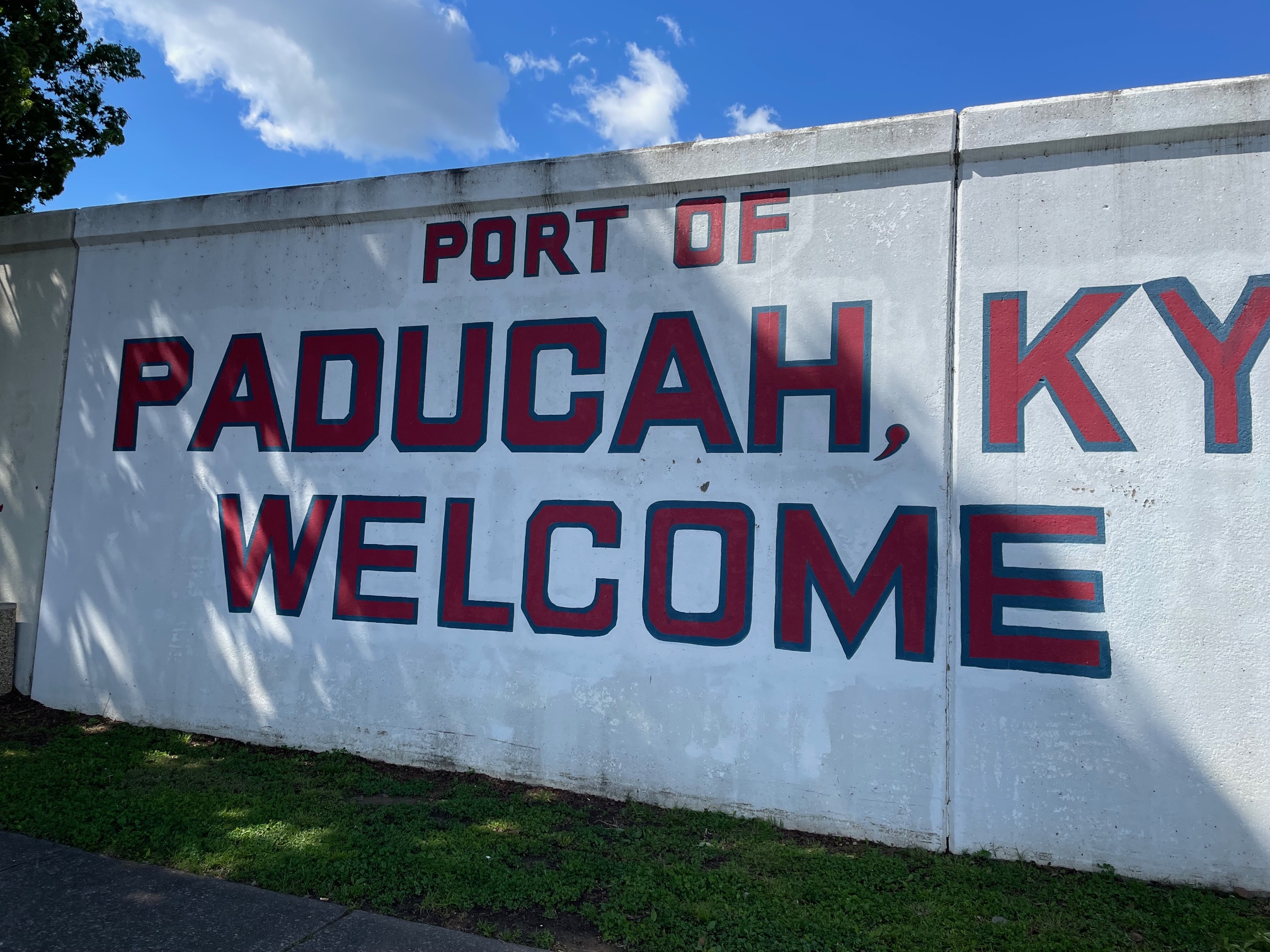
Paducah, Kentucky, sits at the confluence of the Ohio and Tennessee rivers, and had a catastrophic flood in 1937.

Paducah, the smallest of the nine UNESCO Creative Cities in the United States, seemed to fit what we were looking for. UNESCO is the United Nations Educational, Scientific and Cultural Organization, and it cites Paducah (along with Santa Fe) as a notable City of Crafts and Folk Art. We found that to be true, during a five-day visit that included:

The population of McCracken County, for which Paducah is the county seat, is 67,400. But to find this array of culture in a town of 27,000 — cafés and restaurants, locally owned art shops, bars with bands and solo artists, a river history museum, a downtown movie theater screening Civil War — was astonishing on the southern edge of the Midwest.

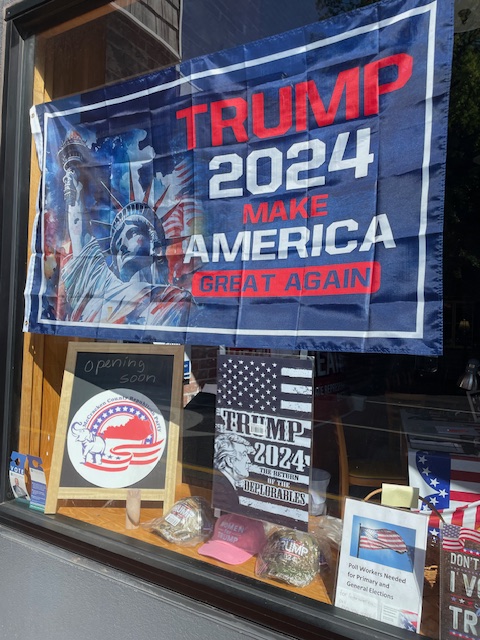
And that’s my point. Had we simply driven through downtown, where the Republican Party headquarters sits squarely in a business district pushing to make a post-COVID comeback, I’d have confirmed my stereotypes about Kentucky (which still calls itself a commonwealth) and kept going. But we got out of the car and stayed a few days — meeting locals, walking the streets, riding bikes, renting a 130-year-old brick “shotgun house” in a weedy, working-class part of town a fair distance from the Holiday Inn where the quilters stay.

We frequented an “all are welcome here” coffeehouse, Etcetera, one of the few eating establishments that didn’t shut down on Sunday in this heavily Christian town. (The closest Unitarian church, which I would have liked to attend, was 97 miles away in Clarksville, Tennessee.) Etcetera attracts colorfully tattooed young people and has a resident cat who sleeps in a heated little house on the patio. The backyard neighbor keeps two lovingly restored Studebakers in his garage, and I was only too happy to hang out and read while he chatted up my husband about classic cars.

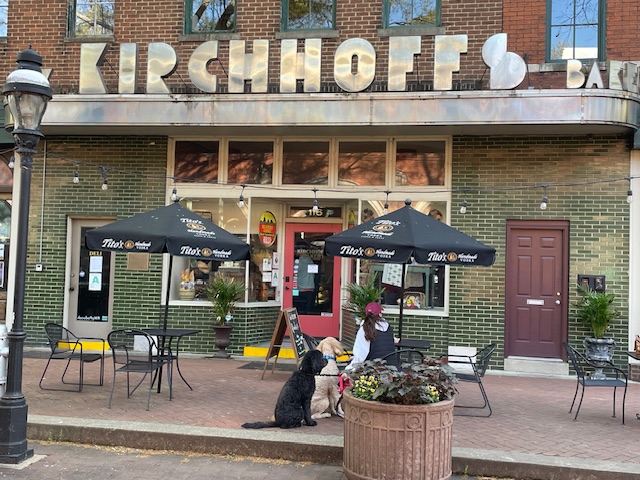
In short, we found our people: the retired schoolteacher outside the Republican headquarters who directed us to Kirchoff’s, the best bakery downtown, with the bonus of a women’s clothing section in the adjoining coffeeshop; the helpful owner and bike mechanic at BikeWorld near the 135-acre Bob Noble Park (also close to the 55-acre Stuart Nelson Park, once the segregated recreation spot for Blacks and now host to the annual Emancipation Celebration every August 8); the young couple restoring the shotgun house next to our AirBnB, who’d wait to blast their music until we left.

We met other folks with whom we were more careful, like the proprietor of a cramped antique shop who piped up when I saw a campaign sign from 1980 in which Ronald Reagan commanded that we “make America great again.”

“I didn’t know that all started with him,” I told my husband. “I thought ‘It’s Morning in America’ was Reagan’s theme.” The proprietor, standing tall, proclaimed Reagan to be a great president. She showed no interest in our viewpoints, likely detecting our disdain, and said her daughter is a Democrat “only because they give her money.” We smiled and moved on to the Four Rivers Corvette Club showcase across the street.

Dogs have to wait at Kirchoff’s Bakery & Deli, too, where a line stretches out the door on Saturday mornings.

On those blissful early mornings when I sat with my journal and a fresh cup of coffee, I pondered how Paducah felt different from my heart-of-the-city home in St. Paul, Minnesota:

  • No recycling containers, anywhere. We even asked a cop.
  • No apparent mass transit system, though I did see one bus stop.
  • No food co-op; and granted, Paducah is small, but Northfield, Grand Marais and St. Peter, Minnesota, all have them.
  • No bookstore downtown and likely no zoning laws. Parking lots take up a lot of precious space.
  • No consistent infrastructure for walking or bicycling. Sidewalks in our neighborhood were in disrepair, and some just ended mid-block. The only painted bike lanes I found were out by BikeWorld.
  • No recovery meetings for women, though the sunburned men wearing bill caps and work boots welcomed me warmly to their meeting. The sayings and the steps were all comfortably familiar — “just spoken with more of a twang,” I told them with a laugh.

Those men’s generosity, their acceptance, helped me avoid a head space where I crossed my arms and complained about what Paducah isn’t or what it lacks (“another Dollar General store?”). That’s too self-satisfied, too sanctimonious, plus it’s the antithesis (or should be) of why we travel. Not to confirm our ways of thinking or insist that others conform to them, but to challenge our habits and beliefs, expose ourselves to something new.

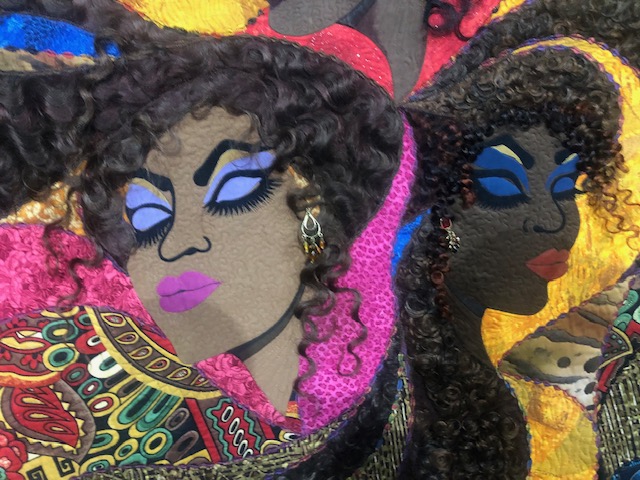
Quilting artist Barbara Ann McCraw has an exhibit at the National Quilt Museum called “Life Stories.” Twenty-two percent of Paducah’s population is Black.

No sooner had I decided to observe rather than judge the differences in Paducah, than I was confronted for what felt like the umpteenth time by a person who declared they could never live in Minnesota because it’s so cold. “How can you stand it up there?” Try as I might to describe the beauty and variety of the four seasons, to explain that you learn to dress for the cold, to cite the social services and amenities that our high tax rate affords us: I could see it. They would visibly shut down.

Whether on the plane, or at Ann Patchett’s bookstore, Paranassus Books (our one stop in Nashville), or in a conversation where I was trying to show genuine interest in Paducah and its confluence of rivers or the stunning Land Between the Lakes Recreation Area that straddles Kentucky and Tennessee, the person who had a preconceived notion about Minnesota clearly wasn’t interested in learning more.

And that’s a shame, because I’d like to show them my home state with the same joy, vigor and gracious hospitality that they showed me theirs. I never thought I would visit Kentucky. I’m too mad at Mitch McConnell and the legacy he’s left us of a conservative six-member super majority on the U.S. Supreme Court. But if politics were a reason to avoid travel, I’d go nowhere but Minnesota in the Upper Midwest.

If Kentuckians want to write off Minnesota for the weather, the best I can say is, “Your loss.” I’m glad I visited Paducah, grateful to have pushed past a stereotype. The docent in the National Quilt Museum described the difference between 18 feet and 18 inches in examining the artwork on their walls. “At 18 feet,” she said, “you see the vision. At 18 inches, you see technique.”

From 18 feet away — or, actually, 744 miles — my vision of Paducah was that of a backwater, no place I’d ever care to visit. From 18 inches, right up close, it was a special community, with a lively arts scene and friendly people. A town I would return to, and one I recommend.

‘Could’ve Been a Contender’: Why I Love Women’s Sports

It’s not just that I’ve jumped on the Caitlin Clark bandwagon, though I have — along with the 14,624 other people who filled the Barn at the University of Minnesota this week to watch her Iowa Hawkeyes take on my alma mater’s Golden Gophers.

Nor is it that I watched the U.S. Women’s National Team ascend the ranks in the “beautiful game” — a foreign sport, in my youth — in the 1990s and early 2000s, at the very time that my two sons were starting to excel at soccer.

It took 2 minutes and 12 seconds against Michigan to make women’s scoring history.

My father and older brother followed the Purple People Eaters–era Minnesota Vikings when I was a kid, back when the team played outdoors and years before one of the fearsome foursome became a state Supreme Court justice. I’ve watched wistfully from the sidelines while my siblings bond each year over their Fantasy Football League.

But now I, too, have found my sport to follow — women’s college basketball in the Midwestern-based Big 10 — and I’m finally feeling it. Here’s what the hoopla is all about!

I’d written off sports as just a guy thing, a way for men to connect and converse while revealing nothing of themselves. I saw the energy but missed the emotions beneath the surface. Following a team through highs and lows, through wins and losses, through “the thrill of victory and the agony of defeat” — to call up Jim McKay on ABC’s The Wide World of Sports — is a rush, a disappointment, a heady exhilaration, a shoulder-drooping drag.

It’s a slice of life in a single season.

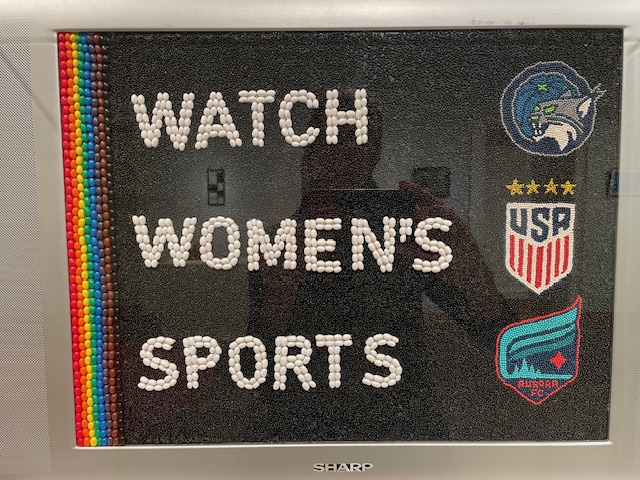
Kate Brenner-Adams’ crop art from the Minnesota State Fair photographed at the Minneapolis Institute of Art. “Sports are a microcosm of society,” she says, “therefore inherently political.”

As my career was winding down, my husband and I started going to the occasional Thursday morning concert at Orchestra Hall (the ones with free coffee, cellophane-wrapped doughnuts and an audience base that makes me feel young). Those are lovely and elegant, and they underscore my exposure to classical music as a kid.

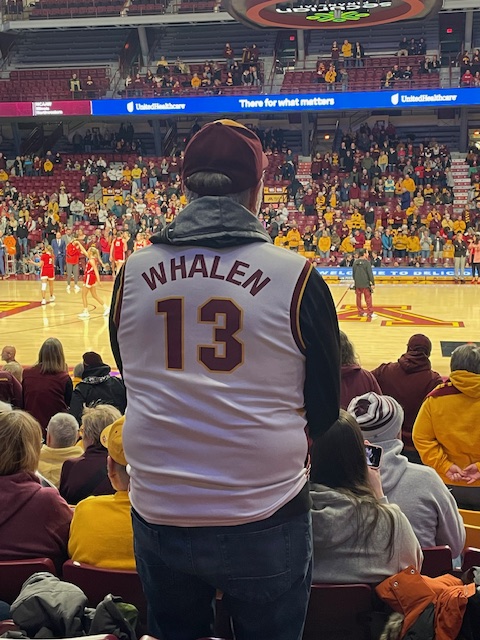
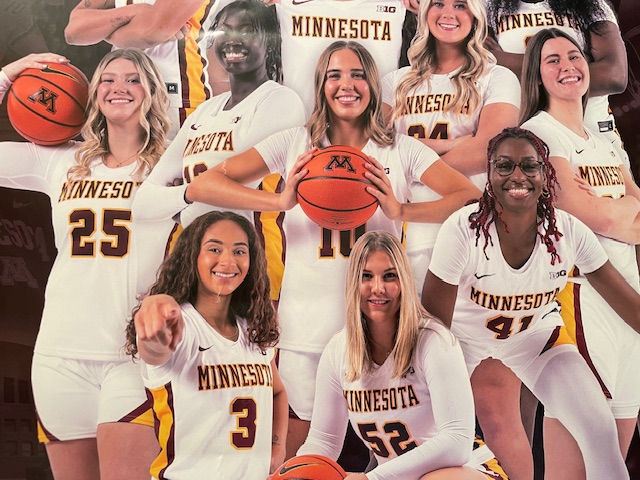
But what I really enjoy are the rowdy, rollicking Gopher women’s basketball games that we began attending last year to see Lindsay Whalen coach and then committed to with season tickets this year, hoping that new coach Dawn Plitzuweit could coalesce the team.

David and I met at the University of Minnesota, and we followed the Gophers nominally when Whalen was an award-winning 5-foot-9 point guard and, of course, stuck with her storied pro career with the Minnesota Lynx. David says women play basketball the way he did, “below the rim.” (I firmly believe the NBA should raise the men’s rim, but that’s a different story.)

Basketball is not the only sport where fans are paying more attention to female athletes. Minnesota now has a team in the Professional Women’s Hockey League, and the Minnesota Aurora, a pre-professional soccer team, has been selling tickets and winning matches — all with an honorable and enviable mission: “to create pathways for women and girls to reach their potential, on and off the field.”

Women my age rarely had that chance. Title IX, which mandated equity in sports at institutions that receive federal funds, passed in 1972. I was 15 years old, a leggy, athletic girl who was a cheerleader and took dance lessons and loved to bike and was always a fast sprinter (“for a girl”) but who never was allowed to be an athlete, to play on a team.

I see them now in the stands, women like me in their 60s and 70s or even older, some with white hair and walkers. These are women who have lived through historic shifts in our society — abortion rights won and lost, better pay and political representation, the Violence Against Women Act extended to lesbians, immigrants and Native American tribal lands — and who are showing up and cheering loudly, despite being told for years that they were lesser, they couldn’t compete, they weren’t enough.

Following women sports, being a vocal and unabashed fan, lets us demonstrate that we still are standing strong.

Image courtesy of Reader’s Digest

I was working as a “Women in Business” columnist at the Saint Paul Pioneer Press in 1999, when Brandi Chastain kicked the winning goal for Team USA in the Women’s World Cup final at the Rose Bowl in Pasadena. My sister Debbie and her family were there. “I actually overheard somebody in the stadium say, ‘They play just like boys!’” she recalls now.

As one of few women on the newspaper’s business desk — and the only one who focused on women’s issues — I was the go-to when male colleagues wanted to get the “woman’s point of view.”

Sure enough, after the sports section displayed the infamous photo of Chastain on her knees, eyes closed, fists raised in the air after she had ripped off her soccer jersey in celebration, my editor called me over to his desk. Was her action unsportsmanlike, inappropriate, simply in poor taste? Or was it sexist that Chastain was getting grief for her exuberance when male players ripped off their jerseys all the time?

And then came the predictable: What do you think of this, Amy?

Newsweek celebrates Brandi Chastain and women’s soccer: July 19, 1999.

It was one of those rare moments when I had the perfectly timed response. Pausing to give the photo a once-over, I looked my male editor in the eye and said calmly: “Nice abs.” And then I turned and walked away.

Twenty-five years later, Target Center in Minneapolis is sold out for the Big 10 women’s basketball tournament in March, a women’s sports bar is opening in the Seward neighborhood several miles away and Brandi Chastain, now 55, has framed the famous sports bra, which hangs in her home. As for me? I barely know a fast break from a field goal, but I’m having the time of my life — watching young women excel at opportunities that were denied me, and supporting them every step of the way.