
The branded blue and green T-shirts are washed and folded, stored on a closet shelf for another year. The stylish waist-length sweatshirt with blue-and-white cuffs may come out for a college game, but the colors are wrong for the Golden Gophers women’s basketball team whose pre-season games will start up in November.
As the WNBA finals sprint to an exhilarating conclusion, the first series to go to seven games in the league’s 30th season, I am reflecting on the dashed dreams for this year’s Minnesota Lynx and how the chaos and camaraderie, the elation and energy, mirror the ups and downs of daily life.
We began with high hopes last spring, confident in the ability of our storied coach and No. 2 draft pick Oliva Miles, who would win accolades all season; then suddenly, on a Tuesday evening in September, it was over. The top-ranked Minnesota Lynx would not be adding a fifth championship banner to the Target Center rafters, along with the five retired jersey numbers from past glory days.
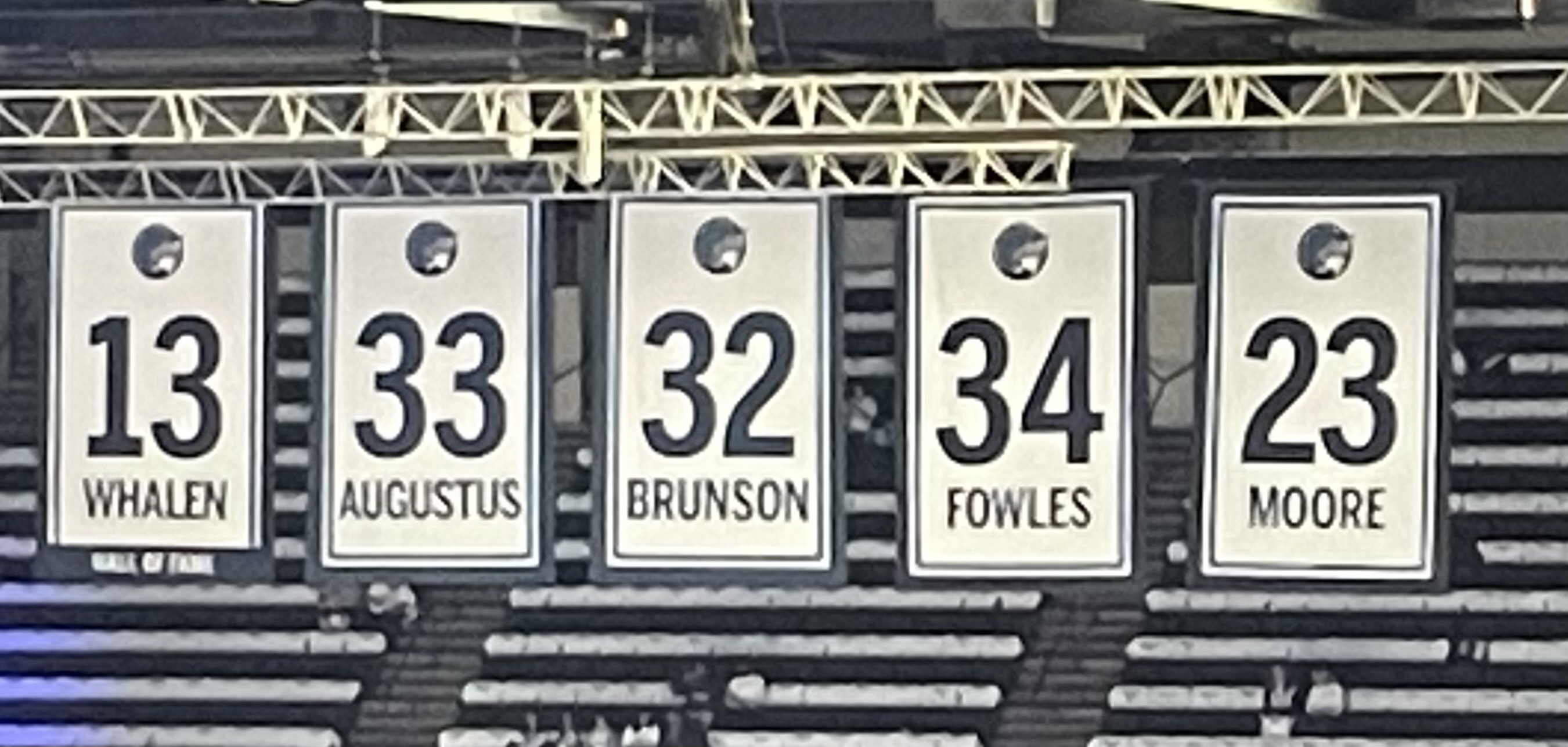
Maybe folks who have followed sports for decades would have taken the loss more in stride. Experience would have told them that the emotional roller coaster (“the thrill of victory, and the agony of defeat,” as Jim McKay used to intone on ABC’s Wide World of Sports) is an inevitable part of following a favorite team.
But for me — and I suspect many older female fans for whom youth “sports” consisted of cheerleading and dance classes — the embarrassing, abrupt end to the Lynx’s season on September 30 was a crash, an unexpected comedown. The No. 1 seed among the WNBA’s 15 teams, the coach who earned top honors for an unprecedented fifth time, the comeback, however tentative, of our star player from double ankle surgery, the surge of “The Rookie,” also named to “best of” honors this year.
I never thought we’d win it all.
- Too short a bench, given the loss of two starters (one to Dallas, one to Portland) and two key bench players (one to Connecticut, another to Dallas), all due to wide-ranging free agency in 2025.
- Too much of a tendency for Cheryl Reeve, our all-time winningest coach — another honor she garnered this season — to pick strategic, team-centered players rather than tall ones. (Think Angel Reese, whom the Lynx passed on back in 2024.)
But I certainly expected to get past the first round, despite four losses in six games leading up to the playoffs. Despite the bad luck of having to face our nemesis in the 2024 finals as our first playoff opponent. In a bitter, controversial conclusion, the New York Liberty beat us in overtime of Game 5 in 2024 when Lynx star Napheesa Collier, then 28, talking about how “pressure was privilege,” was in her prime.
“Failure is the fuel that drives you forward.”
— Breanna Stewart
Instead, the eighth-seeded Liberty, powered by 6-4 guard and former UConn great Breanna Stewart, fresh off a triumphant Team USA win at the FIBA Women’s World Cup in Berlin, swept us in a three-game series: 91–75 at home and 87–71 in Brooklyn. Given New York’s height and depth — a 6-6 starting center, a 6-11 backup center, any number of bench players who can reliably make 3-point shots — we couldn’t touch them.
“Season ends in historic sweep,” my local paper’s headline declared the next day. “Lynx are first top seed to lose in opening round since WNBA went to current playoff format in 2022.”
The morning after the game, I had my regular monthly breakfast with a longtime friend, ironically at the very restaurant where my husband and I had watched the Lynx lose the night before. I was distracted and out of sorts, unable to listen well or, at times, even to follow the conversation.
Why was I so off? Why did it matter so much? Because the Lynx and the WNBA represent more than basketball to their fans. These athletes matter because they’re making history — including standing firm on a 2026 collective bargaining agreement (CBA) that raises salaries, rewards retired veteran players and requires a pregnant player to consent before she’s traded, among other equity initiatives.
These athletes matter because of the strength and courage, the tenacity and gumption they display in every game: sacrificing their bodies to block a shot, faceplanting on the floor, trash talking an opponent to get inside her head (a skill that Reese, of the Atlanta Dream, claims can’t be taught). “When you can step out of your comfort zone and be uncomfortable, you see what you’re made of and who you are,” said legendary Seattle point guard Sue Bird before retiring in 2022. I wish I had been more encouraged to do that as a girl.
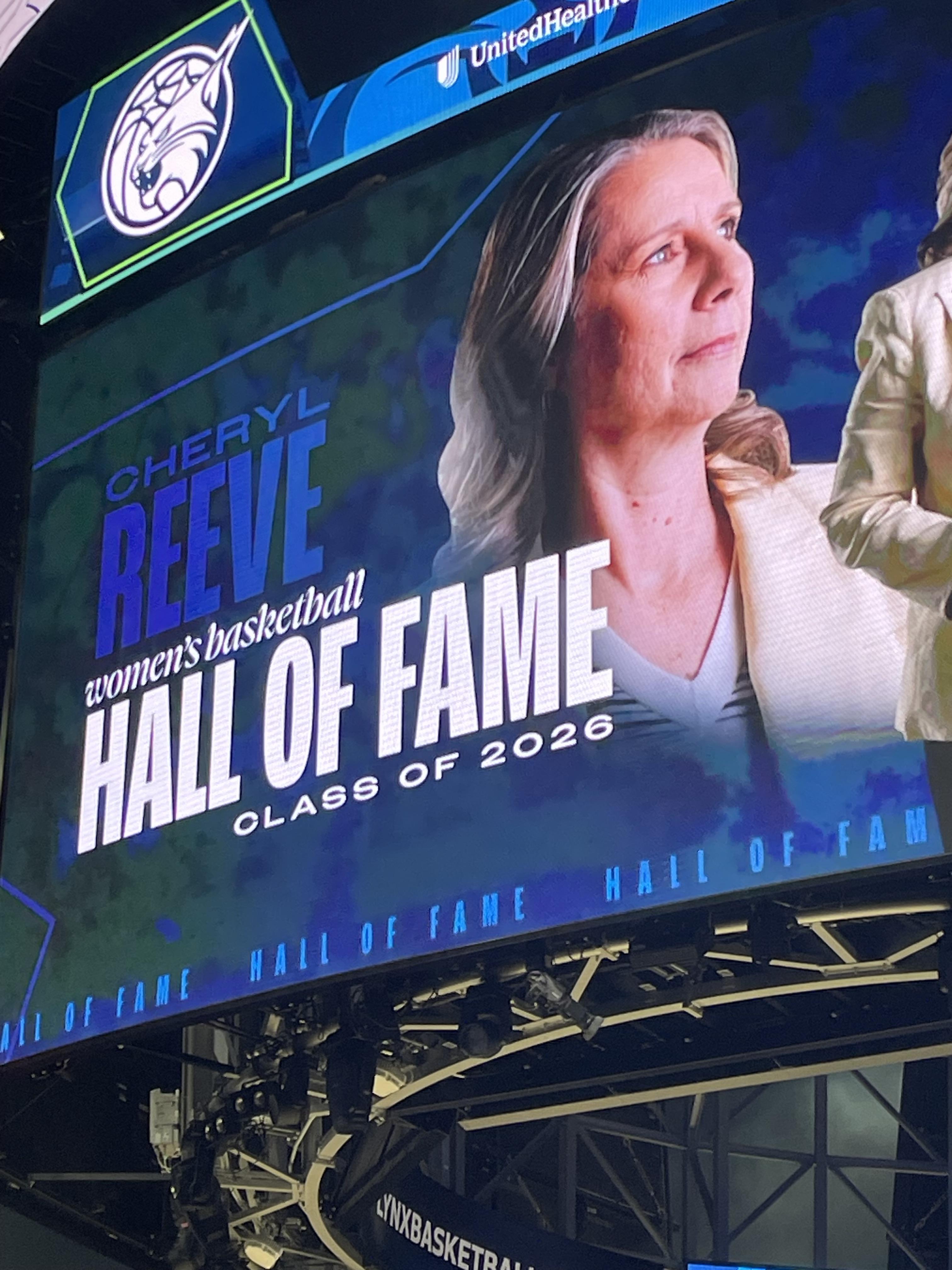
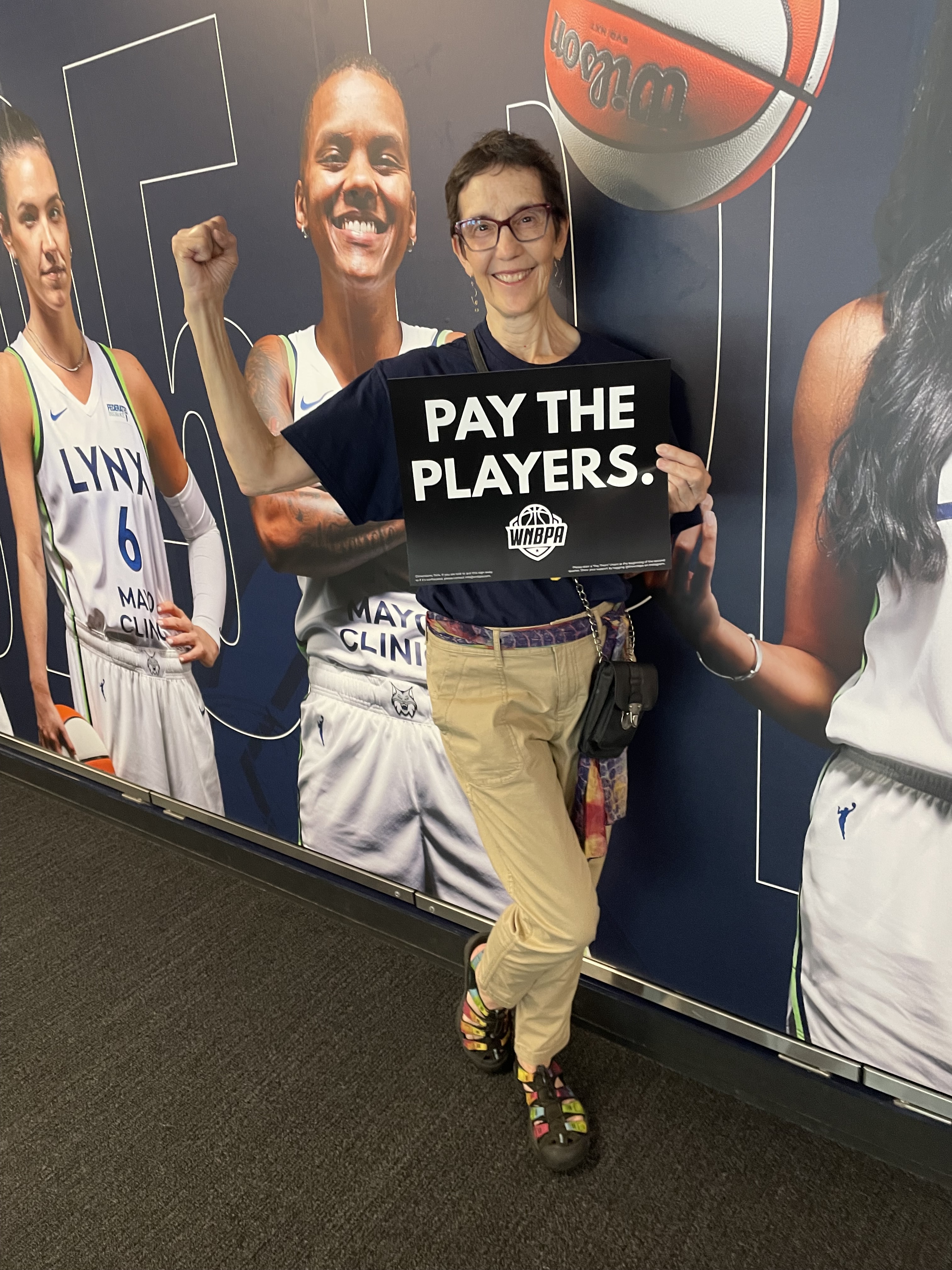
Whether fans are recent converts like me or loyal season-ticket holders who’ve hung in since arenas were half empty, we’re all taking notice of the game’s growing physicality and sharp competitive edge, as well as the star power of players who amplify their image on social media. According to The Athletic’s “No Off-Season” podcast (which I use to boost my basketball IQ and follow teams beyond the Lynx), more than 91 million viewers tuned in for the 2026 season — doubling the WNBA’s television reach just a year before.
“With each generation, we push the game forward,” declared an ad for the “W,” as fans call it, before Game 4 of the finals featuring the Atlanta Dream and the Golden State Valkyries, widely considered the two strongest defensive teams. No more dank, inferior weight rooms, or playing games in school gymnasiums, or putting up with undersized arenas, like the Atlanta Dream’s Gateway Center that seats only 3,500 people.
The Dream’s home games for this year’s playoffs moved to the 17,000-seat State Farm Arena, home to the NBA’s Atlanta Hawks. And the arena filled. True, Game 6 had to be rescheduled from the evening to early afternoon, to accommodate the men’s team, and that caused some predictable cries of sexism. But when nearly five times as many fans get to experience the women’s game in person? I’ll take that as a win.
“Believe in yourself, even when others doubt you.”
— Candace Parker
My fervent following of women’s basketball has become a running joke among my friends. They’ve learned that a quick question will elicit a detailed, impassioned answer and that I’ll schedule our get-togethers around WNBA and NCAA women’s basketball. They understand that the game holds deeper meaning for me than sports, that I embrace it as a feminist, as a sure sign of women’s progress and as an athletic older woman who had too few opportunities — and too little daring — to play the game herself.
My health club has a special rate and restricted hours for seniors, which initially I resented. Now, as I have grown to accept my own advancing age and encroaching physical limitations, I embrace the chance to work out among my peers. Every time I’m strength training, I note the number of older women bucking the messages we were raised with — be skinny, be small, don’t sweat or take up space — by pushing ourselves to be as powerful as possible at our ages.
Female athletes inspired that.
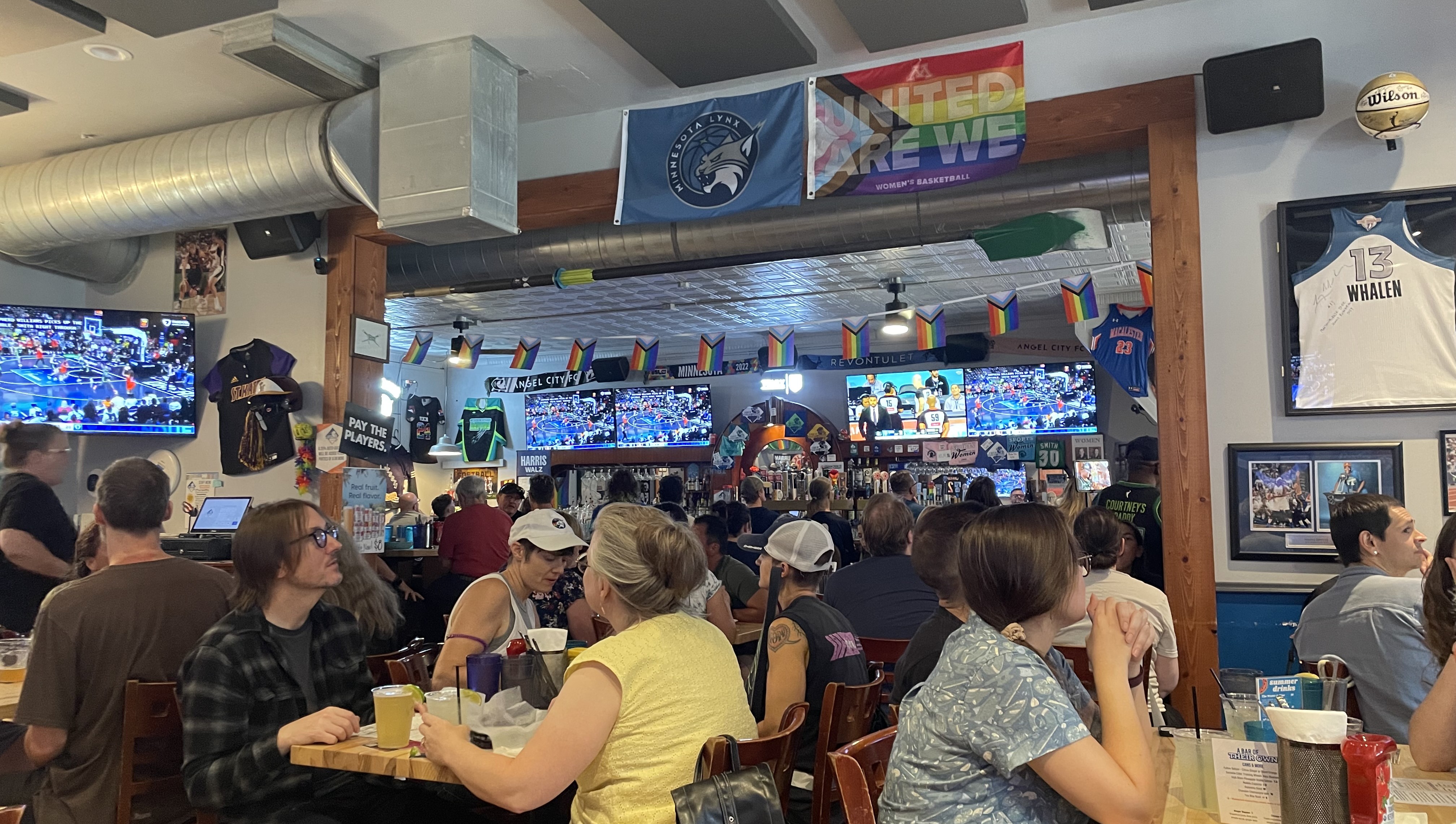
Walk into A Bar of Their Own, the women’s sports bar on Franklin Avenue in Minneapolis, and you’ll see photos of Lynx assistant coach Lindsay Whalen, focused and intense, as a University of Minnesota star point guard. There’s a muscular shot of former Lynx standout Maya Moore palming a basketball, strong deltoid muscles giving shape to her shoulders, in a pose that pays homage to Chicago Bulls great Michael Jordan. Both Hall of Fame athletes, Whalen and Moore stretch the boundaries of what being a woman means, from cautious and acquiescent femininity to the self-confidence, determination and consistent practice that being a competitor requires.
It’s tempting to write off sports figures as just that — people who entertain but don’t enlighten us. For the Minnesota Lynx, however, that isn’t true. I’ve cheered at games this past season that began with a moment of silence for Renee Good and Alex Pretti, the two Minnesota protesters gunned down by ICE agents during the racist and violent and offensively branded Operation Metro Surge in January. At another game we honored groundbreaking state Representative Karen Clark (DFL-Minneapolis), a fighter for marriage equality and many other progressive causes who was the first openly lesbian member to serve in the Minnesota Legislature.
We had a moment of silence in June 2025 when a madman impersonating a police officer murdered Minnesota House Speaker Melissa Hortman, her husband, Mark, and their family dog at the front door of their home.
“I want my legacy to be the joy I brought to others.”
— Caitlin Clark
The WNBA historically has spoken out on social issues, including Black Lives Matter, reproductive justice and this year, the question of whether trans women should be allowed to play collegiate and professional women’s sports. “Women’s sports itself remains somewhat of an act of protest, even after the passing of Title IX,” wrote San Francisco Guardian columnist Andrew Lawrence after Minneapolis police officers murdered George Floyd on a public street in May 2020, which inspired protests throughout the league. “The WNBA has been fighting for respect since its inception.”
As a straight, white, cisgender senior enamored with a league built on the talents and tenacity of Black, queer women, I listen, I learn. I sometimes disagree or get discouraged. But I see hope in the faces of the little girls and young women in the arena who will pick up the basketball, carry the torch — and challenge themselves and our society in ways that my generation could only dream of.

