
Ego, irritation and exhaustion are the watchwords of this story — the emotional and physical habits that work against us as we age. TLDR is the cheeky abbreviation for “too long, didn’t read” (yes, I learned that from a Millennial), so if you’re stopping here, try to guard against:
- Self-importance (the conviction that only you know what’s best).
- Sanctimoniousness (feeling thwarted when others counter what you believe to be right).
- Overdoing it (because you believe you can control the outcome).
I want to tamp down these tendencies in the autumn of my life. Quitting work at age 68 may help me do that.
Image by freepik
I have talked about retirement so often in this blog that my friends and family just dismiss me: You love being busy. You’ll never quit working. The first statement is true. The second has changed, which I never anticipated during my decades as a careerist.
At the end of August, after months of hand-wringing and internal debate, I finally left the last of my part-time jobs. I embraced the word “retirement,” even as I struggle still with what it means.
Getting there has been a journey:
- Three years ago, in September 2022, I resigned from full-time employment after I turned 65 and archly declared that no one should view me as “retired,” given the two part-time positions I’d taken on.
- Six months later, in March 2023, I described those jobs as a “glidepath” toward retirement and interviewed two peers who were taking similar approaches.
- A year into the gig work, in September 2023, I described how part-time professional work pulls more on your intellect and energies than a job you leave behind once the shift is over.
- In July 2024, more than a year before official retirement, I wrote about the decision to draw Social Security at age 67. It was another step closer to the inevitable. And toward acceptance.
Finally, this past February, I gave six months’ notice and developed systems that would make the transition easier for my successor. Here’s how I reconciled my instinctive desire to keep working — despite the privilege of financial security — with the reality that it was time to move on.
The first half of life is devoted to forming a healthy ego, the second half is going inward and letting go of it.
Swiss psychiatrist and psychologist Carl Jung
Once ego takes over
My final job was as managing editor of Streets.mn, an online publication that advocates for “people-centered communities”: bike and pedestrian infrastructure, public transportation, vibrant public spaces and more abundant housing throughout Minnesota. The quarter-time position was the only paid job within the volunteer-based organization. I worked with board members who had full-time responsibilities elsewhere, with unpaid contributors who had little professional writing experience, and with copy editors who were donating their time and had varying degrees of commitment to learning the fine points of AP Style.
The work was rewarding and challenging — a big stretch for a part-time gig, with the responsibility of publishing a new piece of well-reported content every weekday. The board would warn me from time to time that donations were down and cut my hours for several months at the end of 2024. And yet I remained motivated and immensely proud of the work, getting to my computer every workday before 6 a.m. to ensure we met the 7 a.m. publication deadline.
Dedication morphed into ownership as I passed the three-year mark. I thought less about what “we” were accomplishing, together, with this reputable publication and more about how “I” had transformed it into a well-oiled machine.
My successor approaches the role differently and is contributing her own strengths. In the four weeks since I left, I have ceased to check the website every morning and note the copy-editing changes I would have made. (A friend challenged me to stop; just stop.) Time to separate, to let go and, for my own peace of mind, to abandon the notion that my way is the only and obvious answer.
Endings are a little overrated. When the ending is here, it’s here, and you just move forward.
WNBA all-star Diana Taurasi, who retired in 2025 at age 42
Restless, irritable and discontent
My insider joke, more relevant a year ago, was that I didn’t want to become the Joe Biden of Streets.mn — the oldest person in the room at board meetings, writers’ gatherings and readers’ happy hours; the leader who couldn’t accept that she was aging out.
Collaborating with younger people helps keep me mentally fresh. I’ve recognized that since I turned 60. Still, as my quit date got closer, little irritants kept popping up that I could only attribute to a generational divide:
- A Macalester College student who wrote for us occasionally texted me after our coffee meeting to suggest I use AI editing to reduce my workload — apparently unaware of all the years of experience and mentorship it required for me to get good at this.
- A guest on a Streets.mn podcast episode declared that “all cops suck” in Minneapolis, and the host agreed, as though it’s a verified fact. I don’t believe that to be true, nor is it my experience with police. But maybe those are the uninformed musings of an older white woman.
- Though I often told writers that an editor’s job is “to make you look good,” I grew weary of polishing stories that lacked focus or solid reporting. I wondered whether my obsession with word choice, fact-checking and well-crafted sentences was outdated in an era when fewer people read books — or read, period — and when TikTok users see “celebrities” and “influencers” as a legitimate source of news.
A former college professor, a woman whose work was her calling, told me she knew it was time to retire when she got tired of dealing with students. Exactly.
We do best when we learn how to have both work and rest in our lives.
Women Rowing North (2019), by Mary Pipher
The body’s wisdom
I kept notes during the first month of my retirement to track how this life change feels physically and emotionally. I was sick the first few days: stomach problems, little appetite, a newfound love of naps. After consulting WebMD and freaking out at the possibilities, I came to recognize that my malady was pure exhaustion.
I am grateful every day that I enjoy such good health at 68. I can’t imagine life without biking, walking, yoga classes, physical mobility. Yes, these are the “golden years.” But how long can they last?
Two weeks ago, my cousin had to cancel our plans to meet at the Minnesota Landscape Arboretum, and I had an entire day unscheduled. I cooked and listened to podcasts, took a bath and read, baked spoonbread in two pans and shared one with a neighbor who has suffered a broken collarbone. I never allow myself this luxury of time.
“When transitions happen and identities change, one of our great challenges is to find a new sense of meaning and purpose in our lives,” writes psychologist Mary Pipher in the 2019 book Women Rowing North, which is written for the phase of life I’m entering.
This is my chance, finally, to put family first. To cultivate and honor friendships, the intentional family that has stood by me. To spend time with my first grandchild and be present for my grown sons. To retire not only from a career but from achievement and doing, from broadcasting accomplishments on LinkedIn, from filling up my calendar because it helps me feel important.
Time is fleeting. That’s a reality for everyone, but only in old age do you know it to be true.
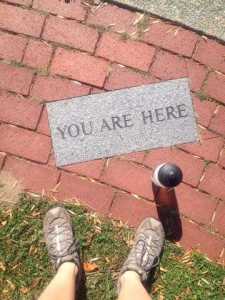 me, who a year ago traded a 40-mile commute for a walkable distance to work of 1.2 miles. Now, instead of nonstop meetings by iPhone in unpredictable weather and crawling traffic, my commute entails reading sidewalk poetry, admiring the art of urban landscaping and simply getting lost in my own thoughts.
 The Middle Stages: Between Midlife and Old Age