Tag Archives: Planned Parenthood

Age Can Help Us Resist Tribal Thinking

“I’ve learned how to say ‘no.’”

“I no longer spend time with people who drain my energy or don’t interest me.”

“I’ve quit over-filling my calendar.”

“I am trying to focus on what matters in the time I have left.”

Declarations like these are common among young-old women like me, who built careers in an era with few social supports, who have raised children or seen their parents to their graves, who once viewed multi-tasking as a virtue and wore their stress on their sleeves. Women who led purposeful lives for decades.

Photo by Mehdi Merzaie on Unsplash

Now, many of us achievers in our 60s are seeking how best to spend our golden years — how to make a difference and live a life of meaning while our health still holds. For me, that means becoming more discerning about where I choose to volunteer and when to stand up for my point of view.

Since retiring, finally, in September, I’ve been digging deeper into the causes I already support — reproductive rights and food insecurity — and investigating where else I want to spend my time. That has brought me up against a different sort of challenge: Where to turn and what to say when my views run counter to the ethics of my chosen community and the causes and political leaders I support. Where can I safely speak my truth?

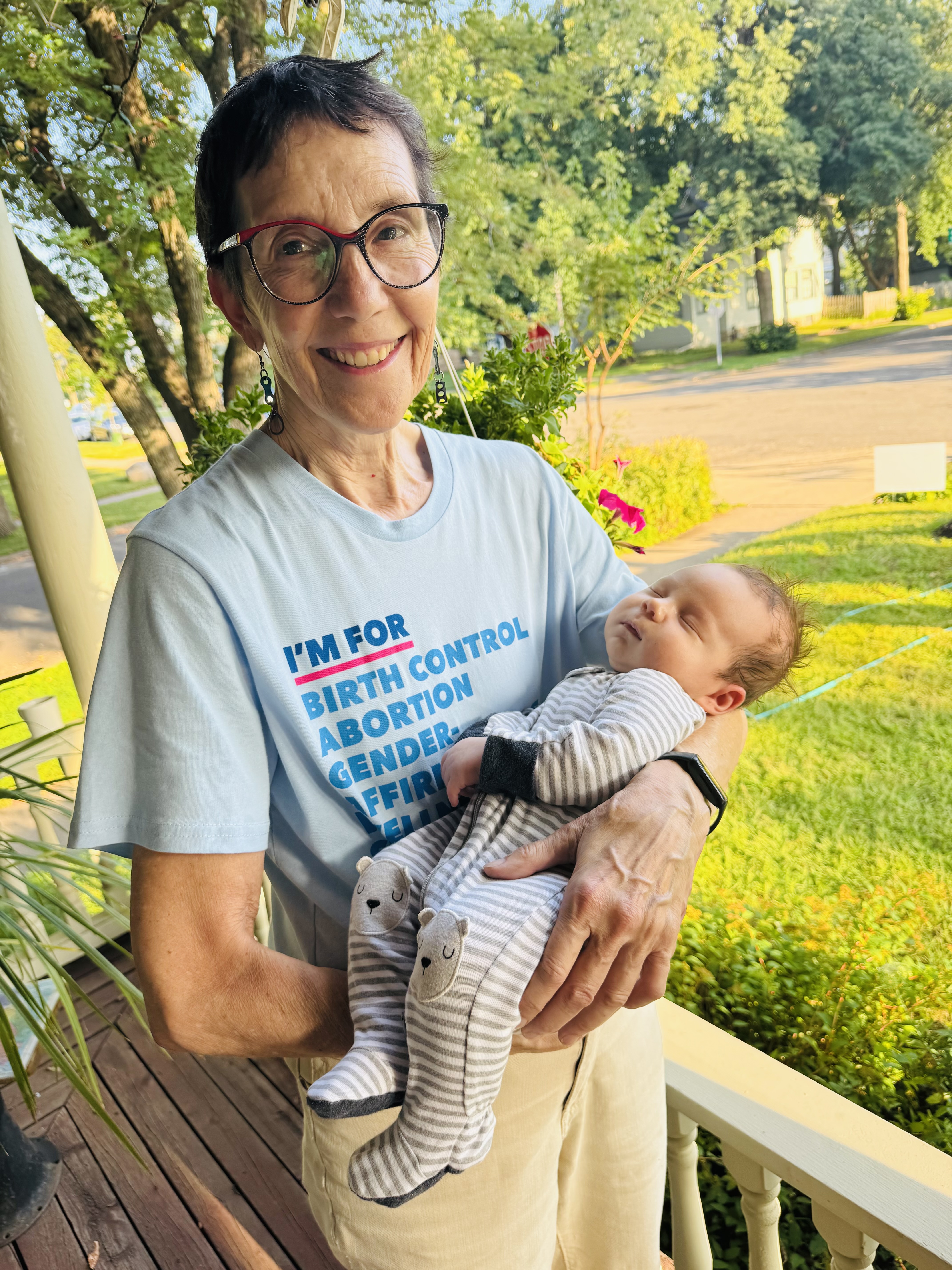
Case in point: I was delighted to volunteer for Planned Parenthood North Central States’ first booth at the Minnesota State Fair on Labor Day earlier this year. But I was mortified when I picked up my light-blue T-shirt in advance and saw the list down the front of what the organization — and supposedly the wearer — stands for. “I’m for birth control, sex education and gender-affirming care” all ring true for me. I can wear that across my chest in public.

But “I’m for abortion”? No, I don’t promote it. What I have marched, volunteered and donated money for since the days when we thought Roe v. Wade would never fall is the protection and expansion of abortion rights. That’s the language I wanted on the T-shirt. When I proposed that to the young staff member in charge of our booth, she said the movement wants to remove any stigma or sense of shame from the practice of abortion. I see her point, but I also saw the quickly averted glances while I walked around the fairgrounds. And Planned Parenthood needs supporters these days, not skeptics.

More significant than what others thought of me is how the T-shirt made me feel. I wore it home, forgot to change and let my husband take a photo of me holding our infant grandson beneath the words “I’m for abortion.” After that, I just gave the shirt away.
An agnostic seeking answers

Binary thinking dominates our yes-or-no, right-or-wrong, polarized society. Am I willing to lurk in the shadows between the black and white, or can I dare to lead a life in living color? By speaking up about my nuanced views on, say, trans women in sports — or countering a local activist whom I believe is unfairly maligning a mayoral candidate in our upcoming election — might I be banished from my tribe, the network of colleagues and left-leaning friends that I have cultivated since my 20s?

I am trying to find the line between honesty and provocation, between truth telling and egocentric mansplaining (yes, women do it, too). Recently, I had a chance to test this out.

“Dear Neighbors,” began the note, delivered quietly to my mailbox on a sunny fall day. “I belong to a community organizing group called Isaiah. Your yard signs have encouraged me to think that you might be interested in one or both of these community events.”

The yard signs that I had out on my corner lot included:

  • “All Are Welcome Here” by my well-tended Little Free Library;
  • A “Vote Yes” sign for the public-school referendum in St. Paul, where we homeowners already are overtaxed but feel obliged to support our underfunded schools; and
  • A “Safer Summit” sign to promote a multi-million-dollar off-road bike trail on the city’s signature street, which many who live on Summit Avenue ardently oppose.

My neighbor, whom I don’t know well, had the courtesy to sign her pitch. She is among a handful of people who have pointed me toward the good work Isaiah does in our community, including its calls for a transition to clean energy and “dignified wages” for childcare professionals. Still, as an unchurched agnostic — one who believes in a higher power but doesn’t claim to know its shape or origin — I resist Isaiah’s religious orientation.

I emailed my neighbor a week or so later. No liberal can rightly argue with racial and economic equality, I told her, and Isaiah’s call for a “collective voice” is a smart strategy that conservatives have long employed — but I can’t move past the organization’s faith-based roots. I signed off by urging the woman to “keep up the good fight.”

As of this writing, she has not responded, and that’s unfortunate, because it shuts down any opportunity for mutual understanding.
Tribal thinking discourages dialogue

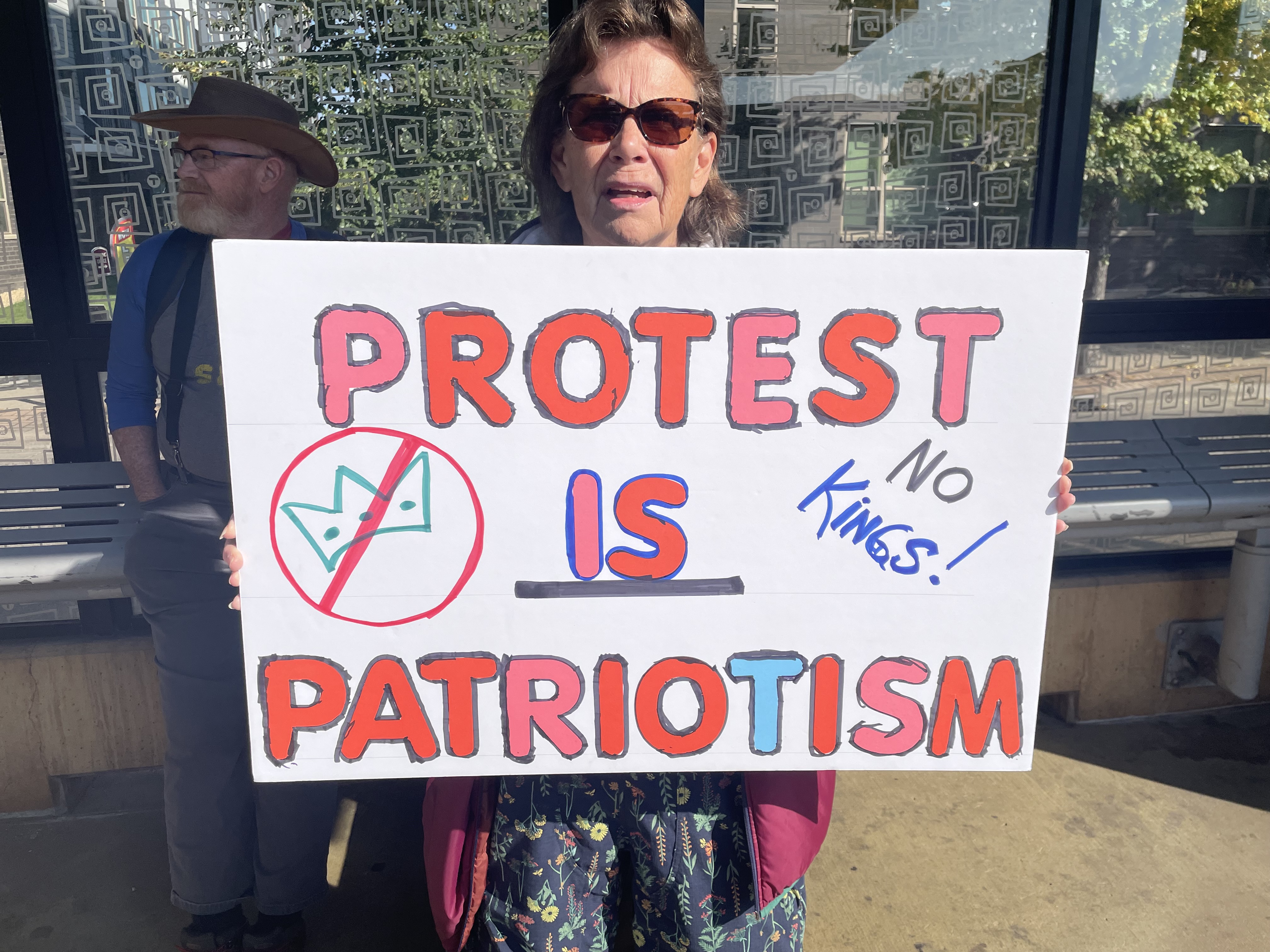
“Speak your mind, even if your voice shakes,” goes a famous quote by Gray Panthers founder Maggie Kuhn. I didn’t think about my personal safety when I took the light-rail train to Minneapolis on a sunny Saturday morning in October to join 100,000 people in a No Kings rally. Opposing the policies of Donald Trump felt that important.

Nor did I hesitate recently to display a yard sign calling on the City of Saint Paul to reinstitute its common-sense restrictions on student housing in our neighborhood, even though people with whom I often politically align oppose it. The state’s largest private university is five blocks away. Having served as that institution’s director of neighborhood relations for eight years, I know firsthand that the Student Housing Overlay District — since undone by a pro-density City Council — saved this area from being overrun by noise, trash, property crimes and ill-kept rentals.

Age has granted me more freedom to speak my truth. I’m less fearful about what other people think, or at least I can dial back my anxiety more quickly. I no longer have employers to please or any fear about my causes blowing back on them (which volunteering with Planned Parenthood did when I worked for a Catholic institution).

But I still can’t shake the niggling insecurity that speaking out on hot topics may alienate some members of my tribe or get me pilloried on social media.

Part of that fear relates to the reality that my views are moderating with age, even as my party moves farther left. Thirty days into the government shutdown — and in full support of keeping healthcare costs within reach for all Americans — I think the Democrats, my party, have played their hand and lost. Congress needs to do the people’s business again or give up their own paychecks in solidarity with sidelined workers.

Must I blast that out on social media and then fervently check my feeds to see who “likes” me and who doesn’t? As courageous as I like to think I am, that isn’t how I want to expend my energy.

“Humans, like animals, are pack animals,” says a January 2025 article in Psychology Today called “Tribalism: How to Be Part of the Solution, Not the Problem.” People naturally want to align with a group, to feel less alone, which is why demonstrations like No Kings are momentarily empowering — even if no lasting change takes place.

The article challenges us, however, not to let the emotional exhilaration of tribalist belonging overtake research and rational thought. Among the “difficult questions” that author John G. Cottone, Ph.D., asks readers to explore are these:

  • “Do I know how to recognize the propaganda of my own tribe, and resist it when I see it?”
  • “Do I pursue multiple perspectives on important issues with intellectual honesty — or do I only solicit my own tribe’s political perspective?”
  • “Do I have compassion for everyone on the road of truth, even those who are walking today where I walked yesterday?”

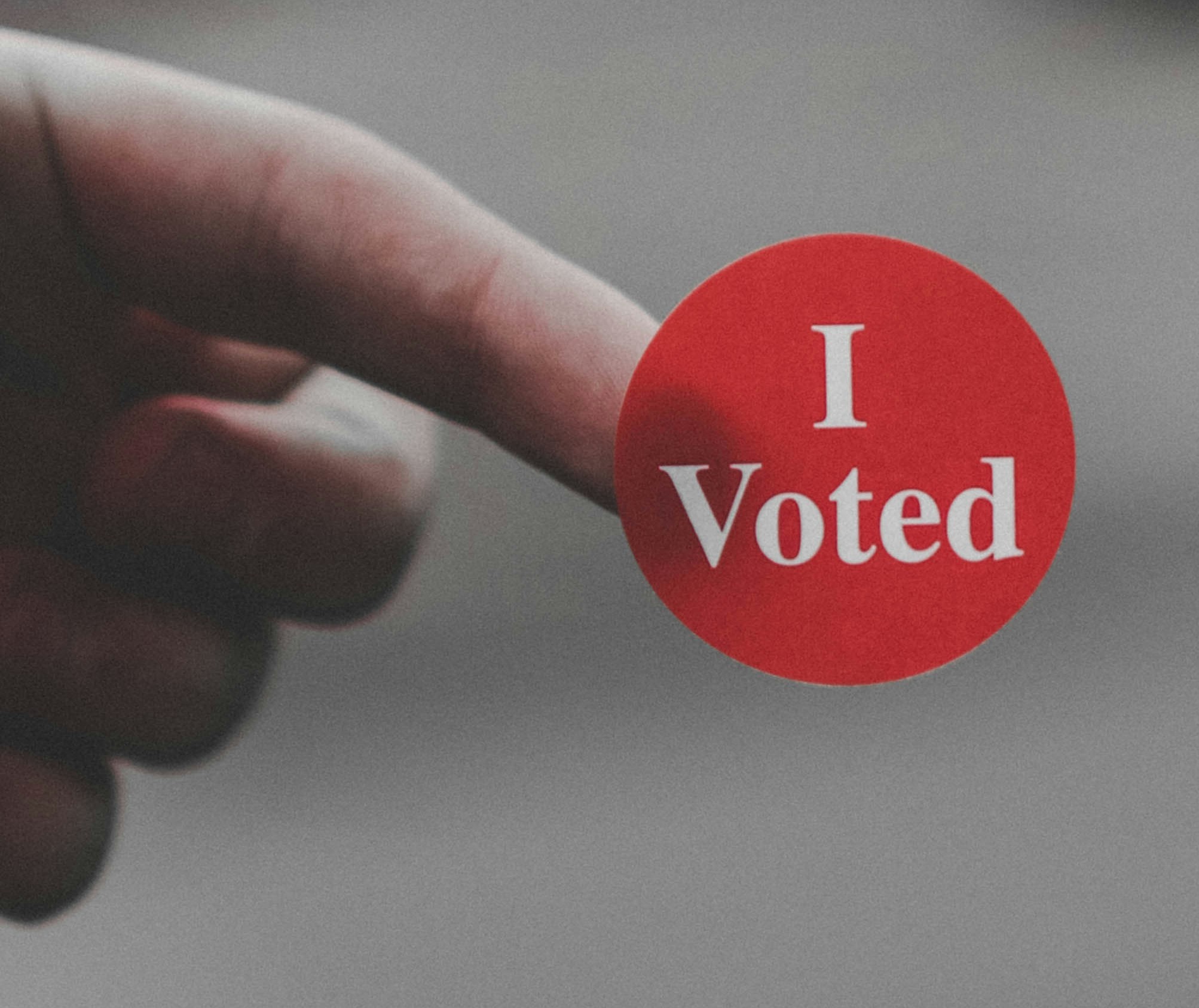
As I prepare to vote in my city’s off-year election — casting a ballot for mayor and the school funding initiative, as well as monitoring the contentious Minneapolis mayoral race across the river — I won’t be in full alignment with the bike-riding, urbanist activists, my tribal pack, who are posting lengthy arguments on Bluesky and Facebook about how they plan to vote and why.

Disagreeing with people with whom you normally align is uncomfortable, uneasy. But in this case, speaking out will mean casting a secret ballot and having the confidence to recognize where and how to use my voice.

Signs of the Times: Do Yard Signs Make a Difference?

In the 11 years that I’ve lived across the street from John and Carey, I’ve not known them to showcase their preferences or opinions with yard signs, unlike many in our liberal, activist, urban neighborhood. So I took note when a Friends of the Saint Paul Public Library sign went up in their front yard — an innocuous enough message, in a neighborhood with two colleges and at least one Little Free Library on every block. And I paid even more attention at the blue and white reminder for traffic to slow down on the side street that we share in our corner houses.

“I feel it’s some kind of miracle that a serious accident has not occurred at our intersection,” Carey told me, citing that as the reason why she got the “20 Is Plenty” sign, which the City of Minneapolis began distributing in 2020, when it lowered its speed limit to 25 miles per hour. (St. Paul began offering free signs to residents earlier this year.) The library sign was a gift to donors, she recalls.

The absence of political signs in their yard on a well-traveled corner is no accident. “We haven’t put up political signs for years,” Carey says. “Personally, I don’t think seeing a campaign sign in someone’s yard would ever influence me to vote for that candidate.”

Her stance is at the heart of my own household’s disagreement about political yard signs. My husband, David, thinks they’re a distraction and a blight. America “fought for the secret ballot for a reason,” he says, and it’s nobody’s business how we vote. I counter that when ill-informed voters fail to recognize all the names on their ballots, I want my candidate’s moniker top of mind: “Oh, yeah, I’ve heard of that one.”

I didn’t have yard signs at the house where we raised our sons in Northfield because I had visible jobs — editor of the twice-weekly local newspaper, later director of communications for one of the town’s two private liberal arts colleges — and expressing my viewpoints publicly would have been inappropriate (and unethical as a journalist).

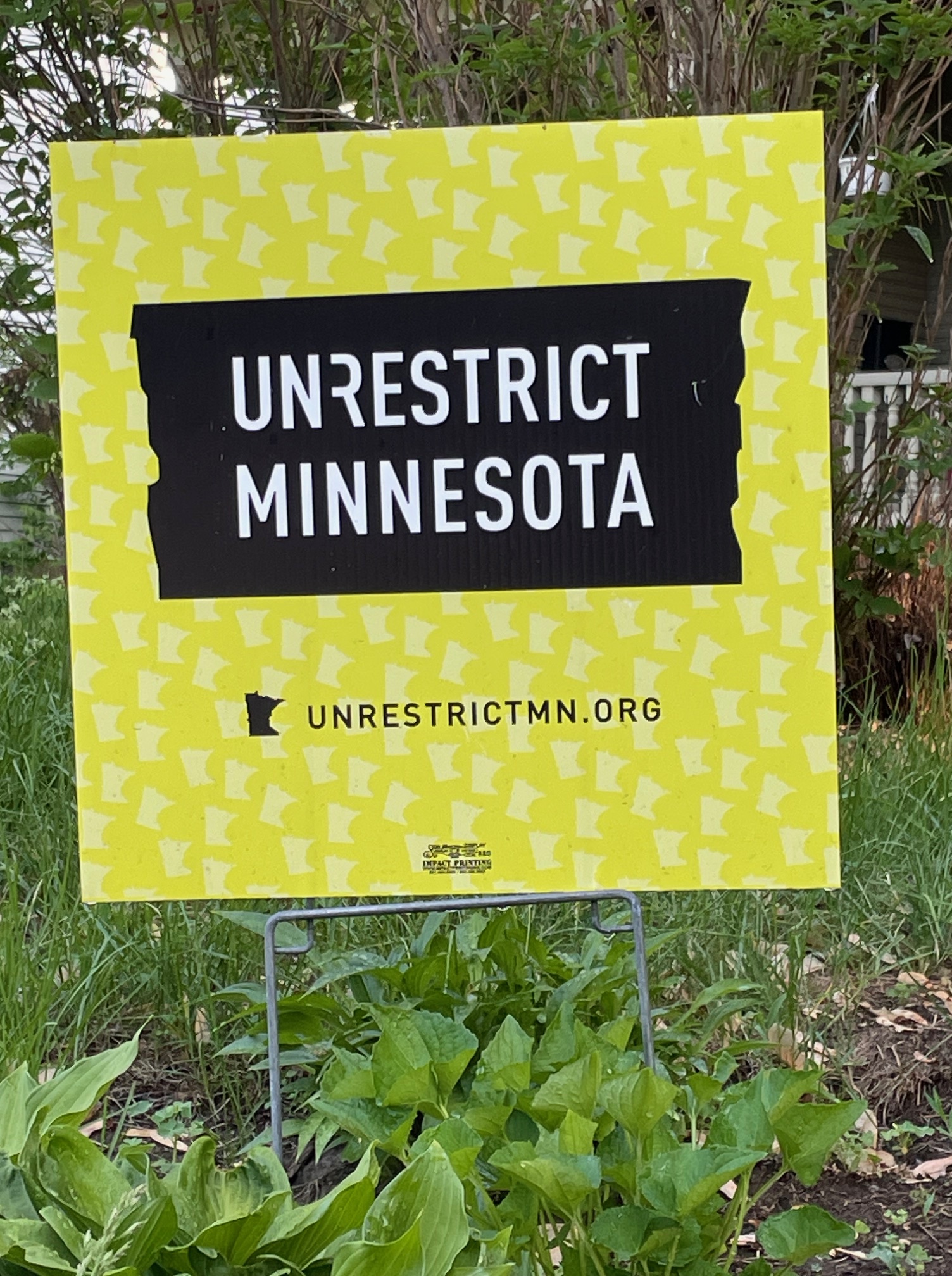
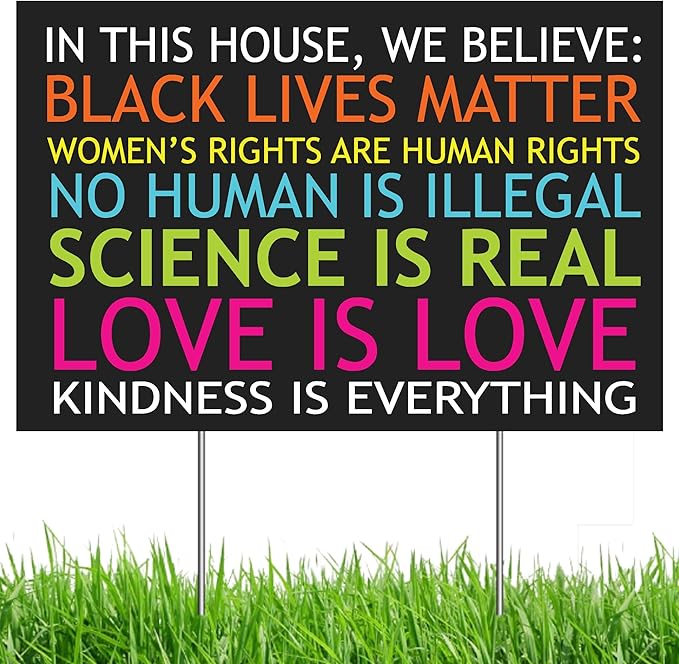
Later, when we moved to St. Paul, I hesitated to display my liberal leanings because of my position as director of neighborhood relations for the state’s largest private college, a Catholic institution. Many students and neighbors knew where I lived, five blocks east of the campus’ northern edge. An “All Are Welcome Here” sign by my own Little Free Library seemed harmless enough, but I waited to plant the pro-choice UnRestrict Minnesota sign in my front yard until I had left the university in September 2022. Having been reported to the general counsel’s office for my activism with Planned Parenthood North Central States, I prioritized job security and bided my time.

Freedom of speech

Signs, flags, bumper stickers: They can serve as advertisements, virtue signaling, rebellions against the establishment or just plain fun.

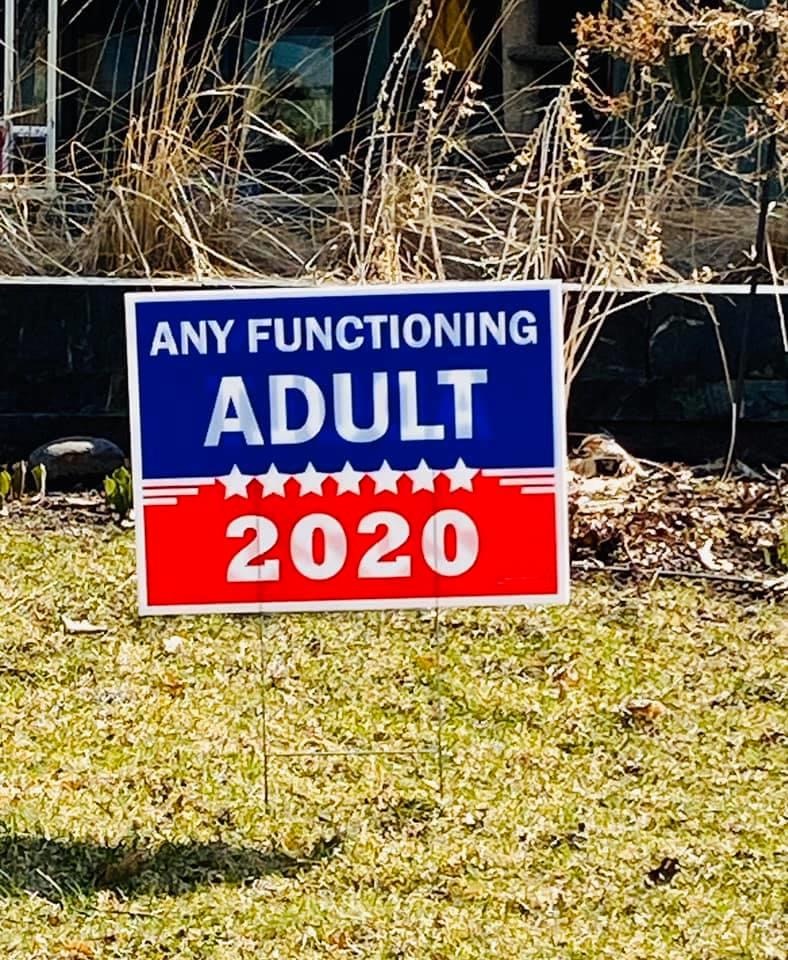
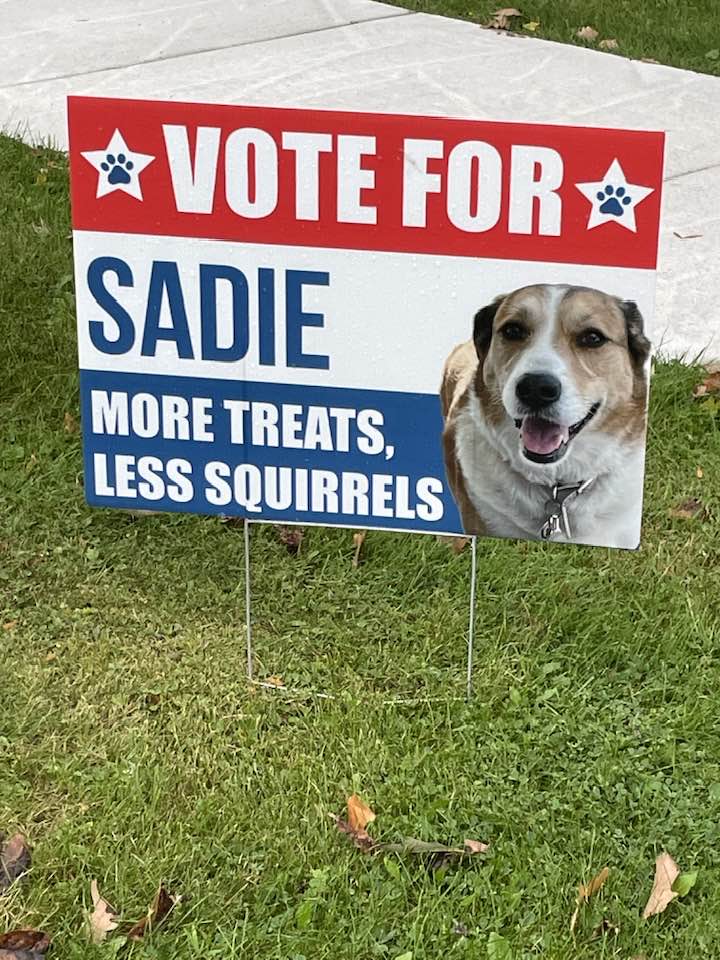
I laughed out loud when I first saw an “Any Functioning Adult” yard sign in Minneapolis during the 2020 presidential race. More recently, during another heated presidential campaign, I smiled at a yard sign in Grand Rapids, Minnesota to elect a family pet amid the battling Harris-Walz and Trump-Vance signs.

For others in my neighborhood, yard signs are both joyful expressions and serious business. Jamie, the husband and father in the family next door, has printed anti-Project 2025 signs for his yard (and mine) and was among the first on our block to put a Black Lives Matter stake in the ground. “I believe yard and window signs express my beliefs and values,” he says, “especially related to landmark and once-in-a-lifetime cultural change issues like gay marriage or systemic racial injustice.”

Jamie also has printed a T-shirt that he wears when he waves pro-democracy signs with other activists on a busy street corner once a week: “People of quality are not threated by people seeking Equality,” the T-shirt reads.

Two hand-made porch signs at my next-door neighbors’ home.

His wife says the handmade signs in their porch windows were a creative outlet for the oldest of their three children during the early days of COVID and in the explosive aftermath of the police killing of George Floyd. “Signs serve as an entry point to launching a discussion about a difficult or controversial subject,” she says, “and hopefully help others consider opposing views as less threatening.”

Another nearby neighbor — the only Republican I know on the block — put out a Nikki Haley sign back when the presidential candidate was still standing up to Donald Trump. I asked him about it one morning as we were dumping our recycling in the alley bins. He looked wary at first but later explained his motivation in an email.

“I thought she was the most qualified person in the race at the time, and I wanted to show my support and get others to notice,” he told me. “This is the first time I’ve put up a sign in more than 15 years. Nikki was the only presidential candidate I’ve been excited about in many, many years.”

Power and privilege

The Reverend Kelli Clement, a Unitarian Universalist minister, puts up signs in the front yard of her house in south Minneapolis “without worrying too much,” she says. Many of her neighbors share her views, and she works inside an institution that aligns with her values.

She describes both of those circumstances as a privilege:

  • Freedom from fear that a progressive sign would get “shot up or stolen,” which has happened to people she knows in small-town Wisconsin and other rural areas.
  • Freedom from worry that the UU congregation she serves would reprimand or discipline her for voicing opinions that run contrary to church teachings.

The UU “values of justice, equity and inclusivity are my values,” Kelli says. She can’t imagine wanting to post a yard sign that runs contrary to those. Plus, “nonprofit leaders and religious folk are individuals in their own right,” she declares. “We don’t owe our civic opinion to our place of employment.”

For Joan, whom I met through community and political organizing, yard signs are a catalyst to explore and confirm her beliefs. They help her step beyond what’s comfortable “and proclaim a position and values.” Which can be hard, she says, “if you believe you are in the minority.”

I am at an age and stage where I no longer have to appease an employer — a time of life when I am developing what I consider a healthy disregard for whether people approve of me. At 67, after decades of working hard and playing by the rules, I feel I have earned the right to be forthright and frank, so long as I don’t disrespect others. My yard signs may mean little to neighbors or passerby, but for me they represent a visible, colorful, even audacious symbol of being true to myself.

‘Glidepath’: a bridge between work and retirement

Catherine Spaeth lives in an 1894-era house with a wraparound front porch, carved oak banisters, an abundance of natural light and a high-ceilinged kitchen that suits her latest adventure — a pastry and baking certificate from Saint Paul College that she hopes to parlay into a part-time job or a small catering business.

In addition to the chance to perfect her baking skills, she likes the certificate’s emphasis on classes like “Food Safety and Sanitation” and “Culinary Nutrition Theory.” Her recently resurrected blog, The Butter Chronicles, features posts about how food choices affect our brains, the rise in U.S. sugar consumption and why professional cooks never wipe their hands on their aprons.

At 63, Spaeth (below) has run study abroad programs in private higher ed, taught American history and literature, and co-owned a company that designed college cultural immersion programs. She speaks English, French and Italian and holds advanced degrees in American studies. She and her husband, an athletic outdoorsman, took a six-month pilgrimage walk through Europe in 2022.

With a life that expansive, why go back to community college now, cramming to relearn algebra for the admissions exam only to sweat alongside students young enough to be her kids? The why is simple: Because she can. “It’s been really fun,” says Spaeth, over hot tea and homemade scones.

“Going back to school is an incredible luxury,” she acknowledges, though Spaeth balks at the assumption that she “doesn’t have to work.”

“What that conjures up for women is way different than what it conjures up for men,” she explains. “It’s saying, ‘You don’t have to do anything.’ You can stay at home and everything you do at home is not work” — a stereotype and societal perception that drove me, 40 years ago, to pursue a paid career.

Both Spaeth and her husband, a retired lawyer, plan to forego drawing Social Security until they’re 70. “We’re not big spenders,” she notes, “and our mortgage is paid off.” So, her goal in returning to college is less to earn money than to find purpose after decades of full-time work. “I don’t want a life with no commitments,” Spaeth says.

What happens after 60?

Like many professionals in their 60s, including me, Spaeth is on a glidepath toward retirement. Not ready to quit work entirely but situated financially to have options, we have left full-time careers for a variety of reasons:

  • We earned and saved enough over the course of our working lives that we could afford this choice.
  • Medicare gives us reasonably priced healthcare coverage at age 65 without having to rely on employer-provided benefits.
  • We watched as our peers, deemed irrelevant or overpriced, were laid off or restructured out (yes, it happens to people over age 60, despite the legal risks).
  • We opted to do something different — volunteer, travel more widely, pursue a passion — when the careers became less relevant to us.
  • We have spouses who may be older or are retired themselves.

Glidepath is a financial planning term that references the portfolio rebalancing typically recommended as people get closer to retirement. But it applies to the path that Spaeth and I are pursuing, too: more schooling, in her case; two part-time jobs, in mine.

As a self-described workaholic, I found myself ready to slow down at 65 but not to step away from work entirely. My career has meant too much to me — in identity and intellectual stimulation, in the pride and purpose of supporting a family — to simply flip a switch and say: “I’m done.” Plus, I also want to delay drawing Social Security.

“I love the term glidepath,” says Spaeth, whose study-abroad business ground to a halt once COVID struck. “It was a rough year and a half trying to stay afloat with no revenue coming in.” She calls the pastry and baking certificate her “next project,” one that allows her to look ahead rather than wallowing in the business loss.

That sense of optimism is particularly important as women age. “Part of wanting commitment and engagement is related to an identity,” Spaeth says. “As older women, we’re already invisible in lots of ways, and I don’t want to be out of the world, out of the working world — where, for better or worse, you get your respect or recognition.”

Endings and beginnings

Six months into my own glidepath a term I prefer to “semi-retirement” — I am learning firsthand about the challenges and benefits of leaving full-time work. The upside of two part-time jobs is apparent in the schedule I have crafted: more volunteering for Planned Parenthood, where I had to operate under the radar while employed by a Catholic university; more opportunities to cook and have people over; more reading and yoga; more coffee and meal dates with my friends and sons.

Still, the expanses of time that I expected to emerge have not materialized. “Busier than I’d like to be” is my standard response when people ask how my new life is going. That’s due in part to my tendency to overbook my calendar.

‘Retired’ is an old word, for men who are leaving manual labor.

Kathy Kelso, St. Paul-based advocate on healthful aging

But it’s also because professional occupations, which my two roles are — managing editor of a Twin Cities–based community blog and executive director of a small, environmentally focused nonprofit — do not lend themselves to hourly contract work.

  • Do you charge only for the time you’re at the computer or in meetings? Or is it legitimate to bill for travel time or for processing and “think time,” as another nonprofit executive director encouraged me to do?
  • Who pays for networking and professional development, for the outreach that yields relationships more than direct, measurable impact on a given project?
  • Most challenging, how do you right-size your ego — your past practice of operating as a doer and decision-maker — so it fits into the box that contract work constructs? When the board differs with your recommendations or does not consult you on a key decision, do you fight it, or recognize that you are not in charge?

The financial definition of glidepath fails to address that emotional turbulence. I am traveling toward a different future, but I lug along my baggage from the past — the habits and ways of working, the belief that my career defined me. I rarely called in sick. I was always pushing for new solutions. I reveled in the résumé-building accomplishments that my career allowed.

None of that matters anymore, because the glidepath leads downhill, to a door labeled “retirement,” which traditionally has meant: That’s it! You’re finished.

Retirement: define your terms

Jim McCartney, 69, a former business reporter and colleague of mine at the St. Paul Pioneer Press, is wary about the term glidepath, given its implication that his career is slowing to a stop. “I’m not necessarily wanting to land,” he says, “if landing means I have to stop writing.”

After leaving journalism for a lucrative career in public relations, McCartney faced a layoff three years ago, at the start of the pandemic. He was 66 and immediately began promoting himself as a writer for hire, even though his wife brings in a full-time income.

“I love writing,” he says. “It’s kind of my identity. I can’t imagine ever stopping writing.”

Unlike me — working at two jobs I enjoy but for significantly less than my full-time compensation, once you factor in benefits — McCartney takes pride in having earned more as a freelancer during the first year after he was laid off. “I don’t necessarily place my self-worth on what I can make, but it’s nice to know that someone is willing to pay well for my services,” he explains. “As long as I like the work, it’s a validation that you’re worth X amount per hour.”

McCartney is now doing business under the moniker JSM Communications LLC, specializing in science, medical and healthcare writing. He will wait until he turns 70 to draw Social Security, subscribing to the common wisdom that “unless you’re really sick and don’t think you’re going to live very long,” it makes sense to maximize the monthly payout from the government.

Two of his close friends from the Pioneer Press are retired and involved in volunteer work at nonprofits, their reporting days behind them. But McCartney, who began his career as a city reporter at the New Ulm Journal (above), likes the word retired even less than he likes glidepath.

“I don’t want someone to think, ‘Oh, I wish Jim were still writing, but he’s retired.’ I don’t want people to think I’m out of the game,” he says, “because I’m not out of the game. I’m still writing, but I’m doing it on my own terms.”