What the fuck! I’m tired of all the swearing

It isn’t that I never swear. It’s just that shit and fuck and goddamn and all the rest have become so ubiquitous that they’ve lost their ability to stun or shock, which, to my mind, is the whole point of swearing.

There are swear words, like the ones just mentioned, and there is crude or offensive language, and all of it seems subjective and so very public these days. On a bus ride recently to downtown St. Paul, a woman started swearing a blue streak into her phone as another man and I were exiting the bus to participate in a City Council meeting. Amid audible shouts of “Fuck this” and “fuck that,” I said to him: “This is why people are uncomfortable on mass transit.”

No one swore giving testimony at the City Council, except to say “damn” once. Clean language was a sign of respect. We know that swearing has its place, and it’s not in front of public officials whom you are asking to vote yes on your pet issue.

The older I get, the less natural that profanity sounds in my speech, as though I’m trying to sound younger, with it, more relevant than I really am — like putting on an outfit from the 1980s that still fits but no longer suits me.

A study reported on CNN Health shows that people who do swear may be more intelligent and creative, have a useful tool to control pain and are less likely to physically strike out when angered. If that’s true, then why is our society so fractured?
Because other studies from the same period, sometime in 2021, say swearing is on the rise, especially since the pandemic; and I know few people whose mental health has improved since then.

The C-Word

The call came in on a weekend, as they usually did. This time, it was a Saturday afternoon. Everyone in the neighborhood had access to my cellphone number, so I wasn’t surprised that the caller was a woman I had never met.

She had been dog-walking, she told me, across the street from the private-university campus where I worked, near single-family houses that had been given over to student rentals. That meant beer cans and weeds in the once tended yards, sagging and smelly couches on porches, and, on this late October afternoon, carved pumpkins lining the steps that led to the front door of a student house.

The word cunt was carved conspicuously, in capital letters, in one jack-o’-lantern where the teeth should have been in the grinning mouth. The woman said she could read it from the sidewalk. Based on the audible indignation in her voice, I took her to be about my age and stage — a product of a time when women’s liberation, as it was called then, sustained and shaped us.

Yes, I assured her, the C-word offended me, too.

As director of neighborhood relations at the university, I handled infractions and misbehavior among students who lived in the quiet residential blocks that surrounded campus. I prided myself on responding promptly and in person. And so, within 10 minutes, I was pounding on the students’ door. Expecting to encounter guys (entitled football players, maybe?), I was surprised to see they were all women.

“This is sexist hate speech,” I told them, after listening to their story of a (likely drunken) pumpkin carving party the night before. They shrugged it off, as did my colleagues in the Dean of Students’ office, who were dealing with the ramifications of what they considered a far more serious offense — the N-word being scrawled that fall semester on a Black student’s residence hall door.

Photo courtesy of Flickr: Creative Commons

My sons later told me the C-word was part of everyday speech in England and Australia. A female colleague called to gently explain that young women were reclaiming cunt as their own. “I don’t buy it,” I shot back. “They’re participating in their own oppression.” One could argue that Black male comics have reclaimed the N word. That doesn’t mean it should be written on a jack-o’-lantern, in full view of pedestrians — and children — on a public street.

I told her that when I type cunt in a Microsoft Word document, I get a “vocabulary” reminder: This language may be offensive to your reader. What I didn’t say was that the one time a man hurled the C-word at me, he then hurled a gob of spit in my face as well. Luckily, the assault ended there.

“CUNT: An informal name for the vagina. The word was in common use during the Middle Ages and was the name given to a number of streets in various British towns. Parsons Street in Banbury, Oxfordshire was once called Gropecunt Lane.

Urban Dictionary

‘Seven Words You Can Never Say’

We inhabit the speech patterns we heard and learned as children, until we’re old enough to develop and embrace our own. My parents raised my siblings and me to use quiet voices in the library, to address our friends’ parents as “Mr.” or “Mrs.,” a practice I carried into adulthood, and never, ever to swear.

Though I never had my mouth washed out with soap, it was an approved parental practice at the time, much like the paddle for rowdy boys in junior high.

The first time I heard my father use foul language was, oddly, when he was quoted in our small-town newspaper, the Mankato Free Press. He’d been canoeing up north on his annual getaway with the guys, and a fish of some species and considerable size hit my dad’s paddle and landed in the boat. My brother recalls a headline that played on “a real fish story” theme. I was 9 or 10 years old and shocked to read my father quoted in the paper as saying the fish came at them “like a bat out of hell.” I had never heard him swear.

I refused to let my sons say sucks or sucked when they were small, encouraging them to speak more descriptively and expand their vocabulary beyond the vulgar. Both swear liberally now, punctuating their sentences with fuckin’ so often that the word has lost its meaning, or any punch.

I ask why they find it necessary to use fuckin’ as an adjective (“Move your fuckin’ car”) or an adverb (“It was fuckin’ great”). “The concert or the restaurant was great,” spoken with gusto, would convey the same meaning. But this is how their Millennial generation communicates. It’s what they hear on social media and on Ted Lasso (“he’s here, he’s there, he’s every fuckin’ where”) and on countless comedy specials.

That I was raised in an era when comedian George Carlin was arrested for enumerating onstage the “Seven Words You Can Never Say on Television” seems irrelevant to my grown sons. Nowadays, young adults might concede the seven words as slang, even as vulgarities, but not as swear words.
For the record, here are the seven words as Carlin uttered them in 1972:

  • Shit
  • Piss
  • Fuck
  • Cunt (there it is!)
  • Cocksucker
  • Motherfucker
  • Tits.

Two describe private parts of women’s bodies; three are sexual acts, one of which is particularly demeaning (you guess); two are bodily functions. The profanity that people spew so readily these days bothers me not because I’m a prude — though my sons might dispute that — but because I value women in a world that still does not.

Consider how many of these so-called “dirty” terms and phrases denigrate or poke fun at women’s bodies, sexual practices or health habits (yes, a douche bag is a legitimate thing; look it up). And then tell me they are harmless.

“Fuck!”

Ruth Bader Ginsburg and then-President Bill Clinton upon his appointment of her to the U.S. Supreme Court in 1993. Photo courtesy the BBC.

A friend who is a recognized leader in the abortion rights movement in Minnesota telephoned me on September 18, 2020, to break the news that U.S. Supreme Court Justice and feminist icon Ruth Bader Ginsburg had died. “I wanted you to hear it from me,” my friend said.

We both knew this spelled the end of Roe v. Wade. The president, after all, was Donald Trump.

Among the first people I texted was my sister-in-law in Boston, an attorney who, as a law student, got to meet Ginsburg and hear her speak. She replied immediately and with as much fraught emotion as I was feeling.

“Fuck!” the text read. That said it all.

The full weight of the utterance hit me because I rarely hear her swear. It was powerful punctuation to a moment that began to reshape women’s rights and freedoms as my Baby Boomer generation had known them. That was swearing as it should be: effective, to the point and rare.

It Can Take Years to Recognize Your True Colors

Anyone with grown children surely can recall elementary school field trips to an apple orchard, a local park or a science museum where their kids were assigned to wear matching T-shirts. Decades back, I took it to be a simple, visual way to keep the kids together and prevent the wanderers and rowdies, like my older son, from getting lost, which soothed my maternal anxieties.

But now that I’ve had opportunities to wear my own matching-color uniforms in both professional and volunteer roles, it occurs to me that the T-shirts also provided children with identity and pride, a reassuring sense of place. Like a sports team or a squad of soldiers, the kids felt special. Like they belonged.

My own, more recent experiences with uniforms and matching T-shirts tell a similar story of belonging — and of recognizing our true colors as we age.

Dressing alike at work “builds rapport and makes us feel safe. If there is a sense of conformity, then we feel able to identify ourselves in others, which can bring a level of certainty.”

Dr. Sarah Jane Khalid, METRO.co.uk

Years ago, when I was head of marketing and communications at St. Catherine University, our president had a penchant for morphing the annual launch of the academic year from a standard motivational speech into a stage show, complete with musicians and dancers. I tap danced twice, alongside other game faculty and staff members who saw the assignment as a novel break from our workaday routine.

The president had a canny ability to showcase her subordinates’ creativity while nurturing their loyalty and sense of place. That was most evident the year she ordered hundreds of matching T-shirts, swore department heads to secrecy and then closed campus after her opening-day address so everyone could hop on chartered buses and enjoy a late August day at the Minnesota State Fair.

I still remember the giddy thrill of strolling through the fairgrounds and acknowledging other purple-clad Katies with a wink and a wave. Whether friends or strangers, we felt this unmatched sense of belonging, all because of matching shirts.

Though examples abound about how the potent mix of power and uniforms can be brutally misused, in this case the common colors served the common good. Matching purple T-shirts helped us show the world that we were part of, and proud of, our campus and its women’s college culture.

“It is always an honor to put on a uniform.”

San Diego Padres third baseman Manny Machado

A less happy experience with uniforms occurred recently at the headquarters of Planned Parenthood North Central States when I arrived for my monthly shift to make donor thank you calls. The usual array of protestors was on the public sidewalk as I passed by: kneeling to pray and count rosary beads, pacing and chanting with gruesome signs, yelling at patients as they left their vehicles and before they’d made it safely to the main door.

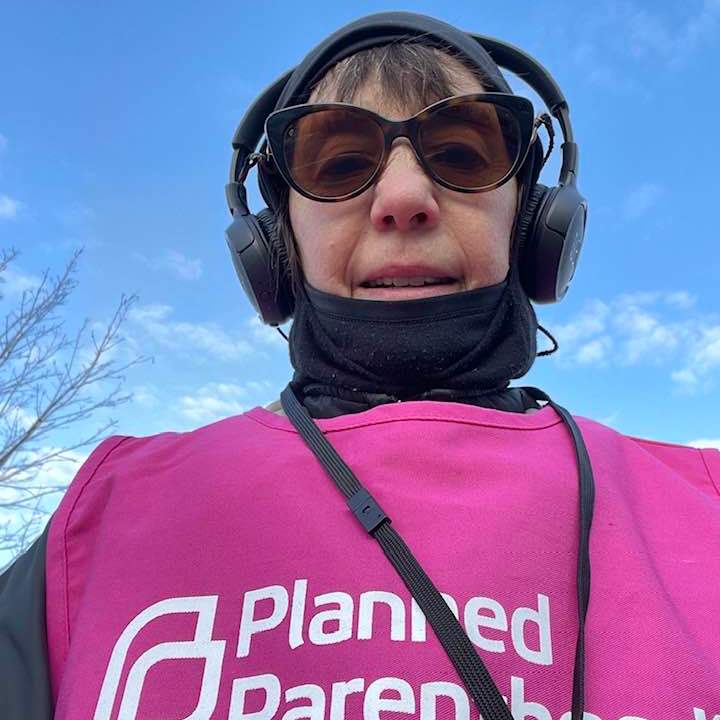
As a volunteer, you try to tune out the racket. As an older woman, I have learned that temper rarely serves me. But the fall of Roe v. Wade, the misogynistic bills in state legislatures around the country, the sanctimony of Trump’s conservative court that, I believe, will harm democracy even more than the insurrection — all of my simmering resentment boiled over into rage that day when I saw a protestor wearing a hot pink vest, in the exact style and color of Planned Parenthood’s volunteer security team.

I strode past her, toward the building, and then pivoted and marched back. I’d never shouted at a protester, something we are ordered not to do. “Hot pink is our color,” I said, standing inches from her face. “That is the most cynical thing you can do, to impersonate a volunteer and make women think you’re here to help them. You have no idea what people are here for.”

I ignore the woman now when I arrive for my volunteer shifts as an escort or a phone banker, and breathe a sigh of relief when I see someone in the driveway wearing the pink security vest branded with white lettering: smiling, waving, welcoming me inside the gates. Hot pink is our refuge, our code and color — our symbol of collective resistance to a society that increasingly restricts voting, that fears other freedoms and that will not stop with a rollback of abortion rights.

“One thing I’ve learned as I’ve gotten into serious old age, it’s not nearly as scary when you’re inside it.”

Jane Fonda, “Wiser Than Me” podcast with Julia Louis-Dreyfus

I am 20 years younger than Jane Fonda, one of my icons; and yes, in my darker moments, I do fear growing older, dreading mobility loss the most. Aging is intimidating, and if any person 65 or older tells you differently, take time to ask a few follow-up questions.

Among the health risks for older people, cherry picked from a list of 15: dementia, incontinence, heart disease, hypertension, arthritis, depression, hearing loss and cancer. No wonder the United Nations declared 2021–30 the Decade of Healthy Aging, given the exploding population of older folks worldwide.

One can deny aging, as I am prone to do — stubbornly insisting, for example, that the name of my blog remain “The Middle Stages” (“Do you plan to live to 130?” one sarcastic reader inquired). So, it’s no surprise that I’ve resisted participating in what I’ve derisively called the “old people” classes at Lifetime Fitness, the facility I joined for free once I qualified for Medicare.

During my first class in the Aurora “community,” Lifetime’s program for active seniors, I announced to anyone who would listen — and likely more than a few folks who didn’t care — that I’d transferred recently from CorePower, the youthful yoga chain founded in Denver. When I didn’t return to my Aurora class for weeks, the front desk at Lifetime reached out to entice me back with, yes, a colored T-shirt.

In contrast to the industrial black-and-gray shirts pedaled to younger members of the club, the Aurora shirts are a calming shade of blue. Would this relegate me, a former fitness instructor, to forever exercising among slow-moving seniors?

“Healthy, active, social,” the back of my blue shirt reads. I swallowed my pride and wore the T-shirt to an Aurora program full of bald and graying heads, a Pilates class that acknowledged realities like foot neuropathy and shrinking muscle mass. I was one of four people wearing the blue T-shirt in class that day, and like the schoolkids of decades past, that helped me feel at home.

“People eventually show their true colors,” the saying goes. Mine are now hot pink for social action and a soft sky blue for safer, gentler physical activities that encourage both self-acceptance and self-care. All of us 65 and older are journeying toward a future that none of us can see. It’s a different sort of field trip, complete with matching T-shirts.

It is the place where I belong.

‘Glidepath’: a bridge between work and retirement

Catherine Spaeth lives in an 1894-era house with a wraparound front porch, carved oak banisters, an abundance of natural light and a high-ceilinged kitchen that suits her latest adventure — a pastry and baking certificate from Saint Paul College that she hopes to parlay into a part-time job or a small catering business.

In addition to the chance to perfect her baking skills, she likes the certificate’s emphasis on classes like “Food Safety and Sanitation” and “Culinary Nutrition Theory.” Her recently resurrected blog, The Butter Chronicles, features posts about how food choices affect our brains, the rise in U.S. sugar consumption and why professional cooks never wipe their hands on their aprons.

At 63, Spaeth (below) has run study abroad programs in private higher ed, taught American history and literature, and co-owned a company that designed college cultural immersion programs. She speaks English, French and Italian and holds advanced degrees in American studies. She and her husband, an athletic outdoorsman, took a six-month pilgrimage walk through Europe in 2022.

With a life that expansive, why go back to community college now, cramming to relearn algebra for the admissions exam only to sweat alongside students young enough to be her kids? The why is simple: Because she can. “It’s been really fun,” says Spaeth, over hot tea and homemade scones.

“Going back to school is an incredible luxury,” she acknowledges, though Spaeth balks at the assumption that she “doesn’t have to work.”

“What that conjures up for women is way different than what it conjures up for men,” she explains. “It’s saying, ‘You don’t have to do anything.’ You can stay at home and everything you do at home is not work” — a stereotype and societal perception that drove me, 40 years ago, to pursue a paid career.

Both Spaeth and her husband, a retired lawyer, plan to forego drawing Social Security until they’re 70. “We’re not big spenders,” she notes, “and our mortgage is paid off.” So, her goal in returning to college is less to earn money than to find purpose after decades of full-time work. “I don’t want a life with no commitments,” Spaeth says.

What happens after 60?

Like many professionals in their 60s, including me, Spaeth is on a glidepath toward retirement. Not ready to quit work entirely but situated financially to have options, we have left full-time careers for a variety of reasons:

  • We earned and saved enough over the course of our working lives that we could afford this choice.
  • Medicare gives us reasonably priced healthcare coverage at age 65 without having to rely on employer-provided benefits.
  • We watched as our peers, deemed irrelevant or overpriced, were laid off or restructured out (yes, it happens to people over age 60, despite the legal risks).
  • We opted to do something different — volunteer, travel more widely, pursue a passion — when the careers became less relevant to us.
  • We have spouses who may be older or are retired themselves.

Glidepath is a financial planning term that references the portfolio rebalancing typically recommended as people get closer to retirement. But it applies to the path that Spaeth and I are pursuing, too: more schooling, in her case; two part-time jobs, in mine.

As a self-described workaholic, I found myself ready to slow down at 65 but not to step away from work entirely. My career has meant too much to me — in identity and intellectual stimulation, in the pride and purpose of supporting a family — to simply flip a switch and say: “I’m done.” Plus, I also want to delay drawing Social Security.

“I love the term glidepath,” says Spaeth, whose study-abroad business ground to a halt once COVID struck. “It was a rough year and a half trying to stay afloat with no revenue coming in.” She calls the pastry and baking certificate her “next project,” one that allows her to look ahead rather than wallowing in the business loss.

That sense of optimism is particularly important as women age. “Part of wanting commitment and engagement is related to an identity,” Spaeth says. “As older women, we’re already invisible in lots of ways, and I don’t want to be out of the world, out of the working world — where, for better or worse, you get your respect or recognition.”

Endings and beginnings

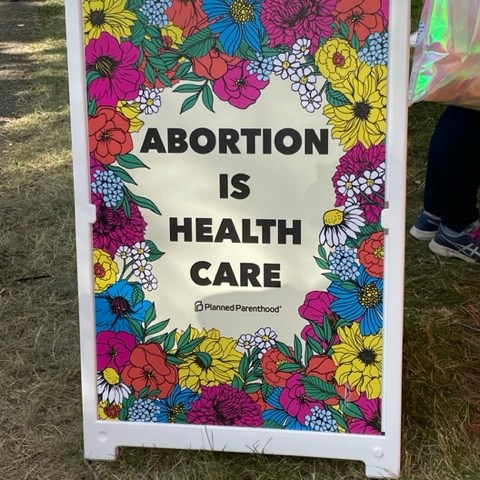
Six months into my own glidepath a term I prefer to “semi-retirement” — I am learning firsthand about the challenges and benefits of leaving full-time work. The upside of two part-time jobs is apparent in the schedule I have crafted: more volunteering for Planned Parenthood, where I had to operate under the radar while employed by a Catholic university; more opportunities to cook and have people over; more reading and yoga; more coffee and meal dates with my friends and sons.

Still, the expanses of time that I expected to emerge have not materialized. “Busier than I’d like to be” is my standard response when people ask how my new life is going. That’s due in part to my tendency to overbook my calendar.

‘Retired’ is an old word, for men who are leaving manual labor.

Kathy Kelso, St. Paul-based advocate on healthful aging

But it’s also because professional occupations, which my two roles are — managing editor of a Twin Cities–based community blog and executive director of a small, environmentally focused nonprofit — do not lend themselves to hourly contract work.

  • Do you charge only for the time you’re at the computer or in meetings? Or is it legitimate to bill for travel time or for processing and “think time,” as another nonprofit executive director encouraged me to do?
  • Who pays for networking and professional development, for the outreach that yields relationships more than direct, measurable impact on a given project?
  • Most challenging, how do you right-size your ego — your past practice of operating as a doer and decision-maker — so it fits into the box that contract work constructs? When the board differs with your recommendations or does not consult you on a key decision, do you fight it, or recognize that you are not in charge?

The financial definition of glidepath fails to address that emotional turbulence. I am traveling toward a different future, but I lug along my baggage from the past — the habits and ways of working, the belief that my career defined me. I rarely called in sick. I was always pushing for new solutions. I reveled in the résumé-building accomplishments that my career allowed.

None of that matters anymore, because the glidepath leads downhill, to a door labeled “retirement,” which traditionally has meant: That’s it! You’re finished.

Retirement: define your terms

Jim McCartney, 69, a former business reporter and colleague of mine at the St. Paul Pioneer Press, is wary about the term glidepath, given its implication that his career is slowing to a stop. “I’m not necessarily wanting to land,” he says, “if landing means I have to stop writing.”

After leaving journalism for a lucrative career in public relations, McCartney faced a layoff three years ago, at the start of the pandemic. He was 66 and immediately began promoting himself as a writer for hire, even though his wife brings in a full-time income.

“I love writing,” he says. “It’s kind of my identity. I can’t imagine ever stopping writing.”

Unlike me — working at two jobs I enjoy but for significantly less than my full-time compensation, once you factor in benefits — McCartney takes pride in having earned more as a freelancer during the first year after he was laid off. “I don’t necessarily place my self-worth on what I can make, but it’s nice to know that someone is willing to pay well for my services,” he explains. “As long as I like the work, it’s a validation that you’re worth X amount per hour.”

McCartney is now doing business under the moniker JSM Communications LLC, specializing in science, medical and healthcare writing. He will wait until he turns 70 to draw Social Security, subscribing to the common wisdom that “unless you’re really sick and don’t think you’re going to live very long,” it makes sense to maximize the monthly payout from the government.

Two of his close friends from the Pioneer Press are retired and involved in volunteer work at nonprofits, their reporting days behind them. But McCartney, who began his career as a city reporter at the New Ulm Journal (above), likes the word retired even less than he likes glidepath.

“I don’t want someone to think, ‘Oh, I wish Jim were still writing, but he’s retired.’ I don’t want people to think I’m out of the game,” he says, “because I’m not out of the game. I’m still writing, but I’m doing it on my own terms.”