Elder-care duties call us to seek the best inside ourselves

I’d heard the news about women and memory loss by the time my sister sent her foreboding e-mail — “a little scary, sisters” — with a link to a story headlined: “Women Descend into Alzheimer’s at Twice the Speed of Men.”

One in six women has a chance of getting Alzheimer’s by age 65, compared with one in 11 men. I recognize that truth every time I count the female heads at our mother’s memory care building.

What is less in the news — but ever-present in the lives of thousands of Baby Boomers, the majority also women — is the stress of caring for a loved one with Alzheimer’s.

I’ve been my mother’s primary caretaker since February 2012, when she was diagnosed with the disease. I get the 6 a.m. phone call when she refuses to take her shower. I press the doctor about why he prescribed an anti-depressant without consulting me. I clean the toilet and the sink every time I visit.

These chapters of my life are writing themselves as I rush through them. Unlike my journal, I rarely linger long enough to reflect on how I really feel. All I can hope is that my sons observe the constancy and discipline, and that, one day, they will do the same for me.

Chapter 1: The Professional Caregiver

I joined 40 other scared, sad middle-aged people at a talk in late April by Charles Schoenfeld, a Wisconsin-based author who retired from truck driving and studied to become a certified nurse assistant in dementia wards.

“Human kindness can often reach where medicine and textbooks cannot,” said Schoenfeld, the only man in his CNA classes. “It takes a special person to work in these facilities.”

We daughters and sons or spouses and partners were invited that evening by a physicians’ group that services upscale memory-care facilities. But 800,000 people in the United States who have dementia live alone, without benefit of the long-term-care insurance that allows my mother to reside in a well-appointed place with daily activities, on-site nursing care and an aide-to-patient ratio of 8:1.

The cost of $5,500 a month will drain her financial resources and exhaust her insurance within five years. At that point, if she’s still living, county assistance will kick in.

“So, what do low-income people do who have Alzheimer’s or dementia?” I asked Schoenfeld, adding that every resident but one at my mother’s home is white and all of the aides are people of color, many of them first-generation immigrants.

“That’s a head-scratcher,” he said, clearly not expecting this twist at a white-table-cloth dinner hosted at a country club. Next question?

Chapter 2: Caregiving and Work

It would be dramatic, and inaccurate, to say I downsized my career a year ago solely to care for my mother. It is absolutely true, however, that a non-management job — and the 15 hours a week it nets me — makes my time with her more possible and more pleasant.Audrie Gage_06.15
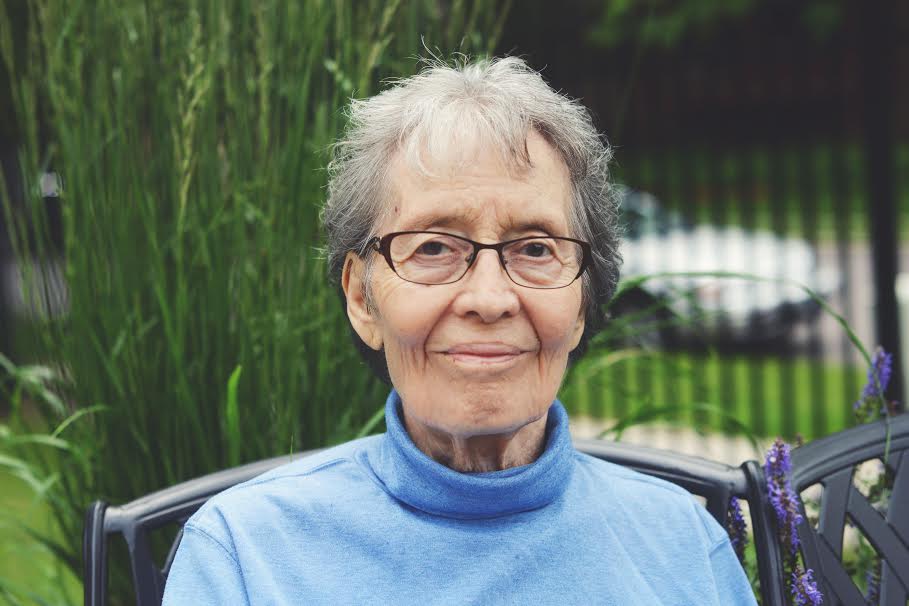
Now that Mom can no longer shop or talk politics or converse on the phone, I focus on what we can do. I wash and style her hair when I visit. I attend and sometimes lead the seated exercise class — and tear up when the residents close by singing multiple verses, from memory, of “You Are My Sunshine.”

Mom has lost 12 pounds in six months as the disease has claimed her appetite and sense of taste. I sit with her at mealtime and urge her to eat. I bring her candy bars and sugared coffees from the Caribou nearby.

I’m grateful for those moments when my maternal instincts take over, when I sit beside her on the bed and rub her shoulders or stroke her cheek. When I am thinking less about my loss than her own. And I do it all unquestioningly and mostly without complaint. I take the responsibility as seriously as I did my duties to my children.

“Working at home,” “on vacation” and “sick child” are among the dozen or so descriptive magnets on the check-out board at work. Not one of them says “elder care” or “Alzheimer’s” or “gone to see my mother while some shell of her is left.”

Work-life balance is still defined as moms with kids.

Chapter 3: Caregiver Support Group

The first time I heard about the caregivers’ support group at The Alton Memory Care, where my mother lives, I pictured the group therapy sessions on The Bob Newhart Show of the 1970s. Kooks and cranks sitting awkwardly in a circle while a droll, befuddled expert tried to lead them back to mental health.

The image amused me till I recognized the kook and crank inside myself — and felt my resistance and resentment at having to sit around that table.

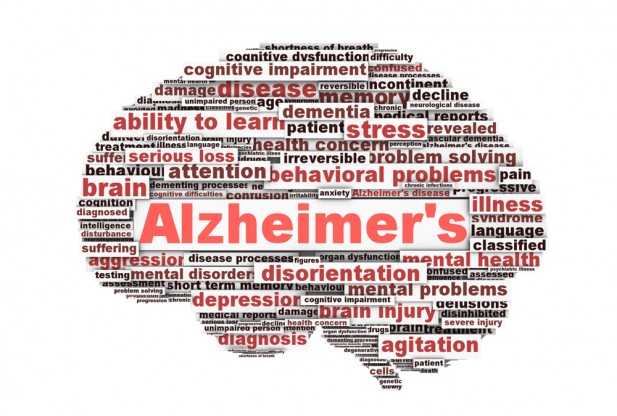
Two weeks ago a woman named Julie dominated the conversation. Her mom was just diagnosed at age 86, and Julie wanted to know every fact and facet about Alzheimer’s:Alzheimers word cloud
  • How many stages are there? (“Most experts say seven.”)
  • What’s the difference between Alzheimer’s and dementia? (“The former is a subset of the latter.”)
  • How is Lewy bodies dementia different from Alzheimer’s? (She had me there.)

“What does it matter?” I finally asked her, as kindly as I could. “You won’t be able to predict the course of this disease. Your mother will have good days and bad days. Every time you see her will be different.”

Our group leader steered us back to the strengths of people who have dementia. They live in the moment, observe non-verbal cues, always appreciate music and experience a range of emotions.

I note the absence of emotion every time I leave Mom’s building. I turn off the car radio and drive home stony-faced, in silence, seeking the distance between myself and the inevitable.

The Upside of Anger? I Rarely Find One Anymore

I work with the public and am a clearinghouse for complaints, so I deal with a lot of angry people. Sometimes I’m the target, other times I’m paid to listen. More often I’m the go-between or messenger, charged with trying to broker or influence a solution.

Whatever my role, and however legitimate the frustrations, I have learned to muster a special brand of fortitude, humor and patience to hold my own amid the heat.

Personally, I am less angry as I age and less enthralled with the personal power that I thought my temper gave me. I am quicker to make amends when I am wrong and more willing to step aside in a disagreement, to speak my piece and then yield the last word. I once judged that behavior as passive.

And so, in the course of re-examining my relationship with this misunderstood emotion, I talked with anger expert and mediator Jeanne Zimmer, executive director of the Dispute Resolution Center in St. Paul.

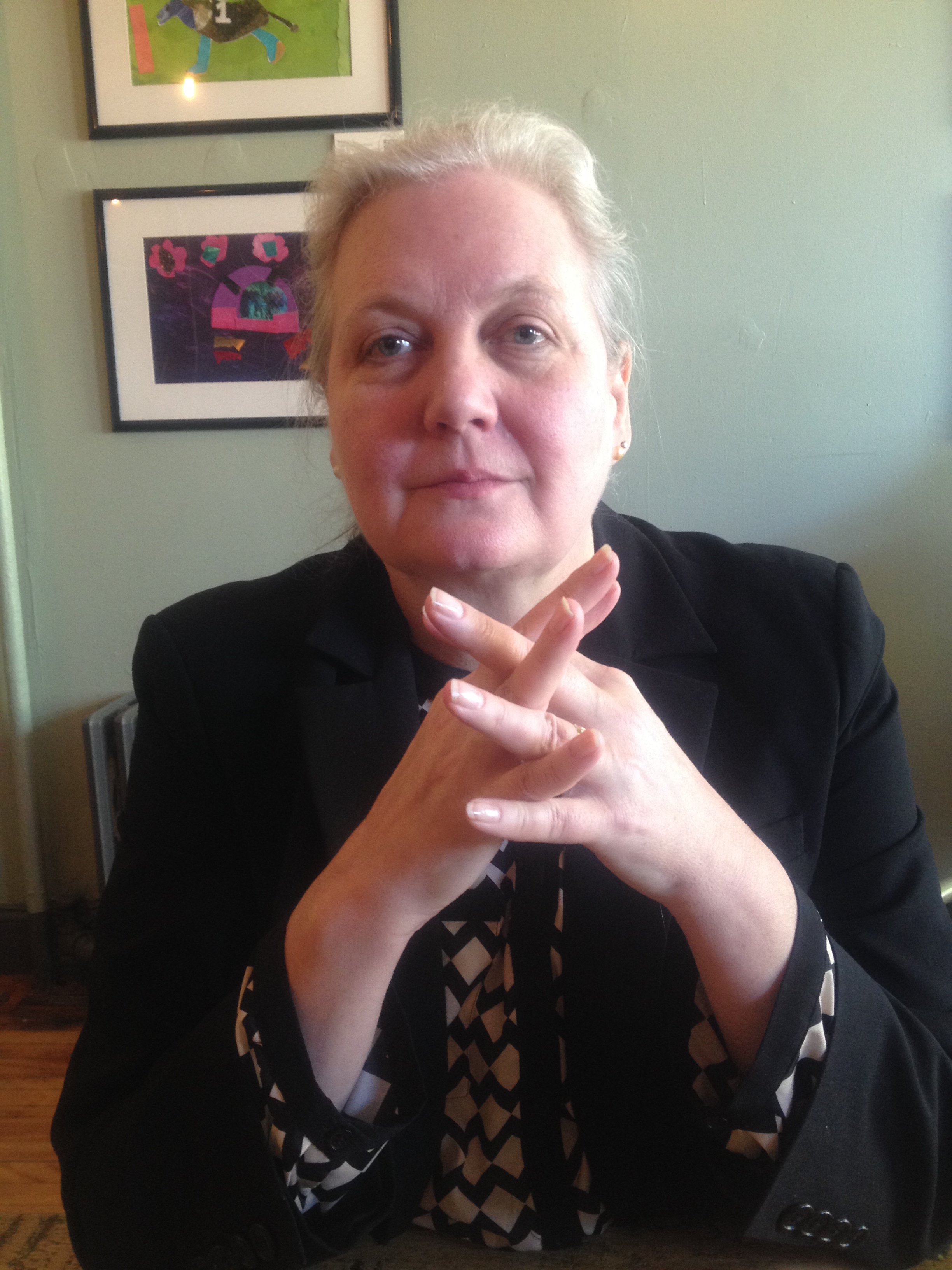
Jeanne Zimmer

Jeanne Zimmer

How do you engage with angry people without becoming angry yourself?

“You have to be empathetic without taking on their emotions. Just to pick up the phone in our office, you have to have the 30-hour training. The person on the other end of that phone is angry. You need to listen both for what they’re saying and the emotions underneath it.

“People can’t move to logical problem-solving till those emotions are addressed. Mediators will say: ‘It sounds like you’re really hurt. This must be hard.’ Then the angry person can move forward.”

Years ago I was stunned to hear anger described as the flip side of fear. What have you learned about anger?

Anger is a secondary emotion. Shame or fear is often underlying anger. Think of primary and secondary colors. What is really going on?

“Somebody comes in and says: ‘Your dog is barking all the time. I want you to move.’ What’s underneath that? The interest may be my sleep, or fear of dogs.”

What is difficult about this work?

“As a mediator your job is to listen and absorb. Self-care is important. You don’t want to take that emotion with you. If you can’t be fully present to the person on the other end of the line, let it go to voicemail and take a walk.”

A handful of the angry people I encounter strike me as mean-spirited. They’re “beside themselves,” to use a phrase that I am only now coming to understand.

“People behave in conflict as they saw growing up. Many of us weren’t taught good conflict-resolution skills. How did the family of origin deal with anger? Did they scream and yell? Give you the silent treatment? Send you to bed and everything was magically OK in the morning? You tend to do what you know.

“If you learn sarcasm, for example, how do you change it? The response is not hard-wired; it takes intention to change it, and that’s harder than it looks. It’s much easier to call 911 or sue somebody than it is to sit down and work things out.”

I used to love the rush that self-righteousness gave me. So what is the motivation to change?

“Unresolved conflict affects your health. It can take a mental and physical toll. Conflict distorts who people are. It takes us out of our place of homeostasis, our place of balance.

“Also we’re not at our best when we’re in conflict. You don’t see people as they are or how they see themselves. If you told this handful of so-called difficult people what your perceptions are — that they seem unfair or unkind — they’d be surprised.”

What is the science — or art — of mediation?

“People come in and don’t talk to each other. They talk to the mediator. When you summarize what someone else is saying, you’re helping them to be heard in a neutral voice. People need to be acknowledged, recognized and heard. That anger is: ‘You’re missing something!’ And they will go back to that again and again till they feel heard.”

How has this work helped you deal with anger personally?

“I am angry about something in my life right now. I’m hurt and I’m frustrated. How do I articulate that? And, I can’t change what’s going on. There’s a powerlessness.

“It helps to describe what the anger is like, how it feels. Then, how do you take care of yourself when you’re angry? Do you like to be left alone or to talk about it? It’s that meta-communication: How do we help each other? Then, you have to be brave enough to confront it.”

Various men over the years have called me strident, emotional and, my favorite, overly sensitive. Does our culture allow women to be angry?

“I’m 55. Women my age were taught in our professional lives that we had to be like men, wear the blue suits. We tried to become mini-men. But a man who gets angry is manly; a woman who gets angry is a bitch. Those stereotypes are out there.

“So at work, especially, how can you articulate how you’re actually feeling and be heard? Because women, again, are dubbed ‘too emotional.’ We’re seen as weak and not in control.Hillary Clinton_2

“People are afraid of angry women, so that’s the fear of Hillary [Rodham Clinton]. People expect men to be angry, and a woman who is angry loses the pretty. Your face gets red, you’re not Minnesota nice.”

In my 50s I’ve been working to respond more than react. Has your relationship with anger changed with age?

“Most people become mellower with age. You learn to pick your battles, you learn to let things go. Self-reflection makes a difference. Are you willing to be vulnerable?”

Is anger ever justified?

“Part of our work at the Dispute Resolution Center is learning to diagnose the conflict. If you have a hammer, everything looks like a nail. You need to know what the appropriate response is.

“If you’re Rosa Parks, you don’t mediate. If there’s an injustice, you need to get out there and stand up and effect change. There are reasons why we have the legal and criminal-justice systems. But way too many issues are being treated as though they’re about ‘rights,’ and they could be solved in an inter-personal way.”

A Getaway Gets Me Closer to Who I Am and Hope to Be

I wake up early the morning we are to check out of the hotel room. It’s 4:30 a.m., and I feel myself preparing to leave, to return to what we call “real life.”

Facebook at White House_06.15

Facebooking at the White House

This trip to Washington, D.C., is the first vacation my husband and I have taken together since December 2012. We often travel by combining my business trips with a short vacation, which affords us a half-price trip. This time I was attending a four-day conference, during which he stomped the city with his map and sturdy shoes, and afterward we tacked on a few days of sight-seeing together.

In between we had moments — separately and as a couple — when the distance from our daily lives helped us see ourselves more clearly. For me, that is the discipline and the reward of a vacation. I maintain enough of my routine to feel physically healthy and keep pace in the high-strung cities where work trips invariably take me.

But I step back, too. I allow myself the time and space to read, write in my journal and reflect upon a life that, in many ways, is blessed.

Proudly Minnesotan
“Where are you from?” is a common question at a conference. It’s an ice-breaker, a way to forge a quick connection. I used to be embarrassed to mention Minnesota given the indifference I encountered on the East Coast, the lack of curiosity about the Upper Midwest.

These days — likely because I’m more comfortable with who I am — I proudly tell people where I’m from and where I’ve always lived. At this conference for community relations specialists in higher education, I resisted the urge to compete with the woman from Chicago who challenged my labeling of St. Paul as the “Boston of the Midwest” given our number of colleges and our status as the state’s capital.

Chicago is the nation’s second city. St. Paul is the second sibling to its better known Twin City, but I like the relative quiet and the friendly neighborhood feel, and I’m finally to an age where I can acknowledge that.

I felt that pride of place again at the “Reporting Vietnam” exhibition at the Newseum (a worth-the-trip experience for a former journalist) where Eugene McCarthy and Hubert Humphrey were featured as prominently as LBJ and Richard Nixon.

Elsewhere in the museum, a series of comedy clips from “Laugh In” and “Saturday Night Live” about anchors and reporters featured Al Franken from the early ’90s. “That’s one of my state’s senators!” I crowed to the woman sitting next to me. I’m not sure she saw the humor, and maybe it only reinforced her impression of Minnesota as a backwoods state. I didn’t care.

A different lensindia amy
The emotion of traveling hits me more acutely as I age. It’s not that this trip took me out of my Westernized, middle-class comfort zone, as a 16-day journey through India did back in 2006. Instead it was the roller-coaster ride of anticipation, exhilaration, exhaustion, reflection and elation again that had me hyper-alert to my surroundings.

That, in turn, made me nostalgic about my youth and wistful sometimes about what my life is missing and what I hope it still can be.

    • I called my father, a retired attorney, from the steps of the U.S. Supreme Court and reminisced into his message machine about our trip to D.C. when I was 11 years old and he patiently walked me through “The First Ladies” exhibition at the Smithsonian. Instead of heeding the selfish and self-defeating voice that said, “He never calls back,” I reassured myself that being a decent daughter is the one piece of this equation that I control.
    • I stood below the steps where Dr. Martin Luther King delivered his “I Have a Dream” speech and watched a group of African-American parents and children from Indiana mourn and celebrate their sons and brothers who have been shot dead. And I recognized how little I can do to save my own sons and felt the painful tug-and-pull of parenting young adults — the impulse to hang on, the absolute requirement to let go.
    • I joined the touristy throngs in front of the White House and felt the satisfaction of knowing that I voted for the president who lives there. That wasn’t true during my last visit in 2002. And I challenged myself to work to get my candidate elected in 2016. Women’s Studies was my second major in college. Time to put the theory into action.

Coming homeSkip
Back home for a week now, I have settled into the life I sought to escape. Living paycheck to paycheck but grateful for interesting work. Both tired of and devoted to my 15-year-old, food-obsessed dog. Worried for the economic climate my sons are inheriting and proud of them for making their way in it.

Nearly one-fourth of working Americans have no paid vacation or holidays, and those of us who do are often too driven or insecure to take it.

After years as a workaholic, I’ve come to see vacation as a worthwhile investment, a rare chance for a broader view. “All work and no play” not only makes Jack a dull boy; it makes him unaware of customs and cultures beyond his own, and way too invested in the illusion that he’s irreplaceable.