Category Archives: Social Studies

Boomers Can Help Biden By Speaking Up About the Realities of Aging

My then–eight-day illness coincided with President Joe Biden’s stricken performance at the first presidential debate on June 27; and so, I have been thinking about age and the limits it imposes on our energies; and how long it takes some of us to acknowledge its real impacts, as though we might have prevented our physical decline and mental slowdown. As though we are at fault.

Let’s begin with the obvious: The debate’s 9 p.m. start time in the president’s time zone is when most old people (including me) get ready for bed. He was tired! I’ve since heard that Biden had a cold that Thursday night, which explains the weak, scratchy voice. (Or was that the excuse the campaign invented?) Regardless, if Biden felt half as compromised as I have with my upper respiratory infection — when I have misspelled “horseradish” on the grocery list, run over a curb on a day when I had no business driving, repeatedly emailed “Christy” at work when I meant to send messages to “Crystal,” and committed any number of verbal gaffes with my antibiotics-addled brain — then I’d be willing to give the president a pass on his poor performance.

But I don’t think physical exhaustion explains it, unless you acknowledge it as a natural consequence of his age. That’s the conversation that anxious Democrats seem reluctant to have. Joe Biden is old. We don’t have to hide it, mock it or try to explain it away. When performing without the benefit of a teleprompter, or the psychological comfort of his team of aides, Biden acted like what he is — an 81-year-old man who is decades past his prime. And who should not be running for the most rigorous, visible and consequential job in the world.

I doubt whether Biden can be convinced to pass the baton less than two months before the Democratic convention, though the next-day New York Times column by his friend Tom Friedman made an eloquent and compassionate case for why that decision would serve the country. “[T]ime has finally caught up with him,” Friedman wrote. “And that was painfully and inescapably obvious on Thursday.”

Asked to bet today, I’d predict we are careening toward a second Trump presidency, which will be a disaster for the environment, for women’s reproductive rights, for immigrant protections, for an independent judiciary, for public-school funding and so much more. Perhaps, in the meantime, we can salvage a graceful exit for Joe Biden by ceasing to slap our foreheads and exclaim about his perfectly normal signs of aging: the shuffling gait, the search for words, the raspy voice, the stooped posture. All of which I remember from my own father’s decline, a man who, like Biden himself, had once been a sharp-minded attorney and politician, too.
As I stare down turning 67 on July 4, I am mindful that we can best locate empathy when we have experienced another person’s plight ourselves. It’s no surprise that I felt nothing but sadness for Joe Biden, who is nearly 15 years my senior, as he lumbered and stumbled onstage. I saw in him a quality that, until recently, I’ve been unwilling to see within myself — a refusal to concede to age, to recognize when it is time to step back and clear the path for younger people.

My upper respiratory infection hung on for 10 days and took two different prescriptions to kick because I had spent weeks performing like I was 20 years younger than I am. Having assured my retired husband I would scale back my work commitments this year, I instead stubbornly hung on to my two part-time jobs while taking on freelance assignments and contract work that I was afraid to turn down — all at a pace I once readily sustained. Mix too little sleep and too much multitasking with generalized stress, and you eventually get sick.

And if you’re old, you take a long time to get well.

I’ve since quit one of the part-time jobs and am scheduling my freelance work more carefully. But more than once during this extended illness, I have remarked to my husband that I tire more easily, that I must start prioritizing rest. “If that’s aging in a healthy 67-year-old,” I’d say, “how does an 81-year-old president do it?” Those comments now seem prescient, post-debate.

Neither my husband nor I is a huge Biden fan, but we are staunch Democrats and we’re afraid of Donald Trump. We’ll vote for Biden if he stays in the race and are trying to convince our Socialist older son that he should care enough to vote at all. The broader realization, however, is that we aging Boomers lack humility. We’ve been in charge for so long, during such a pivotal time in U.S. history — a period that I now recognize to be an anomaly of liberalism in a self-interested, deeply conservative country — that we can’t see our limitations and step off the stage.


We wouldn’t be in this position now if the Democratic National Committee had built a bench back when Biden was billing himself as a “transition” president, the only one who could defeat Trump in 2020. We wouldn’t be here if he had made more use of a Black female vice president whom, it appears now, he picked for show and to appease a constituency he couldn’t afford to alienate.

But here we are. The commentators who call for this clearly exhausted president to get on his feet again, prizefighter-style, to schedule interviews “in unfriendly places” and to forcefully compete are themselves still in denial. They’re asking him to summon a level of energy that most 81-year-olds cannot muster, let alone keep up between now and November.

Being this sick for this long, I have been forced to cancel appointments, to read and nap, to recognize that my body no longer will allow me to push at the edges of my energy. I can still contribute, but it’s going to have to be in different ways. Biden’s greatest gift to the country, to his family and to himself would be to make way for a successor and offer himself as the advisor and elder statesman that he deserves to be.

Some question whether the president, from his seat at the pinnacle of power, is capable of that level of self-awareness. “What was the combination of moral conviction, personal confidence and selfishness that propelled Biden, despite the risks, toward his decision to seek another term?” asked columnist David Ignatius in a Washington Post commentary that my sister shared with me the day after the debate.

To say that Biden no longer is up to the job is neither to blame him nor to deny the achievements of his administration. In fact, it is ageism — a perverse sort of shame — to avoid citing his diminishing capabilities. We aging Boomers must speak publicly about the realities we are experiencing as we grow old. Only then can we demystify and make peace with this most natural, and inevitable, of life’s progressions.
‘Could’ve Been a Contender’: Why I Love Women’s Sports

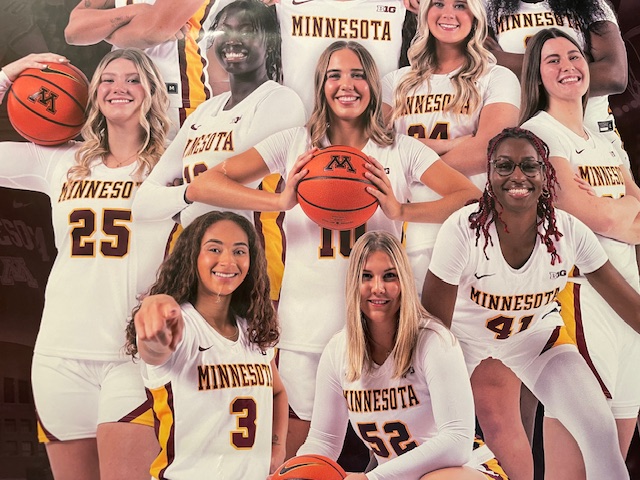
It’s not just that I’ve jumped on the Caitlin Clark bandwagon, though I have — along with the 14,624 other people who filled the Barn at the University of Minnesota this week to watch her Iowa Hawkeyes take on my alma mater’s Golden Gophers.

Nor is it that I watched the U.S. Women’s National Team ascend the ranks in the “beautiful game” — a foreign sport, in my youth — in the 1990s and early 2000s, at the very time that my two sons were starting to excel at soccer.

It took 2 minutes and 12 seconds against Michigan to make women’s scoring history.

My father and older brother followed the Purple People Eaters–era Minnesota Vikings when I was a kid, back when the team played outdoors and years before one of the fearsome foursome became a state Supreme Court justice. I’ve watched wistfully from the sidelines while my siblings bond each year over their Fantasy Football League.

But now I, too, have found my sport to follow — women’s college basketball in the Midwestern-based Big 10 — and I’m finally feeling it. Here’s what the hoopla is all about!

I’d written off sports as just a guy thing, a way for men to connect and converse while revealing nothing of themselves. I saw the energy but missed the emotions beneath the surface. Following a team through highs and lows, through wins and losses, through “the thrill of victory and the agony of defeat” — to call up Jim McKay on ABC’s The Wide World of Sports — is a rush, a disappointment, a heady exhilaration, a shoulder-drooping drag.

It’s a slice of life in a single season.

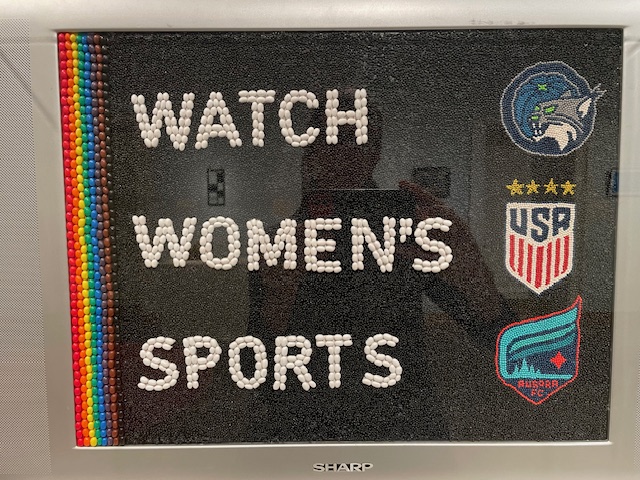
Kate Brenner-Adams’ crop art from the Minnesota State Fair photographed at the Minneapolis Institute of Art. “Sports are a microcosm of society,” she says, “therefore inherently political.”

As my career was winding down, my husband and I started going to the occasional Thursday morning concert at Orchestra Hall (the ones with free coffee, cellophane-wrapped doughnuts and an audience base that makes me feel young). Those are lovely and elegant, and they underscore my exposure to classical music as a kid.

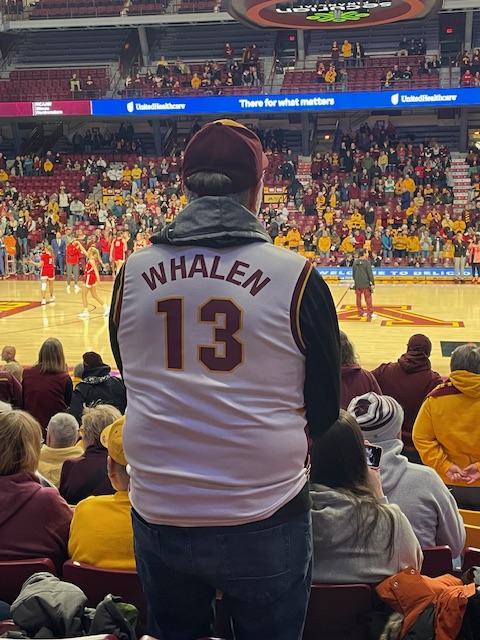
But what I really enjoy are the rowdy, rollicking Gopher women’s basketball games that we began attending last year to see Lindsay Whalen coach and then committed to with season tickets this year, hoping that new coach Dawn Plitzuweit could coalesce the team.

David and I met at the University of Minnesota, and we followed the Gophers nominally when Whalen was an award-winning 5-foot-9 point guard and, of course, stuck with her storied pro career with the Minnesota Lynx. David says women play basketball the way he did, “below the rim.” (I firmly believe the NBA should raise the men’s rim, but that’s a different story.)

Basketball is not the only sport where fans are paying more attention to female athletes. Minnesota now has a team in the Professional Women’s Hockey League, and the Minnesota Aurora, a pre-professional soccer team, has been selling tickets and winning matches — all with an honorable and enviable mission: “to create pathways for women and girls to reach their potential, on and off the field.”

Women my age rarely had that chance. Title IX, which mandated equity in sports at institutions that receive federal funds, passed in 1972. I was 15 years old, a leggy, athletic girl who was a cheerleader and took dance lessons and loved to bike and was always a fast sprinter (“for a girl”) but who never was allowed to be an athlete, to play on a team.

I see them now in the stands, women like me in their 60s and 70s or even older, some with white hair and walkers. These are women who have lived through historic shifts in our society — abortion rights won and lost, better pay and political representation, the Violence Against Women Act extended to lesbians, immigrants and Native American tribal lands — and who are showing up and cheering loudly, despite being told for years that they were lesser, they couldn’t compete, they weren’t enough.

Following women sports, being a vocal and unabashed fan, lets us demonstrate that we still are standing strong.

Image courtesy of Reader’s Digest

I was working as a “Women in Business” columnist at the Saint Paul Pioneer Press in 1999, when Brandi Chastain kicked the winning goal for Team USA in the Women’s World Cup final at the Rose Bowl in Pasadena. My sister Debbie and her family were there. “I actually overheard somebody in the stadium say, ‘They play just like boys!’” she recalls now.

As one of few women on the newspaper’s business desk — and the only one who focused on women’s issues — I was the go-to when male colleagues wanted to get the “woman’s point of view.”

Sure enough, after the sports section displayed the infamous photo of Chastain on her knees, eyes closed, fists raised in the air after she had ripped off her soccer jersey in celebration, my editor called me over to his desk. Was her action unsportsmanlike, inappropriate, simply in poor taste? Or was it sexist that Chastain was getting grief for her exuberance when male players ripped off their jerseys all the time?

And then came the predictable: What do you think of this, Amy?

Newsweek celebrates Brandi Chastain and women’s soccer: July 19, 1999.

It was one of those rare moments when I had the perfectly timed response. Pausing to give the photo a once-over, I looked my male editor in the eye and said calmly: “Nice abs.” And then I turned and walked away.

Twenty-five years later, Target Center in Minneapolis is sold out for the Big 10 women’s basketball tournament in March, a women’s sports bar is opening in the Seward neighborhood several miles away and Brandi Chastain, now 55, has framed the famous sports bra, which hangs in her home. As for me? I barely know a fast break from a field goal, but I’m having the time of my life — watching young women excel at opportunities that were denied me, and supporting them every step of the way.

What the fuck! I’m tired of all the swearing

It isn’t that I never swear. It’s just that shit and fuck and goddamn and all the rest have become so ubiquitous that they’ve lost their ability to stun or shock, which, to my mind, is the whole point of swearing.

There are swear words, like the ones just mentioned, and there is crude or offensive language, and all of it seems subjective and so very public these days. On a bus ride recently to downtown St. Paul, a woman started swearing a blue streak into her phone as another man and I were exiting the bus to participate in a City Council meeting. Amid audible shouts of “Fuck this” and “fuck that,” I said to him: “This is why people are uncomfortable on mass transit.”

No one swore giving testimony at the City Council, except to say “damn” once. Clean language was a sign of respect. We know that swearing has its place, and it’s not in front of public officials whom you are asking to vote yes on your pet issue.

The older I get, the less natural that profanity sounds in my speech, as though I’m trying to sound younger, with it, more relevant than I really am — like putting on an outfit from the 1980s that still fits but no longer suits me.

A study reported on CNN Health shows that people who do swear may be more intelligent and creative, have a useful tool to control pain and are less likely to physically strike out when angered. If that’s true, then why is our society so fractured?

Because other studies from the same period, sometime in 2021, say swearing is on the rise, especially since the pandemic; and I know few people whose mental health has improved since then.

The C-Word

The call came in on a weekend, as they usually did. This time, it was a Saturday afternoon. Everyone in the neighborhood had access to my cellphone number, so I wasn’t surprised that the caller was a woman I had never met.

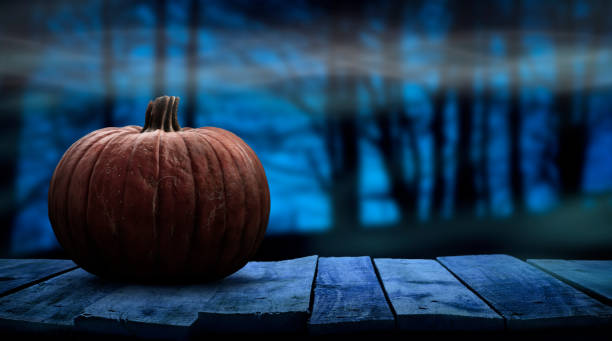
She had been dog-walking, she told me, across the street from the private-university campus where I worked, near single-family houses that had been given over to student rentals. That meant beer cans and weeds in the once tended yards, sagging and smelly couches on porches, and, on this late October afternoon, carved pumpkins lining the steps that led to the front door of a student house.

The word cunt was carved conspicuously, in capital letters, in one jack-o’-lantern where the teeth should have been in the grinning mouth. The woman said she could read it from the sidewalk. Based on the audible indignation in her voice, I took her to be about my age and stage — a product of a time when women’s liberation, as it was called then, sustained and shaped us.

Yes, I assured her, the C-word offended me, too.

As director of neighborhood relations at the university, I handled infractions and misbehavior among students who lived in the quiet residential blocks that surrounded campus. I prided myself on responding promptly and in person. And so, within 10 minutes, I was pounding on the students’ door. Expecting to encounter guys (entitled football players, maybe?), I was surprised to see they were all women.

“This is sexist hate speech,” I told them, after listening to their story of a (likely drunken) pumpkin carving party the night before. They shrugged it off, as did my colleagues in the Dean of Students’ office, who were dealing with the ramifications of what they considered a far more serious offense — the N-word being scrawled that fall semester on a Black student’s residence hall door.

Photo courtesy of Flickr: Creative Commons

My sons later told me the C-word was part of everyday speech in England and Australia. A female colleague called to gently explain that young women were reclaiming cunt as their own. “I don’t buy it,” I shot back. “They’re participating in their own oppression.” One could argue that Black male comics have reclaimed the N word. That doesn’t mean it should be written on a jack-o’-lantern, in full view of pedestrians — and children — on a public street.

I told her that when I type cunt in a Microsoft Word document, I get a “vocabulary” reminder: This language may be offensive to your reader. What I didn’t say was that the one time a man hurled the C-word at me, he then hurled a gob of spit in my face as well. Luckily, the assault ended there.

“CUNT: An informal name for the vagina. The word was in common use during the Middle Ages and was the name given to a number of streets in various British towns. Parsons Street in Banbury, Oxfordshire was once called Gropecunt Lane.

Urban Dictionary

‘Seven Words You Can Never Say’

We inhabit the speech patterns we heard and learned as children, until we’re old enough to develop and embrace our own. My parents raised my siblings and me to use quiet voices in the library, to address our friends’ parents as “Mr.” or “Mrs.,” a practice I carried into adulthood, and never, ever to swear.

Though I never had my mouth washed out with soap, it was an approved parental practice at the time, much like the paddle for rowdy boys in junior high.

The first time I heard my father use foul language was, oddly, when he was quoted in our small-town newspaper, the Mankato Free Press. He’d been canoeing up north on his annual getaway with the guys, and a fish of some species and considerable size hit my dad’s paddle and landed in the boat. My brother recalls a headline that played on “a real fish story” theme. I was 9 or 10 years old and shocked to read my father quoted in the paper as saying the fish came at them “like a bat out of hell.” I had never heard him swear.

I refused to let my sons say sucks or sucked when they were small, encouraging them to speak more descriptively and expand their vocabulary beyond the vulgar. Both swear liberally now, punctuating their sentences with fuckin’ so often that the word has lost its meaning, or any punch.

I ask why they find it necessary to use fuckin’ as an adjective (“Move your fuckin’ car”) or an adverb (“It was fuckin’ great”). “The concert or the restaurant was great,” spoken with gusto, would convey the same meaning. But this is how their Millennial generation communicates. It’s what they hear on social media and on Ted Lasso (“he’s here, he’s there, he’s every fuckin’ where”) and on countless comedy specials.

That I was raised in an era when comedian George Carlin was arrested for enumerating onstage the “Seven Words You Can Never Say on Television” seems irrelevant to my grown sons. Nowadays, young adults might concede the seven words as slang, even as vulgarities, but not as swear words.

For the record, here are the seven words as Carlin uttered them in 1972:

  • Shit
  • Piss
  • Fuck
  • Cunt (there it is!)
  • Cocksucker
  • Motherfucker
  • Tits.

Two describe private parts of women’s bodies; three are sexual acts, one of which is particularly demeaning (you guess); two are bodily functions. The profanity that people spew so readily these days bothers me not because I’m a prude — though my sons might dispute that — but because I value women in a world that still does not.

Consider how many of these so-called “dirty” terms and phrases denigrate or poke fun at women’s bodies, sexual practices or health habits (yes, a douche bag is a legitimate thing; look it up). And then tell me they are harmless.

“Fuck!”

Ruth Bader Ginsburg and then-President Bill Clinton upon his appointment of her to the U.S. Supreme Court in 1993. Photo courtesy the BBC.

A friend who is a recognized leader in the abortion rights movement in Minnesota telephoned me on September 18, 2020, to break the news that U.S. Supreme Court Justice and feminist icon Ruth Bader Ginsburg had died. “I wanted you to hear it from me,” my friend said.

We both knew this spelled the end of Roe v. Wade. The president, after all, was Donald Trump.

Among the first people I texted was my sister-in-law in Boston, an attorney who, as a law student, got to meet Ginsburg and hear her speak. She replied immediately and with as much fraught emotion as I was feeling.

“Fuck!” the text read. That said it all.

The full weight of the utterance hit me because I rarely hear her swear. It was powerful punctuation to a moment that began to reshape women’s rights and freedoms as my Baby Boomer generation had known them. That was swearing as it should be: effective, to the point and rare.