Category Archives: Social Studies

Why Seniors Should Ride Mass Transit

Before we get rolling, understand that my recommendations will apply to older people only if they are physically mobile and relatively fit — and lucky enough to live in a city or community where mass transit is readily available. Being a regular exerciser would be a plus, but what I’m proposing will help people of any age get there.

And my proposal is this: Ditch the car or SUV as often as you reasonably can and commit to trying what we multi-modal enthusiasts call active transportation. That means getting around by foot, bike, bus or train — or some combination of the four — as often as you can.

I use the term “senior” because that is how Metro Transit, my system in the Twin Cities, defines the fare structure for people who are 65 and older. As of January 1 of this year, the bus fare for any senior — call yourself “older,” an “elder” or “young-old,” if you prefer — has dropped to a buck a ride, including during the weekday “rush hours” that COVID rendered almost meaningless.

“We’ve seen travel patterns change,” says Lesley Kandaras, general manager of Metro Transit, who rode every bus and train route during her first year on the job. “We no longer have those weekday peaks of ridership in the early morning and the late afternoon.”
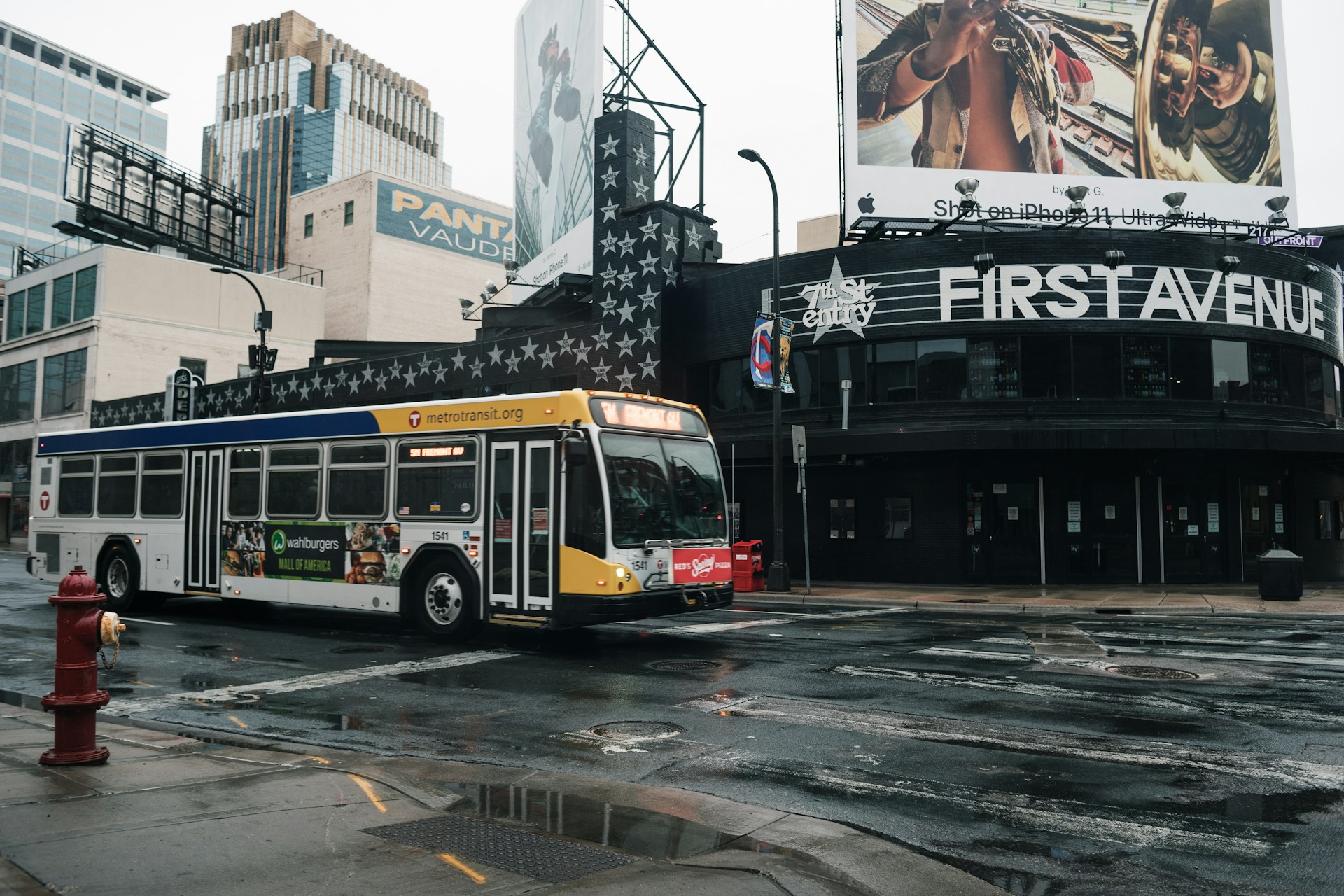
A Metro Transit bus in downtown Minneapolis. Photo by weston m on Unsplash

Transit fares includes a transfer window of two and a half hours, meaning I can meet a friend for a leisurely coffee or attend a yoga class and swing by the grocery store afterward and still get back home on only a dollar.

You can’t drive that cheaply. More importantly, driving robs you of exercise, contemplative time and contact with the outside world, all of which I find to be essential as I age. For those who balk, who say they don’t have time to ride a bus or train, who claim that driving is simply faster and more convenient, I agree with you. It’s why almost 92% of all households in America have at least one vehicle (the most popular being some type of truck).

But consider the following reasons — beyond the obvious value to our warming climate — why active transportation will help sustain you in body, mind and spirit.

No. 1: You exercise more.

I spent a total of $4 the other day riding the bus to and from my volunteer gig at Planned Parenthood North Central States (Route 63 there and 87 back) and then to the iconic Riverview Theater in Minneapolis to see the Oscar-winning “Anora” (don’t bother) with a friend (Route 21).

One route is half a mile from my house, the other five blocks and the third barely two blocks. I’d have saved 60 to 90 minutes of travel time had I driven. But I’d have walked far fewer steps than the 15,000 I amassed that day, and I would have missed the chance to really see my city: to greet people on the sidewalk, chat with a bus driver, notice the colorful murals on the sides of old buildings. To be present in a way you can’t be in a car.

Half of all Americans fail to get the recommended 30 minutes a day of physical activity, according to the National Library of Medicine, and those numbers decrease for both aerobic and muscle-strengthening exercises as women and men age. Using transit can help, because it invariably involves walking: to and from the stops and, in my case, to the next stop — or the one beyond that — if the bus or train is running late.

No. 2: You forge your independence.

My husband and I deliver Meals on Wheels every Friday, and we see plenty of old people who no longer have the physical capability to leave their apartment without assistance.

I remember this well with my own parents: Mom eventually was confined to a room, and my dad, though never wheelchair-bound, gradually lost the ability to pursue the activities he enjoyed, including jogging, golfing, skiing and even walking outdoors. Much as I fear losing my mobility, I recognize the time will come when I no longer can stride to the train station or run to a waiting bus.

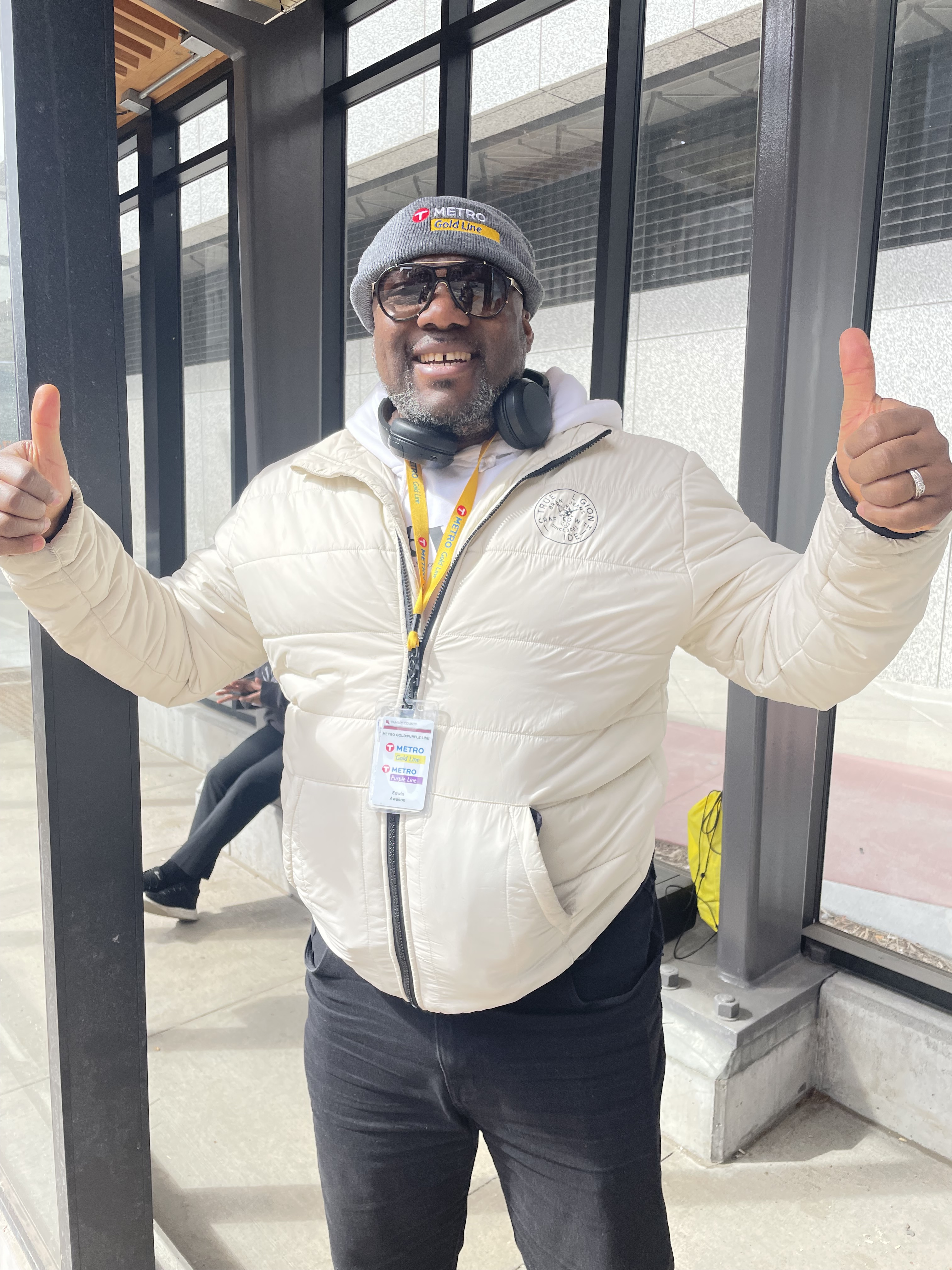
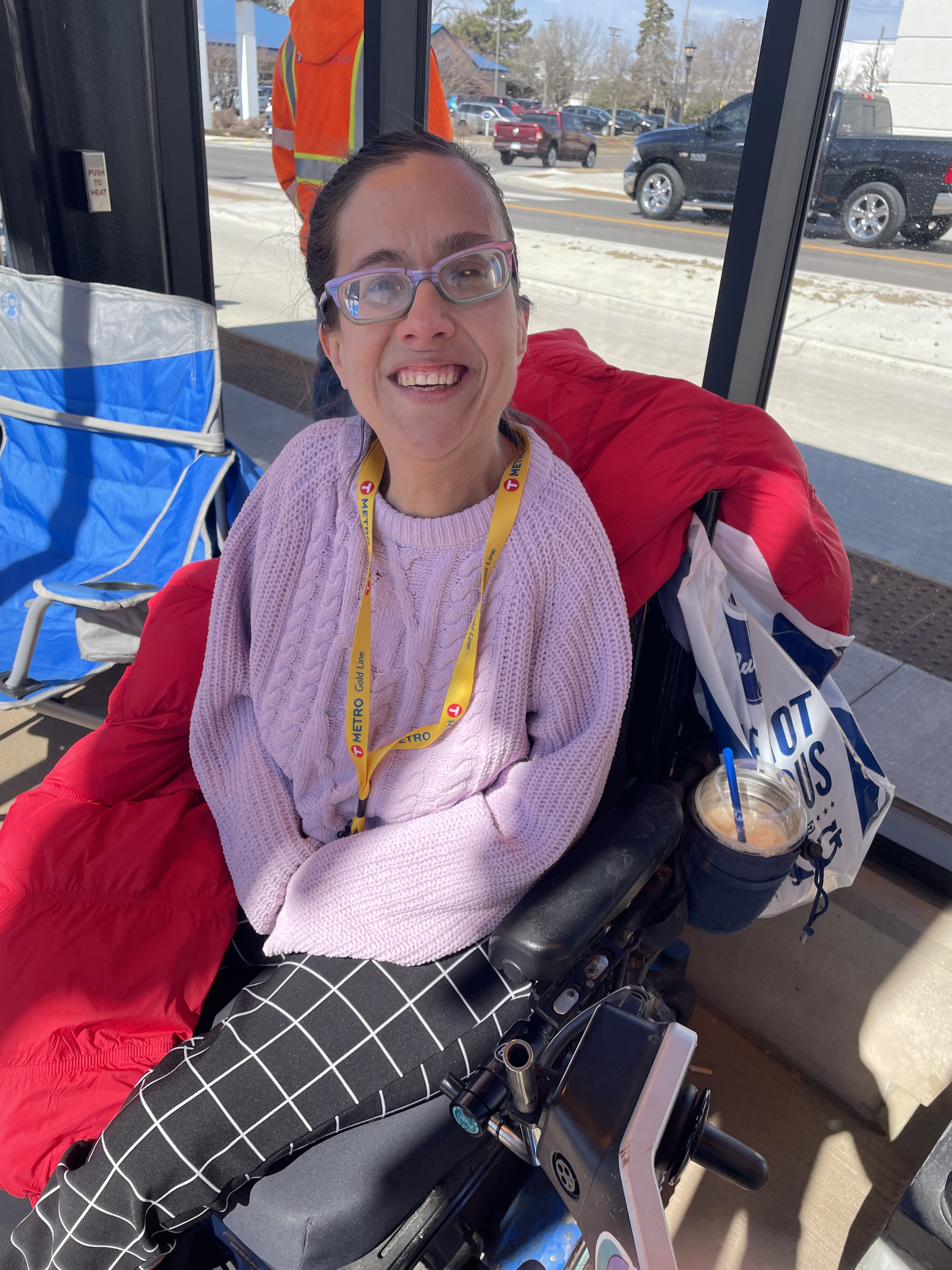
That’s why I am grateful to be able to use mass transit now. It keeps me healthy and helps me feel part of the world at an age — post-career — when people’s worlds start to shrink. I feel more independent the less I rely on a car, and I get to meet people I otherwise might not encounter, including the folks I chatted with (below) during opening day festivities for the Gold Line bus rapid transit that now serves downtown St. Paul and the eastern suburbs.
No. 3: You engage with the elements

Why live in Minnesota if you shrink from each season’s particular joys and challenges? Earlier this year, on the coldest day of winter, the dental receptionist and mammogram technician were astonished that I had bused to my healthcare appointments. I was equally mystified why they would scrape their windshields and drive on icy roads.

To prove my point, I drew up a list of practical tips for riding mass transit, whether the weather is below zero or cresting 100 degrees. Chief among them: Learn the tools to plan your travel. (ProTip: The Transit app is great!)

How people dress for a bus ride when it’s minus 4 degrees.
  1. Exchange mobile numbers with whomever you will be meeting. Buses and trains, at least in my town, often run slightly off schedule.
  2. Protect yourself from crime by investing in a sturdy backpack so you can walk with your arms free and keep valuables out of sight. I’ve been annoyed by loud music and occasional public drinking on a bus, but no one has ever threatened me. The light-rail trains can be intimidating to ride, with less access to a driver. But Metro Transit has reduced trains to two cars — removing the middle car, where drug use was often visible — and begun employing trip agents who check fares and provide a reassuring unarmed presence.
  3. Pack a water bottle, Kleenex (especially useful in cold temperatures) and sunscreen, important in any season. An extra hat or scarf during the winter and a bill cap to shield your face from summer sun are also useful.
  4. Catch up on your reading. I often stuff newspapers inside my backpack, and I read my digital subscription for the New York Times or a book I’ve downloaded on my iPhone.

No. 4: You get to practice patience.

Transit ridership falls off after age 55, according to Metro Transit research, and is miniscule for people 75 and older. But that 20-year window is a time when many of us, if we’re lucky, still have relatively good health. Kandaras, the general manager, hasn’t researched the question of why seniors stop riding transit, “but we want to make it more attractive to adults who are older,” she says.

I can think of several incentives to get my peers out of their vehicles:

  • The reality that driving gets harder as your reaction time slows, and people seem to be driving ever faster these days.
  • It feels good not to be contributing to the carbon emissions that are killing our planet. In fact, says Kandaras, one group of older adults “said to hit home with climate.”
  • Mass transit is more calming than driving. You can read, or just watch the world go by.

That last reason is the most compelling for me. After an adult lifetime of pushing, achieving, trying to live up to expectations, doing what, in hindsight, feels like too much — likely because I no longer can multitask — I appreciate the chance to sit back and relax while I get where I need to go.

“Leave the driving to us,” the old Greyhound Lines slogan said. It was coined in 1956, the year before I was born, when the U.S. automobile market was starting to boom. Turns out, the slogan was meant to woo people who had the option to drive, which is exactly what transit agencies must do if they want to return to pre-pandemic ridership levels.

Mass transit will never win in an argument about convenience, especially among middle-class people who own a car and, therefore, have choices. But peace of mind? Any of us, at any age, could use more of that.
The Morning After . . . and What Comes Next

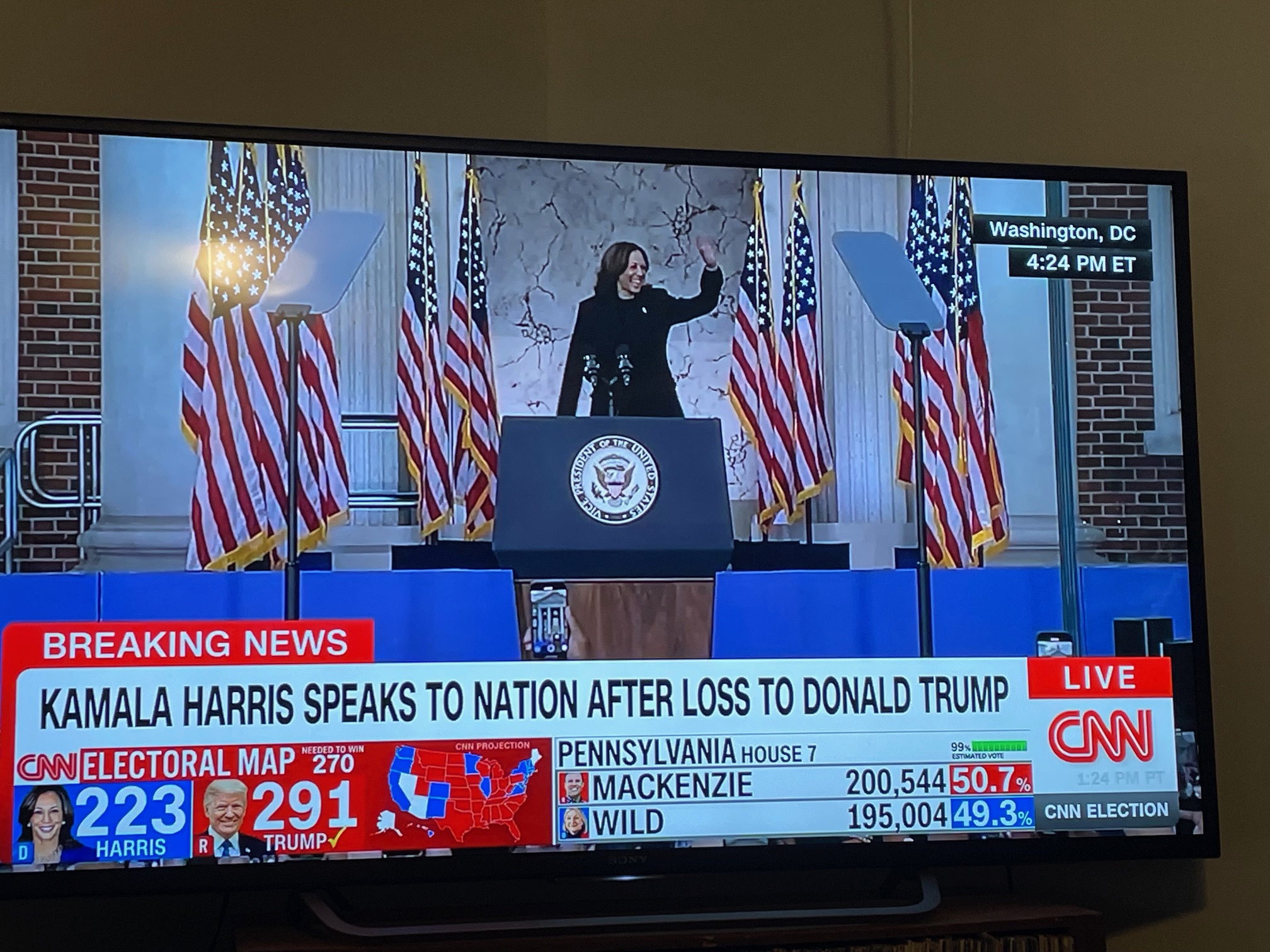
None of us saw this coming.

The morning after a presidential election that will go down in history for its sweeping affirmation of a “me first” brand of nationalist politics, I was doing what I do every morning: walking my two dogs. After crossing a busy street, the dogs were straining at their expandable leashes as we approached a person in a black trench coat.

“Two dogs behind you!” I yelled. As we passed the individual, I turned and explained, “We didn’t want to scare you.” And then, exhausted from a 15-hour shift as a poll worker the previous day and after a night when, again, I got too little sleep, I said: “It’s a dark morning today.”

The person, a young adult of indeterminate gender, looked over and apparently judged me to be safe. “I’m trans,” they said, “and I’m terrified.”

My eyes filled with tears as I put a gloved hand to my heart. “I’m so sorry,” I said. “I am so, so sorry.” As they moved on, I called out, “Be well,” and we exchanged a look of compassion and understanding that has been replicated many times in my liberal urban neighborhood during this awful, incomprehensible week.

“I wouldn’t want this man for my neighbor, let alone my president,” said the owner of an antiques store two blocks from my house as he unlocked his front door. He told me he had read the Gettysburg Address right before the election and lamented that the days of a president with the intellect, humanity and foresight of Abraham Lincoln were clearly long past.

“Government of the people, by the people, for the people.” Indeed. We liberals and progressives misjudged what the people wanted.

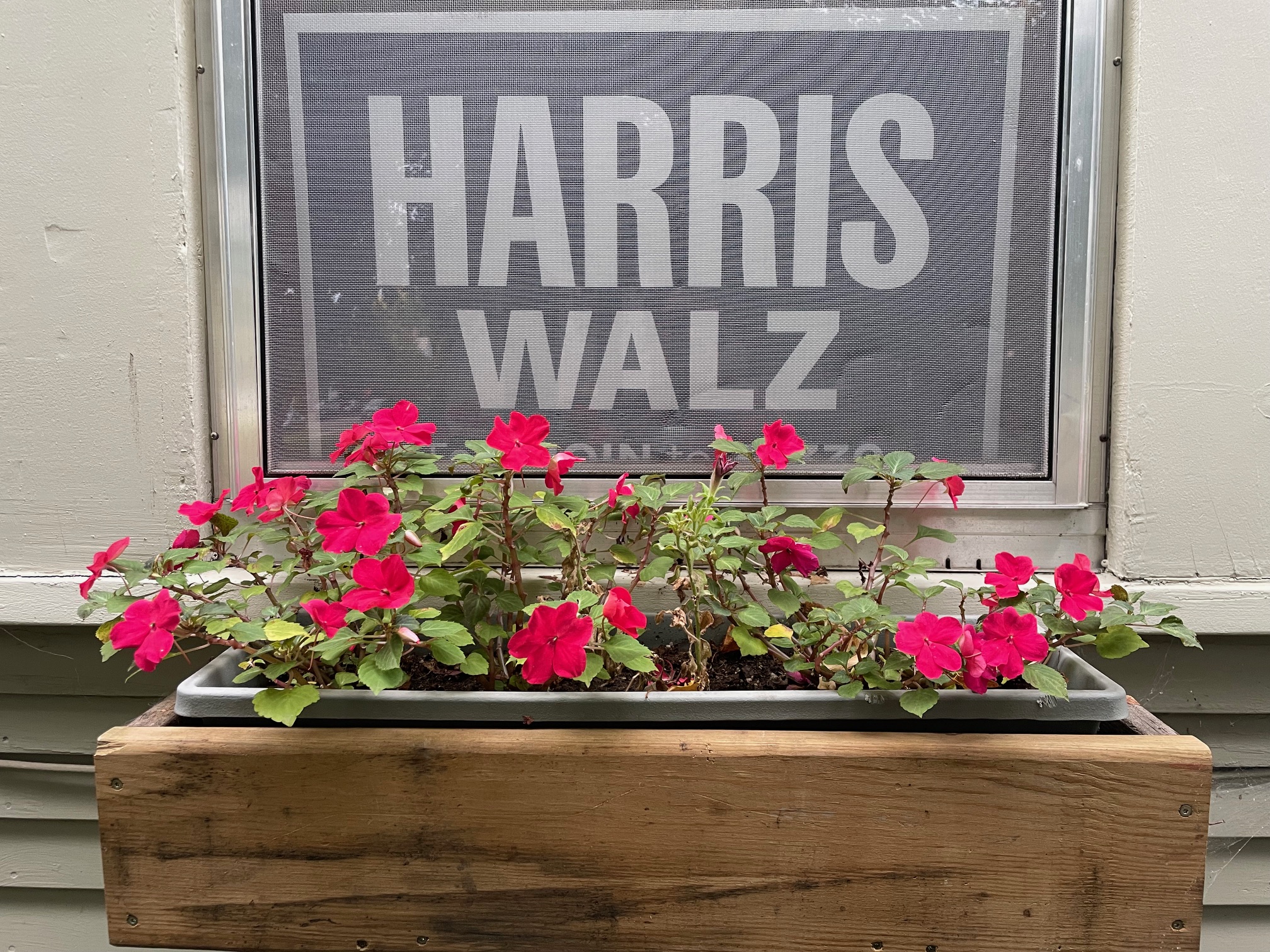
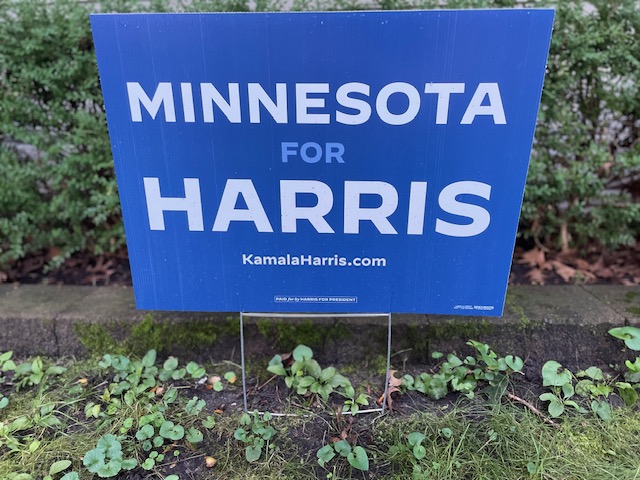
At my husband’s request, I returned the “No Project 2025” sign to my next-door neighbor, who had handmade a number of them for people’s yards. “I don’t want us to be a target,” my husband said, and I understood immediately. The Harris/Walz sign in our dining room window, however, remains. My virtue signaling, yes; my small rebellion.

On PBS NewsHour last night, which I watch every Friday for the analysis of journalists David Brooks and Jonathan Capehart, former anchor and sometime reporter Judy Woodruff checked in again with voters whom she had interviewed throughout the fall.

The economy and immigration were key themes, as they were among the majority of Americans who voted for Donald Trump, but identity politics and fear came up as well:

  • A middle-aged Black man said when he woke up the day after the election, “it was a feeling of, ‘Here we go again.’ We’re moving back in time.”
  • A young white man said he supported Trump because he is tired of being blamed. “Being male and white in recent years, we’ve been told that we’re the problem in society. . . . Everyone who’s oppressed, quote-unquote, is being oppressed by white men.” He said Trump ran against diversity, equity and inclusion (DEI) initiatives “meant to lower the amount of white men in any sphere.”
  • A person who identifies as nonbinary, gave birth to a child and is married to a woman said they are “very concerned that legally my marriage may be dissolved” and that their wife ultimately could lose “legal rights to our son.”
  • Reflecting my own identity, one woman described herself as “an older, post-menopausal, white, retired woman.” She may not personally feel the effects of changing social policies, she explained, but her friends’ transgender children and her married lesbian niece likely will.

These thoughts echo the conversations and text exchanges I have had throughout this week. When I told my friend David, a retired attorney, that the three liberal justices on the U.S. Supreme Court “better hang on by their toes,” he took a different view. Samuel Alito and Clarence Thomas, the two oldest conservative members of the high court’s six-person super majority, will retire “within two years,” he said, “while they still have a strong [U.S.] Senate.” Trump will appoint replacements “who are 40 years old,” cementing that super majority for decades.

Mary, a friend and former colleague whose family background mirrors mine, right down to our Republican attorney fathers, called the afternoon after the election while I was soothing myself in a bubble bath. “I’m white, straight, a legal citizen, non-trans, educated and in a good financial situation,” she told me. “I’m aware that others will suffer far more.”

My spiritual advisor, a socially liberal and politically active minister, put the same thought into stark historic terms: “This will be bad for others before it’s bad for us,” she said. “We have to be the good Germans now.”

It was such a hopeful 107 days. As a proud Minnesota DFLer, I reveled in Vice President Kamala Harris’ choice of Governor Tim Walz as her running mate in early August. The spirit of joy in the early days of their all-too-brief campaign (see my previous thoughts on President Joe Biden) was infectious and electrifying — and the prospect that Walz could introduce my state’s progressive agenda to the nation had me more optimistic than I have been since the Dobbs decision shut down women’s fundamental right to bodily autonomy in June 2022.

I am struggling to regain that optimism now. Some 53% of white women voted for Donald Trump, a convicted rapist whose political career should have ended when he bragged about grabbing women “by the pussy” back in 2016. His blatantly sexist (and racist and xenophobic) comments have only gotten more pronounced since then.

One conservative female columnist pushed back against those of us who would castigate white women for not caring enough about abortion rights or the significance of electing the country’s first female president, when, in fact, she said, Trump “spoke directly to voters’ top concerns.”

My top concern is short-term thinking. That the cost of a gallon of milk or a gallon of gas ultimately matters more than the loss of climate protections and democratic freedoms — including Trump’s promised mass deportations of “illegal aliens” and retribution against his “enemies,” and the threat of violence from conservative extremists when elections don’t go their way — is stunning to me. None of them has shouted the words “election fraud” this week!

On rising prices: I’d take the hit from any Trump supporter who called me privileged and middle-class, which both are true, if it weren’t for the photo of a jubilant, bejeweled blonde in West Palm Beach adorning that conservative writer’s column to illustrate the president-elect’s female support.

‘I don’t recognize the America I live in,” I wrote on Facebook on Wednesday, November 6. But here we are. He got elected, his coattails extending to Republican candidates across the country. My job now is to step out of the blue bubble that I live in, where 70 percent of voters in Ramsey County supported Harris/Walz, and start talking with — and listening to — people from the other side.

Among the folks who reached out to me that morning, after Wisconsin tipped the balance for a second Trump presidency, was my oldest friend, a woman I have known for 65 years. Janey was with me in the delivery room for the birth of each of my two sons. She held my mother’s hand and stroked her forehead in a memory-care center days before Mom died. Janey is as much a sister to me as my two older sisters.

Janey also is a Republican who voted for Trump, and we still love each other. “My hopes and prayers are we can come together as one nation that wants the best for our country,” she texted the morning after the election. “We can move on from this. We can be gracious to one another no matter which side of the aisle one belongs. We need to love and respect each other, and to understand we all come from different backgrounds and experiences.”

I do resolve to listen and learn, rather than blaming or pointing fingers. And I resolve to keep working for equity and human rights, just as I did this election cycle: door-knocking, phone banking, writing postcards. I owe that to my younger son, who yearns to have a child. I owe it to my older son, who has left the country. And I owe it to that trans neighbor walking down the street, facing a terror I cannot know.

We are here with you.

Signs of the Times: Do Yard Signs Make a Difference?

In the 11 years that I’ve lived across the street from John and Carey, I’ve not known them to showcase their preferences or opinions with yard signs, unlike many in our liberal, activist, urban neighborhood. So I took note when a Friends of the Saint Paul Public Library sign went up in their front yard — an innocuous enough message, in a neighborhood with two colleges and at least one Little Free Library on every block. And I paid even more attention at the blue and white reminder for traffic to slow down on the side street that we share in our corner houses.

“I feel it’s some kind of miracle that a serious accident has not occurred at our intersection,” Carey told me, citing that as the reason why she got the “20 Is Plenty” sign, which the City of Minneapolis began distributing in 2020, when it lowered its speed limit to 25 miles per hour. (St. Paul began offering free signs to residents earlier this year.) The library sign was a gift to donors, she recalls.

The absence of political signs in their yard on a well-traveled corner is no accident. “We haven’t put up political signs for years,” Carey says. “Personally, I don’t think seeing a campaign sign in someone’s yard would ever influence me to vote for that candidate.”

Her stance is at the heart of my own household’s disagreement about political yard signs. My husband, David, thinks they’re a distraction and a blight. America “fought for the secret ballot for a reason,” he says, and it’s nobody’s business how we vote. I counter that when ill-informed voters fail to recognize all the names on their ballots, I want my candidate’s moniker top of mind: “Oh, yeah, I’ve heard of that one.”

I didn’t have yard signs at the house where we raised our sons in Northfield because I had visible jobs — editor of the twice-weekly local newspaper, later director of communications for one of the town’s two private liberal arts colleges — and expressing my viewpoints publicly would have been inappropriate (and unethical as a journalist).

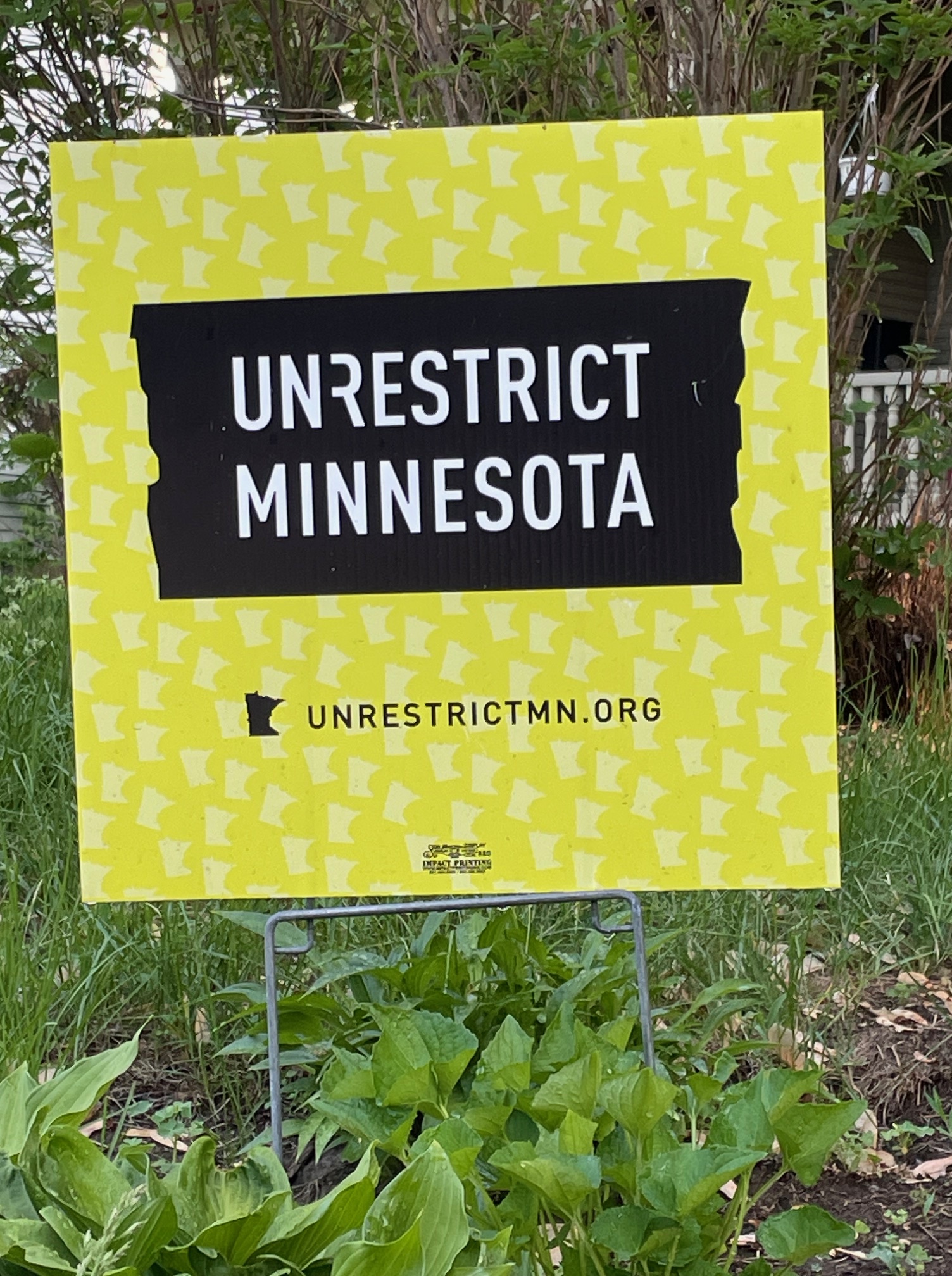
Later, when we moved to St. Paul, I hesitated to display my liberal leanings because of my position as director of neighborhood relations for the state’s largest private college, a Catholic institution. Many students and neighbors knew where I lived, five blocks east of the campus’ northern edge. An “All Are Welcome Here” sign by my own Little Free Library seemed harmless enough, but I waited to plant the pro-choice UnRestrict Minnesota sign in my front yard until I had left the university in September 2022. Having been reported to the general counsel’s office for my activism with Planned Parenthood North Central States, I prioritized job security and bided my time.

Freedom of speech

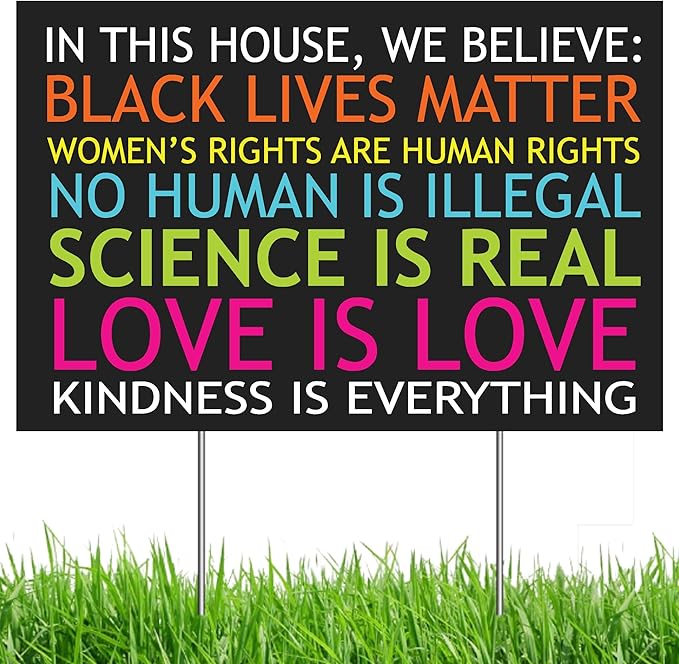
Signs, flags, bumper stickers: They can serve as advertisements, virtue signaling, rebellions against the establishment or just plain fun.

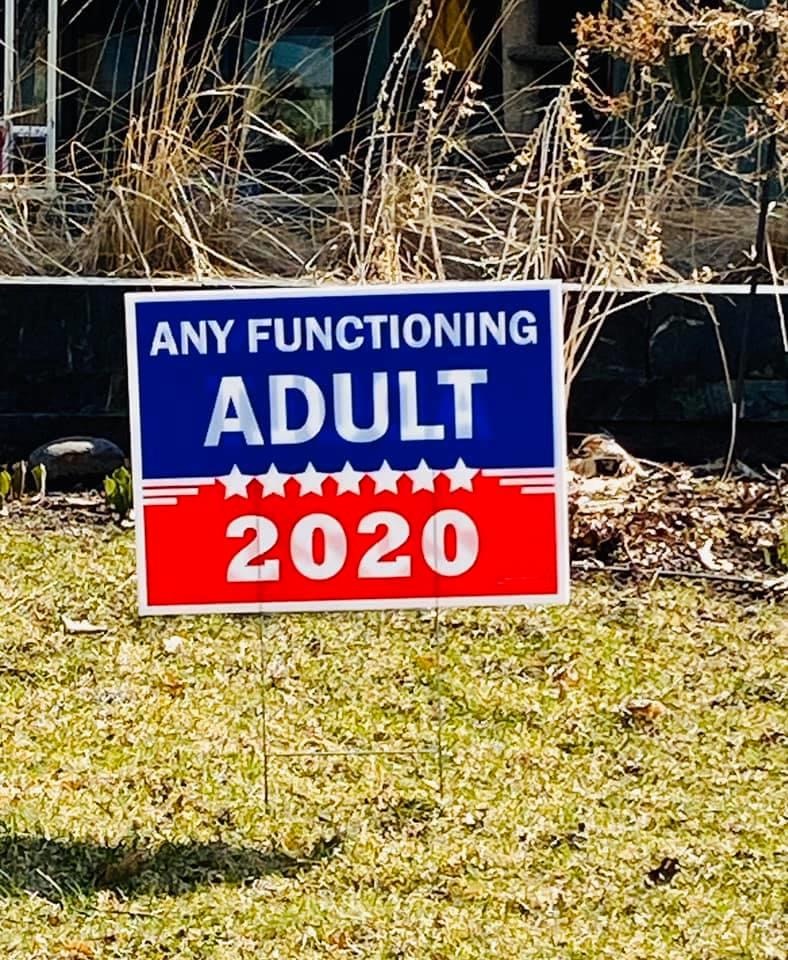
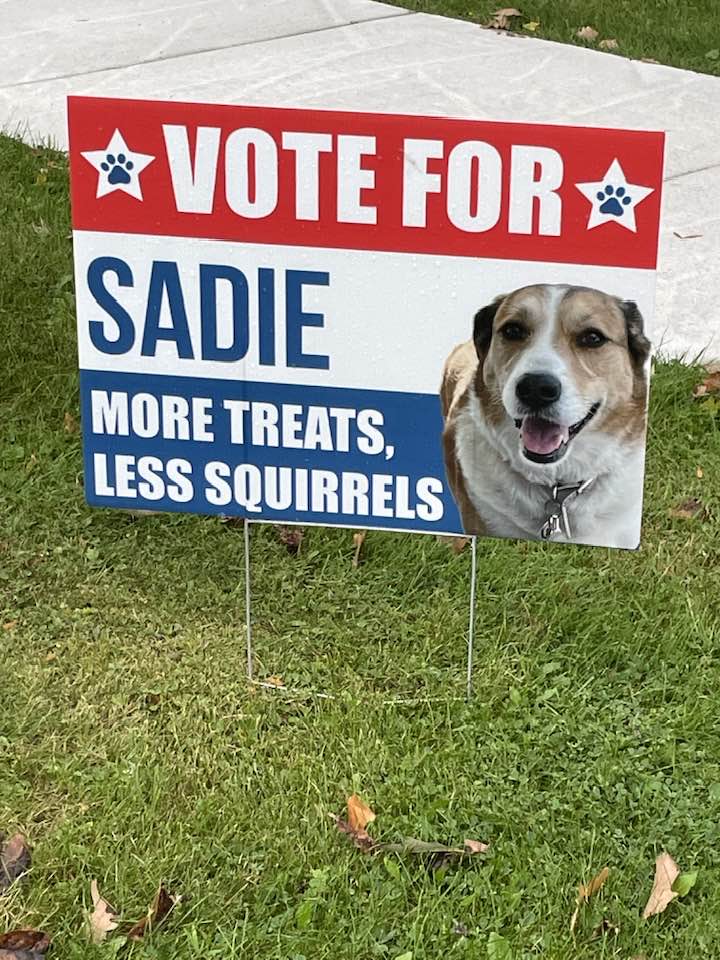
I laughed out loud when I first saw an “Any Functioning Adult” yard sign in Minneapolis during the 2020 presidential race. More recently, during another heated presidential campaign, I smiled at a yard sign in Grand Rapids, Minnesota to elect a family pet amid the battling Harris-Walz and Trump-Vance signs.

For others in my neighborhood, yard signs are both joyful expressions and serious business. Jamie, the husband and father in the family next door, has printed anti-Project 2025 signs for his yard (and mine) and was among the first on our block to put a Black Lives Matter stake in the ground. “I believe yard and window signs express my beliefs and values,” he says, “especially related to landmark and once-in-a-lifetime cultural change issues like gay marriage or systemic racial injustice.”

Jamie also has printed a T-shirt that he wears when he waves pro-democracy signs with other activists on a busy street corner once a week: “People of quality are not threated by people seeking Equality,” the T-shirt reads.

Two hand-made porch signs at my next-door neighbors’ home.

His wife says the handmade signs in their porch windows were a creative outlet for the oldest of their three children during the early days of COVID and in the explosive aftermath of the police killing of George Floyd. “Signs serve as an entry point to launching a discussion about a difficult or controversial subject,” she says, “and hopefully help others consider opposing views as less threatening.”

Another nearby neighbor — the only Republican I know on the block — put out a Nikki Haley sign back when the presidential candidate was still standing up to Donald Trump. I asked him about it one morning as we were dumping our recycling in the alley bins. He looked wary at first but later explained his motivation in an email.

“I thought she was the most qualified person in the race at the time, and I wanted to show my support and get others to notice,” he told me. “This is the first time I’ve put up a sign in more than 15 years. Nikki was the only presidential candidate I’ve been excited about in many, many years.”

Power and privilege

The Reverend Kelli Clement, a Unitarian Universalist minister, puts up signs in the front yard of her house in south Minneapolis “without worrying too much,” she says. Many of her neighbors share her views, and she works inside an institution that aligns with her values.

She describes both of those circumstances as a privilege:

  • Freedom from fear that a progressive sign would get “shot up or stolen,” which has happened to people she knows in small-town Wisconsin and other rural areas.
  • Freedom from worry that the UU congregation she serves would reprimand or discipline her for voicing opinions that run contrary to church teachings.

The UU “values of justice, equity and inclusivity are my values,” Kelli says. She can’t imagine wanting to post a yard sign that runs contrary to those. Plus, “nonprofit leaders and religious folk are individuals in their own right,” she declares. “We don’t owe our civic opinion to our place of employment.”

For Joan, whom I met through community and political organizing, yard signs are a catalyst to explore and confirm her beliefs. They help her step beyond what’s comfortable “and proclaim a position and values.” Which can be hard, she says, “if you believe you are in the minority.”

I am at an age and stage where I no longer have to appease an employer — a time of life when I am developing what I consider a healthy disregard for whether people approve of me. At 67, after decades of working hard and playing by the rules, I feel I have earned the right to be forthright and frank, so long as I don’t disrespect others. My yard signs may mean little to neighbors or passerby, but for me they represent a visible, colorful, even audacious symbol of being true to myself.