Category Archives: Social Studies

Age Can Help Us Resist Tribal Thinking

“I’ve learned how to say ‘no.’”

“I no longer spend time with people who drain my energy or don’t interest me.”

“I’ve quit over-filling my calendar.”

“I am trying to focus on what matters in the time I have left.”

Declarations like these are common among young-old women like me, who built careers in an era with few social supports, who have raised children or seen their parents to their graves, who once viewed multi-tasking as a virtue and wore their stress on their sleeves. Women who led purposeful lives for decades.

Photo by Mehdi Merzaie on Unsplash

Now, many of us achievers in our 60s are seeking how best to spend our golden years — how to make a difference and live a life of meaning while our health still holds. For me, that means becoming more discerning about where I choose to volunteer and when to stand up for my point of view.

Since retiring, finally, in September, I’ve been digging deeper into the causes I already support — reproductive rights and food insecurity — and investigating where else I want to spend my time. That has brought me up against a different sort of challenge: Where to turn and what to say when my views run counter to the ethics of my chosen community and the causes and political leaders I support. Where can I safely speak my truth?

Case in point: I was delighted to volunteer for Planned Parenthood North Central States’ first booth at the Minnesota State Fair on Labor Day earlier this year. But I was mortified when I picked up my light-blue T-shirt in advance and saw the list down the front of what the organization — and supposedly the wearer — stands for. “I’m for birth control, sex education and gender-affirming care” all ring true for me. I can wear that across my chest in public.

But “I’m for abortion”? No, I don’t promote it. What I have marched, volunteered and donated money for since the days when we thought Roe v. Wade would never fall is the protection and expansion of abortion rights. That’s the language I wanted on the T-shirt. When I proposed that to the young staff member in charge of our booth, she said the movement wants to remove any stigma or sense of shame from the practice of abortion. I see her point, but I also saw the quickly averted glances while I walked around the fairgrounds. And Planned Parenthood needs supporters these days, not skeptics.

More significant than what others thought of me is how the T-shirt made me feel. I wore it home, forgot to change and let my husband take a photo of me holding our infant grandson beneath the words “I’m for abortion.” After that, I just gave the shirt away.

An agnostic seeking answers

Binary thinking dominates our yes-or-no, right-or-wrong, polarized society. Am I willing to lurk in the shadows between the black and white, or can I dare to lead a life in living color? By speaking up about my nuanced views on, say, trans women in sports — or countering a local activist whom I believe is unfairly maligning a mayoral candidate in our upcoming election — might I be banished from my tribe, the network of colleagues and left-leaning friends that I have cultivated since my 20s?

I am trying to find the line between honesty and provocation, between truth telling and egocentric mansplaining (yes, women do it, too). Recently, I had a chance to test this out.

“Dear Neighbors,” began the note, delivered quietly to my mailbox on a sunny fall day. “I belong to a community organizing group called Isaiah. Your yard signs have encouraged me to think that you might be interested in one or both of these community events.”

The yard signs that I had out on my corner lot included:

  • “All Are Welcome Here” by my well-tended Little Free Library;
  • A “Vote Yes” sign for the public-school referendum in St. Paul, where we homeowners already are overtaxed but feel obliged to support our underfunded schools; and
  • A “Safer Summit” sign to promote a multi-million-dollar off-road bike trail on the city’s signature street, which many who live on Summit Avenue ardently oppose.

My neighbor, whom I don’t know well, had the courtesy to sign her pitch. She is among a handful of people who have pointed me toward the good work Isaiah does in our community, including its calls for a transition to clean energy and “dignified wages” for childcare professionals. Still, as an unchurched agnostic — one who believes in a higher power but doesn’t claim to know its shape or origin — I resist Isaiah’s religious orientation.

I emailed my neighbor a week or so later. No liberal can rightly argue with racial and economic equality, I told her, and Isaiah’s call for a “collective voice” is a smart strategy that conservatives have long employed — but I can’t move past the organization’s faith-based roots. I signed off by urging the woman to “keep up the good fight.”

As of this writing, she has not responded, and that’s unfortunate, because it shuts down any opportunity for mutual understanding.

Tribal thinking discourages dialogue

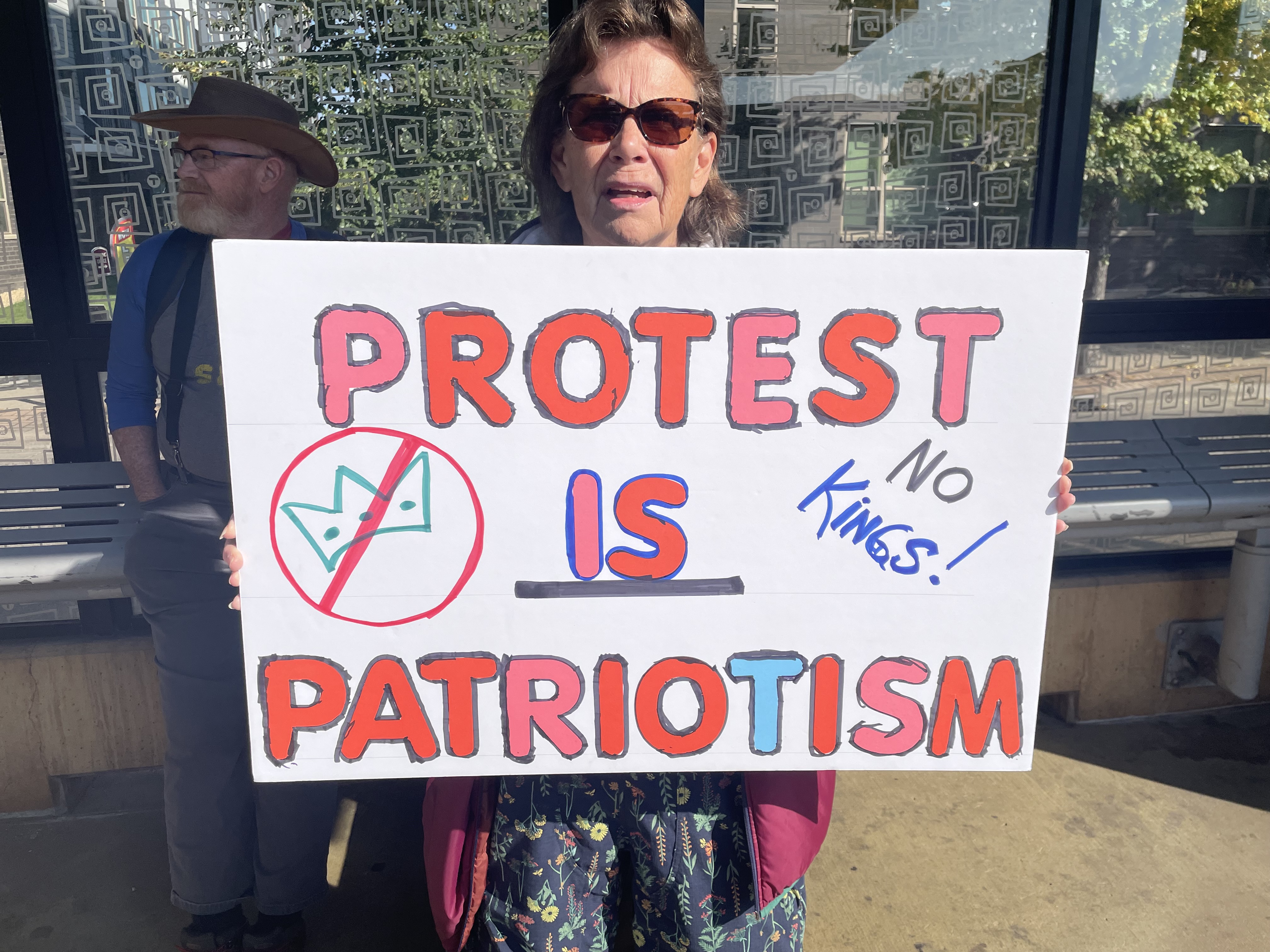
“Speak your mind, even if your voice shakes,” goes a famous quote by Gray Panthers founder Maggie Kuhn. I didn’t think about my personal safety when I took the light-rail train to Minneapolis on a sunny Saturday morning in October to join 100,000 people in a No Kings rally. Opposing the policies of Donald Trump felt that important.

Nor did I hesitate recently to display a yard sign calling on the City of Saint Paul to reinstitute its common-sense restrictions on student housing in our neighborhood, even though people with whom I often politically align oppose it. The state’s largest private university is five blocks away. Having served as that institution’s director of neighborhood relations for eight years, I know firsthand that the Student Housing Overlay District — since undone by a pro-density City Council — saved this area from being overrun by noise, trash, property crimes and ill-kept rentals.

Age has granted me more freedom to speak my truth. I’m less fearful about what other people think, or at least I can dial back my anxiety more quickly. I no longer have employers to please or any fear about my causes blowing back on them (which volunteering with Planned Parenthood did when I worked for a Catholic institution).

But I still can’t shake the niggling insecurity that speaking out on hot topics may alienate some members of my tribe or get me pilloried on social media.

Part of that fear relates to the reality that my views are moderating with age, even as my party moves farther left. Thirty days into the government shutdown — and in full support of keeping healthcare costs within reach for all Americans — I think the Democrats, my party, have played their hand and lost. Congress needs to do the people’s business again or give up their own paychecks in solidarity with sidelined workers.

Must I blast that out on social media and then fervently check my feeds to see who “likes” me and who doesn’t? As courageous as I like to think I am, that isn’t how I want to expend my energy.

“Humans, like animals, are pack animals,” says a January 2025 article in Psychology Today called “Tribalism: How to Be Part of the Solution, Not the Problem.” People naturally want to align with a group, to feel less alone, which is why demonstrations like No Kings are momentarily empowering — even if no lasting change takes place.

The article challenges us, however, not to let the emotional exhilaration of tribalist belonging overtake research and rational thought. Among the “difficult questions” that author John G. Cottone, Ph.D., asks readers to explore are these:

  • “Do I know how to recognize the propaganda of my own tribe, and resist it when I see it?”
  • “Do I pursue multiple perspectives on important issues with intellectual honesty — or do I only solicit my own tribe’s political perspective?”
  • “Do I have compassion for everyone on the road of truth, even those who are walking today where I walked yesterday?”

As I prepare to vote in my city’s off-year election — casting a ballot for mayor and the school funding initiative, as well as monitoring the contentious Minneapolis mayoral race across the river — I won’t be in full alignment with the bike-riding, urbanist activists, my tribal pack, who are posting lengthy arguments on Bluesky and Facebook about how they plan to vote and why.

Disagreeing with people with whom you normally align is uncomfortable, uneasy. But in this case, speaking out will mean casting a secret ballot and having the confidence to recognize where and how to use my voice.

Senior Timeshares: Beware the Hard Sell

I should have been suspicious from the start. Because the older I get — and I just turned 68 — the more I recognize that when I react rather than respond, or am impulsive rather than intentional, allowing my body to move more quickly than my brain, the situation rarely ends well.

The story begins last March. When I reserved a hotel room for a women’s conference in Des Moines, Iowa, this coming February, the booking agent asked at the end of the call if I could stay on the line to hear a marketing offer. Because the property where I had booked a room is part of a major hotel chain, my reward would be 500 points in the organization’s honors program. “Sure,” I told the agent, “I’m game.”

Apparently, I had joined the program for repeat customers back when I traveled to professional conferences once or twice a year. On my own time, I prefer to stay at AirBnB or VRBO short-term rentals because the properties are homey and private, provide a kitchen that helps save on meal costs and tend to be situated among the locals. In short, I feel less like a pampered tourist.

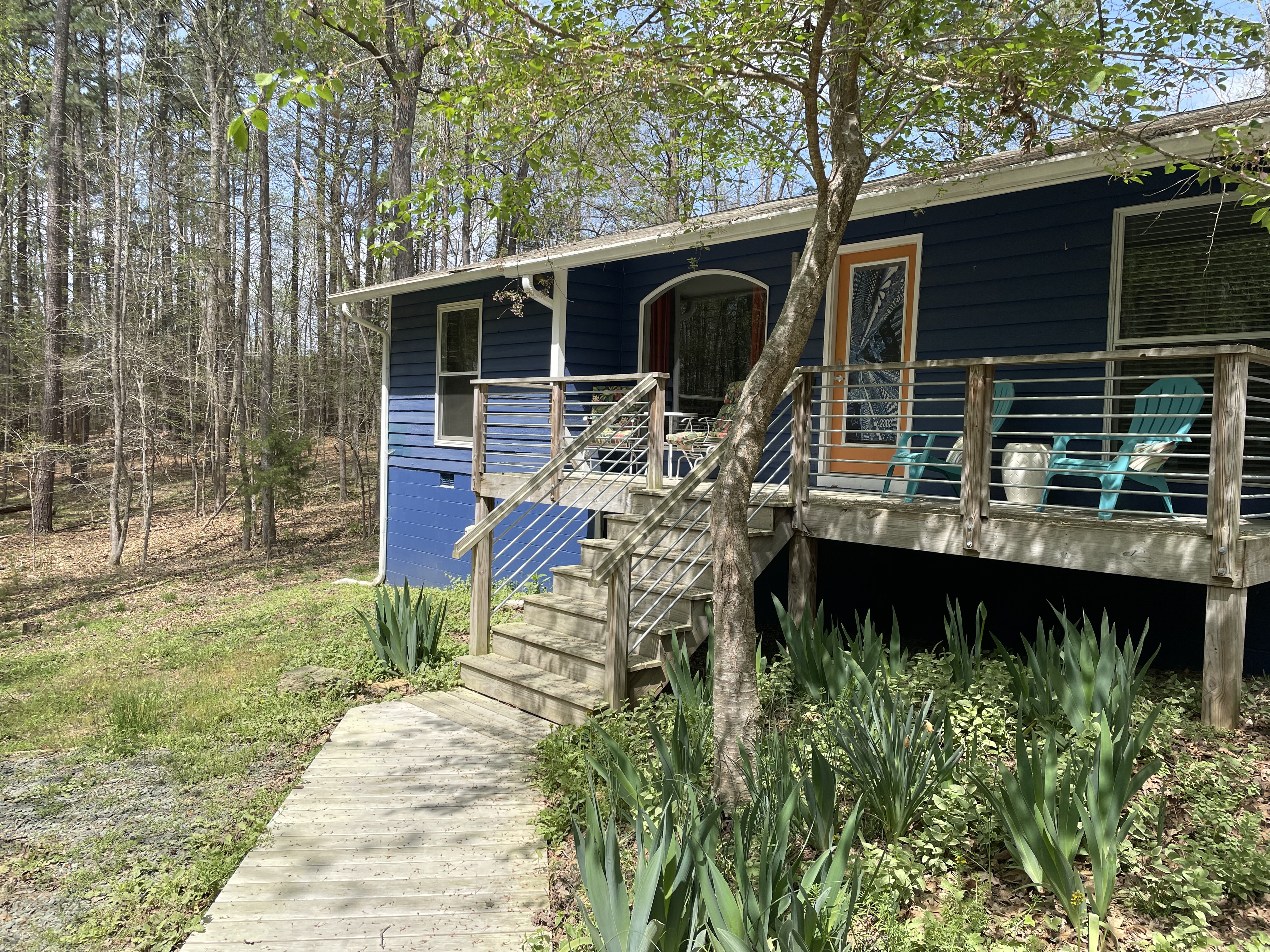
A VRBO in North Carolina that my sister rented for three of us last April for a family wedding.

But pampering is precisely what this hotel chain — and all of the hotel-affiliated timeshare programs — aims to do. The marketing pitch was an enticing offer to spend a few discount-rate nights at a swanky property in Las Vegas or Florida or, my choice, New York City in exchange for a two-hour meeting about the company’s “exclusive timeshare brand.”

The pitchman on the phone asked about my travel habits, employment history and marital status. (Red flag!) Then he offered a reasonably priced deal for three days and two nights at a hotel in midtown Manhattan, but he emphasized repeatedly (another red flag) that I had to pay the $285.75 charge on the spot — that day! I also had to promise that both my husband and I would be on time for the 8:30 a.m. timeshare meeting the morning after we arrived. Otherwise, our hotel room would revert to full price, about double the promotional rate.

Some weeks later, we forked over an extra 65 bucks to convert the trip to a slightly longer four days and three nights at a property in downtown Chicago, a scenic train ride away from our home in the Twin Cities. The tactics of the hard sell at the morning meeting (“don’t be late,” the desk clerk warned when she checked us in at the hotel) harkened back to the original phone call. Not duplicitous but canny, and well rehearsed.

Buy now, pay later

From the get-go, the whole tone and tenor put me on edge, employing sales techniques I had never experienced, even on a car lot. Once we arrived at a modern, amenities-laden property a 15-minute walk from where we were staying, I had to answer a list of the identical questions the telephone salesman had asked me weeks before (marital and employment status being key).

Hotel representatives also wanted to know our top “dream vacation” spots to get away. My choice of Canada and the Netherlands may have been a clue that we weren’t their highest budget catch.

Once the Keurig machine had brewed our coffee and we’d collected mini containers of yogurt and cellophane-wrapped pound cake (the promised breakfast), the meeting began, led by a jovial salesman named Pete.

  • Dressed in business casual (a jacket and necktie would show up later on the man who tried to close the sale), he ushered us into a brightly lit office with partial walls and no door, lending an air of immediacy and vibrancy given the noisy activity in the hallway.
  • The persistent beat of the piped-in Muzak, loud enough that I sometimes couldn’t hear what Pete was saying, seemed designed to distract us. When I asked if he could turn the music down, he said the volume kept others from overhearing Social Security and credit card numbers when deals were getting done.
  • Within minutes of sitting down, Pete asked us what type of properties we usually like to stay in. I explained our preference for short-term rentals — they accommodate my early-bird and my husband’s night-owl tendencies — and specifically mentioned Airbnb. Later, when Pete was showing us a typical timeshare suite on an upper floor of the hotel, he told us that he once discovered a video camera in the shower of an Airbnb and (“thank goodness!”) removed it before his wife used the bathroom.
  • Noting that a key card is required for entrance to the elevators, Pete stressed the safety of the hotel chain’s timeshares — a selling point for the graying target market — and said only other timeshare members would be on the floor of any property we rented. Like a gated suburban community, we’d be tucked in among our own.

Throughout the exciting, emotional, enticing presentation (and it was all three), Pete flipped through digital photos of hotel-chain properties, from resorts and cruises to “glamping” sites at national parks, on a horizontal monitor embedded beneath his glass-topped desk. He said we could join the timeshare program for $80,000 — more than 20 percent of which would be due that day.

Florida beach: Photo by Michael Monahan on Unsplash

“We can’t access that kind of money on the spot,” I told him. “It would have helped to know this coming into the meeting.” He assured us the company could provide a credit card on which to finance the $17,000 down payment; we would sign a contract for the rest, plus the annual HOA fee of $2,100.

My head was spinning. “Could you give us your last name and mobile number,” I asked, “so we can talk things over this afternoon?” Pete said he carried no business cards — an odd practice for a salesman — and stressed again the act-now nature of the offer. Just like the telephone sales pitch that had gotten us to Chicago in the first place, the deal had to be done immediately. On the spot.

Nearly 90 minutes into the two-hour presentation, I learned that our assigned timeshare location would be in Florida, with options to use other company properties around the world. I had already explained to Pete that I wouldn’t spend money in a state where my transgender cousin could be charged with a felony for using a women’s bathroom and where the ACLU describes the year-old abortion ban as “near total,” with “no real exceptions for rape or incest.”

He said no other property was available that day — these being act-now, one-time offers. Then he brought in a “closer,” a trim man in a tailored suit, who consulted his iPad and said he happened to have a different Florida property for only $53,000, a considerable savings from the original quote of $80,000.

But it was Florida again, which we neither wanted nor requested. I walked out, leaving my husband to extricate himself while I waited on the sidewalk, red flags flying everywhere I turned.

Exit strategy

A timeshare sounds like a great idea, a cooperative ownership agreement with like-minded people for a property you have toured and approved. Or, so I thought, based on the arrangement my late father’s law firm had at a ski resort in Colorado.

In this case, the hotel chain wasn’t selling us a property per se. We were purchasing points for the right to stay a certain number of nights per year at any company property — 30 nights, based on our $80,000 purchase price — but we’d still be attached to this place in Florida, sight unseen.

Red flags by J.S. B. on Flickr. Creative Commons (CC) 2.0

My husband and I hadn’t realized that timeshare agreements can be notoriously hard to get out of. I learned that after a Google search led me to warning articles from AARP, a source I trust because they target scams that target seniors. A few days later, searching for the replay of a WNBA game on YouTube, I was stopped cold by an ad from Wesley Financial Group about “timeshare lies.” Apparently, my browsing history had led them to me.

Dubbing itself “the most proven and reviewed timeshare exit company” — CEO Chuck McDowell used to be a timeshare salesman — Wesley employed an attractive young actress to ask whether any of these sales tactics had been used in our timeshare pitch:

1. “Your maintenance fees will never go up.” Yes, Pete had told us that. On average, said the Wesley spokeswoman, they go up 4 percent a year.

2. “This is a financial investment.” We’d heard that, too. But real estate investments pay off based on supply and demand, “and the supply [of timeshares] is always high because of the massive marketing machine that is the timeshare industry,” the Wesley woman said.

3. “Your obligations will die when you pass away.” Actually, Pete had suggested the opposite, saying we could transfer the Florida property and the timeshare points to our two grown sons once we became too infirm to travel. Regardless, according to Wesley Financial Group, “most agreements are in perpetuity.”

After sitting through the mandatory meeting in Chicago, I recognized that a hotel- or resort-based timeshare — offered by Marriott, Disney, Wyndham, Hilton and others — could be ideal for people who travel more often than I do, who want luxurious accommodations where they are separated and safe, and who don’t let political leanings or social issues dictate their destinations.

That isn’t me. In hindsight, I am grateful to have walked away a little wiser and a whole lot less naive, and didn’t fork over $80,000 to remind myself of who I really am.

Why Seniors Should Ride Mass Transit

Before we get rolling, understand that my recommendations will apply to older people only if they are physically mobile and relatively fit — and lucky enough to live in a city or community where mass transit is readily available. Being a regular exerciser would be a plus, but what I’m proposing will help people of any age get there.

And my proposal is this: Ditch the car or SUV as often as you reasonably can and commit to trying what we multi-modal enthusiasts call active transportation. That means getting around by foot, bike, bus or train — or some combination of the four — as often as you can.

I use the term “senior” because that is how Metro Transit, my system in the Twin Cities, defines the fare structure for people who are 65 and older. As of January 1 of this year, the bus fare for any senior — call yourself “older,” an “elder” or “young-old,” if you prefer — has dropped to a buck a ride, including during the weekday “rush hours” that COVID rendered almost meaningless.

“We’ve seen travel patterns change,” says Lesley Kandaras, general manager of Metro Transit, who rode every bus and train route during her first year on the job. “We no longer have those weekday peaks of ridership in the early morning and the late afternoon.”

A Metro Transit bus in downtown Minneapolis. Photo by weston m on Unsplash

Transit fares includes a transfer window of two and a half hours, meaning I can meet a friend for a leisurely coffee or attend a yoga class and swing by the grocery store afterward and still get back home on only a dollar.

You can’t drive that cheaply. More importantly, driving robs you of exercise, contemplative time and contact with the outside world, all of which I find to be essential as I age. For those who balk, who say they don’t have time to ride a bus or train, who claim that driving is simply faster and more convenient, I agree with you. It’s why almost 92% of all households in America have at least one vehicle (the most popular being some type of truck).

But consider the following reasons — beyond the obvious value to our warming climate — why active transportation will help sustain you in body, mind and spirit.

No. 1: You exercise more.

I spent a total of $4 the other day riding the bus to and from my volunteer gig at Planned Parenthood North Central States (Route 63 there and 87 back) and then to the iconic Riverview Theater in Minneapolis to see the Oscar-winning “Anora” (don’t bother) with a friend (Route 21).

One route is half a mile from my house, the other five blocks and the third barely two blocks. I’d have saved 60 to 90 minutes of travel time had I driven. But I’d have walked far fewer steps than the 15,000 I amassed that day, and I would have missed the chance to really see my city: to greet people on the sidewalk, chat with a bus driver, notice the colorful murals on the sides of old buildings. To be present in a way you can’t be in a car.

Half of all Americans fail to get the recommended 30 minutes a day of physical activity, according to the National Library of Medicine, and those numbers decrease for both aerobic and muscle-strengthening exercises as women and men age. Using transit can help, because it invariably involves walking: to and from the stops and, in my case, to the next stop — or the one beyond that — if the bus or train is running late.

No. 2: You forge your independence.

My husband and I deliver Meals on Wheels every Friday, and we see plenty of old people who no longer have the physical capability to leave their apartment without assistance.

I remember this well with my own parents: Mom eventually was confined to a room, and my dad, though never wheelchair-bound, gradually lost the ability to pursue the activities he enjoyed, including jogging, golfing, skiing and even walking outdoors. Much as I fear losing my mobility, I recognize the time will come when I no longer can stride to the train station or run to a waiting bus.

That’s why I am grateful to be able to use mass transit now. It keeps me healthy and helps me feel part of the world at an age — post-career — when people’s worlds start to shrink. I feel more independent the less I rely on a car, and I get to meet people I otherwise might not encounter, including the folks I chatted with (below) during opening day festivities for the Gold Line bus rapid transit that now serves downtown St. Paul and the eastern suburbs.

No. 3: You engage with the elements

Why live in Minnesota if you shrink from each season’s particular joys and challenges? Earlier this year, on the coldest day of winter, the dental receptionist and mammogram technician were astonished that I had bused to my healthcare appointments. I was equally mystified why they would scrape their windshields and drive on icy roads.

To prove my point, I drew up a list of practical tips for riding mass transit, whether the weather is below zero or cresting 100 degrees. Chief among them: Learn the tools to plan your travel. (ProTip: The Transit app is great!)

How people dress for a bus ride when it’s minus 4 degrees.
  1. Exchange mobile numbers with whomever you will be meeting. Buses and trains, at least in my town, often run slightly off schedule.
  2. Protect yourself from crime by investing in a sturdy backpack so you can walk with your arms free and keep valuables out of sight. I’ve been annoyed by loud music and occasional public drinking on a bus, but no one has ever threatened me. The light-rail trains can be intimidating to ride, with less access to a driver. But Metro Transit has reduced trains to two cars — removing the middle car, where drug use was often visible — and begun employing trip agents who check fares and provide a reassuring unarmed presence.
  3. Pack a water bottle, Kleenex (especially useful in cold temperatures) and sunscreen, important in any season. An extra hat or scarf during the winter and a bill cap to shield your face from summer sun are also useful.
  4. Catch up on your reading. I often stuff newspapers inside my backpack, and I read my digital subscription for the New York Times or a book I’ve downloaded on my iPhone.

No. 4: You get to practice patience.

Transit ridership falls off after age 55, according to Metro Transit research, and is miniscule for people 75 and older. But that 20-year window is a time when many of us, if we’re lucky, still have relatively good health. Kandaras, the general manager, hasn’t researched the question of why seniors stop riding transit, “but we want to make it more attractive to adults who are older,” she says.

I can think of several incentives to get my peers out of their vehicles:

  • The reality that driving gets harder as your reaction time slows, and people seem to be driving ever faster these days.
  • It feels good not to be contributing to the carbon emissions that are killing our planet. In fact, says Kandaras, one group of older adults “said to hit home with climate.”
  • Mass transit is more calming than driving. You can read, or just watch the world go by.

That last reason is the most compelling for me. After an adult lifetime of pushing, achieving, trying to live up to expectations, doing what, in hindsight, feels like too much — likely because I no longer can multitask — I appreciate the chance to sit back and relax while I get where I need to go.

“Leave the driving to us,” the old Greyhound Lines slogan said. It was coined in 1956, the year before I was born, when the U.S. automobile market was starting to boom. Turns out, the slogan was meant to woo people who had the option to drive, which is exactly what transit agencies must do if they want to return to pre-pandemic ridership levels.

Mass transit will never win in an argument about convenience, especially among middle-class people who own a car and, therefore, have choices. But peace of mind? Any of us, at any age, could use more of that.