Author Archives: Amy Gage

Unknown's avatar

About Amy Gage

A community relations director in higher education and mother of two adult sons, Amy Gage spent the first 20 years of her career as a journalist and public speaker in St. Paul and Minneapolis, Minnesota. The issues addressed in her award-winning newspaper column, "On Balance: Issues That Affect Work and Home," remain relevant today. In "The Middle Stages," she continues the vital conversation about women's work and lives, with a focus on the challenges and contradictions of aging, the mixed blessings of forsaking family time for the more immediate rewards of a career, and how middle-aged women can continue to forge full lives even as their priorities and sensibilities change.

A Getaway Gets Me Closer to Who I Am and Hope to Be

I wake up early the morning we are to check out of the hotel room. It’s 4:30 a.m., and I feel myself preparing to leave, to return to what we call “real life.”

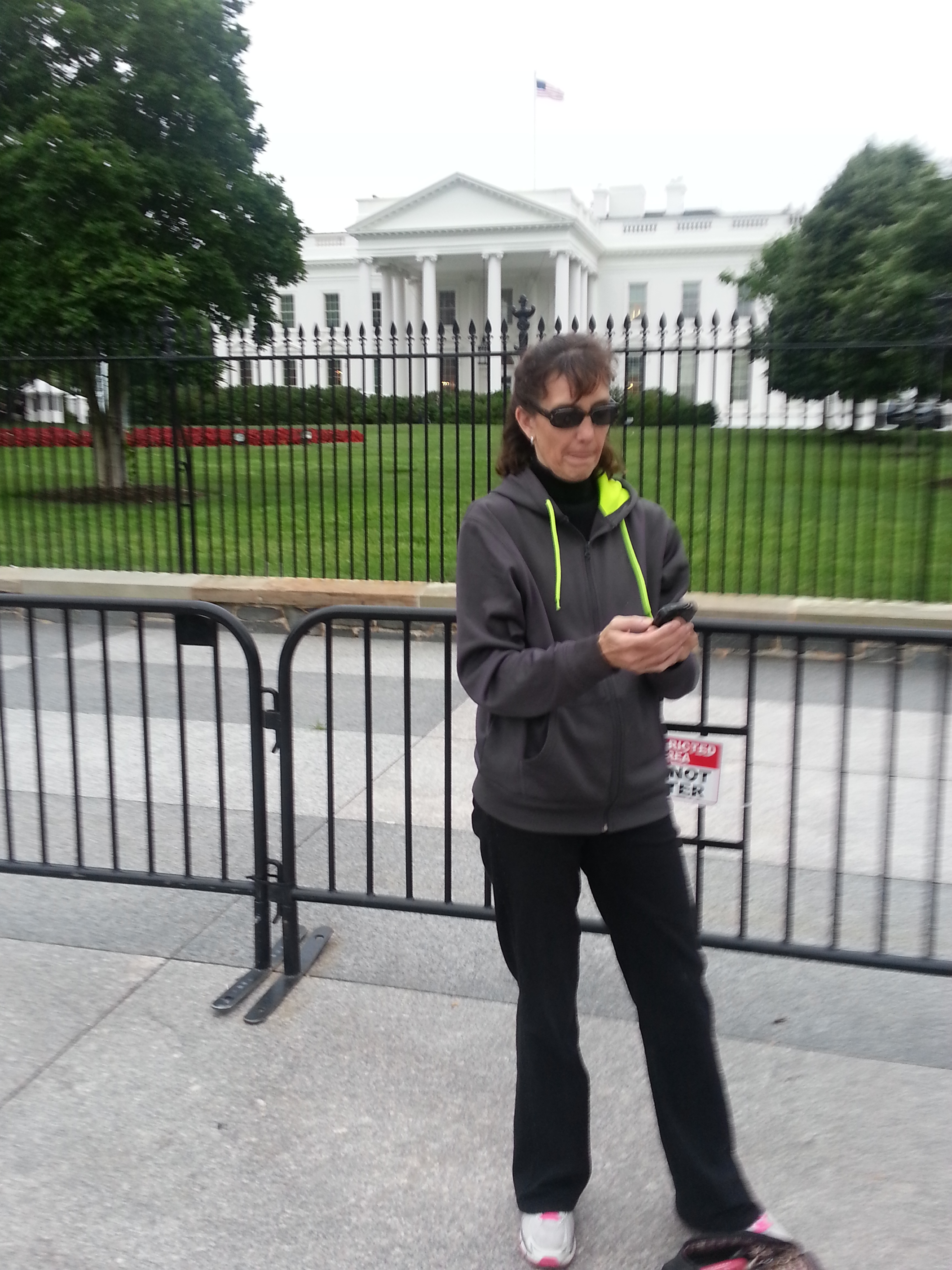
Facebook at White House_06.15

Facebooking at the White House

This trip to Washington, D.C., is the first vacation my husband and I have taken together since December 2012. We often travel by combining my business trips with a short vacation, which affords us a half-price trip. This time I was attending a four-day conference, during which he stomped the city with his map and sturdy shoes, and afterward we tacked on a few days of sight-seeing together.

In between we had moments — separately and as a couple — when the distance from our daily lives helped us see ourselves more clearly. For me, that is the discipline and the reward of a vacation. I maintain enough of my routine to feel physically healthy and keep pace in the high-strung cities where work trips invariably take me.

But I step back, too. I allow myself the time and space to read, write in my journal and reflect upon a life that, in many ways, is blessed.

Proudly Minnesotan
“Where are you from?” is a common question at a conference. It’s an ice-breaker, a way to forge a quick connection. I used to be embarrassed to mention Minnesota given the indifference I encountered on the East Coast, the lack of curiosity about the Upper Midwest.

These days — likely because I’m more comfortable with who I am — I proudly tell people where I’m from and where I’ve always lived. At this conference for community relations specialists in higher education, I resisted the urge to compete with the woman from Chicago who challenged my labeling of St. Paul as the “Boston of the Midwest” given our number of colleges and our status as the state’s capital.

Chicago is the nation’s second city. St. Paul is the second sibling to its better known Twin City, but I like the relative quiet and the friendly neighborhood feel, and I’m finally to an age where I can acknowledge that.

I felt that pride of place again at the “Reporting Vietnam” exhibition at the Newseum (a worth-the-trip experience for a former journalist) where Eugene McCarthy and Hubert Humphrey were featured as prominently as LBJ and Richard Nixon.

Elsewhere in the museum, a series of comedy clips from “Laugh In” and “Saturday Night Live” about anchors and reporters featured Al Franken from the early ’90s. “That’s one of my state’s senators!” I crowed to the woman sitting next to me. I’m not sure she saw the humor, and maybe it only reinforced her impression of Minnesota as a backwoods state. I didn’t care.

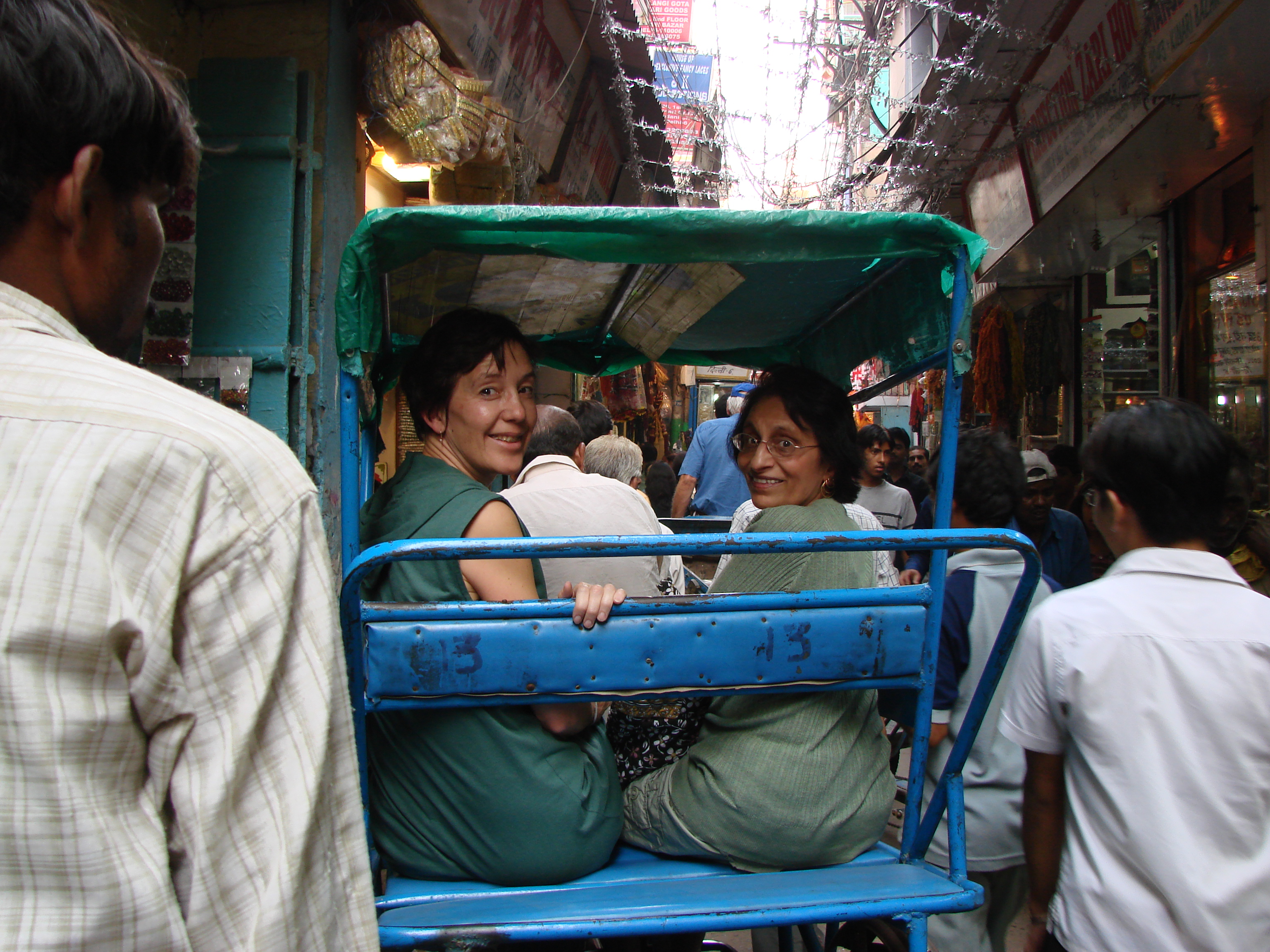
A different lensindia amy
The emotion of traveling hits me more acutely as I age. It’s not that this trip took me out of my Westernized, middle-class comfort zone, as a 16-day journey through India did back in 2006. Instead it was the roller-coaster ride of anticipation, exhilaration, exhaustion, reflection and elation again that had me hyper-alert to my surroundings.

That, in turn, made me nostalgic about my youth and wistful sometimes about what my life is missing and what I hope it still can be.

    • I called my father, a retired attorney, from the steps of the U.S. Supreme Court and reminisced into his message machine about our trip to D.C. when I was 11 years old and he patiently walked me through “The First Ladies” exhibition at the Smithsonian. Instead of heeding the selfish and self-defeating voice that said, “He never calls back,” I reassured myself that being a decent daughter is the one piece of this equation that I control.
    • I stood below the steps where Dr. Martin Luther King delivered his “I Have a Dream” speech and watched a group of African-American parents and children from Indiana mourn and celebrate their sons and brothers who have been shot dead. And I recognized how little I can do to save my own sons and felt the painful tug-and-pull of parenting young adults — the impulse to hang on, the absolute requirement to let go.
    • I joined the touristy throngs in front of the White House and felt the satisfaction of knowing that I voted for the president who lives there. That wasn’t true during my last visit in 2002. And I challenged myself to work to get my candidate elected in 2016. Women’s Studies was my second major in college. Time to put the theory into action.

Coming homeSkip
Back home for a week now, I have settled into the life I sought to escape. Living paycheck to paycheck but grateful for interesting work. Both tired of and devoted to my 15-year-old, food-obsessed dog. Worried for the economic climate my sons are inheriting and proud of them for making their way in it.

Nearly one-fourth of working Americans have no paid vacation or holidays, and those of us who do are often too driven or insecure to take it.

After years as a workaholic, I’ve come to see vacation as a worthwhile investment, a rare chance for a broader view. “All work and no play” not only makes Jack a dull boy; it makes him unaware of customs and cultures beyond his own, and way too invested in the illusion that he’s irreplaceable.

#30DaysofExercise . . . and Live to Tell

Like half of all Americans, I live less than five miles from where I work.

So, no excuses during National Bike to Work Week — except for Thursday, when I have to dress up for a volunteer recognition lunch and attend a fancier work function in the evening.MayisBikeMonth

Exercise-challenge programs such as National Bike to Work Day on May 15 or Run 2,015 in 2015 (whoops, too late now!) are effective motivators — except when they’re inconvenient. I learned that the hard way during the 30 Days of Biking challenge in April.

On the face of it, my mere seven days of biking during the cold, rainy month were a failure compared with the hard-cores who rode their bicycles to bakeries and tweeted throughout the month or posted grinning, thumbs-up photos on Instagram.

What I did instead is what I do every day, every month, every year: I exercised. The particular daily movement that I chose — biking, running, fitness yoga, walking — depended on the weather, on my schedule or on my mood.

The #30daysofbiking challenge did inspire me to log the experience. I kept a daily record of my exercise, and that’s proven to be fruitful now that warm weather is here and I really want to up my cycling miles and train to run another half-marathon.

My daily logs are both instructive and inspiring. I note the excuses, but I see also that I managed to move every day. The journal entries reinforce my midlife exercise mantra: Something is better than nothing. Any exercise counts.

30 Days #2

EXCUSES ARE EASY to come by. It’s harder to sidestep #30DaysofExercise, however, than daily cycling because it allows you to be more a generalist than a specialist.

On April days when it was too windy and cold to bike, I could easily walk the 1.2 miles to work. Likewise, on a day after my running partner had pushed me to run farther than I would have on my own, I could stretch my aching quadriceps and hamstrings in a yoga class.

But the exercise log’s purpose was to record, specifically, whether I had biked. And it revealed more than anything why I failed to get my seat on the saddle for 23 of the month’s 30 days.

  • April 1: Blew it on the first day of the bike challenge! Warm but really windy and then had horrendous rainstorm this evening. Oh, well.
  • April 9: Pouring rain today, 40 degrees. Going to Core Power at noon.
  • April 17: Went for a run with Lou Anne. No energy for more exercise today.
  • April 21: It snowed today. Enough said.

30 Days #4

WITH MY LONG LEGS and short trunk, I seem built to ride a bike. It’s an effortless exercise.

And so it’s easy for me to combine biking with errands, which feels more healthful — and less stressful — than other forms of multitasking.

Movement has more meaning, my cycling log has taught me, when there’s purpose behind it.

  • April 12: Rode to Rainbow Chinese and back to meet friends. As we get more serious about becoming a one-vehicle family, it will become essential to bike.
  • April 16: Still not feeling well so working from home. But I felt well enough to bike to work for meetings. Nobody seemed to mind that I was wearing spandex bike shorts, with bad hair and carrying a helmet.
  • April 26: Rode around the neighborhood and then went to Mom’s. I like combining biking with appointments. It’s a twofer, the equivalent of walking to work.

30 Days #3

CYCLING MAKES ME SMILE in a way that running never has. I love the sweep of scenery, the sense of being one with the natural world.

“You can’t buy happiness, but you can buy a bike,” I read on a cyclist’s T-shirt one sunny Sunday when I was biking home on Midtown Greenway.

Discovering the joy in the simple act of riding was an impetus behind the founding of 30 Days of Biking by Twin Citian Patrick Stephenson, whose idea has gone viral and international. He describes the practice of daily cycling as “transformative.”

  •  April 4: Wore my runner’s mask to bike this morning. Legs and fingers froze. No wind, gliding through the streets. Hills felt good after sculpt class yesterday.
  • April 14: Woke up with sore throat and sniffles. Hunkered down and got tasks done at my desk. Rode the six-mile loop along the River Road after work: 60 degrees, sunny, little wind. I felt better afterward.
  • April 28: Thirty-minute ride at 7 p.m. through the neighborhood. Not enough but it was something. Like any exercise or art or behavior at which I want to get better, biking has to be a practice.

No Easy Out: Here’s How We’ve Stayed Married

My husband and I married in 1985. Ronald Reagan was president, Intel introduced a 32-bit microcomputer chip that year, and Amadeus won the Oscar for “Best Picture.”

Thirty years later, “we are still married,” to borrow the title of one of Garrison Keillor’s books. Our lives are intertwined physically and financially. We are parents and partners and, on the good days, good friends.Marriage 1

We are family, and — like a growing proportion of college-educated couples in which women are financial and decision-making equals — we have chosen, despite the odds, to remain married.

I don’t believe in divorce once children are part of the equation. And so, as a belated anniversary gift to David, and a reminder to those bored and frustrated marrieds who see uncoupling as inevitable or an easy out, I’ve articulated three reasons why.

Cherish your history

We met in a Shakespeare class at the University of Minnesota taught by the gifted Toni McNaron, then a newly sober and recently “out” tenured professor who challenged us to see the Bard through a contemporary lens.

David loves to tell the story of eyeing me from across the room but thinking I was too young to date. I remember being drawn to him in a way that was inexplicable till our first son, Sam, was born in July 1990.

Together, we have invested in property, made homes, made friends, made joint decisions on causes and organizations to support. We both come from small-town, middle-class families with professionally employed, well-known fathers. Born into privilege, we take pride in living frugally.

David and I sometimes muse that we were brought together for the divine purpose of creating our sons. Every mother may believe that. I know it to be true. Sam and Nate are strong, intellectually curious and kind-hearted young men — and our greatest achievement has been raising them well.

Yes, we’ve stayed together for the kids. That is the legacy and lesson of my parents’ divorce, which they announced the day I turned 14.

“Parenting has been a tough haul, but we’ve worked hard at being a team and have started to reconnect on date nights,” says a neighbor, 52, who has been married 20 years. “We both come from divorced families, and that has left a lasting impression on both of us, so we are cognizant of the reason we are together — not just for each other, but for our whole family unit.”

Work through anger

I remember the door-slamming, plate-throwing fights of our younger, more passionate years with detached amusement. Who has time for that now?Wedding_2

In our 30 years together David and I have buried (or scattered) one parent, three siblings, two dogs and even some friends. Time speeds up with each passing decade. Experience has shown me how little we control what twists and turns our lives will take, or how our sense of security may be uprooted.

A boss once told me she feared losing her “edge” as she got into her 50s. Not so for me. I like the softness and compassion that have come with age.

Invariably, when either David or I gets moody or short-tempered, we shift gears, forgive quickly and move on. We don’t have time for sharp words or prolonged resentments, the drama that once fueled what we took for romance.

Laughter and companionship are key in long-term marriage. “We talk, always,” says a friend who has been married 15 years. “We’re honest. We laugh a lot. We take care of each other, not because we have to — but because we want to.”

Love the one you’re with

Stephen Stills’ paean to infidelity has a different meaning to me after three decades of marriage.

David and I are under no illusions that we were “made for each other.” In fact, our temperaments and interests often diverge. His relaxed approach to agendas and timelines drives me crazy. My quick-paced brainstorming and tendency to think aloud set him on edge. He smokes and loves sugar. I eat consciously and exercise daily.

Each of us has friends of the opposite sex and could be happy with someone else — or contented on our own. We’re both readers and contemplative types at heart. But we found each other, and that’s the clay we shape and mold.

Our differences coalesced into a surprisingly congruous approach to raising our sons. Aside from religion — I don’t think we exposed them to enough of it; David went on too many forced marches to Mass ever to inflict mandatory church-going on his kids — we have few disagreements about values in our household.

Growing up together helps. “John and I have a long history together,” says a friend and former coworker who has been married for 23 years. “We met at age 18 and got married at 24. Our life histories are intertwined.”

When I told my husband I was writing a blog post on how long-term marriages endure, he objected. “You didn’t ask me!” he cried.

So, what’s kept us together? His response touched and surprised me, even after 30 years: “Love.”