Author Archives: Amy Gage

Unknown's avatar

About Amy Gage

A community relations director in higher education and mother of two adult sons, Amy Gage spent the first 20 years of her career as a journalist and public speaker in St. Paul and Minneapolis, Minnesota. The issues addressed in her award-winning newspaper column, "On Balance: Issues That Affect Work and Home," remain relevant today. In "The Middle Stages," she continues the vital conversation about women's work and lives, with a focus on the challenges and contradictions of aging, the mixed blessings of forsaking family time for the more immediate rewards of a career, and how middle-aged women can continue to forge full lives even as their priorities and sensibilities change.

‘Glidepath’: a bridge between work and retirement

Catherine Spaeth lives in an 1894-era house with a wraparound front porch, carved oak banisters, an abundance of natural light and a high-ceilinged kitchen that suits her latest adventure — a pastry and baking certificate from Saint Paul College that she hopes to parlay into a part-time job or a small catering business.

In addition to the chance to perfect her baking skills, she likes the certificate’s emphasis on classes like “Food Safety and Sanitation” and “Culinary Nutrition Theory.” Her recently resurrected blog, The Butter Chronicles, features posts about how food choices affect our brains, the rise in U.S. sugar consumption and why professional cooks never wipe their hands on their aprons.

At 63, Spaeth (below) has run study abroad programs in private higher ed, taught American history and literature, and co-owned a company that designed college cultural immersion programs. She speaks English, French and Italian and holds advanced degrees in American studies. She and her husband, an athletic outdoorsman, took a six-month pilgrimage walk through Europe in 2022.

With a life that expansive, why go back to community college now, cramming to relearn algebra for the admissions exam only to sweat alongside students young enough to be her kids? The why is simple: Because she can. “It’s been really fun,” says Spaeth, over hot tea and homemade scones.

“Going back to school is an incredible luxury,” she acknowledges, though Spaeth balks at the assumption that she “doesn’t have to work.”

“What that conjures up for women is way different than what it conjures up for men,” she explains. “It’s saying, ‘You don’t have to do anything.’ You can stay at home and everything you do at home is not work” — a stereotype and societal perception that drove me, 40 years ago, to pursue a paid career.

Both Spaeth and her husband, a retired lawyer, plan to forego drawing Social Security until they’re 70. “We’re not big spenders,” she notes, “and our mortgage is paid off.” So, her goal in returning to college is less to earn money than to find purpose after decades of full-time work. “I don’t want a life with no commitments,” Spaeth says.

What happens after 60?

Like many professionals in their 60s, including me, Spaeth is on a glidepath toward retirement. Not ready to quit work entirely but situated financially to have options, we have left full-time careers for a variety of reasons:

  • We earned and saved enough over the course of our working lives that we could afford this choice.
  • Medicare gives us reasonably priced healthcare coverage at age 65 without having to rely on employer-provided benefits.
  • We watched as our peers, deemed irrelevant or overpriced, were laid off or restructured out (yes, it happens to people over age 60, despite the legal risks).
  • We opted to do something different — volunteer, travel more widely, pursue a passion — when the careers became less relevant to us.
  • We have spouses who may be older or are retired themselves.

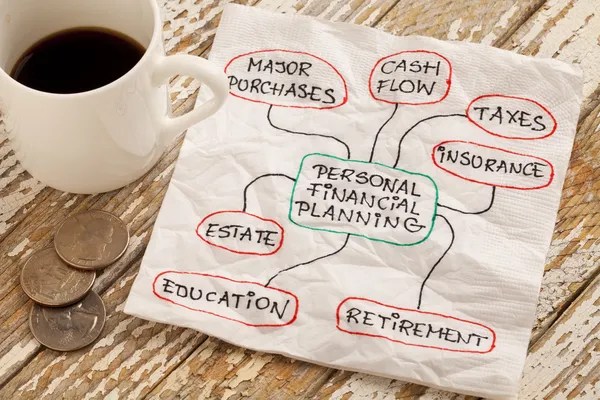
Glidepath is a financial planning term that references the portfolio rebalancing typically recommended as people get closer to retirement. But it applies to the path that Spaeth and I are pursuing, too: more schooling, in her case; two part-time jobs, in mine.
As a self-described workaholic, I found myself ready to slow down at 65 but not to step away from work entirely. My career has meant too much to me — in identity and intellectual stimulation, in the pride and purpose of supporting a family — to simply flip a switch and say: “I’m done.” Plus, I also want to delay drawing Social Security.

“I love the term glidepath,” says Spaeth, whose study-abroad business ground to a halt once COVID struck. “It was a rough year and a half trying to stay afloat with no revenue coming in.” She calls the pastry and baking certificate her “next project,” one that allows her to look ahead rather than wallowing in the business loss.

That sense of optimism is particularly important as women age. “Part of wanting commitment and engagement is related to an identity,” Spaeth says. “As older women, we’re already invisible in lots of ways, and I don’t want to be out of the world, out of the working world — where, for better or worse, you get your respect or recognition.”

Endings and beginnings

Six months into my own glidepath a term I prefer to “semi-retirement” — I am learning firsthand about the challenges and benefits of leaving full-time work. The upside of two part-time jobs is apparent in the schedule I have crafted: more volunteering for Planned Parenthood, where I had to operate under the radar while employed by a Catholic university; more opportunities to cook and have people over; more reading and yoga; more coffee and meal dates with my friends and sons.

Still, the expanses of time that I expected to emerge have not materialized. “Busier than I’d like to be” is my standard response when people ask how my new life is going. That’s due in part to my tendency to overbook my calendar.

‘Retired’ is an old word, for men who are leaving manual labor.

Kathy Kelso, St. Paul-based advocate on healthful aging

But it’s also because professional occupations, which my two roles are — managing editor of a Twin Cities–based community blog and executive director of a small, environmentally focused nonprofit — do not lend themselves to hourly contract work.

  • Do you charge only for the time you’re at the computer or in meetings? Or is it legitimate to bill for travel time or for processing and “think time,” as another nonprofit executive director encouraged me to do?
  • Who pays for networking and professional development, for the outreach that yields relationships more than direct, measurable impact on a given project?
  • Most challenging, how do you right-size your ego — your past practice of operating as a doer and decision-maker — so it fits into the box that contract work constructs? When the board differs with your recommendations or does not consult you on a key decision, do you fight it, or recognize that you are not in charge?

The financial definition of glidepath fails to address that emotional turbulence. I am traveling toward a different future, but I lug along my baggage from the past — the habits and ways of working, the belief that my career defined me. I rarely called in sick. I was always pushing for new solutions. I reveled in the résumé-building accomplishments that my career allowed.

None of that matters anymore, because the glidepath leads downhill, to a door labeled “retirement,” which traditionally has meant: That’s it! You’re finished.

Retirement: define your terms

Jim McCartney, 69, a former business reporter and colleague of mine at the St. Paul Pioneer Press, is wary about the term glidepath, given its implication that his career is slowing to a stop. “I’m not necessarily wanting to land,” he says, “if landing means I have to stop writing.”

After leaving journalism for a lucrative career in public relations, McCartney faced a layoff three years ago, at the start of the pandemic. He was 66 and immediately began promoting himself as a writer for hire, even though his wife brings in a full-time income.

“I love writing,” he says. “It’s kind of my identity. I can’t imagine ever stopping writing.”

Unlike me — working at two jobs I enjoy but for significantly less than my full-time compensation, once you factor in benefits — McCartney takes pride in having earned more as a freelancer during the first year after he was laid off. “I don’t necessarily place my self-worth on what I can make, but it’s nice to know that someone is willing to pay well for my services,” he explains. “As long as I like the work, it’s a validation that you’re worth X amount per hour.”

McCartney is now doing business under the moniker JSM Communications LLC, specializing in science, medical and healthcare writing. He will wait until he turns 70 to draw Social Security, subscribing to the common wisdom that “unless you’re really sick and don’t think you’re going to live very long,” it makes sense to maximize the monthly payout from the government.

Two of his close friends from the Pioneer Press are retired and involved in volunteer work at nonprofits, their reporting days behind them. But McCartney, who began his career as a city reporter at the New Ulm Journal (above), likes the word retired even less than he likes glidepath.

“I don’t want someone to think, ‘Oh, I wish Jim were still writing, but he’s retired.’ I don’t want people to think I’m out of the game,” he says, “because I’m not out of the game. I’m still writing, but I’m doing it on my own terms.”
The Big O has new meaning as women age

Since being diagnosed in November, days before Thanksgiving, I have taken a chalky white pill with a full glass of water every Thursday morning, on an empty stomach. Then I have stood or sat upright for an hour before enjoying my customary coffee with microwaved milk, so the medicine can be absorbed and won’t irritate the esophagus (my “food pipe”).

Initially, I was angry:

  • At a healthcare system that didn’t warn me years ago that bone density could be an issue for a woman who is white, thin, of northern European heritage, with a small frame and a mother who took Fosomax herself for years.
  • At a nurse practitioner who had seen me before my 65th birthday in July and never mentioned it was time for another bone density scan. I discovered that on my own while clicking through MyChart months later to verify an appointment and saw a notice that my scan was “overdue.”
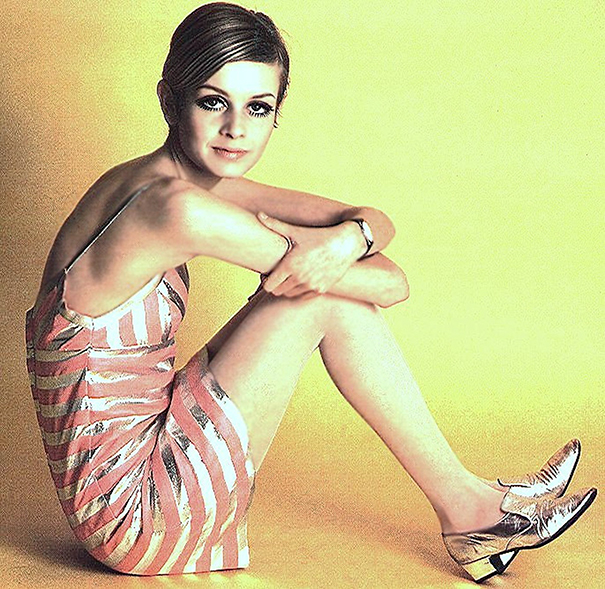
  • At a culture that pressured women to be model thin when I was young. Twiggy was a skinny, 16-year-old kid when the media started marketing her as the ideal body type for women. Even Gloria Steinem, for all her intellect and accomplishments, became the face of the 1970s-era women’s movement in part because she, too, was thin and pretty.

“I have to focus more on being strong than being thin,” I wrote on Facebook shortly after my diagnosis of thinning bones. Enough crowing about keeping a closet full of clothes from my 40s and 50s “because they still fit.” Or celebrating that I weigh less than I did when I got pregnant with my older son, who was born in 1990. Or preferencing cardio exercise, which gives me an emotional lift, over the tougher, more monotonous work of lifting weights.

One of my sisters was nurturing and supportive, texting or calling to offer tips about the benefits of Pilates or which calcium-rich foods to eat. (Who knew that ice cream, eggnog and fortified frozen waffles would make the list, alongside kale and broccoli?)

My oldest sister, the pragmatic one, issued a simple challenge: What are you going to do about it?

Name it, claim it

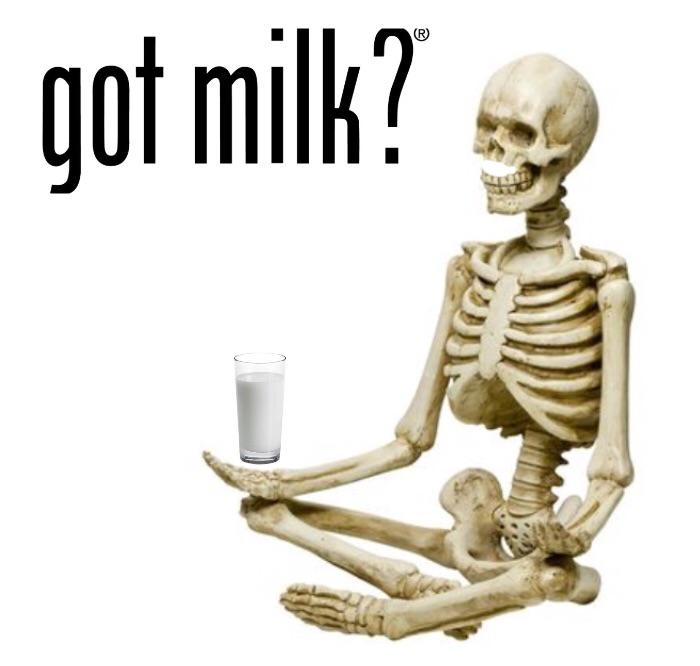
The word itself scares me. Osteoporosis conjures up images of an old, wizened woman whose upper back has curved into a question mark. My reluctance to name the disease, to say the word aloud, is both a symbol and a symptom of my denial. Just as I resisted the label alcoholic when I recognized in my early 40s that I needed to quit drinking, I now reference my “bone density issue.”

Osteoporosis is for old people; osteoporosis, like forgetfulness and a thickening middle, is for my late mother. Thinning bones don’t afflict people who are fit and who exercise as much as I do.

Or so I thought. Physically active throughout my life — a seasoned cyclist, a walker who averages 16,000 steps a day, a former aerobics instructor who still loves to take yoga classes — I was stunned that thinning bones could be a problem. When the nurse practitioner handed me a printout from Mayo Clinic at my follow-up appointment, I noted that none of the “lifestyle choices” that increase risk of osteoporosis apply to me:

  1. Sedentary lifestyle. I have a hard time sitting still. “You’re in fifth gear or asleep,” my husband likes to say.
  2. Excessive alcohol consumption. I haven’t had a drink since January 10, 2010.
  3. Tobacco use. I never could inhale.

“This is not your fault,” the nurse practitioner assured me after I told her I was scared. But the diagnosis, especially on the cusp of snow and ice season in Minnesota, felt like a slippery slide into old age — like “being suddenly Old and Fragile,” as one friend aptly put it.

How would I walk my dogs every morning when falling could more easily break my bones? Would I have to abandon biking come spring, a sport I have loved since I was 5, because a tumble could sideline me forever? Exercise and movement are my sanity, my way of coping with stress, my increasingly tenuous hold on independence, my illusion that I will be forever young.

As the shock has worn off, I have moved gradually toward acceptance, and into action. Do something now, or you’ll pay later. That much is clear.

Bone up

Watching my weight was something I could control in a world that (still) tries to control women’s bodies. Now, I apply that discipline to self-care for my bones.

One lesson I’ve learned already is to take charge of my own healthcare. In a system still exhausted and under-resourced from COVID, no doctor is going to walk me through this. Doing my own research and seeking support from friends and family members, including my weight-lifting sons, have pulled me out of the muck of fear and self-pity.

  • Thursday is Fosomax day, with a weekly reminder on my calendar. The hour of being upright and foregoing any nourishment but water is peaceful and productive quiet time.
  • I lift free weights two to three times a week and am relishing growing stronger.
  • I have started taking a Pilates Fusion class designed for people with arthritis and osteoporosis, with special emphasis on strengthening back, glute and abdominal muscles.
  • I no longer skip my daily calcium and Vitamin D3 supplements.

That my diagnosis came on the cusp of a major life change — a step away from a full-time career, and all the status and identity and financial security that brought me — has made osteoporosis seem both an indignity and oddly well timed, a gentle push into the next phase of life and a firm reminder to accept reality and deal with it.

“Everyone hopes to reach old age, but when it comes, most of us complain about it,” the Roman philosopher Cicero said. Had I not been searching the website for tips on healthy bones, I never would have stumbled upon “Lessons on Successful Aging,” derived from Cicero’s 2,000-year-old essay “On Old Age.”

Among the lessons relative to women at this later stage of life:

  1. A good old age begins in youth. I can wish that I had started lifting weights at a younger age, but I cannot change the habits or negligence of the past. All I can do is develop new patterns now.
  2. We can be active in old age, with limitations. Winter biking will never be a sport I’ll pursue, just as jogging outdoors in winter now seems foolhardy.
  3. Youth and old age differ. Longing for what was keeps us stuck in the past and blocks us from embracing the benefits of aging.

Osteoporosis, the Big O for older women, is my necessary reminder that good health is neither a given nor guaranteed.

Christmas doesn’t matter anymore, but it’s still important

Christmas is upon us, and I am barely present for it this year.

Amid health scares, a whole lot of winter weather and adapting to my shift from full-time career to part-time work from home, my husband and I never bothered to buy a tree. In years past we got a free Douglas fir from a colleague at my workplace, but since leaving there I can’t justify the effort — or the money — to purchase a tree, cajole my husband into setting it up, decorating it and then reverse-ordering those tasks once the needles start to hit the floor in January.

The rituals don’t mean as much without children in the house, and the dogs are indifferent.

I’m giving gift certificates and cash to my two grown sons, and my husband and I agreed to forego material gifts in favor of joint outings during the week I am off between Christmas and New Year’s. Being tourists in our city, we call it, eating in restaurants we haven’t tried, visiting museums we never get to and haunting antique stores for just the right find.

As I did last year, I asked my siblings to forego their thoughtful but unnecessary gifts of chocolate, cheese and boxed fruit in favor of donating to one of my two favorites causes — reproductive freedom (Planned Parenthood North Central States) and hunger relief (Keystone Community Services). And I, in turn, donated to causes of theirs.

No, I’m not a Scrooge or a Grinch. I keep my wraparound porch trimmed with colored lights throughout the year and remain susceptible to the emotional uplift of “Silent Night” or “Hark the Herald Angels Sing,” hymns I well remember from my Methodist upbringing. But neither do I celebrate Christmas as a religious holiday any longer. (“I’m a Unitarian, not a Trinitarian,” I explained recently to a friend.)

And so in a year when I have turned 65, undergone a life-shifting career change and been hit with a medical diagnosis that forces me to reshape my approach to exercise, eating and self-care, I have neither the time nor the energy — nor the desire — to invest in the secular rituals that inspire many people to overspend, overconsume and overdo throughout the month of December.

Christmas Eve, our usual family gathering time, will be at the house that my younger son and his partner purchased earlier this year. “I can’t celebrate Christmas without a tree,” he told me recently at our monthly family dinner. So, I suggested that he host. “It’s their turn,” I told one of my older sisters, who likewise has ceded most holiday celebrations to her grown kids. My role is to cook chicken wild rice soup and bake spoon bread — and then allow a new tradition to unfold.

Aging changes the holiday season, or at least it has for me. I don’t need anything, so why ask for gifts? What I want (earrings, snowshoes, warm leggings, winter gloves), I would rather buy myself.

I am earning less than when I was working full time, which has me looking askance at all the stuff we distract ourselves with, the needless crap that eventually will end up in a landfill, like the Roomba hitting my feet during a recent meeting at a coffee shop. How hard is it to sweep the wooden floor?

I’ve recycled a dozen holiday catalogs that have shown up at my house unbidden, unwanted. Filled with cardigans, scarves, wool socks, monogrammed bathrobes, DVD collections of classic TV shows, dog- or cat-themed throw pillows and flowing tops without a waistline, the catalogs are clearly targeting women of a certain age and era.

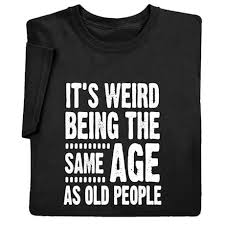
Bathtub reading, if nothing else, worth browsing for the amusing T-shirts:

  • The Proper Term for ‘Senior’ Women Should Be Queen-Agers (Acorn)
  • Don’t Rush Me. I’m Waiting for the Last Minute
  • Never trust an atom. They make up everything.
  • I don’t mind getting older but my body is taking it badly.
  • I’m silently correcting your grammar. (Signals)
  • Moses was the first person with a tablet, downloading data from the cloud
  • 90 Percent of Being Married Is Yelling ‘What?’ From Other Rooms.
  • Underestimate me. That’ll be fun.
  • I sometimes wonder what happened to people who have asked me for directions (Shop PBS)
  • Don’t look back. You’re not going that way.

It’s all fine. It’s fun. But it’s a waste. The catalogs are full of the nothing-you-need stuff that make gift stores so seductive. How much will you pay for a scented candle or a pound of specially wrapped coffee beans that weighs only 12 ounces?

And yet: I was moved to tears a week ago during a Christmas concert at a historic Catholic church when my son’s partner, Tess, who has been singing since childhood, performed with the all-female Partners in Praise choir. They concluded the evening by walking down the aisle and stopping along the way to place a hand on the shoulder of a loved one. While the soprano and alto voices sang the Irish hymn “May the Road Rise Up to Meet You,” I felt tears spontaneously streaming down my face. Not because Tess’ voice was beautiful, though it is. Not because I was witness to how much she loves my son, and he her.

No, I wept for the little boys who are grown up men now, who have their own homes, their own lives. I cried for all the people who aren’t here anymore, the parents and sibling and sister-in-law and friends whom I can’t call up to talk to — though I long to have those conversations — and whom I, as an unconventional believer, am unsure I will ever see again.

Christmas is quieter than it used to be, and so I tell myself that is what I want. I say that I’m relieved not to navigate the politics and resentments of divorced parents and multiple households to visit, the strains of putting on a meaningful celebration for small children all while working and commuting and having too little time and money.

When I walk the half mile to Grand Avenue on Sunday morning and board the #63 bus that will take me to Unity Church-Unitarian for the “Small Wonders” service that acknowledges Christmas Day, I will be by myself. But I won’t be alone.

My mom, my stepmother, my father, my son’s godmother Peggy, my friend D.L., my beloved older brother, Fred: All will be with me — in my mind, if nowhere else. And that will be Christmas enough for me.