
In the 11 years that I’ve lived across the street from John and Carey, I’ve not known them to showcase their preferences or opinions with yard signs, unlike many in our liberal, activist, urban neighborhood. So I took note when a Friends of the Saint Paul Public Library sign went up in their front yard — an innocuous enough message, in a neighborhood with two colleges and at least one Little Free Library on every block. And I paid even more attention at the blue and white reminder for traffic to slow down on the side street that we share in our corner houses.


“I feel it’s some kind of miracle that a serious accident has not occurred at our intersection,” Carey told me, citing that as the reason why she got the “20 Is Plenty” sign, which the City of Minneapolis began distributing in 2020, when it lowered its speed limit to 25 miles per hour. (St. Paul began offering free signs to residents earlier this year.) The library sign was a gift to donors, she recalls.
The absence of political signs in their yard on a well-traveled corner is no accident. “We haven’t put up political signs for years,” Carey says. “Personally, I don’t think seeing a campaign sign in someone’s yard would ever influence me to vote for that candidate.”
Her stance is at the heart of my own household’s disagreement about political yard signs. My husband, David, thinks they’re a distraction and a blight. America “fought for the secret ballot for a reason,” he says, and it’s nobody’s business how we vote. I counter that when ill-informed voters fail to recognize all the names on their ballots, I want my candidate’s moniker top of mind: “Oh, yeah, I’ve heard of that one.”

I didn’t have yard signs at the house where we raised our sons in Northfield because I had visible jobs — editor of the twice-weekly local newspaper, later director of communications for one of the town’s two private liberal arts colleges — and expressing my viewpoints publicly would have been inappropriate (and unethical as a journalist).
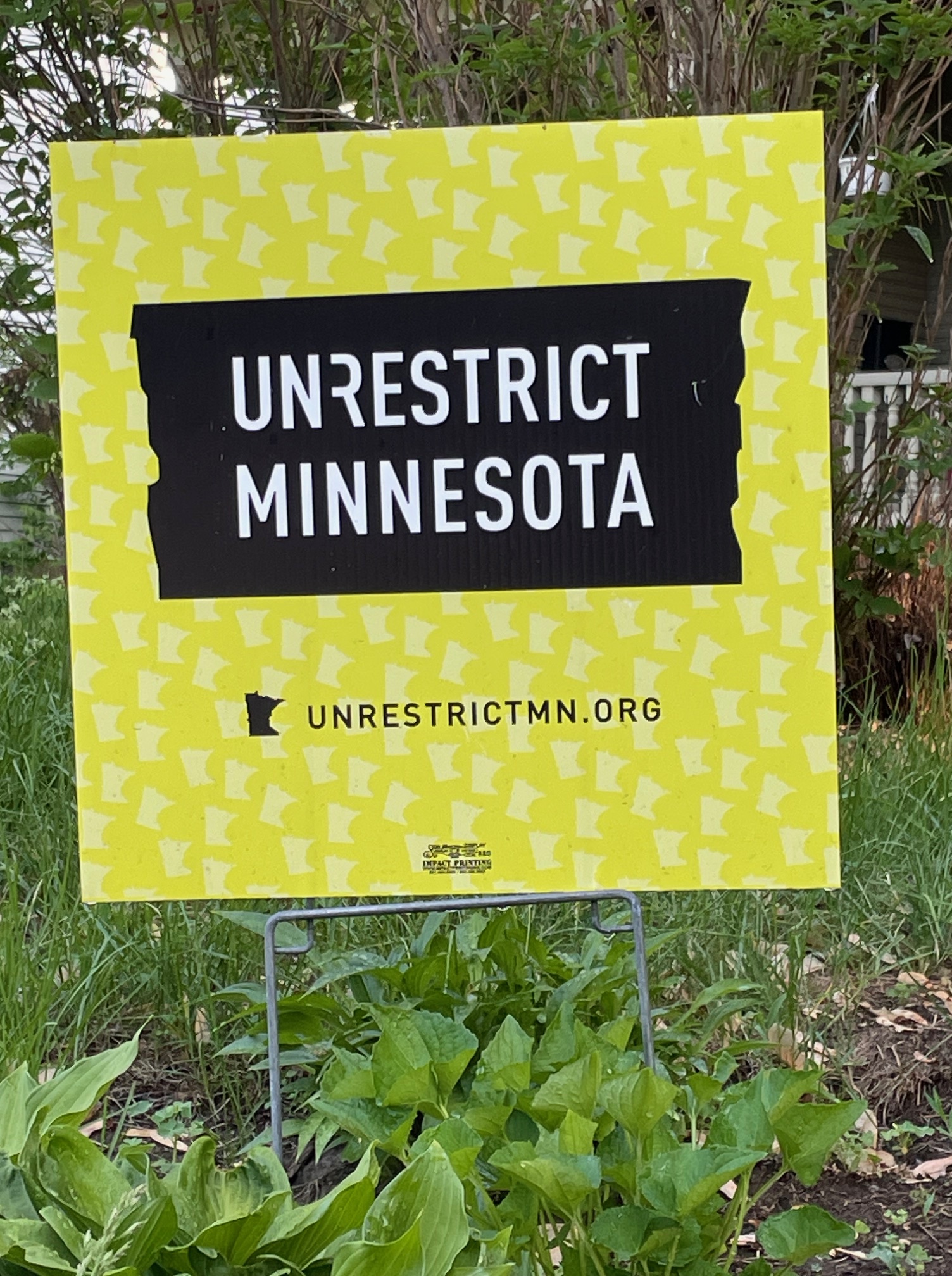
Later, when we moved to St. Paul, I hesitated to display my liberal leanings because of my position as director of neighborhood relations for the state’s largest private college, a Catholic institution. Many students and neighbors knew where I lived, five blocks east of the campus’ northern edge. An “All Are Welcome Here” sign by my own Little Free Library seemed harmless enough, but I waited to plant the pro-choice UnRestrict Minnesota sign in my front yard until I had left the university in September 2022. Having been reported to the general counsel’s office for my activism with Planned Parenthood North Central States, I prioritized job security and bided my time.
Freedom of speech
Signs, flags, bumper stickers: They can serve as advertisements, virtue signaling, rebellions against the establishment or just plain fun.
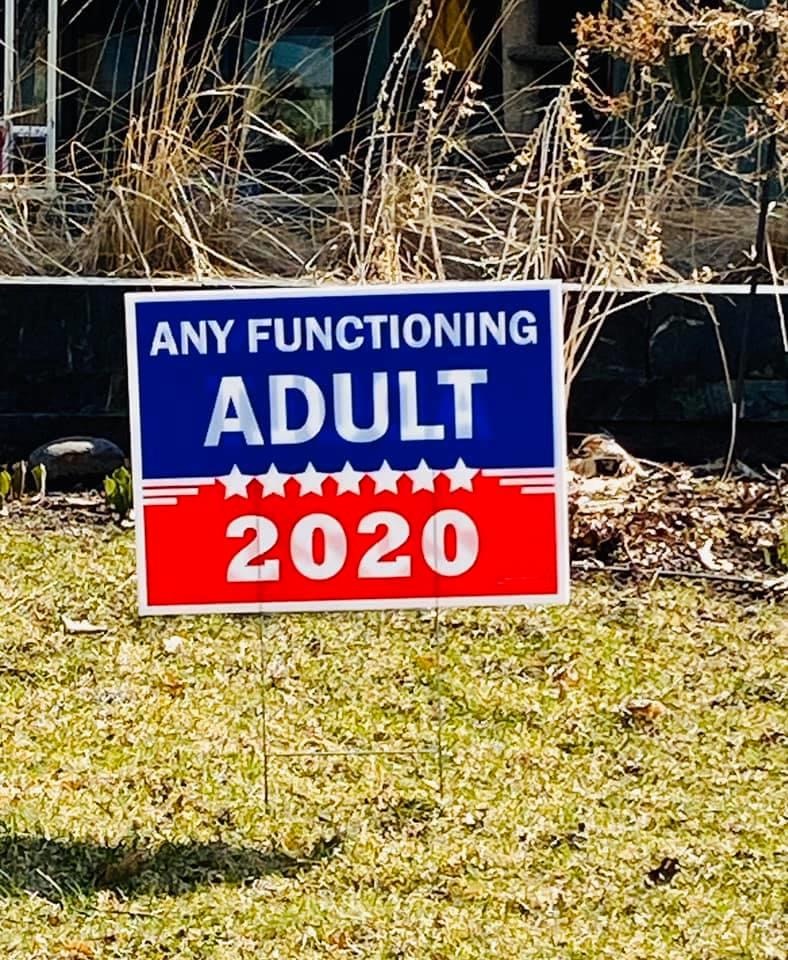
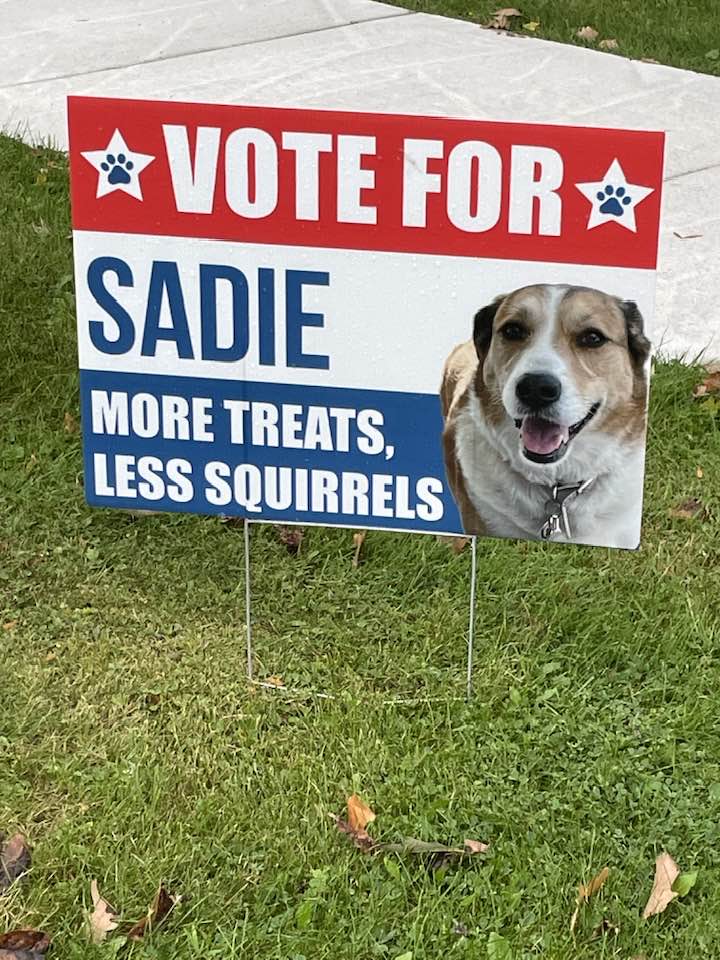
I laughed out loud when I first saw an “Any Functioning Adult” yard sign in Minneapolis during the 2020 presidential race. More recently, during another heated presidential campaign, I smiled at a yard sign in Grand Rapids, Minnesota to elect a family pet amid the battling Harris-Walz and Trump-Vance signs.
For others in my neighborhood, yard signs are both joyful expressions and serious business. Jamie, the husband and father in the family next door, has printed anti-Project 2025 signs for his yard (and mine) and was among the first on our block to put a Black Lives Matter stake in the ground. “I believe yard and window signs express my beliefs and values,” he says, “especially related to landmark and once-in-a-lifetime cultural change issues like gay marriage or systemic racial injustice.”
Jamie also has printed a T-shirt that he wears when he waves pro-democracy signs with other activists on a busy street corner once a week: “People of quality are not threated by people seeking Equality,” the T-shirt reads.

His wife says the handmade signs in their porch windows were a creative outlet for the oldest of their three children during the early days of COVID and in the explosive aftermath of the police killing of George Floyd. “Signs serve as an entry point to launching a discussion about a difficult or controversial subject,” she says, “and hopefully help others consider opposing views as less threatening.”
Another nearby neighbor — the only Republican I know on the block — put out a Nikki Haley sign back when the presidential candidate was still standing up to Donald Trump. I asked him about it one morning as we were dumping our recycling in the alley bins. He looked wary at first but later explained his motivation in an email.

“I thought she was the most qualified person in the race at the time, and I wanted to show my support and get others to notice,” he told me. “This is the first time I’ve put up a sign in more than 15 years. Nikki was the only presidential candidate I’ve been excited about in many, many years.”
Power and privilege
The Reverend Kelli Clement, a Unitarian Universalist minister, puts up signs in the front yard of her house in south Minneapolis “without worrying too much,” she says. Many of her neighbors share her views, and she works inside an institution that aligns with her values.
She describes both of those circumstances as a privilege:
- Freedom from fear that a progressive sign would get “shot up or stolen,” which has happened to people she knows in small-town Wisconsin and other rural areas.
- Freedom from worry that the UU congregation she serves would reprimand or discipline her for voicing opinions that run contrary to church teachings.


The UU “values of justice, equity and inclusivity are my values,” Kelli says. She can’t imagine wanting to post a yard sign that runs contrary to those. Plus, “nonprofit leaders and religious folk are individuals in their own right,” she declares. “We don’t owe our civic opinion to our place of employment.”
For Joan, whom I met through community and political organizing, yard signs are a catalyst to explore and confirm her beliefs. They help her step beyond what’s comfortable “and proclaim a position and values.” Which can be hard, she says, “if you believe you are in the minority.”
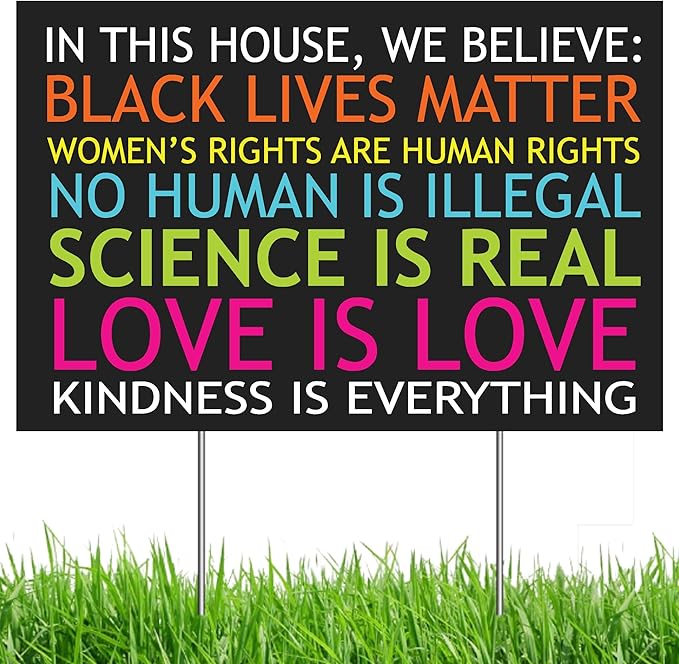
I am at an age and stage where I no longer have to appease an employer — a time of life when I am developing what I consider a healthy disregard for whether people approve of me. At 67, after decades of working hard and playing by the rules, I feel I have earned the right to be forthright and frank, so long as I don’t disrespect others. My yard signs may mean little to neighbors or passerby, but for me they represent a visible, colorful, even audacious symbol of being true to myself.


Expressing your viewpoints publicly is NOT inappropriate or even unethical for a journalist. When reporting about a subject, it’s more important to find and publish facts than your opinion, of course, but demands that journalists shouldn’t support a political party or even shouldn’t vote, those demands are unethical (and snobbish if they come from inside the profession).
LikeLike