Tag Archives: Work-life balance

How Women’s Work-Life Choices Are Evolving

The first thing I noticed was the number of women casually wearing blue jeans as they networked, introduced themselves and sipped their morning coffee, as though clothes did not define their role or status.

I had debated what to wear for my first professional women’s conference in over 25 years. Would skirts and blazers still be required? Given that I was taking mass transit to the event, could I get away with athletic shoes? Finally, on a chilly, gray Friday with intermittent showers, I opted for slacks and shoes I could walk in — practical and comfortable. Turns out, I was overdressed!

Between the ages of 36 to 43, I was a full-time newspaper columnist writing about women and work, with a focus on how a generation of middle-class women were navigating the personal and the professional in ways their homemaker mothers never had to do. “On Balance: Issues That Affect Work and Home” the column was called. So, when I heard about the annual women’s conference put on by RSP (Ready. Set. Pivot.) — a Twin Cities-based organization that “guides bold, unapologetic women to their next best thing” — I saw it as a chance to investigate how issues for career women have changed over the past 30 years.

Three conclusions or trends emerged that demonstrate the realities I have recognized in my 60s:

  • Progress can be temperamental, and transitory, but movements for social change do push us forward.
  • Age shifts our priorities, giving us space to quit dwelling on the inevitable regrets and instead channel them into more authentic ways to lead our lives today.

“Always concentrate on how far you have come, rather than how far you have left to go.”

Heidi Johnson

Trend #1: Finally! Flexibility Is Firm

Back when I was writing the column on women and work (a first for a local newspaper in the 1990s), once- or twice-a-week telecommuting was an almost revolutionary option provided by employers wanting to be seen as work-life friendly and to retain women struggling vainly to “have it all.” I was commuting a long way to the newsroom, with my husband as an at-home parent to our two sons. When a top-tier liberal arts college a mile from home offered me a job in communications, I used it to negotiate a partial work-from-home arrangement.

“Flexibility doesn’t mean working from home on Tuesdays,” a source told me at the time. “True flexibility looks different ways on different days.” And true flexibility, back then, was rare.

Years later, flexibility was among the trends that panelists cited at the RSP conference, organized by former Blue Cross Blue Shield marketing executive Wendy Wiesman, 50, who relishes the “insane freedom” that she gained when she left a prestigious job at a reputable company five years ago.

“Women are more ambitious than ever, and workplace flexibility is fueling them,” says the Women in the Workplace 2023 report by McKinsey & Company, produced annually in partnership with LeanIn.org.
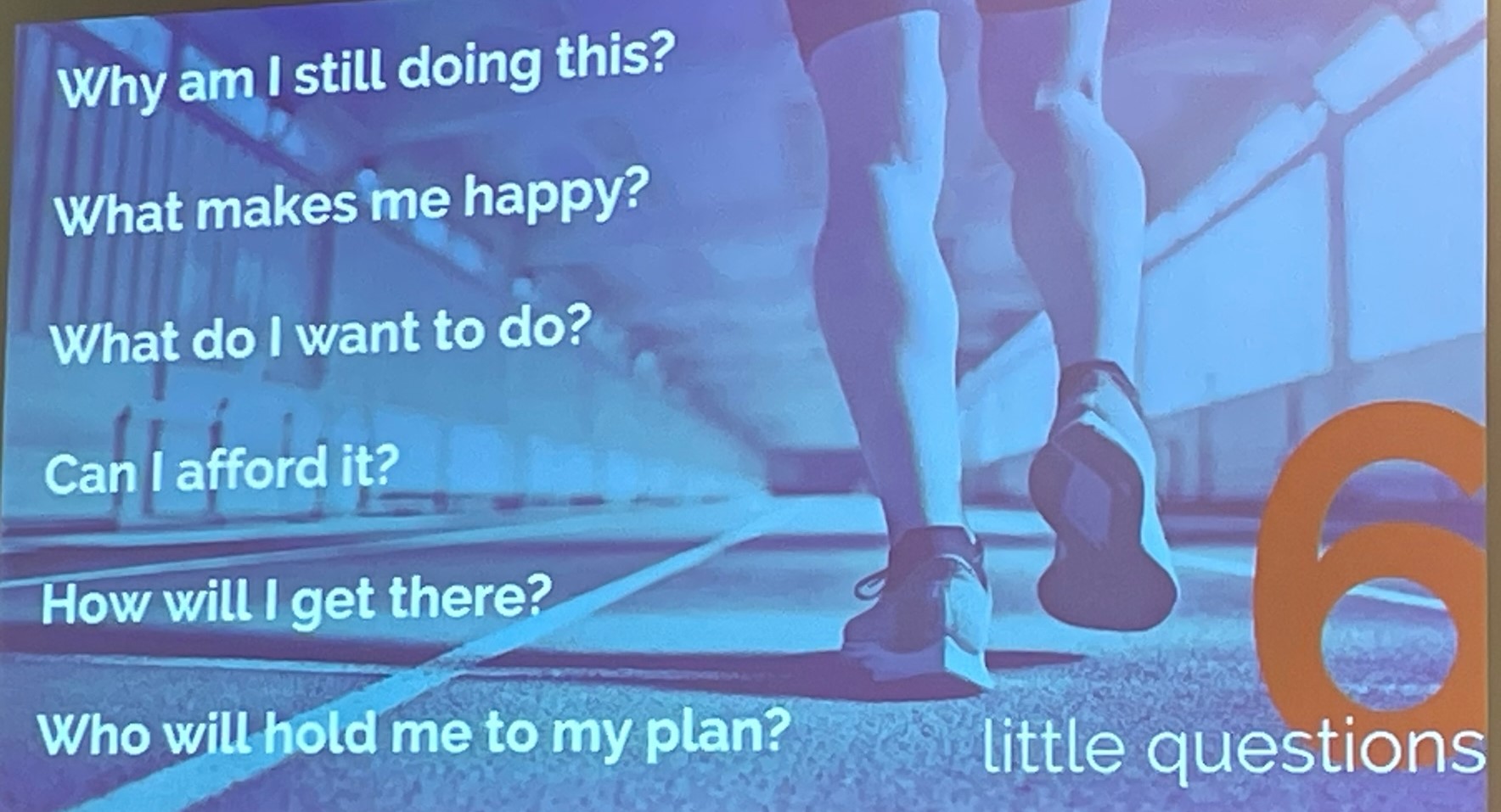
Six key questions kicked off the RSP conference in October.

Rather than being the sole exception, as I was, the women I met at the conference treated flexibility as a given rather than a favor that could be taken away. They have the confidence, or perhaps the strength in numbers, to determine how and where they want to work. COVID and a tight labor market have fueled that trend.

I talked with two women in their 40s who are running their own businesses. Diane, a human resources specialist who was often told she “wasn’t typical,” has three children and is the primary breadwinner because her husband is a teacher. Jennifer, who is married with two daughters, lost 100 pounds a decade ago and joined Toastmasters to help her present herself publicly. Now, having tired of working in financial services, she coaches professionals in public speaking.

Wiesman, founder and CEO of Ready. Set. Pivot., says those are the kinds of courageous women her company attracts, who want to design the next stage of their career and leave a secure position if it’s not working. “The DNA is of a woman who is never quite satisfied,” she says. Or, as her website puts it: “The best talent is restless.”

“What does success mean to me now? From the perspective of today, what is most important to me?”

Randi Levin, transitional life strategist

Trend #2: Self-Care Is Not Selfish

As a young business reporter, I interviewed women who wore blue suits to work. Who pulled back their long hair. Who displayed no photos of their children. It’s almost laughable now, how earnestly we tried to blend in with the corporate male establishment (and, of course, it’s the rap against the women’s movement of the 1970s, that we white women of means were merely striving to fit in rather than working to change the system for Black and brown women, too).

Often that meant working harder for less pay and recognition, on the blind faith that someday, it would pay off.

Nowadays, Black women in particular are vocal about the importance — the essentialness — of self-care amid the myriad stressors in their lives. The inaugural “Rest Up Awards,” announced by the Women’s Foundation of Minnesota in September, are granting $10,000 each to 40 nonprofit leaders throughout the state whose organizations are advancing gender and racial justice. All recipients are women of color, according to coverage in the Star Tribune.

“That whole perfectionism thing is out the door,” said the RSP conference’s keynote speaker, Natasha Bowman, a Black attorney, bestselling author and recognized expert on workplace mental health. “Women experience mental health challenges at twice the rate of men, at least. But we women don’t put ourselves on our to-do lists.”

In helping ambitious, hardworking women to design their next phase of life, Wiesman urges them to broaden their focus — and encompass their families, relationships, volunteerism and other interests in a vision of how they want to live. “I first need them not to work 80 hours a week on their day job,” she explains. “It takes a long time to shift out of that. But you have to begin to not over-achieve in that arena. Otherwise, you make no space for the pursuit.”

And you end up in your 60s, as I have, trying to explain your workaholic choices to now-grown children who still resent that you were gone so much while they were growing up.

“I did then what I knew how to do. Now that I know better, I do better.”

Maya Angelou

Trend #3: We Get to Be Who We Really Are

In addition to all the jeans and easy laughter at the women’s conference, I noticed that I had never heard “shit” and “fuck” spoken so often or openly at a professional gathering. My age-related aversion to swearing aside, I took it as a brazen symbol of Generation X women’s comfort with themselves. They’re not looking to anyone else to define what is acceptable. “I’m challenging the universe to think differently about talented women,” said Wiesman during her introductory remarks at the event.

Leadership coach Susan Davis-Ali, Ph.D., author of the book How to Become Successful Without Becoming a Man, spoke during a panel discussion about the “great corporate job” she had 15 years ago before leaving to launch her own work and pursue her own path. “Transformation means to change,” she says, including “behavior and attitudes.”

“Getting personal will create risk,” another panelist said. The mostly middle-aged, mostly white women in attendance — exactly the audience for my long-ago business column — heard about negotiating for what they’re worth (“men ask for significantly more money”), about defining what they are offering the market (“generalists aren’t getting noticed; find your sweet spot”) and about speaking with more authority (less “I think” or “I feel”; “own your expertise”).

Men’s restrooms were repurposed at the RSP conference.

When a panelist asked how many of us were old enough to have been expected to “be in the office from 9 to 5 with pantyhose on,” I was among the few women who raised my hand. Later, during a breakout session, I spoke up on behalf of my Boomer generation: the ones who blazed a trail but failed to notice that some women weren’t on the path, who overinvested in work as our sole means of self-worth and self-expression.

Wiesman’s generation obviously has learned from our mistakes. “Since the pandemic, women are centering more on their lives and themselves,” she told me. “They’re focusing on themselves first and not the system.”

As a woman of retirement age who still enjoys work, I’d say it’s time to start emulating the women coming up behind us, the ones who declare (as Wiesman’s RSP website says): “This is what I want, this is what I need, this is what I’m good at, this is what I love.” And then get out there and show the world that aging women still have a hell of a lot to offer.

Healthy, holistic success: Be curious, be mindful, be brave

The wheel of life — an exercise designed to help people find true balance among all aspects of their lives — typically has eight areas of focus, from social life to personal growth to career.

Amy Machacek, 46, a high-energy yoga instructor turned entrepreneur, rocked the wheel a bit for her personal and corporate training programs. Her nine categories include “home/environment,” “fun and recreation,” “significant other/romance” and “friends.”Amy Etzell

As the owner of two Northfield, Minnesota–based businesses — HeartWork Yoga and LIFE.REVAMP — Machacek has relied equally on her instincts, her network (including her entrepreneurial father) and her passion for keeping up with industry trends. In addition to her E-RYT 200-hour yoga certification, she has trained in nutrition, meditation and life coaching. She’s also studied with Jack Canfield, co-creator of the Chicken Soup for the Soul series and author of The Success Principles.

Machacek’s liberal arts education at the University of St. Thomas taught her to “be curious” — one of her favorite sayings — and to embrace lifelong learning. “It’s why I have one daughter there now and another starting in the fall,” she says.

On February 6, Machacek will headline UST’s prestigious First Friday Speaker Series in downtown Minneapolis, offering attendees a five-step plan for gaining more energy in all areas of their lives.

On stress reduction: Yoga doesn’t decrease your stress. It doesn’t make your boss nicer or your kids listen to you. But it changes your perception of that stress. I’m helping people process or manage this stuff in a way that is less taxing.”

On the character of an entrepreneur: “I’m not sure whether it takes courage or stupidity! My partner, Dave Shonka, works for a traditional company. He likes the security, but he doesn’t have the freedom. I like the freedom, and I’m OK without having security. Neither is right or wrong, but your choice should match your personality.

“I’m creative, and I really need a creative outlet. Plus, I watched my family do this when I was growing up. It seemed normal to me to put in long hours when you’re building the business and have some flexibility once the business is doing well.”

On growing a business: “If I stay just one step ahead of my growth, I can expand thoughtfully and not have to take on debt. HeartWork initially was yoga classes only, in a small town with 11 other places that offer yoga. We weren’t going to be viable forever if we just did yoga classes.Life Revamp

“Then I created the yoga teacher training school and added personal training to the studio. LIFE.REVAMP was next. I was working on all of my certifications, and I recognized that if I combined nutrition, life coaching and yoga, I could help people gain forward momentum.

“I brought in barre tone classes when I saw them on the coasts. People have short attention spans. If you’re not adding or changing, you’re dying.”

On how fitness fuels success: “Everyone in LIFE.REVAMP is working on their own things, but it all starts with fitness and nutrition. The initial call may come because of career issues, but first people need more energy and clarity about where they are body-wise.

“One of my clients has 750 employees, and his company bought another company this fall. He told me how great he felt standing in front of his expanded team. ‘I knew what I was talking about,’ he told me. ‘I was standing up straight.’ Another middle-aged client who has shed some weight says she’s now ready to focus on being an athlete again.”

On the tyranny of technology: “We have to make some rules for ourselves. At the end of the workday, Ward Cleaver could close his ledger book, turn off the light and go home. And nothing followed him.

“Now, that doesn’t happen — but we don’t have to allow technology into every aspect of our lives. Otherwise, it’s like the spoiled child who demands our attention all the time. We’re losing out on our relationships because of it.”

On positive parenting: “I don’t want to hover over my kids and make every decision for them. I help them slowly make more decisions as they get older, so they’re ready when they go to college. Nowadays, parenting seems to be defined as keeping kids in a sweet, tight grip. My job as a mom is to love my kids and prepare to let them go.”

On beauty and aging: Marcia Wellstone [Markuson] was a classmate of mine at Northfield High. When she died in October 2002, I was 33 years old. I remember it vividly. We’d had a class reunion that summer, and she was this shiny person. She had gotten remarried, she loved her stepkids. I was standing in my bedroom when I heard the news and thought: ‘Who am I to complain about getting older, about being alive?’ Marcia didn’t get this opportunity, and I did.

“I describe it now as my life before that moment and my life after. Honestly, not for one day since then have I complained about aging. I see aging as a gift, and I believe that to the bottom of who I am.”

On the rewards of growing older: “I love the wisdom and experiences that come with age. All the hard stuff and good stuff we’ve been through makes us who we are today.”

On staying curious: “I tell people in my classes every day: ‘Be curious. Don’t act like you know everything.’ Our lives get smaller as we grow older. We don’t get down on the floor. We don’t reach our arms as high. We don’t move as fast, we don’t try new things — but we need to keep reaching in life.”

5 Q’s: On How Life Integration Drives Success

“I like to challenge myself to take reasonable risks, and that can cause me to feel vulnerable,” says industrial-organizational psychologist Carol Lynn Courtney, Ph.D., a native of Buffalo, New York, whose leadership development and executive coaching business takes her throughout the country as well as to Ecuador, Turkey and elsewhere around the globe.

Placing herself in stressful and unfamiliar situations helps her better understand her clients, who include top leaders and mid-level managers in corporations, universities and nonprofits. “We ask people to change their behaviors every day,” says Courtney, president of Courtney Consulting Group in Minneapolis, “and that’s a scary thing for them.”

Courtney, 56, both busy and balanced — accomplished and yet accessibly down to earth —created a coaching model called “Life in the Center,” which she uses to guide her clients toward more integrated lives.

Recently, before her weekly saxophone lesson, she talked over a vegetarian dinner about how values and purpose, relationships, creativity, lifelong learning, purposeful investing, exercise and play all contribute to a vital and fulfilling career — as well as a meaningful life.

Eleanor Roosevelt

Why do you use the word integration rather than balance?

It’s not about life-work balance. You can never have life-work balance. A healthy life is about integrating all of your priorities and activities, and that practice may work differently on different days.

At my home office, for example, I can be writing a report and get up to play my sax for half an hour. That’s more difficult to do when I’m at my main office. Recently, I’ve tried to avoid scheduling any client meetings before 8:30 a.m. That allows me to exercise and meditate first thing in the morning, so when I show up for my clients, I am even more engaged.

I’m being intentional and deliberate: These practices are going to help me grow. The self-care and self-expression are just as important as the work I’m doing. In fact, they inform and improve the work. That’s why I call it life integration.

How does this play in the corporate world?

As an industrial psychologist, I’m dealing with the workplace and the challenges that my clients have at work. But I tell people that I work very holistically. There’s a vulnerability any time somebody puts themselves out there, to look at their work style, their strengths or blind spots. My clients’ work issues often have roots in other realms of their lives: physical, financial, emotional or social. Whether we like it or not, those issues can impact how we show up in the workplace.

You challenge yourself to “avoid becoming too comfortable or complacent.” Why continue to take risks at this stage of your life and career?

It keeps me honest. I ask my clients to do some pretty tough things. I could just say, “Well, go do this, make this change.” Instead I say: “You’re going to have to do this, and it’s going to be difficult. And you can get past the fear.”

At times, I’m scared when I get up onstage and play my saxophone — an instrument I didn’t pick up till my 40s — but once you do it, it’s like you’ve never been afraid. By doing the very thing that you’re nervous about, you get through it. You say: “OK, I did that. I accomplished that.” It’s a success, and not just from an ego point of view.

I find myself giggling and saying: How amazing! I was able to do this crazy thing — whether it was playing the sax with our band of I/O psychologists or bungee-jumping in South Africa or taking dance classes every week from a woman young enough to be my daughter.

You say that the decisions we make at midlife will affect the old age we’ll have. When did you recognize that in your own life?

Growing up, I was seeing people around me who gave up in their 40s, plus a lot of people in my family died in their 50s. Heart trouble, cancer, mental health issues — it’s all in my genes.

That impacted why I decided in college to become a vegetarian. I played sports during my undergraduate years at Wells, and only the salad bar would be left in the dining hall after soccer practice. I learned how to control the things I can: exercise, eating, emotional well-being.

Research now shows that if you hit age 50 without major health issues, you increase your chances to live to age 80. I see this with clients and the choices they make. Clients will say: “I’m going to retire and then travel.” Great! What kind of exercise are you doing? Because travel can be rigorous. I have experienced this firsthand.

My exercise — running, swimming, biking, kettlebell classes, kayaking, lifting weights — helps me play my sax better. Those practices aren’t distinct; they’re integrated.

How do the sax playing and the lessons at Zenon Dance Company up your game as an industrial psychologist?

The discipline I have in my work is the same discipline I bring to my sax playing and my other avocations. To play really well, you can’t be self-conscious. The more relaxed you are, the more in the moment you are, the better you’ll play. I’m still learning this.

Similarly, when I’m rolling around on the floor and jumping in dance classes with people 25 years younger than me, I have to trust my body. I have to let go! If you are nervous and your muscles tense up, you can’t move in a fluid way. As adults, we become more physically self-conscious. We brace ourselves when we think we are going to fall and end up becoming more vulnerable to getting hurt.

It’s a great analogy for life.

The work that I do coaching teams and executives on their performance is like music or dance or any physical exercise. Once you’ve mastered the foundational knowledge, it frees you up for the art of what you’re doing. I don’t sit there thinking: I’m using this theory. That’s second-nature by now. And so I’m free to work with the art of the person, to focus on the individual or team, and to see the nuances.

Learn more: To nominate yourself or someone else for a “5 Questions” interview in “The Middle Stages,” contact Amy Gage at agage1014@gmail.com.