
Tag Archives: sobriety

Dry January: Don’t Confuse It with Sobriety

I had never paid attention to Dry January, now winding to a close as “Feb Fast” winds up, until a colleague reached out before the New Year to tell me he was “sober curious” and intended to stop drinking for a month. He had seen my reference in an earlier blog post to being sober and was looking for support and affirmation, which I happily provided.

That’s what those of us in the recovery community are called to do.

Since then, I’ve been awash in information about Dry January, from recipes for mocktails — my own go-to is orange juice and club soda — to guidance about how to “cut down” if you’d rather not quit outright (“Not Drunk, Not Dry,” a New York Times headline calls it) and what to tell people who wonder why you’re not drinking. Apparently “that’s my business” doesn’t suffice, especially at a work function.

“If you decide to quit alcohol for a month but still have the identity of a drinker, then any change can feel unsustainable.”

Amid all the podcasts and magazine articles and the interesting statistics — one third of adult Americans participate in “some form” of Dry January, according to Newsweek, while nearly half of young adults try to abstain — have come two serious, significant milestones:

  • The U.S. surgeon general issued a report in early January linking any use of alcohol to a greater risk for cancer. That led one wine aficionado (otherwise called an oenophile, which I won’t pretend I can pronounce) to decry the warning as a “very unnuanced, binary solution to what feels like a very nuanced problem.”
  • I celebrated 15 years of sobriety on January 10, 2025, a hard-won victory for which I am humbled and grateful — and, yes, not a little bit proud. Acknowledging and accepting myself as a problem drinker (say it, an alcoholic) remains a daily practice of outreach and introspection. And it is something entirely different than gritting your teeth and giving up alcohol for a month or a few weeks, or even a year. Trust me, I tried.

“If you decide to quit alcohol for a month but still have the identity of a ‘drinker’— physically, emotionally, mentally, spiritually and relationally — then any change can feel dissonant and unsustainable as we’re only addressing a part of the problem,” wrote psychologist Amanda Charles in an article a year ago about why Dry January often fails.

Well-intentioned, likely health-conscious people equate not drinking with sobriety when they toss around terms like “sober curious” and “sober-ish.” They’re not aiming to be sober, with the lifelong dedication that requires; they just want to feel better for a while: to clear their head, lose some weight, improve their sleep. I applaud their efforts, even as I know firsthand that some of these temporary teetotalers are deluding themselves, unwilling or unable to face a larger problem.
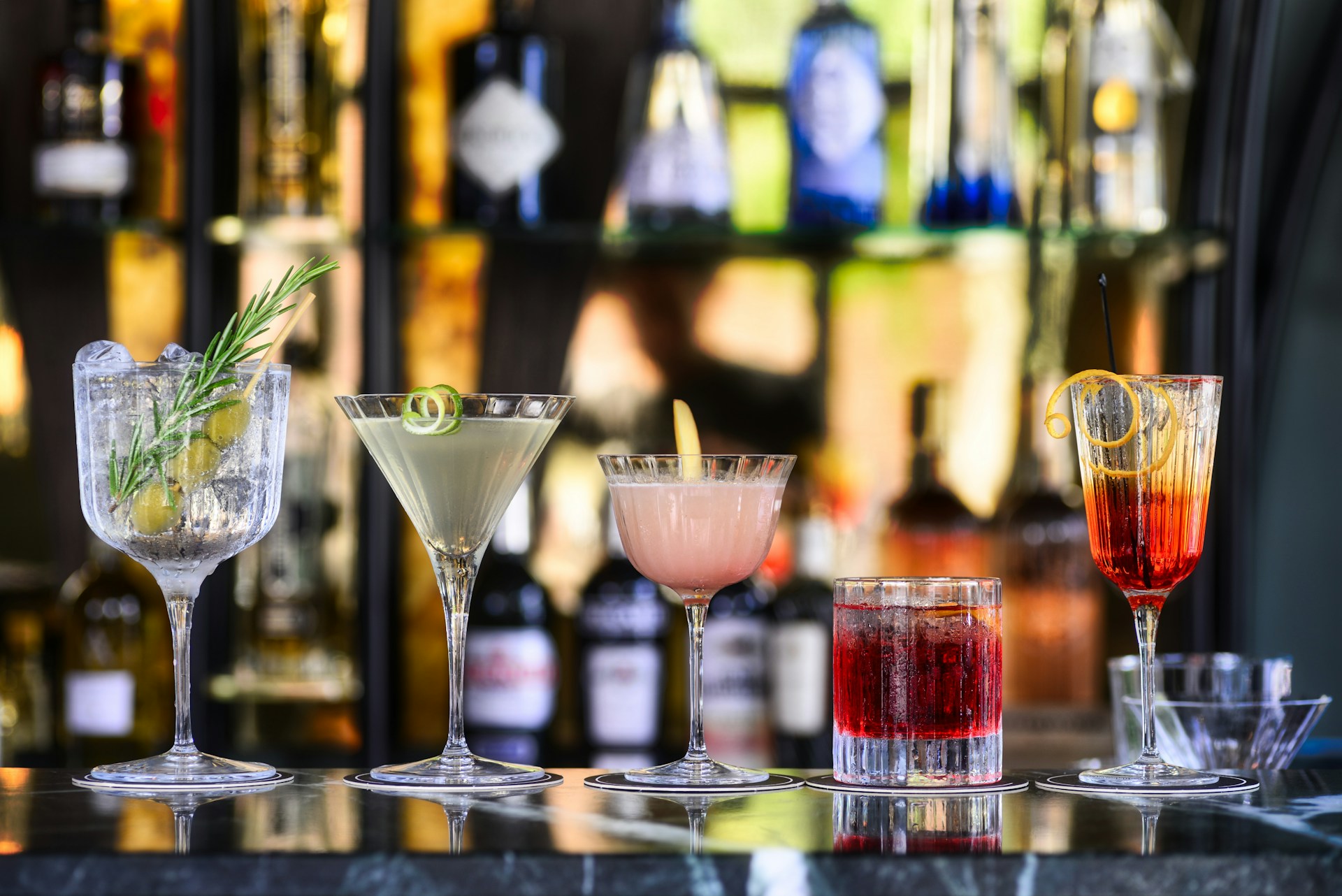
Photo by M.S. Meeuwesen on Unsplash

I first talked about my sobriety publicly back in 2016, when I published a blog post at six years sober. My mother, who had seen me through outpatient treatment at Hazelden in 2010, had died the year before, and though I shared the post on Facebook, I didn’t point other family members to it. If any of them read it, they never said anything.

This year, I wanted to be different. More open, less ashamed.

I texted my three surviving siblings on the morning of my 15th year anniversary (the fourth sibling, my older brother, died of acute cocaine toxicity back in 1988, a tragedy that underscores the importance of my sobriety). My younger brother and I exchanged texts about the distinction between being dry — or clean, the more common term for drug users who are abstaining — and sober. “Clean is not using,” he said, repeating what an acquaintance of his younger son had told him. “Sober is more about making good decisions, if I recall.”

“Yes,” I replied, “and following the steps” — meaning the 12 Steps of Alcoholics Anonymous, a worldwide society that is becoming less secretive in a digital, more enlightened age. “The steps,” I told him, “are about owning our own shit, helping others and recognizing what we can and can’t control.”

If you can’t control or stop your drinking, you will have to set aside your ego and ask for help.

My shorthand, somewhat crude description speaks to a more eloquent and essential truth: If you can’t control or stop your drinking, which I could not — despite all the self-discipline in other areas of my life — you will have to set aside your ego and ask for help. It’s both the hardest and the best decision I’ve ever made.

That is where AA comes into play. The 12 Steps require chronic alcohol abusers to examine why they drank, whom their drinking harmed (for years, I fooled myself that my consumption hurt only me, even though I didn’t get sober until my sons were 15 and 18) and how they will live a moral, more honest life. My favorite is Step 10 — “We continued to take personal inventory and when we were wrong promptly admitted it” — because it helps me try to be a better person every day.
Photo by Fabian Moller on Unsplash

When my older sister praised me for helping others, I explained that unity, service and recovery are the three pillars of AA: “The first word in the first step is ‘we.’ No one gets sober alone,” I said, “or at least I couldn’t.”

Rather than viewing that as weakness, we have to learn to see humility as a necessary strength. My sponsor put it this way during one of our weekly phone calls: “If we could have put the pause on our drinking, we would have,” she said. “The great, great joy is in the connections we are now able to make. We learn how to be vulnerable and share our beautiful brokenness.”

The gift of being sober is so much more than putting down the bottle, and it’s something that Dry January alone will never teach you.

Gratitude: No action is too little, or too late

I wake up early every morning, before 6 a.m. This time of year, in Minnesota, the place where I was born and raised and choose to stay, that means doing battle with the reality that it is dark and cold outside, that I am trapped indoors until the surprisingly late sunrise because it may be dangerous to run or dog walk when I can’t see the ice.

Call it 90 minutes of forced reflection, made more poignant as the holidays wind down.

To wake up the day after the final Christmas celebration and know that the warm glow has extinguished, that the heartfelt expressions of love and affection with siblings and friends and the thoughtful texts from coworkers will not converge again for another year, to feel the deadweight of all the sugar that has come into the house from well-meaning neighbors’ homemade treats (“old people cookies,” my sons call them) and then to see only blackness outside and feel the sting of cold air — and to recognize that this is life now, for another three months — well, the only way out of that sinking morass is gratitude.

In order to face the cold and darkness, I must examine my life. Count my blessings, as I was taught as a girl. Practice gratitude, in today’s parlance. Surrender to the season and the stillness and the solitude.

Speak it, name it, write it down

Gratitude gives life a richness that has nothing to do with wealth. That has everything to do with relationships and paying attention to the world around you and finding purpose beyond yourself. I first learned about the practice of keeping a gratitude journal when I was treated at Hazelden in 2010 for a drinking problem, that most obsessive and self-centered of addictions.

It was on a Zoom call this past Thanksgiving with other women in recovery that I became reacquainted with the power and simple pleasure of hearing people speak aloud what is good about their lives:

  • “I am grateful to have the quiet life I have.”
  • “I am grateful for my dog and cat.”
  • “I’m grateful that I’m no longer reliant on other people’s opinions of me to validate my self-worth.”
  • “I am grateful that I have hope now, even though it comes and goes.”
  • And mine, eight months into COVID lockdown: “I am grateful for the mistakes and the growth and the uncertainty.”

November was National Gratitude Month. That dovetails nicely with Thanksgiving, just as Dry January naturally follows from New Year’s Eve (complete with a #soberissexy hashtag on Instagram). But gratitude, like yoga, sobriety and other disciplines, is a practice, not a once-a-year social media or Hallmark card event. To offer thanks or count your blessings only on Thanksgiving would be the equivalent of declaring love to your special someone only on Valentine’s Day. It becomes an external obligation, rather than a habit that you integrate into your daily life.

Unsure how to seek gratitude when you are struggling with one of the most difficult years in modern history or when, like me, you are waking up to your unearned privilege? Start with the internet. There, you can:

Here’s a real-world example: After my boss died unexpectedly in July 2018, at an age younger than I am today, I endured months of uncertainty at work. The champion for my unconventional job was gone. My future in the organization felt precarious. I was afraid, and my instincts told me to bolt.

Instead, I made the wiser, more difficult choice of staying until the situation sorted out, which it did eventually. Meanwhile, I forged those roiling waters by building a bridge of gratitude.

Every morning as I walked to work, I counted off on the digits of one hand five things about the job for which I was grateful. From the large (I have purpose and opportunities to learn) and the lucky (I like the people I work with) to the seemingly insignificant (I no longer have to commute by car), I reminded myself daily why the job was worth fighting for.

After proposing an enhanced role some months after my boss’s death, I got a new manager, a better title and a generous raise. A more conventionally religious person might give the credit over to God. I say it was the habitual practice of gratitude that reshaped my attitude, helping me gain perspective and a patience I often lack.

“Gratitude is a magnet,” says spiritual director JoAnn Campbell-Rice on the Hazelden Betty Ford Foundation website. “By focusing on what I do have rather than on what I don’t have, gratitude draws the best of any given moment, person or situation.”

‘Gratitude turns what we have into enough’

What is good about my life today, in this moment, right now? That question is at the essence of a gratitude practice.

After nine months of knitting and Netflix, “Zooming” as a verb, too much home cooking and too little sleep, I am keenly aware of what my daily life lacks. The usual wintertime distractions of going to a museum or the movies, reading at a coffeehouse, lunching with friends, hosting neighbors for brunch — those outlets are closed amid COVID’s still rising deaths and case counts.

Still, I remain grateful. I am grateful for a home that allows me to shelter comfortably. I am grateful that no one in my family has caught Coronavirus. I am grateful for the strength and agility to get outside, to walk and run, even to shovel my own sidewalks. I am grateful, at 63, to have a job.

“Gratitude, just as philosophers and psychologists predict, points us toward moral behaviors, reciprocity, and pay-it-forward motivations.”

Christina Karns, Greater Good magazine

But gratitude — at a time of high unemployment, record numbers of homeless encampments in my city and more COVID-related deaths than any of us thought possible back in March — feels like the embodiment of white, middle-class privilege. What did I do to deserve any of this?

A friend and Unitarian minister recently flipped the question back at me: What’s the alternative to gratitude, some unspoken belief that you deserve your good fortune? “Gratitude is related to humility,” she explained. It’s less an exercise in entitlement than an awakening to the imbalance of opportunities — the systemic inequalities — in a country that feeds on excess. For a few.

Gratitude leads to action. It moves me toward simplicity, inspiring me to recognize when my own needs have been met, to stop when satisfaction morphs into greed, to know when enough is enough. And then to step outside myself, and be of service. “Humility is not thinking less of yourself,” said C.S. Lewis. “It’s thinking of yourself less.”

And that practice, if sustained and multiplied by millions, could literally change the world.

End note: The “End in Mind” Project featured this blog post on February 4, 2021.

Becoming a non-drinker in a drinking world

Imagine that you’re a successful, middle-aged career person who has contracted late-onset diabetes.

Your new dietary regimen requires you to quit eating cake, formerly your favorite way to unwind after a long day at the office (with more frequent indulgences on weekends and vacations). You work hard to give up cake. You examine your character and compulsions, and you seek support from other diabetics to rid yourself of this once-satisfying habit that you recognize now as a fatal disease.

And yet, everywhere you turn — whether at Target or Cub Foods, at company parties or celebrations — cake is available. Cake is glorified. At work, cake is pressed on you as a key to networking, getting ahead and building relationships.

Welcome to the world of the high-functioning alcoholic — or problem drinker, if you prefer. Except that cake is a vodka gimlet and a glass or three of Chardonnay. Cake is the monthly “happy hour” your employer sponsors for exempt staff, the event you skip because you don’t want to feel removed or resentful. Cake is the predictable reward and the requisite joke (“man, do I need a big piece of cake”) after a project is completed, a deadline has been met.

Every adult eats cake. It is assumed. It is a given.

Shaken and stirred

For those of us who have chosen to quit drinking at middle age — due to addiction, long-term health or other reasons — the linkage of alcohol with work success and socializing can be daunting on the bad days, and merely tiresome on the best.

How do I explain my irregular attendance at the aptly named “Afterglow,” a convivial gathering at various local watering holes after the daylong meetings of Leadership Saint Paul? Billed as “a unique opportunity to connect with other leaders,” LSP is a competitive and prestigious program sponsored  by the Saint Paul Chamber of Commerce whose value can be traced as much to informal relationships as to the formal curriculum.

Informal business relationships often are constructed around alcohol’s power as a social lubricant. I get it. I remember how freeing it used to feel to drink with colleagues after work, to laugh and share our stories. Drinking was a lot of fun until it ceased to be fun, until it became a solitary escape from the pressures and perfectionism I placed upon myself.

Now, after six hard-won years of sobriety, I have less tolerance for the artificial connections and amped-up conversations that alcohol inspires. I don’t want to be the square, sipping a club soda or Diet Coke while others soften their edges with beer and wine. Neither do I want to seem standoffish or disapproving. So, with rare exception, I stay away from alcohol-infused business functions — or I make a token appearance and slip out.

Sometimes I contemplate a return to that bubble of instant warmth where walls melt and insecurities wash away. But the temptation is a siren song. I can’t go back there. I can’t have my cake and eat it, too.

Shaken and stirred

That chemical dependency runs in my family, and that I reached a point in middle age where my drinking scared me — those facts are my story, my reality and my problem. “I understood that it was not the world’s job to understand my disease,” one of the venerable recovery books says. “Rather it was my job to . . . not drink, no matter what.”

Few ordinary abstainers or normal drinkers realize, however, how much practice and commitment sobriety really takes.

This journey began for me at age 43 and consumed a lot of mental energy throughout my 40s. Finally, at 52, I conceded. I gave up and began the halting process of starting to define myself as a nondrinker.

It’s easy enough to stay away from bars (though I miss going out to hear music), and I enter liquor stores only when I want to buy a special gift. What’s harder to avoid are reminders of drinking in a society where alcohol is both romanticized and ubiquitous.

  • On Facebook: “Opened a bottle of wine and a can of Pringles,” writes a former colleague about her Memorial Day weekend at the lake. “If I am not careful they will both be gone in one sitting. Loving the day at the cabin!”
  • At my yoga studio: Two of my teachers at CorePower Yoga are recovering alcoholics. All of my instructors tout the physical and emotional benefits of yoga. Yet, no one sees the contradiction in the “Yoga & Wine” events that the studio markets to women, especially, as a way to pamper themselves and get away from it all. I thought yoga was about the discipline of being present.
  • In the media: The Star Tribune recently featured a collaboration between a yoga studio and a craft brewery with a headline claiming that “studies” confirm “exercise and drinking go together.” The journalist quoted no fitness experts and cited no academic evidence. Instead, she interviewed the young participants whose bodies still can take abuse and dressed it up as medical research. “Research suggests,” she wrote (emphasis mine), “that both activities can give people a feel-good buzz that gets stronger when they do them in succession.” Like hitting your head with a hammer after sex?

A better path

I recognized the weight of navigating a booze-soaked culture when I encountered an alcohol-free bar at the recent Great River Gathering in downtown St. Paul and breathed a sigh of joy and pure relief. “To promote a more inclusive environment this year, we’ve established a dry bar,” the program read. “No alcohol will be available at this location. Soda, coffee, and water will be available for purchase.”

Sold! How hard was that? Did my ability to get a club soda without staring at glistening bottles of wine impede the rights of drinkers lined up at the three other bars?

I’m not pushing for Prohibition. I don’t need you not to drink. In fact, I still serve beer and wine to guests in my home. I am simply asking you to acknowledge that not drinking, for me, takes effort — that a work-sanctioned “happy hour” is work.

So, join me in a soft drink, as my friend and colleague did at a financial-planning event for women, generously claiming that she was counting calories. Understand why I leave the party early or sometimes don’t show up at all.

Please don’t pity me. I’m not suffering. “I want to see life at its own speed,” NBA great Bill Russell once said about his refusal to use drugs. It’s an accurate explanation for my late-in-life sobriety; and life has never had so much clarity, or felt so good.

Note: Journalist and author Andy Steiner published a follow-up story in MinnPost about this blog post on June 15, 2016.