Tag Archives: health

From Skinny to Strong: A Lifetime of Physical Fitness

I’ve belonged to some manner of fitness club since my parents had a family membership at the YMCA, primarily to ensure we kids learned how to swim in a small town with public pools and nearby lakes. Back then, we called these facilities “gyms,” not health clubs or workout studios; and men seemed to use them more often than women.

At least that was true in my family: Dad exercised at the Y, playing racquetball, jogging on the circular track above the basketball court, doing calisthenics in an era when Jack LaLanne was on TV. In lieu of exercising, Mom would starve herself occasionally on the two-week Mayo Clinic Egg Diet and seemed to perpetually be battling her weight.

My father’s example looked more fun to me (plus, I like to eat), but I credit both of my parents with my instinctive need to move — as much for my mental health as physical strength and stamina. Dad set an example of daily exercise, whether golfing and running or taking us skiing and sledding at Ski Haven (since renamed Mount Kato), which still used towropes when I was a girl. Mom put me in dance classes from the age of 5, pushed us to “play outside” and outfitted all of us kids with bikes, which was how parents back then expected their children to get around.

Almost a quarter of adults engage in no physical activity outside of their jobs, and sedentary lifestyles are an important reason that two-thirds of U.S. adults are overweight or obese. 

U.S. Department of Transportation

As an adult, I morphed my physical activities from fun and games into practical purposes: walking, bike riding and using mass transit to get around before I bought my first car at age 25. I still tell my peers about how daily dog walks and active transportation — replacing car trips with human-powered mobility, such as walking or biking — are relatively effortless, enjoyable ways to stay in shape.

Those habits serve me well in my late 60s, at an age when thinning bones and prediabetes are a real risk, even for those of us who pay attention to our health. Like many women of my era, however, I’ve seen exercise primarily as a way to stay thin, a priority I internalized after gaining an unwanted 30 pounds during an unhappy period in my teens.

It’s not too late to get stronger, but it is time. No longer can I deny the physical weakening that comes with age.

Our bodies, ourselves

Of all the celebrities who flew in for the No Kings rally at the Minnesota State Capitol on March 27 — Bernie Sanders, Bruce Springsteen, Joan Baez — I was most excited to see Jane Fonda, still looking fit and energetic at 88. “She taught my generation of women to exercise rather than starve ourselves,” I told a friend, and I have .

The fitness studio craze took off in 1983, the year after Jane Fonda’s Workout video sparked a revolution and earned enough to support her political causes. I started attending classes at Leslie’s Shape Shop in Minneapolis with a friend and colleague. We’d squeeze into our tights and Spandex leotards, move and sweat to invigorating music, and afterward bond over office gossip, white wine and fatty appetizers. Elizabeth and I remain great friends to this day.

When I turned 40, with two young boys, a demanding career and a long commute, I decided to juggle more balls and become a step-aerobics instructor. Blessed with a natural sense of rhythm, I stole routines from classes at the Life Time Fitness in a former men’s athletic club across the street from my office in downtown St. Paul.

“Physical fitness is a three-legged stool: strength, aerobic capacity and flexibility.”

Jane Fonda’s Workout Book

Word spread, and middle-aged women began to fill my 8 a.m. Saturday classes back home at Olympus Athletic Club in Northfield. Drawn to the camaraderie and the beat of disco-influenced aerobics music, they also seemed to appreciate my mantra: Exercise is fun! The key is finding an activity that you enjoy.

That’s when fitness became not just a personal pleasure but a cause. A way to help myself and other women enter middle age with more agility and confidence and less shame. Not for us the deprivation diets and speedy pills of our mothers’ generation. Exercise would help us own and accept our bodies and claim our place in male-dominated spaces.

But however much I preached to my students about the three-legged stool of fitness (muscle strength, muscle length and sustaining a healthy heart rate), my busy brain and obsession with thinness have always led me to prioritize aerobic exercise. A recent unneeded and unexpected drop in weight, which my doctor and I concluded is a loss of muscle mass, has pushed me toward lifting weights in earnest.
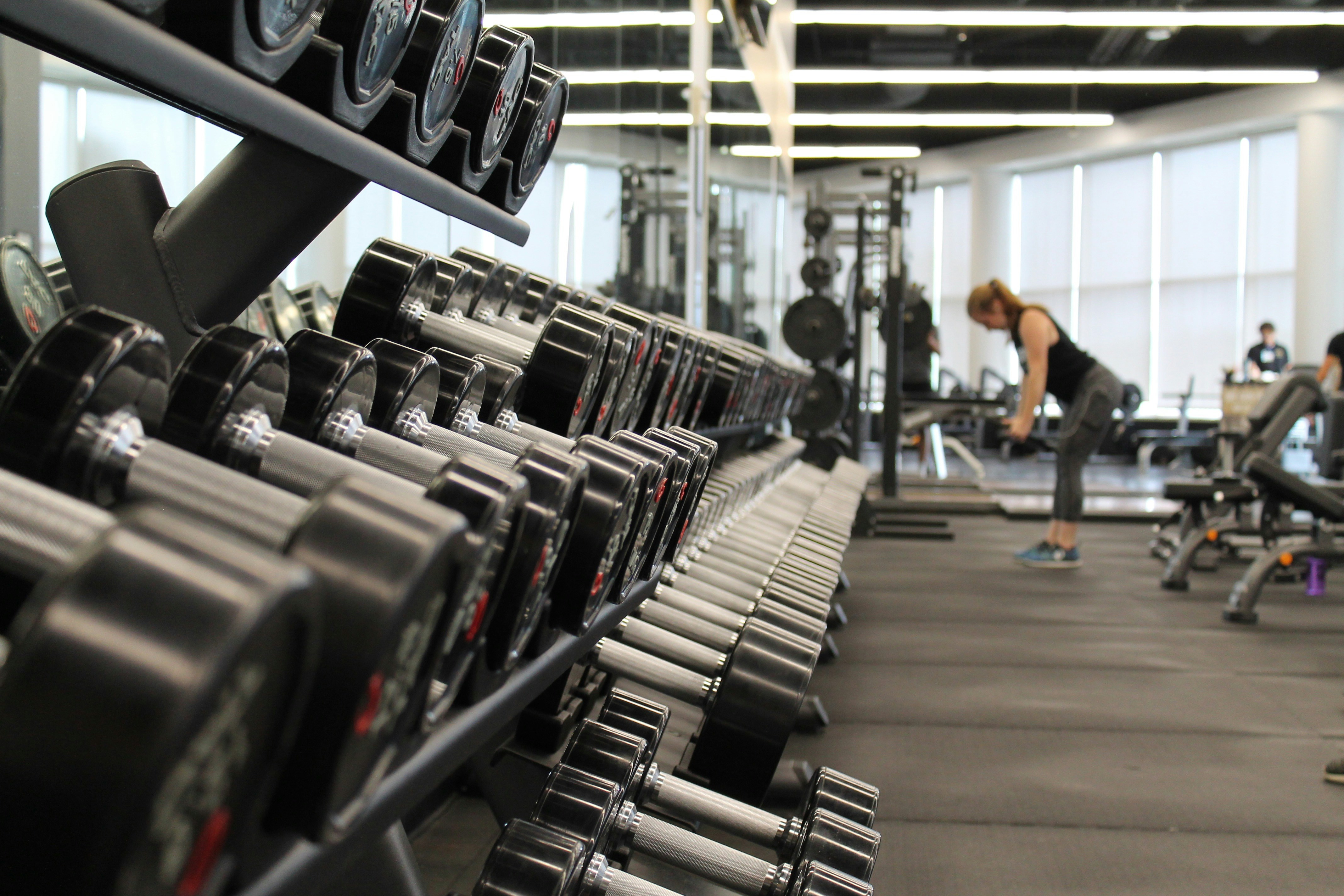
Gaining weights

Being thin is not enough anymore. At 68, I want to be strong enough to pick up my grandson, lift myself off the floor with no railing nearby, carry groceries, help move furniture around the house. That has meant setting aside my ego (and fear) and investing both time and money in getting stronger, which includes:

  • Paying the hefty fee for three sessions with a trainer, who has helped me focus on gluteal and hip strength and on rehabilitating an injured shoulder.
  • Learning how to use bands, kettlebells, TRX straps and weight machines for muscle work as well as conventional dumbbells.
  • Listening to my sons — both serious weightlifters — when they instruct me to eat more protein, lift heavier weights with fewer repetitions, and strengthen my bones with beginner plyometrics, a series of jumping exercises that has me jump-roping for the first time in decades.

The average 30-year-old can expect to lose about 25% of his or her muscle mass and strength by age 70, and another 25% by age 90. 

Harvard Health Online

Getting stronger has also meant finding a workout studio that helps seniors feel comfortable and welcome. Not the community center that had a great bone-strengthening yoga class, but where my strength trainer didn’t create a program specific to my needs. Nor the CorePower studio where I reveled in heated yoga classes for nine years, but which clearly was tailored to a younger generation.

Instead, using the Silver Sneakers benefits that come with my Medicare Advantage Plan, I’ve rejoined Life Time Fitness in a neighborhood with a growing amount of senior housing. The Aurora Program, launched in January 2022, offers specialized classes, opportunities for seniors to socialize and dedicated hours for us to work out.

At first, I balked at the limited hours — weekdays, 9:30 a.m. to 3 p.m.; nothing on Saturday before 2 p.m. — and wondered whether Life Time, a for-profit company that markets itself to a young, fit, athletic population, wanted to make money off aging exercisers but keep us out of the way.
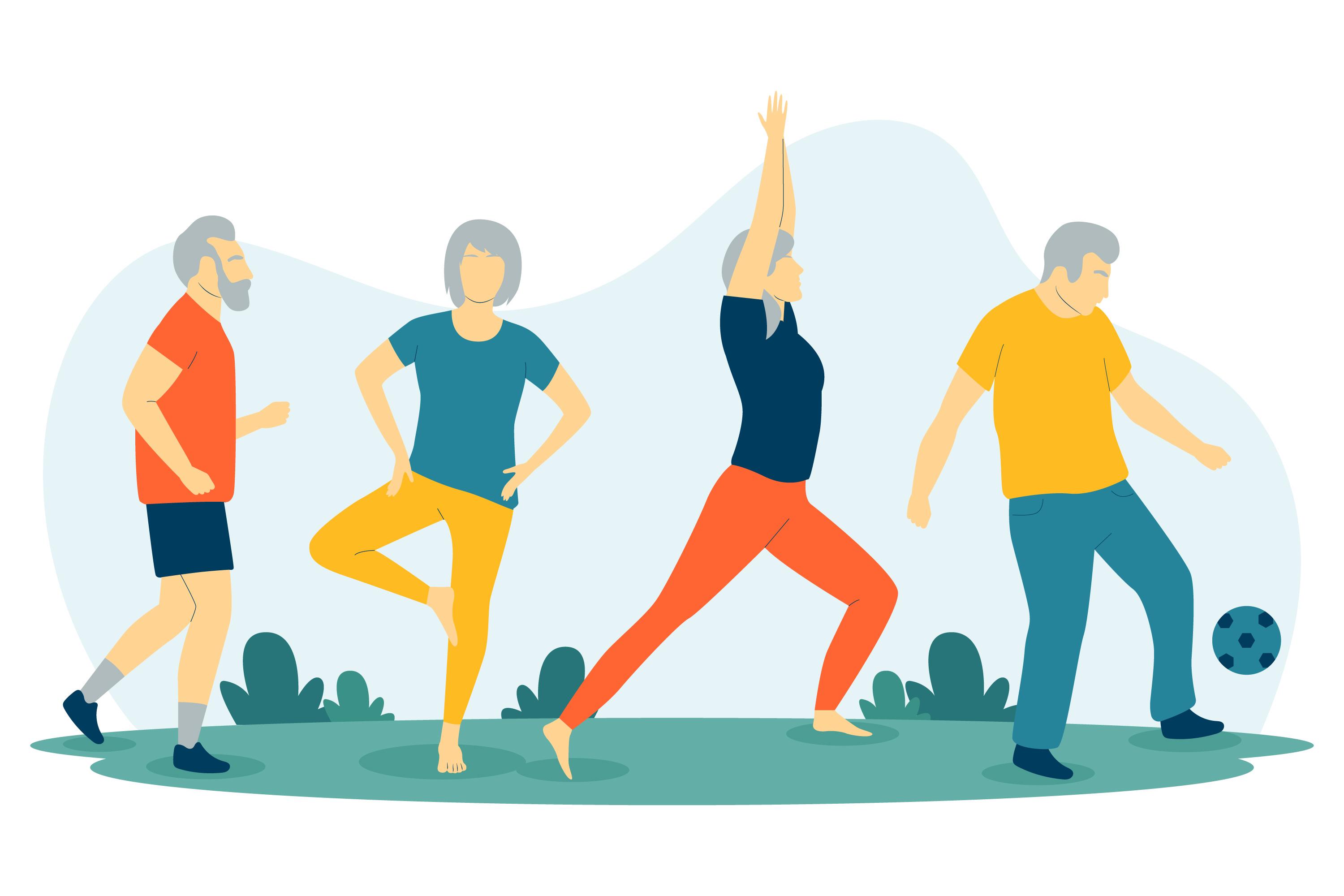
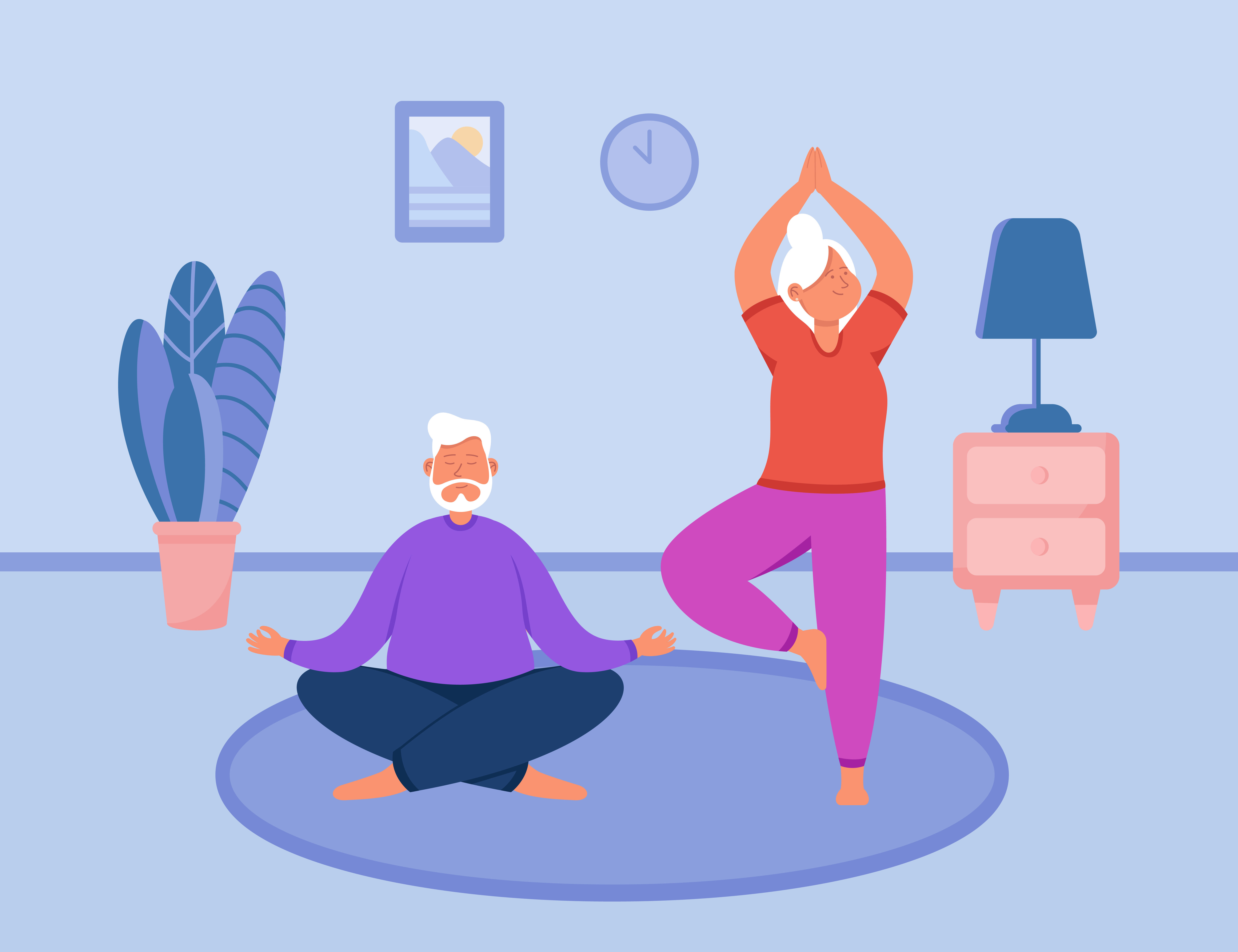
Now I appreciate the chance to work on my weights program among people my own age. Invariably we older women exchange smiles and glances, acknowledging one another and offering unspoken encouragement.

I recently saw a white-haired woman walking with a book bag to the city library near my house. Slightly stooped, she moved with a shuffling gait, seeming to favor one foot. “That’s me in 15 years,” I said to my husband. Then I made the conscious decision to admire her determination. Instead of pitying the woman or — worse — turning away from the preview of my own inevitable decline, I kept watching.

“Rock on,” I whispered. “At least you’re out there.” Facing an uncertain future, and moving toward it.
Can a Mobile App Improve Seniors’ Mobility?

I first went to a physical therapist two decades ago, in my 40s, when I injured my shoulder in yoga. Young, fit and overly sure of myself — a runner and bicyclist, an aerobics instructor — I didn’t do the exercises with any consistency, and I live with that mistake to this day.

After visiting a different PT twice in my early 60s for a pulled hamstring and another shoulder injury, I figured out that physical therapy, like yoga, only pays off with regular practice. If you commit to performing the highly specific, often tedious exercises every day — or nearly so — your body will heal and feel better. Otherwise, you likely will remain in pain.

Given that reality, how practical is the growing trend of providing physical therapy not in a clinical setting but via a mobile app that people can access at home?

Physical therapy traditionally has been hands-on. Photo by Raspopova Marina on Unsplash

My experience as a physically active 68-year-old woman dealing with the normal wear and tear of aging proves that it can, indeed, work. Hinge Health, a San Francisco–based company whose services are free through my Medicare Advantage plan, has been nothing short of a godsend for my stiff neck and perpetually impinged left shoulder.

Initially, I was skeptical whether video visits with a PT and a health coach could possibly be effective. But I was so tired of shoulder pain, which was hindering my spring bike riding, that I decided to try it last May.

“People come to us with a wide range of goals,” says Doctor of Physical Therapy Melanie Cosio, based in Mobile, Alabama, and serving members (the word Hinge Health prefers to “patients”) across the country. “We often see people getting ready for a surgery, whether sports-related or they slipped and fell at their house.”

She sees plenty of older people like me, who’ve been athletic our whole lives and — seemingly out of nowhere — are now more prone to injury or sudden aches and pains. “They want to stay on top of their mobility,” says Dr. Mel, as the program calls her.

Hinge Health also serves older adults who may be housebound, lack access to in-person appointments or want a daily dose of motivation, backed by scientific research. “Hinge Health gets us into people’s homes, no matter how rural they are,” she explains. “The connection I can make via video is really impactful. We’re also making programs that are easy to digest and access from someone’s phone.”

“Our stretching and strengthening exercises help your body get more resilient and train your nervous system to better cope with pain.”

Hinge Health mobile app, education library

Traditional physical therapy states that movement is medicine. Hinge Health translates that time-honored philosophy into a 21st century AI-powered program that potentially reaches more people and keeps them exercising longer.

Rewards, including free exercise gear and performance badges, are woven throughout the program. Key to why Hinge Health works, however, is reliance on the foundations of successful physical therapy — motivation, consistency and education — but with a modern, more accessible twist.

Daily texts provide chipper reminders to “exercise for better sleep and a more vibrant you,” “keep marching forward” and “get up and glow.” Those prove to be more motivational than annoying. In fact, the messages work to plant a seed: I’d better do this today if I want to hit my weekly goal.

The daily playlists are no more than 11 minutes, and each session earns points that eventually push you to the next level, with progressively harder exercises. At the end of each session, you can indicate whether a particular movement was too hard or too easy, and the system will adjust your playlist’s difficulty.

An assigned physical therapist and health coach are within easy reach through the app and typically respond within a day. More immediately, Hinge Health’s TrueMotion® AI technology, or “real-time feedback,” lets you track through your smartphone whether you’re performing the exercises correctly.

“Laser beams of light are being shot so they can monitor where you are,” explains Tony Schmitz, a Hinge Health member from St. Paul, Minnesota. “It’s a little Wizard of Oz-ish: Who’s behind the curtain, really? Maybe it’s all AI and there is no person.”

More enticing for me than the technology was the free equipment. Hinge Health sent a phone stand when I finally enrolled last spring, after my insurance provider, Blue Cross Blue Shield of Minnesota, mailed out two invitation letters (“move better and feel better with online physical therapy”). A set of resistance bands, which I had never used in weight-training workouts before, and a yoga mat soon followed. I even got an electronic muscle- and nerve-stimulating device called Enso 3, once I had demonstrated that I was serious about the Hinge Health program.

“They’ve really dialed this in,” says Schmitz, 72, an author, retired journalist and self-described gym rat who’s endured a series of health challenges and now practices his Hinge Health exercises every day. “They’re giving you this stuff early on to really get the hook in. Mission accomplished.”

“It’s possible to retrain your pain system by considering all the factors that may contribute to your pain: sleep, stress, relationships and worries.”

Hinge Health mobile app, “Pain Is Your Protector”

Founded in 2014 and holding a “moderate buy” consensus rating on the New York Stock Exchange (HNGE), Hinge Health serves 1.5 million people through 2,350 client companies and over 50 health plans. The program focuses on musculoskeletal care, with the low back, knees, shoulders, neck and hips being the most common areas treated.

Given how strongly Blue Cross Blue Shield promoted the program, I found it odd that the company refused to comment for an article I wrote about Hinge Health in Next Avenue, an online magazine produced by Twin Cities PBS for people 50 and older. After being turned down for an interview, I asked the media relations team via email: “Could anyone explain how Blue Cross selects the clients to target for Hinge Health? For example, I got two unsolicited letters, possibly because I had used PT before.”

No response may indicate an answer. On November 21, two weeks before the open-enrollment period ends for 2026 Medicare plans, Blue Cross Blue Shield of Minnesota announced that “high cost pressures across all Medicare programs” were forcing the insurance giant to cut its SilverSneakers benefits at two of the Twin Cities’ most popular workout facilities, Life Time and YMCA of the North. The loss of free memberships will affect 26,000 seniors, according to the Minnesota Star Tribune.

Even if Blue Cross discontinues its sponsorship of Hinge Health, I’ve learned enough to do the exercises on my own and to recognize that a home-based routine of physical therapy augments more rigorous workouts outdoors or at a health club.

Photo by Delaney Van on Unsplash

The program’s wholistic approach includes an emphasis on education. A new article appears at the end of each daily playlist focusing on sleep tips, mindful eating, building goals and habits, breathing and meditation, and mental health. One article features author and podcast star Brené Brown and “Atomic Habits” author James Clear describing how all-or-nothing perfectionism can undermine new habits. Instead, “plan for failure,” the article says. Don’t beat yourself up if you fall short of a particular goal. Reset, reevaluate and try again.

My biggest learning from Hinge Health is that the pain in my body gets fed in my brain. Emotions affect it, especially fear. I’ve learned how to carefully, mindfully move toward my shoulder pain (and my emotional pain, for that matter) rather than freezing up or backing away.

“Pain typically goes a lot deeper than the physical pain that someone’s in,” explains Dr. Mel, the PT with whom I work. “Knowing that pain is multifaceted, we encourage people to move. It’s often the best way to support healing.”

Maintaining health becomes more challenging and time-consuming as we age — whether building muscle mass and strengthening thinning bones or figuring out how to consume enough fiber and protein. Hinge Health asks members to articulate a North Star goal when they enroll. Mine is simple but not always easy: Keep moving well, and well into old age.

Dry January: Don’t Confuse It with Sobriety

I had never paid attention to Dry January, now winding to a close as “Feb Fast” winds up, until a colleague reached out before the New Year to tell me he was “sober curious” and intended to stop drinking for a month. He had seen my reference in an earlier blog post to being sober and was looking for support and affirmation, which I happily provided.

That’s what those of us in the recovery community are called to do.

Since then, I’ve been awash in information about Dry January, from recipes for mocktails — my own go-to is orange juice and club soda — to guidance about how to “cut down” if you’d rather not quit outright (“Not Drunk, Not Dry,” a New York Times headline calls it) and what to tell people who wonder why you’re not drinking. Apparently “that’s my business” doesn’t suffice, especially at a work function.

“If you decide to quit alcohol for a month but still have the identity of a drinker, then any change can feel unsustainable.”

Amid all the podcasts and magazine articles and the interesting statistics — one third of adult Americans participate in “some form” of Dry January, according to Newsweek, while nearly half of young adults try to abstain — have come two serious, significant milestones:

  • The U.S. surgeon general issued a report in early January linking any use of alcohol to a greater risk for cancer. That led one wine aficionado (otherwise called an oenophile, which I won’t pretend I can pronounce) to decry the warning as a “very unnuanced, binary solution to what feels like a very nuanced problem.”
  • I celebrated 15 years of sobriety on January 10, 2025, a hard-won victory for which I am humbled and grateful — and, yes, not a little bit proud. Acknowledging and accepting myself as a problem drinker (say it, an alcoholic) remains a daily practice of outreach and introspection. And it is something entirely different than gritting your teeth and giving up alcohol for a month or a few weeks, or even a year. Trust me, I tried.

“If you decide to quit alcohol for a month but still have the identity of a ‘drinker’— physically, emotionally, mentally, spiritually and relationally — then any change can feel dissonant and unsustainable as we’re only addressing a part of the problem,” wrote psychologist Amanda Charles in an article a year ago about why Dry January often fails.

Well-intentioned, likely health-conscious people equate not drinking with sobriety when they toss around terms like “sober curious” and “sober-ish.” They’re not aiming to be sober, with the lifelong dedication that requires; they just want to feel better for a while: to clear their head, lose some weight, improve their sleep. I applaud their efforts, even as I know firsthand that some of these temporary teetotalers are deluding themselves, unwilling or unable to face a larger problem.

Photo by M.S. Meeuwesen on Unsplash

I first talked about my sobriety publicly back in 2016, when I published a blog post at six years sober. My mother, who had seen me through outpatient treatment at Hazelden in 2010, had died the year before, and though I shared the post on Facebook, I didn’t point other family members to it. If any of them read it, they never said anything.

This year, I wanted to be different. More open, less ashamed.

I texted my three surviving siblings on the morning of my 15th year anniversary (the fourth sibling, my older brother, died of acute cocaine toxicity back in 1988, a tragedy that underscores the importance of my sobriety). My younger brother and I exchanged texts about the distinction between being dry — or clean, the more common term for drug users who are abstaining — and sober. “Clean is not using,” he said, repeating what an acquaintance of his younger son had told him. “Sober is more about making good decisions, if I recall.”

“Yes,” I replied, “and following the steps” — meaning the 12 Steps of Alcoholics Anonymous, a worldwide society that is becoming less secretive in a digital, more enlightened age. “The steps,” I told him, “are about owning our own shit, helping others and recognizing what we can and can’t control.”

If you can’t control or stop your drinking, you will have to set aside your ego and ask for help.

My shorthand, somewhat crude description speaks to a more eloquent and essential truth: If you can’t control or stop your drinking, which I could not — despite all the self-discipline in other areas of my life — you will have to set aside your ego and ask for help. It’s both the hardest and the best decision I’ve ever made.

That is where AA comes into play. The 12 Steps require chronic alcohol abusers to examine why they drank, whom their drinking harmed (for years, I fooled myself that my consumption hurt only me, even though I didn’t get sober until my sons were 15 and 18) and how they will live a moral, more honest life. My favorite is Step 10 — “We continued to take personal inventory and when we were wrong promptly admitted it” — because it helps me try to be a better person every day.

Photo by Fabian Moller on Unsplash

When my older sister praised me for helping others, I explained that unity, service and recovery are the three pillars of AA: “The first word in the first step is ‘we.’ No one gets sober alone,” I said, “or at least I couldn’t.”

Rather than viewing that as weakness, we have to learn to see humility as a necessary strength. My sponsor put it this way during one of our weekly phone calls: “If we could have put the pause on our drinking, we would have,” she said. “The great, great joy is in the connections we are now able to make. We learn how to be vulnerable and share our beautiful brokenness.”

The gift of being sober is so much more than putting down the bottle, and it’s something that Dry January alone will never teach you.