Tag Archives: Feminism

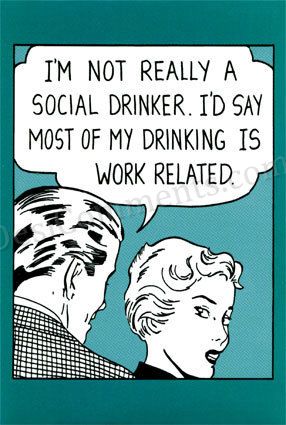
‘Overserved’? Certainly, and workplace sobriety underrated

By this point in the news cycle, even the most blasé sports fan in the Upper Midwest knows that Norwood Teague has problems — legal, psychological and, likely, alcohol-abuse problems.

The former athletics director at the University of Minnesota was said to have been drunk at a president’s retreat in mid-July when he sexually harassed two senior-level women. He resigned August 7.

Amid the media firestorm that has ensued — with more women coming forward to say Teague harassed them and the U of M president backing away from his original claim that his golden boy had merely been “overserved” — one question has yet to be asked.

Was it appropriate, or advisable, for alcohol to be served at this work-related function at all?

Star Tribune columnist Patrick Reusse, a recovering alcoholic, was the first to say that Teague’s alcohol consumption at the retreat was “no excuse” for his boorish and illegal behavior. True enough. But can the U of M be held accountable? Who was minding the bar at the taxpayer-supported leadership retreat? How was Teague allowed to get this drunk?

Attorney, women’s advocate and human resources consultant Gina Franklin counsels employers to “turn around” the assumption that alcohol is a bonding agent and a necessary source of creative inspiration at work.Gina_Franklin

“That’s the ‘Mad Men’ philosophy of life,” says Franklin, a senior associate at W.J. Flynn and Associates in Eagan, Minnesota. “We think it’s seriously dated.”

Franklin, like me, is an old-school feminist who would never blame women for harassment or assault. But we share the perhaps prudish and politically incorrect opinion that sobriety in professional settings is a protective tool.

As an HR coach, what would you say to Norwood Teague?

Now that he’s resigned, he needs to think about: “How do I address this so I can be employed again?” If I were his coach, I would say: “Go get an alcohol assessment and really learn if there is abuse or addiction. Put together a plan for how you’re going to better understand this. Have this be part of a life-changing event.” I think an employer would give some credit to the proactive nature of that.

Employers that cater to younger workers, especially, promote alcohol at workplace functions or after long days at the office as a well-deserved stress reliever.

If our clients have an occasion to provide alcohol at an event, we work with them not just around policy but the whole culture of consumption:

  • You can serve alcohol in limited amounts, such as two drink tickets per person.
  • Remind everybody of the organization’s harassment policies and code of conduct.
  • Provide food at the event. Stop any access to alcohol after dinner. Instead have a speaker or entertainment — and then provide cab rides home.Drinking at work

What role does alcohol play in sexual harassment?

Alcohol is a factor in the majority of these crimes. It goes almost hand in hand. Alcohol removes inhibitions, and it compromises judgment.

While I was in law school in the early 1980s, I had a public debate with my law professor: Is alcohol a mitigating factor when sentencing a sex crime? My response was: “No, it’s not a mitigating factor. The individual made a choice to consume to excess and his judgment was impaired.” I was unequivocal about it. If you use alcohol as a mitigation in sex crimes, then you’re always going to mitigate. Always.

Your daughters are 18 and 21. How do you caution these young women about mixing alcohol and work, without missing out on the networking and relationship-building that often happens at work-related events?

I have to think about that as a woman every day in my world, and both my daughters and my stepdaughters, who range from 28 to 38, ask me how I do it. I talk about compromise. If consumption of alcohol would compromise your thinking and decision-making and put you at risk, that’s not a good plan. There are men who would take advantage of that.

Since I quit drinking five years ago, I’ve noticed how often workplace socializing is tied to alcohol — and I’m increasingly ill at ease with the assumption that everybody drinks. How can employers support people who don’t drink, whether they’re recovering alcoholics or abstain for other reasons?

We advise employers to have non-alcoholic choices for employees, just as you’d have non-meat choices for meals. If I were the HR person, I would meet with any employee whom I knew was in recovery and develop strategies for how to navigate those events. I’d give that person advice and support.

The U of M incident — or multiple incidents — has helped many of us recognize the prevalence of sexual harassment, despite women’s gains in all sectors of society. Or is harassment tied more broadly to the prevalence of rape and domestic violence?

Sexual harassment was not a subject when I started in the workplace. I’m 62. I’m literally a grandmother in terms of the women’s movement and the subject of the relationship between the sexes. I founded a rape-crisis center in the 1970s as an undergraduate in Nebraska. It still serves victims of sexual assault, domestic abuse and child abuse.

For years now women have been coming forward to say: “No, we’re not going to tolerate sexual assault.” Prevention of sexual harassment — and recognition of harassment — evolved from that.

What Gen X Can Teach Boomers about Parenthood

At a time when the necessity and affordability of high-quality child care is back in the news, two Generation X mothers — educated, ambitious and deliberately underemployed — exemplify a model of work-family balance that provides a different solution to a persistent problem.

Who takes care of the kids when both parents work?

In the households of Julie Reiter and Liz Boyer, the answer is: It’s a family affair. “The most important job in the world,” as Chelsea Clinton recently described motherhood, is the work of mothers and fathers alike, in Reiter and Boyer’s respective marriages.

The “balance” in their families is less about women juggling responsibilities alone than it is both partners dancing daily through a life that is contradictory and complex, with trade-offs and rewards in equal measure.Juggling Woman

A recent conversation with these two Gen X moms convinces me they have learned from my workaholic generation — and that it’s not too late for us Baby Boomers to learn from them about priorities and possibilities, teamwork and trust.

Lesson 1: You can’t “have it all.”

Born between 1965 and 1980, Generation X was raised during what one analyst calls “one of the most blatantly anti-child phases in history,” when feminism, greater career opportunities and more access to birth control (and abortion) gave women a new range of options.

Gen X mothers are more skeptical than we were about the messages that society — and advertisers — are trying to sell them. (Remember the slim, sexy “24-hour woman” in the Enjoli perfume ad who brought home the bacon and fried it up in a pan?)

“You can do anything, but you can’t do everything,” says Boyer, 39, executive director of Macalester-Groveland Community Council in St. Paul and a Master of Science candidate in environmental studies. “You can be an astronaut, but then you can’t be home with your kids. You can be a lawyer, but then you can’t be PTA president.”

The mother of Ellie, 10, and Alex, 6, Boyer longed to be an at-home mom — a role that my generation shunned as old-fashioned and professionally limiting. But that dream was financially impossible given her husband’s career in education and nonprofits.

After spending two years “pissing and moaning” when Ellie was a baby, Boyer has made peace with having to be employed. “In retrospect, it’s made me a better mom to work part time all those years,” she says.

Having only recently started working full time, however, she acknowledges the career sacrifice she’s made, too: “I’d be at a different point in my career if I hadn’t had kids.”

Lesson 2: Share roles and responsibilities.

My husband and I used to call ourselves “Ozzie and Harriet in reverse,” with me as family breadwinner and him as self-described “Mr. Mom.” It was new wrapping on an old package that limited one partner’s family time and the other’s earning potential.

Now that our two sons are grown, I remember — and try not to regret — how much mental and emotional energy I gave to my career. When I wasn’t literally at the office, I often was thinking about work, or I was engaged in the freelance writing and aerobics teaching that helped me feed the family (and my ego).Gen X road sign

Reiter and Boyer, like other Gen X mothers, have a more fluid, seamless approach to life and work. They are present with their children, holistically, in a way that I couldn’t seem to manage. And while they care about their careers, work is not their first priority.

“I like to work hard. I love challenge,” says Reiter, 42, executive director of Union Park District Council in St. Paul and a Berkeley-educated attorney. “But I clearly don’t care about the career path, or I would have followed that route.”

Her husband jokingly calls her his “downwardly mobile wife.” Reiter was planning to practice in a prestigious downtown law firm when they met, and she still has more earning capacity than he does as a human resources specialist.

Today, they are partners in a shared endeavor to raise and support their son and daughter — Beyen, 8, and Beena, 7 — whom they adopted from Ethiopia as toddlers. Reiter’s husband works from home most days, giving her flexibility and him access to the children, and her office is two blocks away, allowing her to be home with the children after school and at dinnertime.

Lesson 3: Accept that life is unpredictable.

If I could do anything differently, I would worry less and enjoy the moment more. (My older sisters tell me that’s the benefit of being grandmothers.)

Between them, Boyer and Reiter have lived through job loss, pay cuts, ill children who spoke no English, arguments about whose turn it is to cook and buy groceries, and, currently, full-time jobs with tangible rewards but no benefits.

And yet: They laugh easily. They see the big picture. When Boyer was commuting from St. Paul to Chaska with a colicky baby at home who refused to take a bottle, she lamented to a friend that the life she’d created wasn’t working.

“You’ll keep tweaking things till it does work,” the woman told Boyer. “Everything will be alright in the end, and if it’s not alright, it’s not the end.”

Reiter’s mother was home full time until Julie was 15. “And she resents it to this day, the fact that she never had a life of her own,” Reiter says wistfully. “My mom says now: ‘It’s so good that the kids see you go off to meetings. It’s important for them to understand your work ethic.’”

She grins. “When we walk into the Neighborhood Café, my kids see people give me a hug and thank me for my work. I’m investing in this community, and it’s benefiting my family.”