Tag Archives: CorePower Yoga

It Can Take Years to Recognize Your True Colors

Anyone with grown children surely can recall elementary school field trips to an apple orchard, a local park or a science museum where their kids were assigned to wear matching T-shirts. Decades back, I took it to be a simple, visual way to keep the kids together and prevent the wanderers and rowdies, like my older son, from getting lost, which soothed my maternal anxieties.

But now that I’ve had opportunities to wear my own matching-color uniforms in both professional and volunteer roles, it occurs to me that the T-shirts also provided children with identity and pride, a reassuring sense of place. Like a sports team or a squad of soldiers, the kids felt special. Like they belonged.

My own, more recent experiences with uniforms and matching T-shirts tell a similar story of belonging — and of recognizing our true colors as we age.

Dressing alike at work “builds rapport and makes us feel safe. If there is a sense of conformity, then we feel able to identify ourselves in others, which can bring a level of certainty.”

Dr. Sarah Jane Khalid, METRO.co.uk

Years ago, when I was head of marketing and communications at St. Catherine University, our president had a penchant for morphing the annual launch of the academic year from a standard motivational speech into a stage show, complete with musicians and dancers. I tap danced twice, alongside other game faculty and staff members who saw the assignment as a novel break from our workaday routine.

The president had a canny ability to showcase her subordinates’ creativity while nurturing their loyalty and sense of place. That was most evident the year she ordered hundreds of matching T-shirts, swore department heads to secrecy and then closed campus after her opening-day address so everyone could hop on chartered buses and enjoy a late August day at the Minnesota State Fair.

I still remember the giddy thrill of strolling through the fairgrounds and acknowledging other purple-clad Katies with a wink and a wave. Whether friends or strangers, we felt this unmatched sense of belonging, all because of matching shirts.

Though examples abound about how the potent mix of power and uniforms can be brutally misused, in this case the common colors served the common good. Matching purple T-shirts helped us show the world that we were part of, and proud of, our campus and its women’s college culture.

“It is always an honor to put on a uniform.”

San Diego Padres third baseman Manny Machado

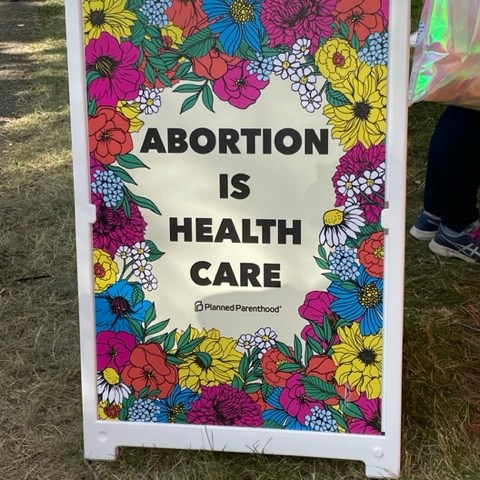
A less happy experience with uniforms occurred recently at the headquarters of Planned Parenthood North Central States when I arrived for my monthly shift to make donor thank you calls. The usual array of protestors was on the public sidewalk as I passed by: kneeling to pray and count rosary beads, pacing and chanting with gruesome signs, yelling at patients as they left their vehicles and before they’d made it safely to the main door.

As a volunteer, you try to tune out the racket. As an older woman, I have learned that temper rarely serves me. But the fall of Roe v. Wade, the misogynistic bills in state legislatures around the country, the sanctimony of Trump’s conservative court that, I believe, will harm democracy even more than the insurrection — all of my simmering resentment boiled over into rage that day when I saw a protestor wearing a hot pink vest, in the exact style and color of Planned Parenthood’s volunteer security team.

I strode past her, toward the building, and then pivoted and marched back. I’d never shouted at a protester, something we are ordered not to do. “Hot pink is our color,” I said, standing inches from her face. “That is the most cynical thing you can do, to impersonate a volunteer and make women think you’re here to help them. You have no idea what people are here for.”

I ignore the woman now when I arrive for my volunteer shifts as an escort or a phone banker, and breathe a sigh of relief when I see someone in the driveway wearing the pink security vest branded with white lettering: smiling, waving, welcoming me inside the gates. Hot pink is our refuge, our code and color — our symbol of collective resistance to a society that increasingly restricts voting, that fears other freedoms and that will not stop with a rollback of abortion rights.

“One thing I’ve learned as I’ve gotten into serious old age, it’s not nearly as scary when you’re inside it.”

Jane Fonda, “Wiser Than Me” podcast with Julia Louis-Dreyfus

I am 20 years younger than Jane Fonda, one of my icons; and yes, in my darker moments, I do fear growing older, dreading mobility loss the most. Aging is intimidating, and if any person 65 or older tells you differently, take time to ask a few follow-up questions.

Among the health risks for older people, cherry picked from a list of 15: dementia, incontinence, heart disease, hypertension, arthritis, depression, hearing loss and cancer. No wonder the United Nations declared 2021–30 the Decade of Healthy Aging, given the exploding population of older folks worldwide.

One can deny aging, as I am prone to do — stubbornly insisting, for example, that the name of my blog remain “The Middle Stages” (“Do you plan to live to 130?” one sarcastic reader inquired). So, it’s no surprise that I’ve resisted participating in what I’ve derisively called the “old people” classes at Lifetime Fitness, the facility I joined for free once I qualified for Medicare.

During my first class in the Aurora “community,” Lifetime’s program for active seniors, I announced to anyone who would listen — and likely more than a few folks who didn’t care — that I’d transferred recently from CorePower, the youthful yoga chain founded in Denver. When I didn’t return to my Aurora class for weeks, the front desk at Lifetime reached out to entice me back with, yes, a colored T-shirt.

In contrast to the industrial black-and-gray shirts pedaled to younger members of the club, the Aurora shirts are a calming shade of blue. Would this relegate me, a former fitness instructor, to forever exercising among slow-moving seniors?

“Healthy, active, social,” the back of my blue shirt reads. I swallowed my pride and wore the T-shirt to an Aurora program full of bald and graying heads, a Pilates class that acknowledged realities like foot neuropathy and shrinking muscle mass. I was one of four people wearing the blue T-shirt in class that day, and like the schoolkids of decades past, that helped me feel at home.

“People eventually show their true colors,” the saying goes. Mine are now hot pink for social action and a soft sky blue for safer, gentler physical activities that encourage both self-acceptance and self-care. All of us 65 and older are journeying toward a future that none of us can see. It’s a different sort of field trip, complete with matching T-shirts.

It is the place where I belong.

Rejuvenated. Refreshed. And Resolute: I’m Not Retired

‘I hate the word retired,” says my friend Sandy (a pseudonym) as we settle in at our favorite coffeehouse on East Lake Street in Minneapolis to discuss our lives since leaving full-time employment.

She is 69, volunteering and still working part time after a departmental restructuring a few years ago eliminated a job she loved and nurtured. In early September, I left a well-compensated position two months after turning 65. I wasn’t pushed out. In fact, they were sorry to see me go.

Like Sandy, I transitioned immediately into part-time work, with two job contracts that total about 26 hours per week. Nothing close to my former full-on pace, but certainly not retired. And yet that is what many people — former business associates, one of my sisters, even a few close friends — insist on calling this period of my life.

“Congratulations on your retirement,” reads a card from a well-meaning former colleague, who softens the blow with a handwritten note: I know you will never officially be retired with all of your passions & energy.

Still. The R word bothers me enough (I literally cringe when people say it) that I reluctantly opt to poke at the bruise, look under the rock, examine the visceral impact that being called “retired” has on me. My friend Sandy nails it: It feels like an accusation, she declares, “like I sit in a recliner all day.”

Words matter, especially to a writer. And so, I believe I am being neither defensive nor in denial when I correct people — repeatedly — who say I am retiring.

True, I left my full-time job of eight-plus years on September 7. Yes, I acknowledge that I likely will never have a career, as I once defined it, again: a title, a stack of business cards, an office that overlooks historic Summit Avenue in St. Paul, name recognition among the constituents I served. I closed the door on all that, feeling like Mary Richards when she gave one last, wistful glance to the WJM newsroom on March 12, 1977.

Mary Richards, a feminist role model to girls of my generation, says goodbye to the WJM newsroom.

And yet: Here are three reasons why I refuse to use the R word for the next, and likely last, phase of my working journey.

  1. Social Security: The government declares my “full retirement age ” as 66 years and 6 months, when my benefits will be higher. Several of my peers are waiting to claim Social Security until they’re 70, which many financial advisors encourage. All I can promise is that I’m not going to claim benefits for a while.
  2. Continued employment: I have two income streams from part-time jobs, as managing editor of Streets.mn, a transportation and environmental community blog, and as executive director of a re-emerging nonprofit dedicated to urban parks and trails.
  3. I like working: Absent pressure from my retired husband, I would have stayed at my university job for another academic year. But two part-time jobs landed in my lap last spring, and that softened the hard decision to quit full-time work before I felt ready, either emotionally or intellectually.

If I’ve learned anything in recent years from the movement to declare pronouns when introducing yourself (“she/her”), it is that individuals have a right to describe themselves in words that feel affirming and true. The people who know me well will tell you, I am not retiring, in any sense of that word. My younger son’s partner suggested that I am “downsizing” my career. I can live with that.

Never depend on a single income. Make an investment to create a second source.

Investment guru Warren Buffett

Last Friday was the first time in four decades that a biweekly paycheck didn’t drop into my checking account, a tidy sum of money that helped me feel sheltered and secure, like a double bolt on the front door when I’m home alone. I now have three paychecks instead of one — the two part-time jobs and a pension from the Newspaper Guild, which I laughed off as “grocery money” when I was working full time. Soon, I know, it will come to feel essential.

These first few weeks of “gig work,” as my Millennial son calls it, were cushioned by a final, fat paycheck from my former employer that included an extra 40 hours of vacation pay. The reality of living on a smaller, less predictable income has yet to hit home, though I passed on ordering a $4 cup of coffee when I went out for Sunday breakfast (I’d just made coffee at home) and have given up membership in my pricey yoga studio because Medicare will pay for the unfortunately named Silver Sneakers classes at other gyms nearby.

Up to 40 percent of retired Americans live mainly on Social Security. I recognize the privilege in my easy choices and see the middle-class safety net strung securely beneath me. I was taught to save money, advised to take advantage of employer retirement plans, which I did starting at age 27, educated to understand the risks and rewards of buying stocks.

I talk with friends who are farther down the road on this journey, loping toward what we all hope will be a fulfilling and financially solvent old age:

  • “When I don’t work, I don’t get paid,” says Diane, who rebounded from a company downsizing with a consulting contract that calls on her accrued wisdom and expertise. Lately, however, elder-care duties have pulled her out of state.
  • “You have to get used to taking money out rather than putting money in,” says Mary, a former colleague who retired at 60 and is living on her husband’s Social Security draw and full-time paycheck — and doing significant volunteer work at her church.
  • “I had to learn to look at income from a monthly point of view,” says another friend whose post-career consulting allowed him to hold off drawing Social Security until he turned 70, the age at which benefits max out. “Give yourself time to adjust.”

Patience is not my strong suit. Moments of panic wash over me as my Health Savings Account dwindles, as the Dow Jones Industrial Average freefalls with Putin’s torturous and ego-driven war, as my sleep grows increasingly fitful. What have I given away?

When we no longer know what to do, we have come to our real work, and when we no longer know which way to go, we have begun our real journey.

Poet and environmental activist Wendell Berry

One thing I miss already about full-time employment is having an office, a place to go to every morning, a space where I knew my purpose and who I am. Or who I was. I changed my profile on LinkedIn a few days after leaving the career position and realized I would be lost without a title. That’s what the two part-time jobs afford me, in addition to the ability to delay Social Security for at least a year.

A 22-item “Checklist for Retirement” — the type of document I’ve been filing away for the past few years — asks predictable questions about how I’ll spend my time once I quit work altogether, whether I have an emergency fund and a strong network of friends, whether I am comfortable with the level of risk in my investments.

The final question, framed as a statement, is the one that stumps me: “I am ready for this next chapter of my life.” Despite months of planning and preparation, I think I’m not. I watch the retirements, or semi-retirements, that I admire: people who stay physically active and civically engaged, who volunteer in both minor and meaningful ways, who consciously keep up their relationships, who hold jobs more for satisfaction than identity.

None of that fits the Barcalounger stereotype of retirement, the all-or-nothing notion that you’re either working, or you’re not. An article in the AARP Bulletin last June, “Why You Should Keep Working After Retirement,” argues for the very life that I am trying to construct and craft. Among its eight reasons, “a sense of purpose” and “a cushion for your savings” appeal to me most.

But there’s a ninth reason, which AARP does not address: I want work that allows me more space in my life — for my husband and sons, for the friends I have neglected, for the causes I yearn to support and for myself.

Financial journalist Chris Farrell coined the term “unretirement” in a book of the same name published in 2016. In one of those coincidences that seems meant to be, I stumbled upon a “Retire with Purpose” podcast episode the other day featuring another financial journalist discussing the same “unretirement” concept.

“I’m still in the game,” explained Richard Eisenberg, 66, who recently left a full-time job as managing editor at Next Avenue to teach, write and podcast. “I’m just not doing it all day, every day.” Instead, Eisenberg has time to “volunteer, mentor, travel, see my kids.”

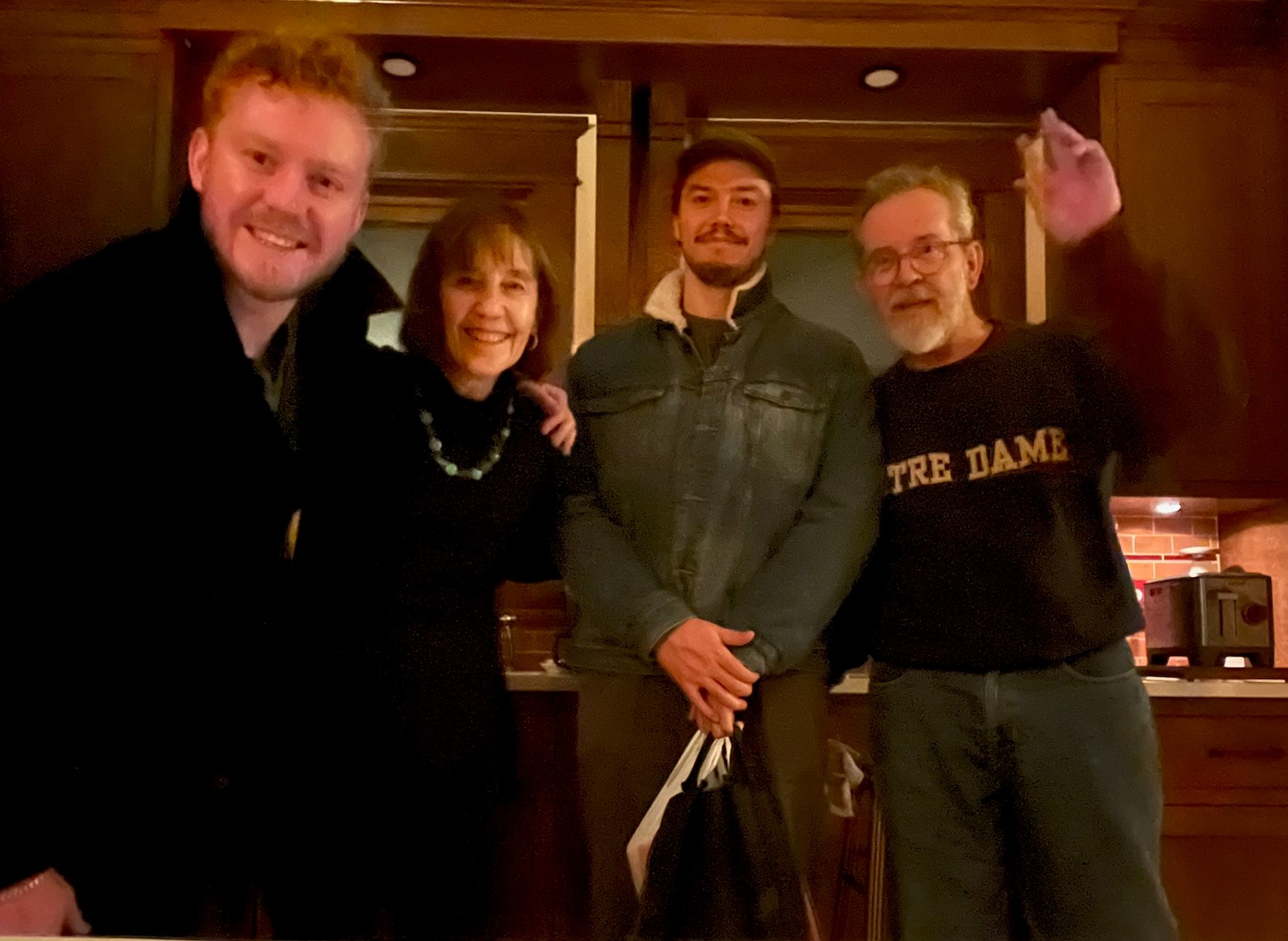
Sam Studer (left) and Nate Studer and their proud parents on Thanksgiving 2021

One week before my last day at the office, I texted my two sons about establishing a tradition of monthly homecooked family meals. “Your dad and I acknowledge your busy lives and would like to be more intentional about finding time with you,” I said. To my delight, they responded immediately and affirmatively.

My breadwinning career took me away from my family. A lot. I can’t change that, but I can make different decisions now. Unretirement — working less, living more, cherishing time as well as money — grants me that freedom and opportunity. That second chance.