Tag Archives: climate change

Stay Cool, You Don’t Need Air-Conditioning

At night during the summer, my husband sets up a big metal box fan — yellow, decades old, with three speeds powered by three dusty blades — and blows it out the west-facing window in his upstairs den. Then he sucks in the cooler evening air from outdoors by closing every window in the house except three in the bedrooms and one in the living room (to please the dog who commandeers the couch).

This is our old-fashioned, climate-friendly version of air-conditioning, along with ceiling fans in the kitchen, the main bedroom and my home office, a north-facing spare bedroom where I sleep on hot nights because of the bed’s access to the open window. When we first moved to this old house in 2013, we occasionally used a portable air-conditioning unit in the front bedroom, but it was noisy and blocked the light during the day and kept waking me at night every time it clunked off and on. So, we hauled the dripping unit out to the boulevard, where someone quickly claimed it.

For them it was a find, like the perfectly good snow shovels I lugged home from an alley last spring. For me — raised in a household with open windows and floor fans, back when air-conditioning was a nonessential for the middle class — the portable unit symbolized the hedonistic tendencies of our self-absorbed culture. Doing without it was one small way to side with Mother Nature in a battle she inevitably will win.

Billboard at the corner of Grand and Fairview avenues in St. Paul

Where comfort counts

Air-conditioning is a luxury that the vast majority of Americans now judge to be a necessity, and far more of us, especially in Minnesota, could live without it. As a person who tolerates the heat fairly well, in part because I have trained myself to do it, I would welcome not having to shiver in every bus, grocery store, movie theater and office building — enduring this artificial, overcooled air because some HVAC company tells me it is civilized. A symbol of prosperity and progress.

That progress, unfortunately, is costing the planet — fueling the very climate crisis from which air-conditioning helps us hide.

Ninety percent of households in the United States have air-conditioning, compared with 60 percent in China, 16 percent in Mexico and 5 percent in India; versions of those data, from 2016, were cited again this July in news alerts about the record-breaking heat worldwide.

Indeed, air conditioning represents one of the most insidious challenges of climate change, and one of the most difficult technological problems to fix. The more the world warms, the more we’ll need cooling — not merely for comfort, but for health and survival in large parts of the world.

James Temple, MIT Technology Review, September 1, 2020

Summer in the city

On a cool Sunday afternoon, a comfortable 74 degrees, it’s easy to forget how daunting July 2023 has been. More than 90 million Americans were under heat alerts earlier this week, according to PBS NewsHour. The month itself was the hottest on human record.

I read about farmers trying to keep their animals cool in rural Minnesota; about a man who died at a bus stop in Phoenix, Arizona, where temperatures climbed to over 110 degrees for 27 days in a row; about wildfires blazing in Mediterranean countries. Closer to home, I smelled acrid air in my own yard from Canadian wildfires hundreds of miles north and saw more watering bags going around the thin-trunked saplings that the city planted on boulevards to replace sturdier trees lost to Emerald Ash Borer.

But still, I went outside during our recent record heat wave. I like the heat. I’m a lifelong Minnesotan. We wait for months, from late October until mid-April, for warm weather. Even on the afternoon when it was 96 degrees, with an excessive heat warning, I stood by my decision not to cave on air-conditioning, to cave in to the popular notion that we couldn’t live without it.

Front-page news in the Minneapolis-based Star Tribune on July 28, 2023

Years earlier, when we were selling the family home in Northfield, I wouldn’t budge when the Realtor said the house would move more quickly — and fetch a higher price — if we installed central air. My family had lived comfortably in the house for 20 years. “There’s always one hot week in July when we hang out in the basement,” I told her. “Otherwise, we have plenty of cross breezes and ceiling fans. Find buyers who are green.”

And that’s the point. Minnesotans readily adapt to changing seasons. We think nothing of living differently in the winter: reading more, wearing layers of clothing, making stews and soups, staying home at night with Netflix. Similarly, we can find novel and healthful ways to stay cool, if we resist or cannot afford the immediate relief of air conditioning.

I sent my husband, who is less heat-tolerant than I am, to see Oppenheimer one evening this past week at our historic local movie theater. The next day, he wandered through the cool galleries at the Minneapolis Institute of Art.

There is a long history of industry-funded “deflection campaigns” aimed to divert attention from big polluters and place the burden on individuals.

Michael E. Mann, Time magazine, September 12, 2019

I chose to embrace the weather, as I do during the winter: biking to my errands with an extra side of water and sunscreen; reading on the porch at night and watching vehicles sealed up like tombs against the heat. Moving more slowly, giving myself permission to push away from the computer and relax, to call a friend. Like a snow day in July.

This heat wave, now over, was of our own making: our driving, our air-conditioning, our consumerism, our conveniences. Personal habit change won’t solve the climate crisis, it is said. But right here, today, surveying what little I can control: I see it as the only choice we have.
Try this Antidote for Aging: Leave the Car at Home

I gave up my membership at CorePower Yoga in September, in anticipation of becoming eligible for Medicare. After nine years, I said a reluctant goodbye to the Colorado-based chain that brought fast-paced, fitness yoga to the masses, at least those of us who could afford it.

Now, my Blue Cross Blue Shield Advantage plan, which supplements the hospitalization and basic clinical coverage in Medicare Parts A and B, offers free membership at certain health clubs. The youth-oriented CorePower is not among them, and so I took another step down the path leading directly to old age and signed up at the YMCA a walkable distance from my house and Lifetime Fitness, a bus ride away.

Exciting, yes, but the busing and walking will benefit my aging mind and body more than any health club membership ever could.

Four reasons why:

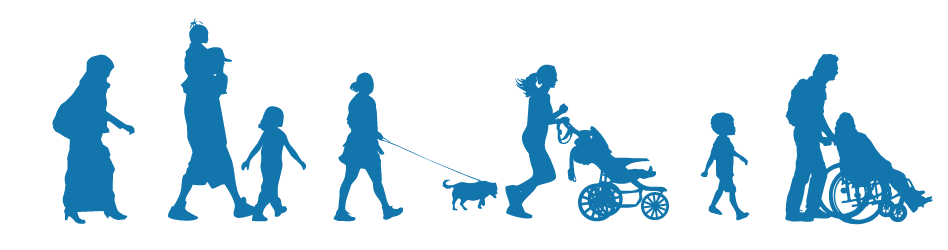
  1. I will engage in active transportation — walking (with or without my dogs) or riding a bus or bike — far more often than I’ll get to BodyPump at the Y or the Gluteous MAXout class at Lifetime Fitness.
  2. I notice more about my community and the wider world when I get around in a way that de-prioritizes cars, which separate us from other people. Paying attention makes me aware of how the world has changed, keeping me current on social trends, and that’s good for older people.
  3. I am more likely to engage with others — greeting them on a sidewalk, chatting with them on a bike path — and social interaction sparks my aging brain.
  4. My imagination takes flight and my worries right-size when I am gazing out the window on a bus or train or moving freely outdoors. Speed no longer is the top priority.

Being a daily pedestrian, a regular transit rider and at least a two-season cyclist have become ingrained habits. Because I live in a city — in a neighborhood with sidewalks, bike paths and several bus routes an easy walk away — I can incorporate those practices more readily than someone who lives in a small town or a suburb. And yet a walk or a bike ride can happen almost anywhere.

Active transportation is an ideal way to exercise as we age, at a time of life when we’re more serene and less competitive. (At 65, my last timed run is a decade behind me, and I never bought a computer for my road bike.) I have been keeping a multimodal diary since July, jotting down why I was grateful on any given day to have made the counter-cultural choice to leave the car in the garage and move instead on my own power.

Communal transportation requires patience, flexibility and, at times, humility — having to explain, for example, that a late bus is beyond your control. But all three traits are invaluable to graceful aging.

Consider this:

  • If I hadn’t taken the bus to a volunteer shift at Planned Parenthood North Central States, I wouldn’t have gained 3,000 steps on a brisk and bracing day, warmed slightly by the sunshine, when I missed my bus and had to high tail it to a different route.
  • If I hadn’t walked to the bus stop for yoga on a Sunday morning in July, I wouldn’t have been able to greet a neighbor and introduce myself to another. I would have lost the chance to read an article in that morning’s Washington Post. Still, had I driven, I could have left home 30 minutes later. In a go-go society, that matters.
  • If I hadn’t bussed to a business meeting where I didn’t have the option of running late, I would not have recognized the luxury of having choices. I allowed myself five minutes to get to a bus stop three blocks away: Why did my dog choose this moment to escape from the back gate? But, of course, I could always use my car if I missed the bus. Privilege means having options — and less anxiety than the young man in the back of the bus shouting into his mobile phone about how he was short on rent because he spends too much money (“meals out, shin guards”) on his girlfriend’s kids.
  • If I hadn’t ridden my bike to meet a friend for coffee, I wouldn’t have discovered the private, pristine patio behind Cahoot’s Coffee Bar on a lovely autumn day. It was the safest place to park my new bike, and the barista kindly helped me get it back there.
  • If I had driven to a meeting where the bus did make me late, I would have missed the 12-minute walk to the bus stop and the reminder that I used to commute to work by foot — 17 minutes each way — and need to build that exercise into my new routine of at-home contract work.
  • If I hadn’t taken the Green Line train to a meeting in downtown St. Paul, I wouldn’t have figured out how to feel safe on a transit system wrestling with crime. I sat in the car closest to the conductor, looped one strap of my backpack around my arm, kept my smartphone out of sight and minded my own business.
  • If I hadn’t walked to a meeting at a favorite coffee shop just far enough away to contemplate driving, I wouldn’t have snagged the metal plant stand shaped like a tricycle from a neighborhood antique store just moments before they closed.

We can’t lecture or guilt people into driving less, even though we know it helps cut greenhouse gas emissions. Sure, we can cite climate change as an existential threat, but Americans know that — we’ve been whipsawed all summer by news of drought here, torrential rains there — and still, our self-defeating practices don’t change.

I used to work for a man who left his climate-controlled house in the suburbs, got into his climate-controlled vehicle in his attached garage, drove freeways to the campus where we both were employed and parked in a climate-controlled garage beneath the student center. Once upstairs, he walked the equivalent of half a city block outside to reach his climate-controlled office. That was the extent of his engagement with the outdoors.

I don’t have enough years left on the planet to spend them encased in air-conditioned structures that separate me from what is real, and essential. I want to be out there, amid it all, with the city and Mother Nature, as unpredictable and sometimes scary as they both may be.

Photo courtesy of Jan Huber on Unsplash

How the warming climate chills me as I grow old

Last summer, when I was pondering how to address the physical enormity and psychic reality of climate change, which terrifies me as I grow older, I came up with a catchy headline for this blog post: Paris is burning. Again.

It was late July. The Notre Dame Cathedral had been ablaze three months earlier, and another heat wave was scorching Europe, with Paris’ temperature hitting an all-time high. That felt safe to reflect on, because it was all so far away; it neatly sidestepped my sense of powerlessness and fear, my smug hope that my family would be safe from the most catastrophic effects of global warming because we live in the cold, land-locked Upper Midwest.Blog_big blue marble

Now, thanks to the youth of the world — can we elect Greta Thunberg president, even though she’s Swedish and only 16 years old? — the reality of climate change has washed up at my generation’s feet, just as Houston and other cities drown in rain.

For some time now I have been tossing newspaper clippings in a drawer, where I can access the scary warnings (“One-fourth of the world faces looming water crises”) without having them stare me in the face. The tendency of Americans to drive anywhere, everywhere — 88 percent of us own cars, while only 53 percent own bicycles — particularly concerns me in a state where vehicle emissions are a leading source of climate change:

Really, is that enough? To verbally shrug our shoulders and declare record-breaking heat, choked roadways and wetter, warmer winters to be beyond our control? As young activists reportedly chanted at global climate protests on September 20: “You had a future and so should we.” And then this: “We vote next.”

Where do the children play?

What moved me, finally, to coalesce my anxiety into some measure of coherent thought was not the climate protesters — as impressive and inspirational as they are — but the generation of young adults who are afraid to have children. My younger son, age 24, told me over lunch recently that he and his girlfriend would like to have kids — except they’re not sure they can. No, Nate said, reading my facial expression, infertility is not the issue. “The planet’s dying,” my son told me.Blog_children playing

In a TED Talk titled “How Climate Change Affects Your Mental Health,” scientist and storyteller Britt Wray, Ph.D. talks about the “fear, fatalism and hopelessness” that comes from immersing oneself in the realities of climate change. Those who have directly experienced a climate catastrophe (the Bahamians with Hurricane Dorian, for example) may deal with “shock, trauma, strained relationships, substance abuse, and the loss of personal identity and control,” Wray said.

For young people in prosperous nations like ours, climate change takes its toll on the surest sign of hope and optimism, the primary human desire to reproduce. “Having one less child in an industrialized nation can save about 59 tons of carbon dioxide per year,” according to Dr. Wray’s research. And so young adults aren’t weighing the decision about whether to have children against the cost to their careers, as I did, or even against whether they can afford it. Instead, they are looking at the cost to the planet; like my son, they are calculating whether the world is worth sharing with a vulnerable child.

Some young adults have declared a “birth strike,” said Wray, because “government won’t address this existential threat.”

I still grumble about the Thanksgiving a decade ago when Nate made me see The Road, a bleak and frightening film based on a Cormac McCarthy novel. Now, I recognize that he may seek out post-apocalyptic movies and books for reasons other than entertainment. Maybe this is the world he envisions for himself come middle age. Maybe this is the future that we self-centered, luxury-loving Baby Boomers refuse to see.

What is my responsibility?

“You have stolen my dreams and my childhood with your empty words,” climate activist Thunberg told world leaders at the United Nations on Monday (an essential story that the middle-aged editors who run the Minneapolis-based Star Tribune placed on page A4).

As the youngest candidate in the Democratic presidential field, Mayor Pete Buttigieg is using age to his advantage in his case against climate change: “The younger you are, the more you have on the line.”

How much are we willing to sacrifice to fight climate change? The Canadian commentator who posed that question is asking the wrong one. Few Americans today will willingly give up their creature comforts, or the prosperity that some take as their birthright. “All you can talk about is money and fairy tales of eternal economic growth,” Thunberg declared in her stern and sage warning. How dare we, indeed.

At 62, I look to the past for my solution. I strive to live as my Depression-era parents raised us. My father grew strawberries, raspberries, green beans and peas in his garden. My mother hung laundry out to dry. My family had one car until I was 9 years old, though we considered ourselves solidly middle-class. We opened windows and turned on fans to stay cool during the summer.

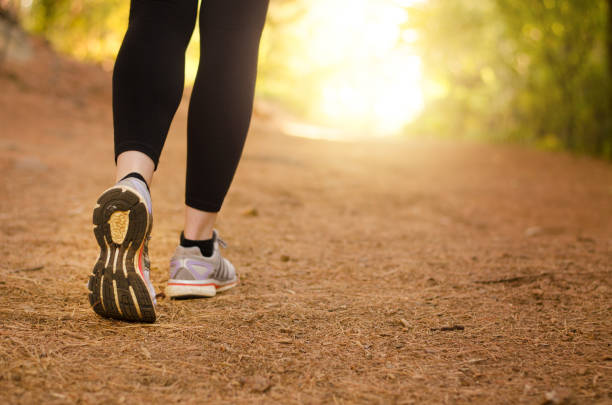
Pair of legs walking on a trail in nature towards the light

Their example stays with me:

  • After years of commuting, I arranged my life so I can walk to work and ride the bus to many of my appointments.
  • My husband and I bought our sons good bicycles as teenagers instead of cars.
  • Our house has no air-conditioning, and we don’t always flush the toilet.
  • We recycle or compost everything we can.
  • I pick up beer cans and plastic bottles on dog-walks in our neighborhood close to a college campus.

These aren’t sacrifices. This is how we live, and it is a calmer, healthier and more satisfying existence than driving in an air-conditioned vehicle from an air-conditioned house or, in the winter, refusing to walk outdoors. Personal behavior change has to power this movement to save our planet.

In order to change the world, you must first change yourself. That saying is painted on a building near my yoga studio in St. Paul. Yes, I still own a car (though it’s a Prius), I still eat some meat, I still accumulate more stuff than I need. But I tread lightly on the Earth, not just for me but for my sons.

“We need to be honest,” says Dr. Wray, “about what we owe one another.”