Tag Archives: Christmas

All Is Calm . . . Now That It’s All Over

It’s early Christmas morning. The only other being awake in a house now occupied by more animals than people is Q.D., the three-legged cat that my older son left behind when he went off to graduate school in London. My dog is still asleep in the large bedroom down the hall, and my husband’s dog, Gabby, is on a couch in the basement.

She’ll stop by soon and start angling for a walk: nudging my hand, doing down-dog on the wooden floor.

Meanwhile, my coffee mug warms my arthritic left hand. No workaday traffic desecrates the dark silence outside. As I balance the checkbook at my computer, a daily habit I learned from my mother, I notice how much money I have spent at grocery stores the past few days, preparing to host a dinner on Christmas Eve and a lunch today, making my deliciously caloric “soccer mom bars” as treats for my neighbors and the beleaguered postal carrier.

Even though I lead the holiday preparations in our household, I’ve never wanted my sons to assume that the annual traditions are necessarily women’s work. That was the norm during my childhood — women in the kitchen, men watching football on TV — and it has soured me on Thanksgiving, especially, for years (not that I care a whit about watching football).

“Cooking is a gift to people,” I like to tell my sons, hoping they will recognize (and one day emulate) the effort as an expression of love, a service to friends and family.

In fact, my favorite presents this holiday season have been consumables: the hearty loaf of zucchini bread that my friend brought over for Christmas Eve dinner, the tray of delicate Scandinavian cookies that my neighbor bakes each year, the bag of coffee beans with oversized mugs from the friendly folks next door.

Despite the undeniable magic of the day itself, barely a week ago I was feeling burdened by Christmas — weighed down with the expectations that come from marketing and media illusions of what the holiday should be, feeling wistful about the many extended family members who are gone. Wondering why my husband and I — neither of whom count ourselves as Christians — continue to put ourselves through this year after year.

We are often referred to not as citizens but consumers. So it’s really important to put the brakes on consumption through practices like gratitude and reciprocity.

Author and scientist Robin Wall Kimmerer

One morning in early December I recycled a pile of year-end appeals from homegrown organizations that all do good work. Every last one is worth supporting:

  • Gillette Children’s in St. Paul, which offers “specialized care to help children with cerebral palsy live fuller lives.” My uncle was chief medical officer there for years.
  • Friends of the Saint Paul Public Library, which helps to “ensure strong public investment in our Library.” There’s a branch three blocks from my house, and I routinely check out books on Libby, the digital app.
  • History Theatre, where I’ve seen numerous education-focused plays staged by local actors with regional topics, often with discussion and “reflection” sessions afterward.
  • Minneapolis Institute of Art, where I enjoy the monthly book-inspired public art tours and appreciate the mission to “make art available to all.”

“It’s giving season!” the MIA postcard declares. Indeed. Two days after Christmas, a plethora of emails continues, wringing the most from tax-related year-end appeals.

Although the health of the U.S. economy is measured against growth — how much we produce and consume in a capitalist society — “giving,” I have come to realize, doesn’t have to equal shopping. Three years ago, I started a tradition among my siblings, asking that we forego the exchange of material gifts in favor of contributing to one another’s chosen nonprofit organizations.

Mine was my local Animal Humane Society this year. AHS has provided me with three loving dogs over the past decades, and I value the organization’s efforts to educate current and potential pet owners.

  • My sister in Maryland chose Laurel Cats, which rescues and rehabilitates abandoned felines. “As the ongoing housing crisis continues in our community, families are facing eviction, and pets continue to be left behind in record numbers,” the newsletter declares, describing a pregnant cat abandoned before a snowstorm.
  • My dog-loving sister in suburban Denver again chose the Colorado Pet Pantry, which donates pet food to shelters and food shelves so people in financial stress can keep their beloved dogs and cats.
  • My stepsister in my hometown of Mankato, Minnesota, each year selects Vine: Faith in Action, a community center that “offers a one-stop shop for aging adults.” She knows older people who have moved to Mankato “primarily because of what we have to offer them.”
  • This year, my brother chose the Trustees in Boston, an environmental organization that protects “exceptional and special places” throughout Massachusetts, where he and his wife raised their sons.
One sibling chose not to donate to my nonprofit this year, and that’s OK. I love to buy people presents — the floor of my office closet is filled with gifts I buy throughout the year, waiting for just the right occasion to bestow them. But to spend money for the sake of it, when you don’t feel inspired to do so, contradicts my growing belief that Christmas should be more about choice than obligation.

One of the great gifts you can give another person is the gift of seeing them, the gift of paying attention.

New York Times columnist David Brooks

In the unhurried hush between Christmas and New Year’s, when the flurry of cooking and cleaning and wrapping presents is over but deadlines and other to-dos remain around the corner, I am thinking about what went right this holiday season.

It was doing the unexpected: foregoing a church service on Christmas Eve in favor of seeing a preview of the new Bob Dylan film, A Complete Unknown, and then discussing that and so many other topics over dinner with my husband and a friend. It was texting loved ones on Christmas morning rather than mailing holiday cards that would have gotten clogged up in the postal system anyway. It was staying out of cheaper suburban big-box stores and patronizing local shops that lend character to my urban neighborhood.

I’ve also been analyzing what didn’t work, like insisting that my younger son and his partner spend time with us on Christmas Day when they’d already had two gatherings with her extended family the day before. Next year, I plan to suggest that we celebrate instead on Sunday, December 28, the day after her birthday.

In mid-December a favorite podcast of mine, “The Opinions,” asked listeners to submit “what brought you joy in 2024.” It was the big things, to be sure: the elevation of Kamala Harris as the Democratic candidate for president, her choice of my state’s ebullient, unpolished governor as her running mate. But in the dark of December, it’s been appreciating what I have, not what I long for — whether that’s better relationships with certain family members or the impossible belief that I should have vanquished all my insecurities by this age.

I restarted the gratitude practice this week that I learned when I first got sober, ticking off five things I am thankful for during my morning dog walk.

Today it’s these:

  1. A warm, comfortable home in a cold, four-season state with a growing population of unsheltered people.
  2. A sister who helped me recognize how holiday traditions and expectations change once adult children have families of their own.
  3. The anticipation of a walk-and-talk this afternoon with a dear friend, who lately is witness to her husband’s failing health.
  4. Physical mobility, even with an aging, sometimes aching body.
  5. The determination, next year, to craft a meaningful Christmas that leans less into what is supposed to be than what feels right, what evolves — and, yes, what brings joy, to me and others.
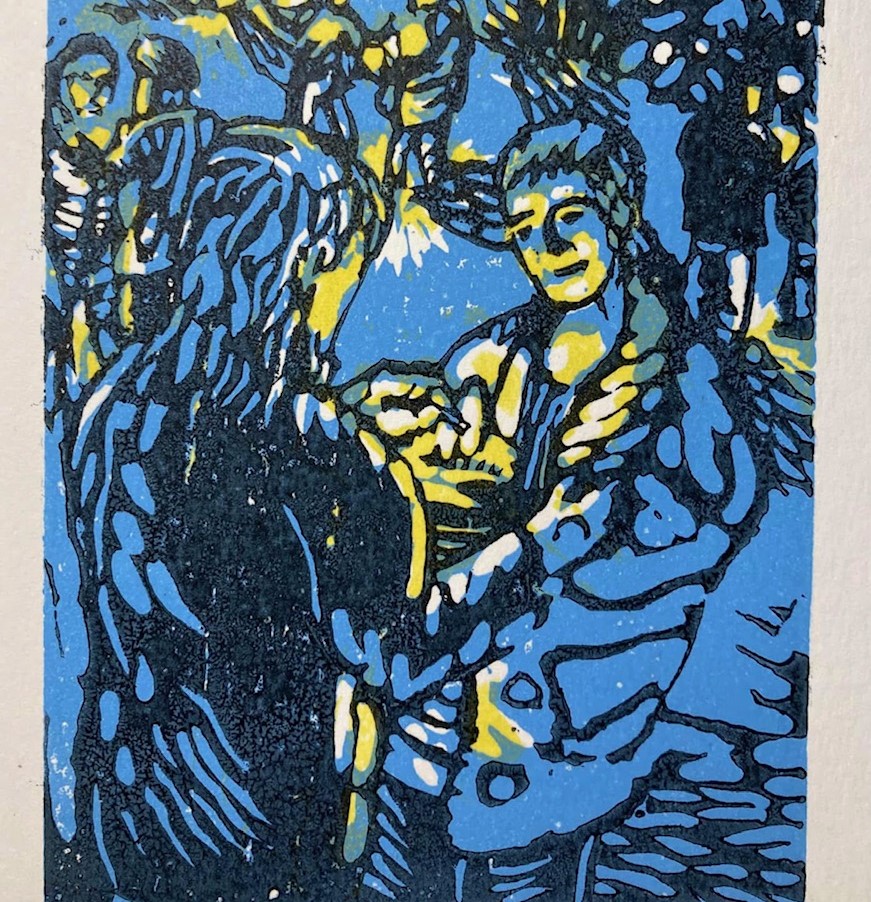
Artwork by Ed Steinhauer

What ‘Merry Christmas’ can really mean

Every year, for many years, I have mailed off roughly the same Christmas gifts to my siblings: a funny dog book or wall hanging for my sister Penny, who dotes on her four dogs; “crazy Cat Lady” trinkets to my oldest sister, Debbie, a cat lover whose husband used to volunteer at a shelter to help socialize feral cats for adoption; and a Minnesota-themed calendar or T-shirt or hat to my brother in Boston, who likes to showcase his Midwestern heritage.

They, in turn, would send me boxes of See’s candy, wax-wrapped aged cheese, frosted cookies in a holiday-themed tin — gifts that I appreciated but really do not need.

This year, I decided, would be different. Crossing my fingers that I wouldn’t appear dismissive of their past efforts, I emailed my siblings before Thanksgiving and asked that, in lieu of material gifts, they give to one of two nonprofits in my name: a local community services organization for which my husband and I deliver Meals on Wheels every Friday and a feminist policy-based organization that is gearing up against threats to Roe v. Wade.

“With the pandemic pressing in on us again and racially based divisiveness rocking our country, I am more aware than ever of the privilege we were born into and from which we continue to benefit,” I wrote.

“To that end, David and I respectfully ask that you take any money you would normally spend on the lovely gifts of food you send us for Christmas each year and instead donate that amount in our names to one of these causes.”

Each of my siblings generously supported the food shelves, youth employment and senior classes at Keystone Community Services, one noting that our father and stepmother received Meals on Wheels for a time. Soon after my initial request, I wrote again, saying that I would like to donate to their favorite causes and elevate the reach of Christmas beyond its consumerist underpinnings.

In the process, I got to know my sisters and brother better. Just as a budget reflects a company or a country’s core values, where a person chooses to donate money says a lot about that individual’s priorities, and about how they see themselves.

Access to the outdoors

My younger brother, L.J., showed himself as the Bostonian he has become since marrying a native of the city some 28 years ago. “Please donate to the Rose Kennedy Greenway,” he told me. “It is a great urban park that adds a lot to downtown Boston.” The public space and programming commits to “providing a park environment that is welcoming to racially, culturally, and economically diverse residents and visitors,” according to the website.

With food trucks, fitness classes, fountains and open green space — typically concentrated in the more affluent neighborhoods of our nation’s cities — the Greenway looks like an inviting place for people of all ages, abilities and economic classes to play and hang out.

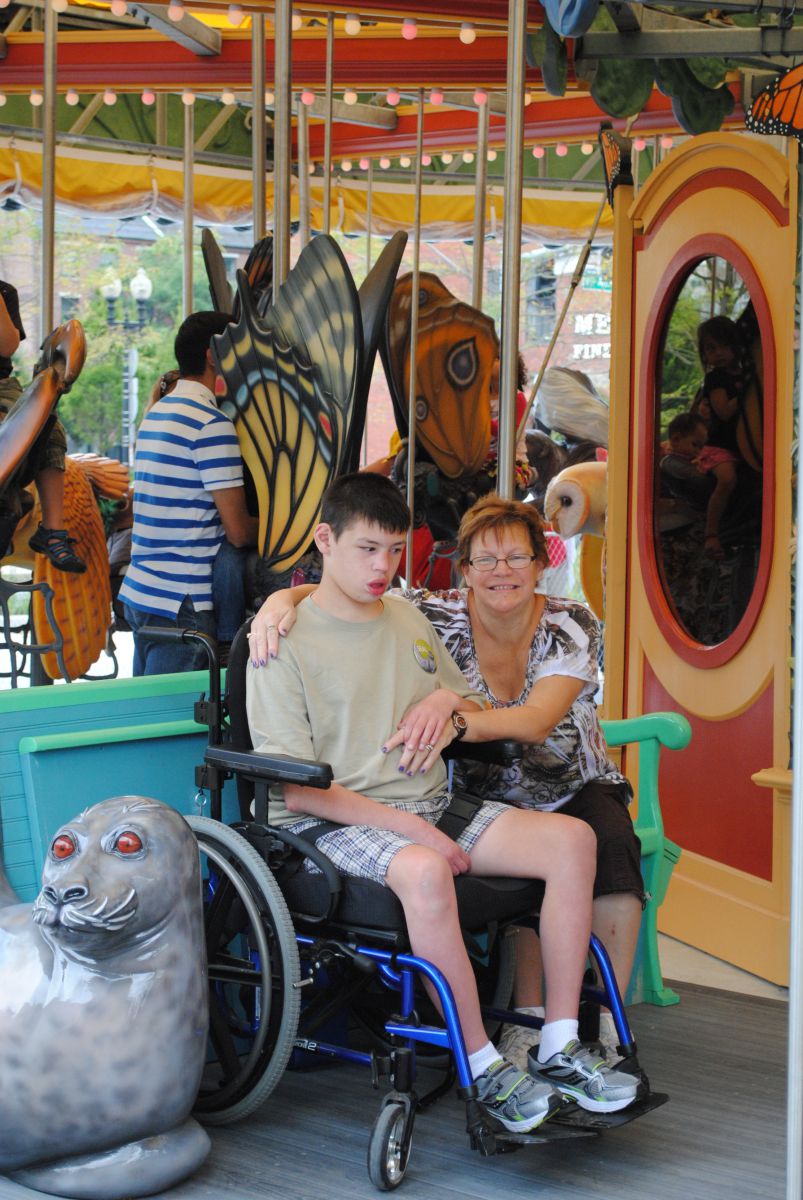
An ADA-compliant carousel at Rose Kennedy Greenway makes a “spin” safe for everyone.

I’m not surprised that equity and inclusion in the natural world is an important value to my brother — raised, as we were, in a community with ample municipal and state parks and in a family that prioritized fitness and outdoor exercise — but we’ve never discussed it. Less politically liberal than I am, my brother revealed a side of himself I otherwise might not have seen. “Thanks for donating,” he said, pronouncing this philanthropic gift exchange “a nice idea.”

Dog-friendly diet

My sister Penny’s overt, over-the-top love of dogs is a running joke in our family. We love to recount the time her father-in-law said that after he died, he wanted to return to Earth as one of Penny’s pampered dogs, the ones who get soft-serve cones at Dairy Queen and homemade dinner so enticing that I once mistakenly ate it myself.

No surprise, then, that Penny’s choice for my donation was Colorado Pet Pantry, a food bank for pets that allows low-income people, or those whose luck has temporarily turned, to keep their animals rather than surrendering them to shelters.

Colorado Pet Pantry is a food shelf for animals whose owners might otherwise have to give them away.

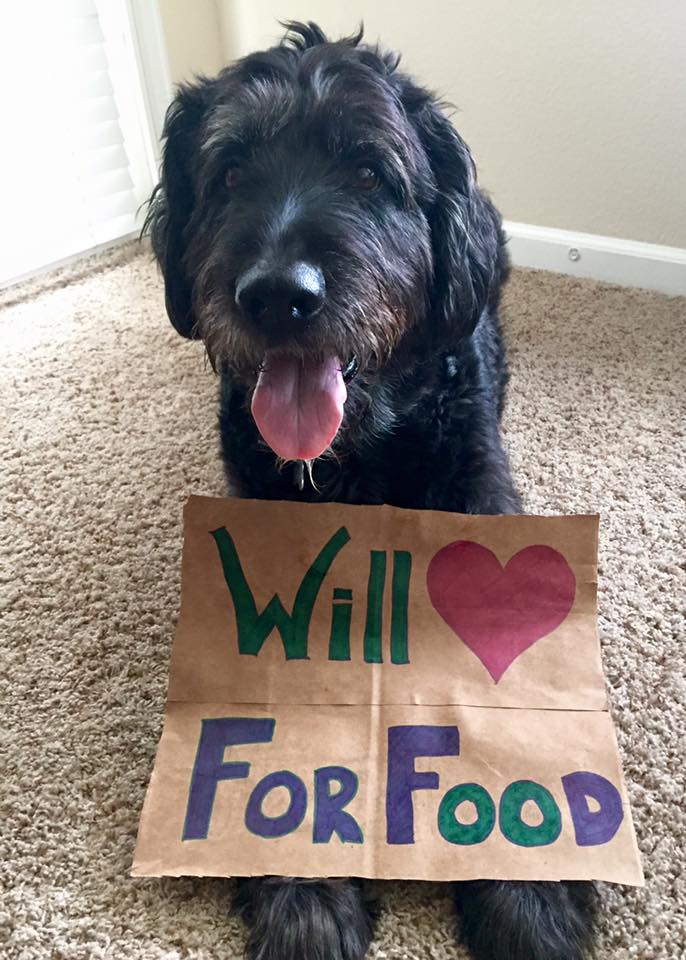
“Being the dog lover that I am, I’m drawn to charities for pets,” she said. “This charity is unique in that it helps people to be able to keep a beloved animal they maybe otherwise couldn’t. That just spoke to me as a nonprofit worth supporting.”

What matters most

The morning after Christmas, I survey the leftovers in the fridge and determine that I can take a break from cooking that day. I recycle the plain brown wrapping paper that my younger son used on his thoughtful gifts of books. I force myself out, despite the cold, on my daily dog walk, trying to counteract the intake of overly rich food.

No Amazon boxes to break down and recycle. No cursing at the amount of plastic wrap that shippers use. No pondering whether to freeze or give away the pounds of candy and exotic edibles that my husband and I, as older empty nesters, do not need to consume.

Instead, I look over the website for the Retreat Center of Maryland, a 5-year-old organization that aims to bring yoga and other wellness practices to people with autism or Parkinson’s disease and other populations that the industry historically has not served. This is my sister Debbie’s choice for my Christmas gift, a nod to our mutual love of yoga. One of her neighbors, a volunteer yoga teacher in prisons, serves on the board.

My stepsister, Mary, my only sibling still living in Minnesota, chose Vine: Faith in Action, which matches volunteers with the needs of people ages 60 and older. In-person and online exercise classes and programs on topics such as diabetes, financial exploitation of seniors and healthcare directives have helped the Mankato-based organization continue to grow and serve.

“I want the gift of time,” I used to tell my sons every Mother’s Day. Now I want this practice of Christmas donations to become a tradition, bringing to life a quote commonly attributed to John Wesley, founder of the Methodist church in which my siblings and I were raised:

Do all the good you can, by all the means you can, in all the ways you can, in all the places you can, at all the times you can, to all the people you can, as long as ever you can.

As a Unitarian, I no longer celebrate Christmas as a religious holiday. Still, I watch myself get caught up every year in the trappings and trimmings, the whirlwind of shopping and spending. Today, as December draws to a close, I can say, “Merry Christmas” and mean it, knowing that my brother and sisters and I shared what I believe is the true Christmas spirit.

Happy New Year? That’s up to you and me

Nothing is more over than Christmas when it is done. I feel that as I begin this New Year’s greeting the morning of December 26. We spent too much money. We ate too much food. All of it was an investment in people we love: our grown children, our siblings, and the friends and colleagues we are blessed to have.

But now the wind is blowing strong. A Christmas Day storm has left the streets rutted with ice. We are back to daily life, still facing the real-world problems that we briefly escaped over the holidays.

My neighbor’s empty house was nearly vandalized on Christmas Eve, because some desperate soul — perhaps addicted or unemployed — lacks the empathy to recognize how his criminal, intrusive actions will haunt this family for years to come.

A man chastised me on a neighborhood Facebook group the other day because I complained about the slippery sidewalks at the soon-to-open CVS drugstore near my house. “Caught in a war zone in Syria. Living in such poverty [that] starving is the norm vs. sidewalks aren’t shoveled where I like to jog. #FirstWorldProblems.”

Sanctimonious, to be sure (or, as my son said, “what a dick”), but I see the man’s point. Looking beyond my relatively privileged life to the real burdens some people face seems especially important at the end of 2016, seven weeks after an election that dashed my hopes for a more inclusive, benevolent society.

Counting blessings is the surest antidote to the inevitable post-holiday letdown. It also is a positive start to 2017, a year when my primary intention is to figure out how to contribute my time and talents to the causes I care about.

Blessing No. 1: A middle-class safety net protects my family.

present

My husband lost his job barely three weeks before Christmas, and I earn significantly less than I was making in a previous management position. Paying our mortgage and monthly bills on my salary alone will be a stretch.

And yet: We own property that brings us income. We have savings we can tap. My husband is able-bodied and employable.

Born and raised in what is now the declining middle class, my husband and I were taught not only how to save money but to invest it. Modest inheritances from deceased relatives have helped put our sons through college. My job provides health insurance and a generous retirement plan. Because we have maximized those privileges, we will make it. The uncertainty is scary, but we will be all right.

Blessing No. 2: Having less money is helping me discover who I really am.

We hosted three different Christmas celebrations this December, and the one where I recognized what I truly value was at a potluck gathering of working-class people whom I had never met. The mother and grandparents of my older son’s girlfriend, our guests talked about their jobs as a means to an end, not as some noble calling or an integral part of their identity.

That notion that the professional is personal — that title and salary confer self-worth and justify self-importance — has gnawed at me for the past two and a half years, since I sidetracked my career and stepped into a job that affords me less income but more time for résumé-enhancing activities such as blogging and going to graduate school.

present_2Having less money this Christmas forced me to give presents of homemade food or inexpensive items that required thought and creativity. Similarly, spending an evening laughing and talking with people for whom work is not their lives helped me, finally, to quit apologizing for my unconventional career choice and to reacquaint myself with the reasons why I made it.

Blessing No. 3: I have learned the practice and necessity of gratitude.

Back in 2011, a spiritual adviser asked me to exchange a gratitude list with her by email every night. The practice helped me notice and recognize blessings such as good health and strong friendships, the ability to support myself, and the dogs who bring me companionship and joy.

The discipline of that gratitude exercise carries on in my ability to seek perspective when I’m upset, to respond rather than react to disagreements or unpleasantness, and to remind myself daily of all that is good about my life.happy-new-year

“You have to participate relentlessly in the manifestation of your own blessings,” writes essayist and novelist Elizabeth Gilbert. It’s a modern take on an ancient Biblical passage: To whom much is given, much will be required. 2017 can be a Happy New Year but only if each of us, individually, thinks and acts communally — and has the grace to share what we’ve been given.