All Is Calm . . . Now That It’s All Over

It’s early Christmas morning. The only other being awake in a house now occupied by more animals than people is Q.D., the three-legged cat that my older son left behind when he went off to graduate school in London. My dog is still asleep in the large bedroom down the hall, and my husband’s dog, Gabby, is on a couch in the basement.

She’ll stop by soon and start angling for a walk: nudging my hand, doing down-dog on the wooden floor.

Meanwhile, my coffee mug warms my arthritic left hand. No workaday traffic desecrates the dark silence outside. As I balance the checkbook at my computer, a daily habit I learned from my mother, I notice how much money I have spent at grocery stores the past few days, preparing to host a dinner on Christmas Eve and a lunch today, making my deliciously caloric “soccer mom bars” as treats for my neighbors and the beleaguered postal carrier.

Even though I lead the holiday preparations in our household, I’ve never wanted my sons to assume that the annual traditions are necessarily women’s work. That was the norm during my childhood — women in the kitchen, men watching football on TV — and it has soured me on Thanksgiving, especially, for years (not that I care a whit about watching football).

“Cooking is a gift to people,” I like to tell my sons, hoping they will recognize (and one day emulate) the effort as an expression of love, a service to friends and family.

In fact, my favorite presents this holiday season have been consumables: the hearty loaf of zucchini bread that my friend brought over for Christmas Eve dinner, the tray of delicate Scandinavian cookies that my neighbor bakes each year, the bag of coffee beans with oversized mugs from the friendly folks next door.

Despite the undeniable magic of the day itself, barely a week ago I was feeling burdened by Christmas — weighed down with the expectations that come from marketing and media illusions of what the holiday should be, feeling wistful about the many extended family members who are gone. Wondering why my husband and I — neither of whom count ourselves as Christians — continue to put ourselves through this year after year.

We are often referred to not as citizens but consumers. So it’s really important to put the brakes on consumption through practices like gratitude and reciprocity.

Author and scientist Robin Wall Kimmerer

One morning in early December I recycled a pile of year-end appeals from homegrown organizations that all do good work. Every last one is worth supporting:

  • Gillette Children’s in St. Paul, which offers “specialized care to help children with cerebral palsy live fuller lives.” My uncle was chief medical officer there for years.
  • Friends of the Saint Paul Public Library, which helps to “ensure strong public investment in our Library.” There’s a branch three blocks from my house, and I routinely check out books on Libby, the digital app.
  • History Theatre, where I’ve seen numerous education-focused plays staged by local actors with regional topics, often with discussion and “reflection” sessions afterward.
  • Minneapolis Institute of Art, where I enjoy the monthly book-inspired public art tours and appreciate the mission to “make art available to all.”

“It’s giving season!” the MIA postcard declares. Indeed. Two days after Christmas, a plethora of emails continues, wringing the most from tax-related year-end appeals.

Although the health of the U.S. economy is measured against growth — how much we produce and consume in a capitalist society — “giving,” I have come to realize, doesn’t have to equal shopping. Three years ago, I started a tradition among my siblings, asking that we forego the exchange of material gifts in favor of contributing to one another’s chosen nonprofit organizations.

Mine was my local Animal Humane Society this year. AHS has provided me with three loving dogs over the past decades, and I value the organization’s efforts to educate current and potential pet owners.

  • My sister in Maryland chose Laurel Cats, which rescues and rehabilitates abandoned felines. “As the ongoing housing crisis continues in our community, families are facing eviction, and pets continue to be left behind in record numbers,” the newsletter declares, describing a pregnant cat abandoned before a snowstorm.
  • My dog-loving sister in suburban Denver again chose the Colorado Pet Pantry, which donates pet food to shelters and food shelves so people in financial stress can keep their beloved dogs and cats.
  • My stepsister in my hometown of Mankato, Minnesota, each year selects Vine: Faith in Action, a community center that “offers a one-stop shop for aging adults.” She knows older people who have moved to Mankato “primarily because of what we have to offer them.”
  • This year, my brother chose the Trustees in Boston, an environmental organization that protects “exceptional and special places” throughout Massachusetts, where he and his wife raised their sons.

One sibling chose not to donate to my nonprofit this year, and that’s OK. I love to buy people presents — the floor of my office closet is filled with gifts I buy throughout the year, waiting for just the right occasion to bestow them. But to spend money for the sake of it, when you don’t feel inspired to do so, contradicts my growing belief that Christmas should be more about choice than obligation.

One of the great gifts you can give another person is the gift of seeing them, the gift of paying attention.

New York Times columnist David Brooks

In the unhurried hush between Christmas and New Year’s, when the flurry of cooking and cleaning and wrapping presents is over but deadlines and other to-dos remain around the corner, I am thinking about what went right this holiday season.

It was doing the unexpected: foregoing a church service on Christmas Eve in favor of seeing a preview of the new Bob Dylan film, A Complete Unknown, and then discussing that and so many other topics over dinner with my husband and a friend. It was texting loved ones on Christmas morning rather than mailing holiday cards that would have gotten clogged up in the postal system anyway. It was staying out of cheaper suburban big-box stores and patronizing local shops that lend character to my urban neighborhood.

I’ve also been analyzing what didn’t work, like insisting that my younger son and his partner spend time with us on Christmas Day when they’d already had two gatherings with her extended family the day before. Next year, I plan to suggest that we celebrate instead on Sunday, December 28, the day after her birthday.

In mid-December a favorite podcast of mine, “The Opinions,” asked listeners to submit “what brought you joy in 2024.” It was the big things, to be sure: the elevation of Kamala Harris as the Democratic candidate for president, her choice of my state’s ebullient, unpolished governor as her running mate. But in the dark of December, it’s been appreciating what I have, not what I long for — whether that’s better relationships with certain family members or the impossible belief that I should have vanquished all my insecurities by this age.

I restarted the gratitude practice this week that I learned when I first got sober, ticking off five things I am thankful for during my morning dog walk.

Today it’s these:

  1. A warm, comfortable home in a cold, four-season state with a growing population of unsheltered people.
  2. A sister who helped me recognize how holiday traditions and expectations change once adult children have families of their own.
  3. The anticipation of a walk-and-talk this afternoon with a dear friend, who lately is witness to her husband’s failing health.
  4. Physical mobility, even with an aging, sometimes aching body.
  5. The determination, next year, to craft a meaningful Christmas that leans less into what is supposed to be than what feels right, what evolves — and, yes, what brings joy, to me and others.
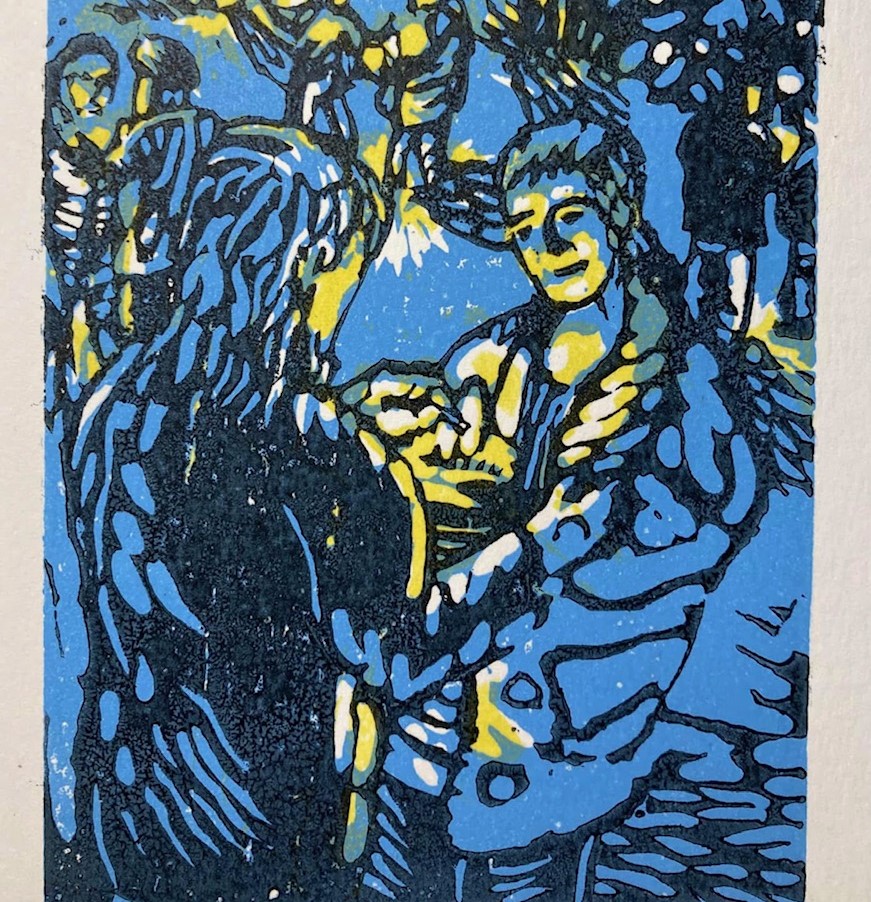
Artwork by Ed Steinhauer

The Morning After . . . and What Comes Next

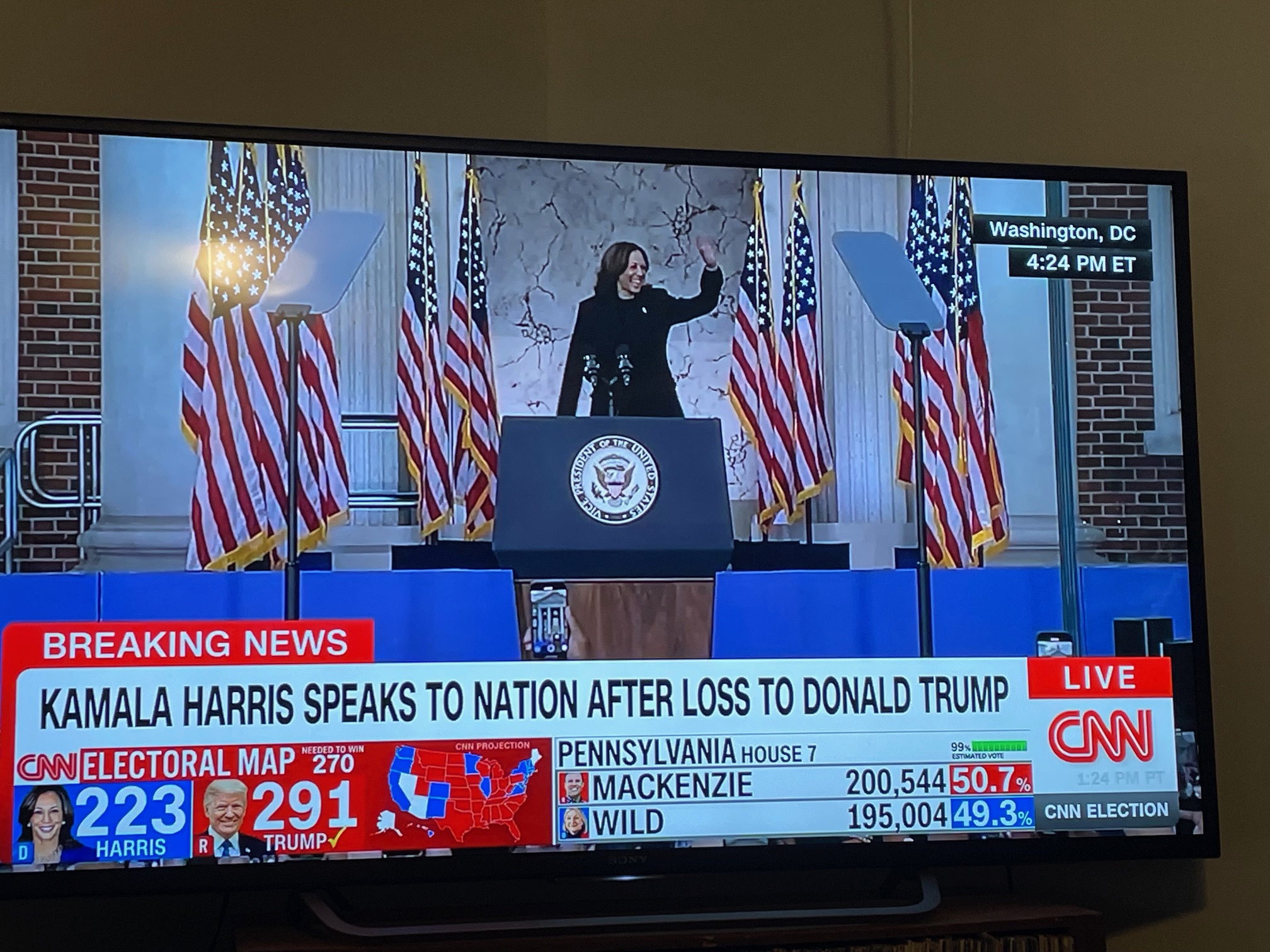
None of us saw this coming.

The morning after a presidential election that will go down in history for its sweeping affirmation of a “me first” brand of nationalist politics, I was doing what I do every morning: walking my two dogs. After crossing a busy street, the dogs were straining at their expandable leashes as we approached a person in a black trench coat.

“Two dogs behind you!” I yelled. As we passed the individual, I turned and explained, “We didn’t want to scare you.” And then, exhausted from a 15-hour shift as a poll worker the previous day and after a night when, again, I got too little sleep, I said: “It’s a dark morning today.”

The person, a young adult of indeterminate gender, looked over and apparently judged me to be safe. “I’m trans,” they said, “and I’m terrified.”

My eyes filled with tears as I put a gloved hand to my heart. “I’m so sorry,” I said. “I am so, so sorry.” As they moved on, I called out, “Be well,” and we exchanged a look of compassion and understanding that has been replicated many times in my liberal urban neighborhood during this awful, incomprehensible week.

“I wouldn’t want this man for my neighbor, let alone my president,” said the owner of an antiques store two blocks from my house as he unlocked his front door. He told me he had read the Gettysburg Address right before the election and lamented that the days of a president with the intellect, humanity and foresight of Abraham Lincoln were clearly long past.

“Government of the people, by the people, for the people.” Indeed. We liberals and progressives misjudged what the people wanted.

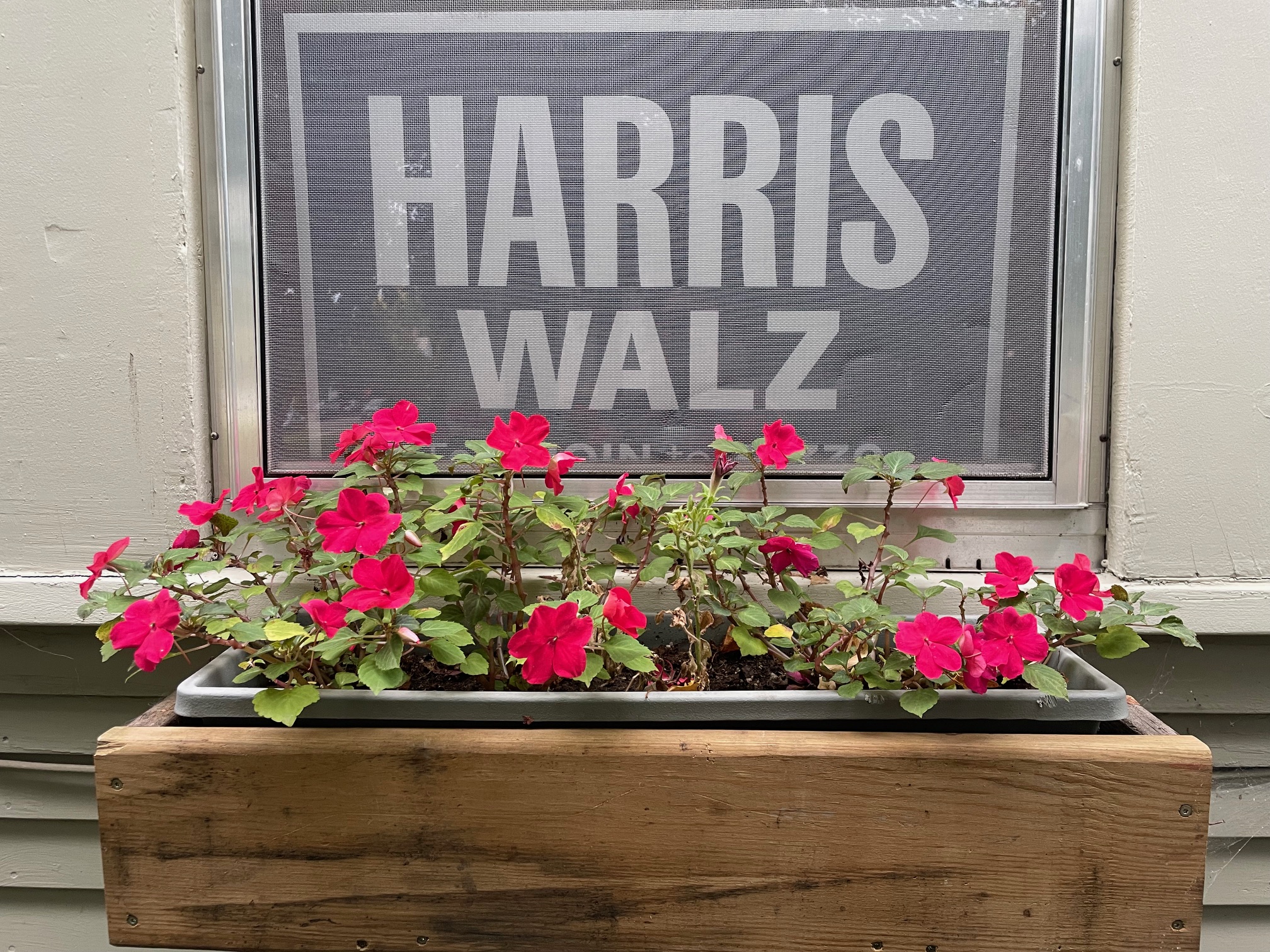
At my husband’s request, I returned the “No Project 2025” sign to my next-door neighbor, who had handmade a number of them for people’s yards. “I don’t want us to be a target,” my husband said, and I understood immediately. The Harris/Walz sign in our dining room window, however, remains. My virtue signaling, yes; my small rebellion.

On PBS NewsHour last night, which I watch every Friday for the analysis of journalists David Brooks and Jonathan Capehart, former anchor and sometime reporter Judy Woodruff checked in again with voters whom she had interviewed throughout the fall.

The economy and immigration were key themes, as they were among the majority of Americans who voted for Donald Trump, but identity politics and fear came up as well:

  • A middle-aged Black man said when he woke up the day after the election, “it was a feeling of, ‘Here we go again.’ We’re moving back in time.”
  • A young white man said he supported Trump because he is tired of being blamed. “Being male and white in recent years, we’ve been told that we’re the problem in society. . . . Everyone who’s oppressed, quote-unquote, is being oppressed by white men.” He said Trump ran against diversity, equity and inclusion (DEI) initiatives “meant to lower the amount of white men in any sphere.”
  • A person who identifies as nonbinary, gave birth to a child and is married to a woman said they are “very concerned that legally my marriage may be dissolved” and that their wife ultimately could lose “legal rights to our son.”
  • Reflecting my own identity, one woman described herself as “an older, post-menopausal, white, retired woman.” She may not personally feel the effects of changing social policies, she explained, but her friends’ transgender children and her married lesbian niece likely will.

These thoughts echo the conversations and text exchanges I have had throughout this week. When I told my friend David, a retired attorney, that the three liberal justices on the U.S. Supreme Court “better hang on by their toes,” he took a different view. Samuel Alito and Clarence Thomas, the two oldest conservative members of the high court’s six-person super majority, will retire “within two years,” he said, “while they still have a strong [U.S.] Senate.” Trump will appoint replacements “who are 40 years old,” cementing that super majority for decades.

Mary, a friend and former colleague whose family background mirrors mine, right down to our Republican attorney fathers, called the afternoon after the election while I was soothing myself in a bubble bath. “I’m white, straight, a legal citizen, non-trans, educated and in a good financial situation,” she told me. “I’m aware that others will suffer far more.”

My spiritual advisor, a socially liberal and politically active minister, put the same thought into stark historic terms: “This will be bad for others before it’s bad for us,” she said. “We have to be the good Germans now.”

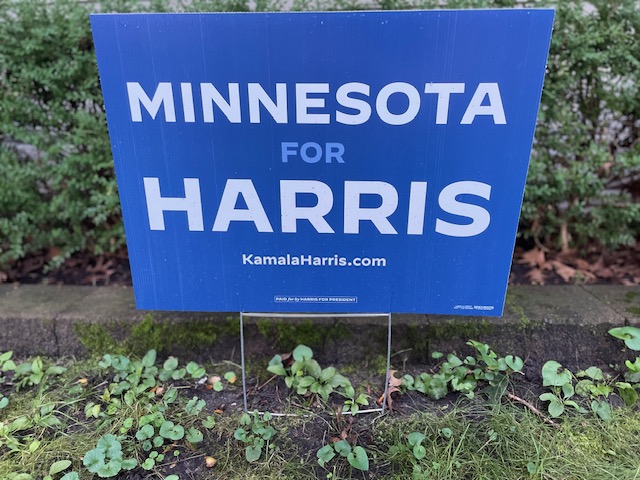
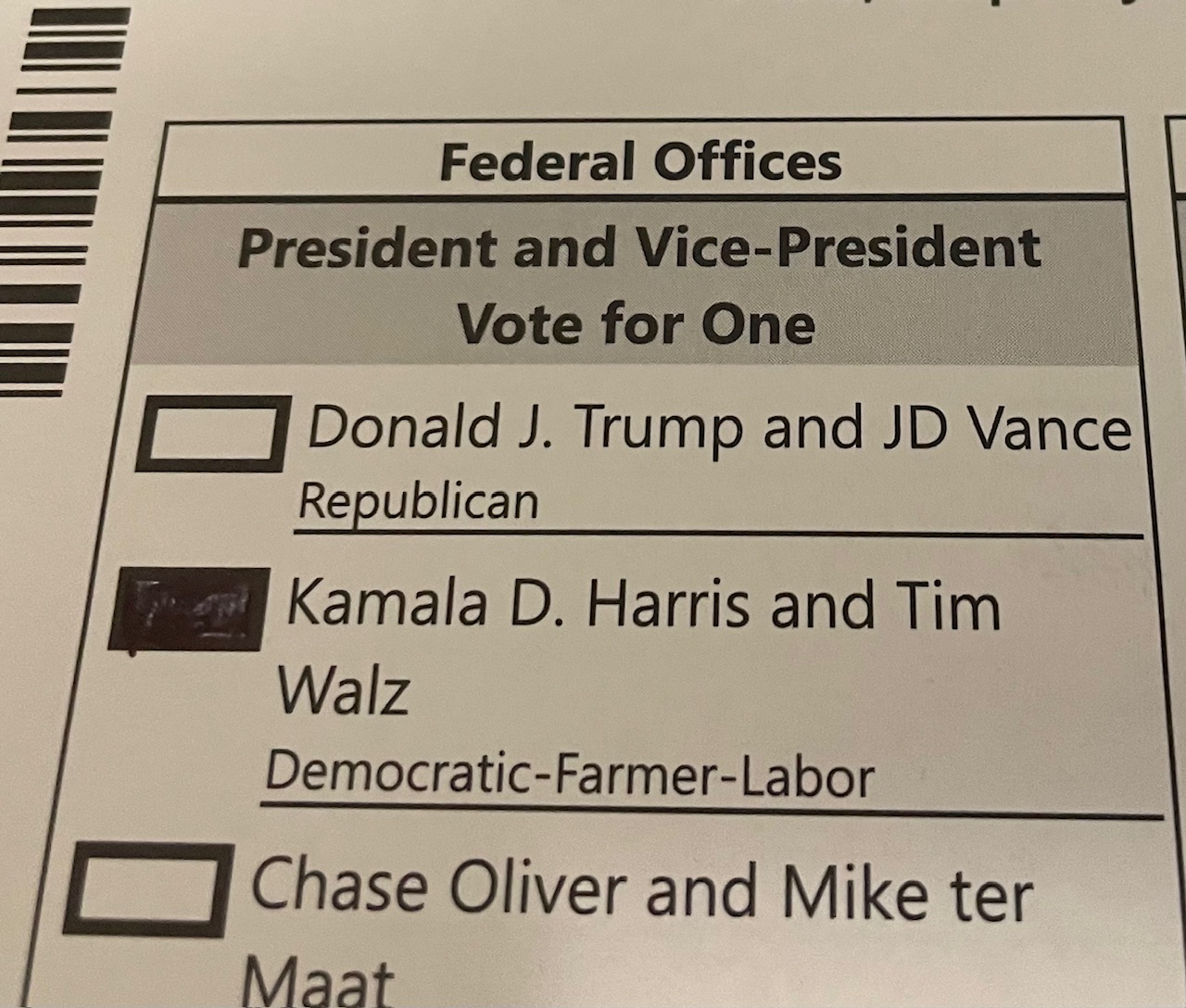
It was such a hopeful 107 days. As a proud Minnesota DFLer, I reveled in Vice President Kamala Harris’ choice of Governor Tim Walz as her running mate in early August. The spirit of joy in the early days of their all-too-brief campaign (see my previous thoughts on President Joe Biden) was infectious and electrifying — and the prospect that Walz could introduce my state’s progressive agenda to the nation had me more optimistic than I have been since the Dobbs decision shut down women’s fundamental right to bodily autonomy in June 2022.

I am struggling to regain that optimism now. Some 53% of white women voted for Donald Trump, a convicted rapist whose political career should have ended when he bragged about grabbing women “by the pussy” back in 2016. His blatantly sexist (and racist and xenophobic) comments have only gotten more pronounced since then.

One conservative female columnist pushed back against those of us who would castigate white women for not caring enough about abortion rights or the significance of electing the country’s first female president, when, in fact, she said, Trump “spoke directly to voters’ top concerns.”

My top concern is short-term thinking. That the cost of a gallon of milk or a gallon of gas ultimately matters more than the loss of climate protections and democratic freedoms — including Trump’s promised mass deportations of “illegal aliens” and retribution against his “enemies,” and the threat of violence from conservative extremists when elections don’t go their way — is stunning to me. None of them has shouted the words “election fraud” this week!

On rising prices: I’d take the hit from any Trump supporter who called me privileged and middle-class, which both are true, if it weren’t for the photo of a jubilant, bejeweled blonde in West Palm Beach adorning that conservative writer’s column to illustrate the president-elect’s female support.

‘I don’t recognize the America I live in,” I wrote on Facebook on Wednesday, November 6. But here we are. He got elected, his coattails extending to Republican candidates across the country. My job now is to step out of the blue bubble that I live in, where 70 percent of voters in Ramsey County supported Harris/Walz, and start talking with — and listening to — people from the other side.

Among the folks who reached out to me that morning, after Wisconsin tipped the balance for a second Trump presidency, was my oldest friend, a woman I have known for 65 years. Janey was with me in the delivery room for the birth of each of my two sons. She held my mother’s hand and stroked her forehead in a memory-care center days before Mom died. Janey is as much a sister to me as my two older sisters.

Janey also is a Republican who voted for Trump, and we still love each other. “My hopes and prayers are we can come together as one nation that wants the best for our country,” she texted the morning after the election. “We can move on from this. We can be gracious to one another no matter which side of the aisle one belongs. We need to love and respect each other, and to understand we all come from different backgrounds and experiences.”

I do resolve to listen and learn, rather than blaming or pointing fingers. And I resolve to keep working for equity and human rights, just as I did this election cycle: door-knocking, phone banking, writing postcards. I owe that to my younger son, who yearns to have a child. I owe it to my older son, who has left the country. And I owe it to that trans neighbor walking down the street, facing a terror I cannot know.

We are here with you.

Evolving Reflections on ‘Home’

My husband and I raised our two sons in Northfield, Minnesota — a progressive, two-college town where I always felt safe, where we rarely locked the side door off the driveway at night, where our kids rode their bikes freely around town. Back when we sold our family home in 2013, I wanted to write an ode to the place where I had lived for 20 years, the longest stretch of my lifetime.

That house was home, full of two decades’ worth of meaning and memories, family and friends, a center of activity for sleepovers and potlucks, where boisterous boys and loving dogs (rest in peace, Skip and Lucy) were a dominant, delightful presence.

The small-town house in Northfield, Minnesota, where our two sons grew up: 20 years of memories. Photo by Amy Gage

No one else in the family seemed to share my nostalgia for the white Dutch Colonial with a three-season front porch, a black roof and red trim, built in 1900 within eyesight of Old Main at St. Olaf College. It “looked appropriate” to see two little girls dash out the front door, my younger son said after he showed the house to his girlfriend during a trip back to town. That was all he would concede.

Eventually, I moved on, too, giving my heart to the smaller, 1906-era empty-nest house my husband and I have now in St. Paul, with a quaint wraparound porch that I fell for on sight. My shifting allegiances make me wonder: Is it the house itself that makes a home? Much as I love the expanded, updated kitchen in my current place and the egress window in the basement that fills my workout room with natural light, are those amenities what have bonded me to this place? Or could I comfortably, given time, call any place home?

Our city house today: walking distance to a library, four bus lines and two colleges, and a short bike ride to the Saint Paul Grand Round. Photo by David Studer

I’ve always reveled in the creative expression of home, the furniture and wall hangings and house plants that reflect my moods and tastes. These days, I am grateful not only for the safety and security I feel at home but for the privilege of being able to afford a house at all.

I root where I am planted. Whether it’s an upper duplex in northeast Minneapolis, a rental house on the edge of Indian Mounds Park in St. Paul or the first house that my husband and I purchased, and subsequently detached from when two teenagers burned a cross on the front lawn of a Black family down the street: Home is structure for me, a physical location, a place where I can put my stamp and comfortably be myself.

I had breakfast recently with a friend who had returned from a summer in Finland, her home country. She talked about the relatives she visited, described a mass transit system that allowed her and her wife to get along without a car, spoke fondly of the concerts they attended and the greater sense of ease in a society less gun crazy and politically polarized than ours.

“So, where is home,” I asked her.

“Home is where your people are,” she said.

My people, literally defined — the family I was raised in — are either dead or have moved away. My three surviving siblings are scattered around the country (the brother who died in 1988 lived just blocks from where I am now). At 67, I have few older relatives left in Minnesota. My mother, father and stepmother died in fairly quick succession, and all during autumn, in 2015, 2017 and 2018. In fact, my only extended family in a state where people are known for staying put is one sister-in-law in Minneapolis, an uncle who spends half the year in Florida, a first cousin in a far southern suburb and another first cousin about two hours north, a DFLer who keeps up the good fight in what is now solid red Trump country.

After seeing my older son off to London for graduate school in August, I feel lucky to have my younger son and his partner just a 10-minute bike ride away.

I describe my closest friends as “intentional family” — the folks who are no blood relation but with whom I share a history, the ones who hung with me through the messes and mistakes of young adulthood. After a 40-year career, I rarely go anywhere in St. Paul or Minneapolis without running into some colleague or connection. I worked with my next-door neighbor at St. Catherine University, shared a cubicle with the neighbor behind me for seven years in a newsroom and knew the woman who lives kitty-corner from my house at Minnesota Public Radio, when I was an editor on its magazine.

So, yes, as my friend says, people constitute “home.” My friendly neighborhood — with its walkability to mass transit, college campuses, and both fun and functional shopping — also enhances my sense of community. I thrive on the convenience of urban living, especially at an age when I feel less inclined to drive and more inclined to do good for the planet.

My parents divorced when I was 14. My childhood home was sold and my foundation ripped away at too tender an age for an awkward, uncertain girl. Perhaps that accounts for my love of home now, my reluctance to travel much with my long-retired husband. As my own career winds down, I have a growing desire just to stay home. To cook and tackle projects. To read and chat with neighbors.

To redefine my purpose and until then, to be still.

When my husband presses me about why I won’t travel more, I hardly know how to begin explaining. Our six-year age difference and our differing parental roles, which made sense when the kids were young, have now become a chasm in our respective wants and needs. As a largely on-site parent, he worked at home; even when he earned a part-time paycheck, he was the one in town while I commuted to my family-wage job.

He loved being Mr. Mom, “but there were no breaks or paid vacations.” And even though I did enjoy raises and paid time off and validations for a job well done, I also spent years leaving home five days a week, including on mornings when I longed to stay back with the little boy in the footie pajamas who held his arms out as I headed to the car.

Being at home now is sustaining; it slows me down, allowing a reset from 40 years of pushing into the wind. There is much of the world I haven’t seen, large swaths of this country I’ve yet to cover. I dream about taking a train somewhere all by myself.

But for today, the simple pleasures of tucking in with a dog and a good book, learning how to cook tofu or repotting plants in my backyard while listening to a podcast are as much adventure as I want or need. Give it time, I tell my husband. This, too, shall pass.