
Lessons from Beyond: the Short, Sad Life of a Small Dog

I barely know the woman whose dog I agreed to foster so she could go to inpatient treatment for alcoholism. We have a good friend in common. I already own two dogs. So I impulsively said “yes” when she sent out an SOS e-mail to find a caregiver for Max, her mini-dachshund.

Three weeks later, Max is dead — by my decree — and I am left with an empty dog bed and the uncomfortable reality that doing the right thing is, often, a lonely enterprise.Max the Dog

Pets as playthings

I picked up Max at his suburban townhouse on a bitterly cold Thursday afternoon in February. His owner had been drinking. Bright-eyed and chatty, trying desperately to appear normal, she apologized for the messy living room and the urine stains on the carpet.

I collected Max’s things — a kennel, a tattered leash, a grocery bag full of canned dog food and pricey treats — and wished the owner well. I was eager to get out of there and get Max home.

I didn’t ask her about the peculiarities of mini-dachshunds. I didn’t know, for example, that they’re not supposed to climb stairs or jump on and off furniture, something my own robust dogs do routinely. All she told me was that Max hated the cold and that he loved to snuggle under blankets, contradicting the Wikipedia site that pronounced the breed “very active” and thus requiring “frequent walks.”

An inveterate exerciser, I envisioned getting this dog on the right path.

Only 5 or 6, Max had a swaying, tentative gait that suggested he was uneasy — or unfamiliar — with a simple walk. He laid in his bed for hours and seemed to be composed of what my son dubbed “flab and bones.” In fact, the slipped disc that paralyzed him, seemingly overnight, “is often caused by obesity,” the Wikipedia site says.

The pads of his feet were as pink as a baby’s bottom. When we’d lift him outside to pee — before the rear-end paralysis took away that function, too — Max would stand in the snow, frozen in place. I attached a leash to his collar once and he refused to move.

I reached the owner at her treatment facility in California prior to putting Max down, and she told me Max had been “horribly abused” when she rescued him at 4 years old. I didn’t want the details — visions of hind-end kicks have haunted me since I had the dog killed last Thursday — but I ask myself whether overfeeding and inactivity don’t constitute some form of abuse as well.

Bred to be hunters of small animals such as badgers and rats, dachshunds require muscle strength to support their long spines. But in an era when “sedentary” seems to define the human condition, dachshunds have become house dogs, playthings — dressed up in silly sweaters for their owners’ amusement.

“Loved for his long round body and cute stumpy legs,” one website reads, the dachshund nevertheless must be nurtured with fish oil and exercise and specific handling in order to remain healthy.

Maybe we need to enlarge the definition of animal cruelty: Is it only hitting? Starvation? Chaining a pet in a cold, dark basement? Or is it also ignorance and benign neglect?

Life’s lessons

Ultimately, Max’s death will matter only to the woman who adopted him and never got to say goodbye. But I’d like his life to stand for something. Maybe one day, the monsters who made his early years hell will reflect on their actions and feel regret. Maybe his owner will find the strength to stay sober because she’ll want to foster another dog

Maybe I’ll find the courage, finally, to do more than wring my hands and actually volunteer on behalf of abused and abandoned animals.

Unlike giving birth — which is painful, traumatic and yet joyous — witnessing death is just hard and mysterious, and very sad.

It’s my 98-year-old father-in-law thrashing in a hospital bed, hours before he died of pneumonia in the facility where he once was chief of staff. It’s my sons’ godmother, my sister-in-law, lying in a hospice and progressively losing the ability to talk or breathe.

And it’s Max, quietly curling up to die — not “going to sleep,” as we like to tell ourselves to sidestep the moral quandary — only seconds after the vet’s lethal injection. “Bless you,” I told her, “you have a hard job.”

“It’s not all puppies and kittens,” she replied.

A friend who used to work for the Animal Humane Society called to comfort me the next day. She quoted a former colleague who had euthanized many animals: “She told me it was the most important moment for an animal,” my friend said, “and it was her responsibility to give them comfort and dignity.”Countryside logo

My family did that for Max. Dr. Signe Wass of Countryside Animal Hospital did that for Max. And in her own way, his owner did that for Max, too. She rescued him, and loved him the best she could.

Thank God, February’s Over: Bring on Spring!

The longest shortest month of the year, February makes me wish time away — something  most of us cease doing at middle age.

We’ve had 26 sub-zero mornings in Minnesota so far this winter. February is among the slowest months for local businesses; people would rather be keeping company with their screens.

Native Minnesotans are supposed to take the icy sidewalks and bitterly cold temperatures in stride. But I’ve eaten too much. Gotten off my running routine. And been too distracted and stir-crazy even to finish reading a book.Penguins on ice

Enough. Spring starts in March, and I am holding myself to better habits, starting today:

1) Keep moving. I felt reborn the other day when I ran four miles along Mississippi River Boulevard with a friend I hadn’t seen in months. Yes, it was cold, but I know how to dress for winter running: layer your clothing, go lighter below the waist, wear a black Ninja hood to encase your head and neck.

The sun was shining. The conversation was lively. And I adopted her trick of thinking positive when the going got tough. Rather than “damn, this hill is steep” we’d exclaim to each other: “Look at the view!”

2) Gain perspective. The death of New York Times journalist David Carr on February 12 threw me, as it did many of his former colleagues. I knew Carr, barely, back in the roaring ’80s, when we both worked at MSP Communications. He chastised me once for wearing a campaign button in the newsroom. He swept through a party at my upper duplex in northeast Minneapolis, pronouncing that I had a “nice pad.”

I envied his self-confidence and single-minded ambition. I recognized his talent, even as I viewed it from a distance. I was never brave enough to travel in his pack.

Like others, I was shocked and saddened to read of his collapse. But I also personalized the news in a way that feels ungenerous, both to him and to myself. I didn’t think about the wife and daughters he left behind or his unfinished work in the world.

When I read about Carr’s globe-trotting career, the mark he made on his profession, and his canny ability both to overcome and capitalize on his addiction, I felt small by comparison. Just as I did back then. Only a year younger than he was when he died, I assessed my career and wondered what I have accomplished.

Weeks later — given time, perspective and a review of his candid, pragmatic interviews with Terry Gross on Fresh Air — I recognize that Carr would want his hometown coworkers to be not intimidated but inspired.

3) Build community. A couple of colleagues asked me in January to teach a weekly yoga practice over the noon hour, even though I hadn’t taught for more than a year. We meet in a drafty gym, with no music. We bring our own blocks and other props. We have a varying range of abilities.

And it’s become a high point of my week. They overlook my rusty teaching. I watch then bring courage and humility to the mat. We’re taking risks, and that helps us appreciate one another in a way that simply working together does not.

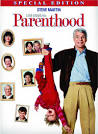
4) Just do it. I’m grateful for the discipline developed over decades in the workplace. You suit up and show up, even when you’d rather be somewhere else. “My whole life is have to,” Steve Martin declares in Parenthood, a spot-on film I saw the day I learned I was pregnant with my older son.Parenthood

I don’t want to walk my dogs in the minus-zero wind-chill every morning. I don’t always want to visit my mother in the memory-care facility, or shop for groceries, or sort the boxes taking up space in our one-car garage. But I do it, because I have to. And because action is always preferable to riding the merry-go-round inside my head.

5) Write it down. On my best days, I see that obligation gives my life purpose. People count on me. I have a good job and a strong network of friends. I’ve built a family to care for and about.

On the harder days — which was most of sub-zero February — I start the day with a cup of coffee and a journal. Thirty minutes later, the world looks right again.

Then I haul out the long, black down coat and the boots that hold me upright on the ice — and I get on with it, whatever it is, because having places to go and people to see brings me one step closer to spring and beats the alternative of wallowing in the winter blues.

Healthy, holistic success: Be curious, be mindful, be brave

The wheel of life — an exercise designed to help people find true balance among all aspects of their lives — typically has eight areas of focus, from social life to personal growth to career.

Amy Machacek, 46, a high-energy yoga instructor turned entrepreneur, rocked the wheel a bit for her personal and corporate training programs. Her nine categories include “home/environment,” “fun and recreation,” “significant other/romance” and “friends.”Amy Etzell

As the owner of two Northfield, Minnesota–based businesses — HeartWork Yoga and LIFE.REVAMP — Machacek has relied equally on her instincts, her network (including her entrepreneurial father) and her passion for keeping up with industry trends. In addition to her E-RYT 200-hour yoga certification, she has trained in nutrition, meditation and life coaching. She’s also studied with Jack Canfield, co-creator of the Chicken Soup for the Soul series and author of The Success Principles.

Machacek’s liberal arts education at the University of St. Thomas taught her to “be curious” — one of her favorite sayings — and to embrace lifelong learning. “It’s why I have one daughter there now and another starting in the fall,” she says.

On February 6, Machacek will headline UST’s prestigious First Friday Speaker Series in downtown Minneapolis, offering attendees a five-step plan for gaining more energy in all areas of their lives.

On stress reduction: Yoga doesn’t decrease your stress. It doesn’t make your boss nicer or your kids listen to you. But it changes your perception of that stress. I’m helping people process or manage this stuff in a way that is less taxing.”

On the character of an entrepreneur: “I’m not sure whether it takes courage or stupidity! My partner, Dave Shonka, works for a traditional company. He likes the security, but he doesn’t have the freedom. I like the freedom, and I’m OK without having security. Neither is right or wrong, but your choice should match your personality.

“I’m creative, and I really need a creative outlet. Plus, I watched my family do this when I was growing up. It seemed normal to me to put in long hours when you’re building the business and have some flexibility once the business is doing well.”

On growing a business: “If I stay just one step ahead of my growth, I can expand thoughtfully and not have to take on debt. HeartWork initially was yoga classes only, in a small town with 11 other places that offer yoga. We weren’t going to be viable forever if we just did yoga classes.Life Revamp

“Then I created the yoga teacher training school and added personal training to the studio. LIFE.REVAMP was next. I was working on all of my certifications, and I recognized that if I combined nutrition, life coaching and yoga, I could help people gain forward momentum.

“I brought in barre tone classes when I saw them on the coasts. People have short attention spans. If you’re not adding or changing, you’re dying.”

On how fitness fuels success: “Everyone in LIFE.REVAMP is working on their own things, but it all starts with fitness and nutrition. The initial call may come because of career issues, but first people need more energy and clarity about where they are body-wise.

“One of my clients has 750 employees, and his company bought another company this fall. He told me how great he felt standing in front of his expanded team. ‘I knew what I was talking about,’ he told me. ‘I was standing up straight.’ Another middle-aged client who has shed some weight says she’s now ready to focus on being an athlete again.”

On the tyranny of technology: “We have to make some rules for ourselves. At the end of the workday, Ward Cleaver could close his ledger book, turn off the light and go home. And nothing followed him.

“Now, that doesn’t happen — but we don’t have to allow technology into every aspect of our lives. Otherwise, it’s like the spoiled child who demands our attention all the time. We’re losing out on our relationships because of it.”

On positive parenting: “I don’t want to hover over my kids and make every decision for them. I help them slowly make more decisions as they get older, so they’re ready when they go to college. Nowadays, parenting seems to be defined as keeping kids in a sweet, tight grip. My job as a mom is to love my kids and prepare to let them go.”

On beauty and aging: Marcia Wellstone [Markuson] was a classmate of mine at Northfield High. When she died in October 2002, I was 33 years old. I remember it vividly. We’d had a class reunion that summer, and she was this shiny person. She had gotten remarried, she loved her stepkids. I was standing in my bedroom when I heard the news and thought: ‘Who am I to complain about getting older, about being alive?’ Marcia didn’t get this opportunity, and I did.

“I describe it now as my life before that moment and my life after. Honestly, not for one day since then have I complained about aging. I see aging as a gift, and I believe that to the bottom of who I am.”

On the rewards of growing older: “I love the wisdom and experiences that come with age. All the hard stuff and good stuff we’ve been through makes us who we are today.”

On staying curious: “I tell people in my classes every day: ‘Be curious. Don’t act like you know everything.’ Our lives get smaller as we grow older. We don’t get down on the floor. We don’t reach our arms as high. We don’t move as fast, we don’t try new things — but we need to keep reaching in life.”