Unconscious bias in a life of white privilege

Dear White People: The Chicago police have shot another black man — and killed a black mother about my age. Pre-Christmas protests at the Mall of America and the Twin Cities airport were staged to remind me — us — of the unearned privileges we enjoy daily.Dear White People

Since the Black Lives Matter movement has come into public consciousness, I have felt blamed but largely blameless as a liberal white American. I believe in social equality. I strive to treat all people with kindness and compassion, whatever their race or ethnicity. I recognized the significance of President Obama’s swift rise to power.

I even thought my critique of him as an “acceptable black” — a cool, well-spoken and sophisticated man whom white America could embrace in a way we never would have the more militant Rev. Jesse Jackson — showed a level of cultural awareness.

It’s not enough. My cries of innocence, my position on the sidelines, my watching of the Black Lives Matter protests from the safe distance of my laptop, amount to nothing more than good intentions. In fact, they make me part of the problem.

I began to recognize my complicity in our country’s stratified social code even before African American philosopher George Yancy challenged me and all white people in a New York Times blog post on Christmas Eve to “accept the racism within yourself, accept all of the truth about what it means for you to be white in a society that was created for you.”

As a white American — a person of inherent privilege — I am being called upon to wake up, stand up and speak up at an age when I thought I’d earned the relative comfort for which I’ve worked so hard.

Unquestioned bias

I am a middle-aged Minnesotan, born and bred, who grew up in a small community with people who looked like me. With all white people.

I’m neither proud nor ashamed of that fact. It simply is. What matters, I am coming to see, is what I do with it.

My awareness of my white privilege has come haltingly, unbidden, in baby steps over the course of years. It may have begun during my years living in liberal, largely white Northfield, Minnesota. A black woman from one of the few African American families in town failed to show up at my house one night to work on a volunteer project for the public schools.

I was polite when she told me later that she’d gotten lost and that “a black person can’t be seen wandering aimlessly through this community.” But internally I scoffed. I judged her to be making excuses. I told myself that no one in that two-college town would regard a black person with such suspicion. Except I did.

The window to my awareness cracked open another inch when someone pointed out the assumptions I took for granted in my middle-class upbringing:

  • Of course I would go to college.
  • Of course Dad would pay for it.
  • Of course I would delay pregnancy till I was married through my access to high-quality health care and reliable birth control.
  • Of course, given the (white) feminist movement of the times, I would pursue not just a job but a career.

Each of those decisions, those options — those privileges — has kept me rooted in the middle class. That I did nothing to earn my station in life, and that I saw a safe neighborhood, good schools and economic opportunity not as a birthright but as the norm, did not occur to me till I was well into adulthood.

The clincher came weeks before Christmas, when I invited a young man onto my porch and then into my living room. He was looking for his smartphone in the snow by my house on a Sunday morning wearing only a lightweight jacket and shorts. He’d been drunk the night before — he conceded it, and I could smell it — but he was driving an SUV (a sure clue to social class), and he looked about the same age as my college junior.

I told myself I wanted to be a good neighbor. But I recognized the reality of my bias as the young man drove away. Would I have been so welcoming or felt so safe had his skin been black or brown? No need to pose it as a question. I know the answer.

Listen and learn

By 2019 the majority of children in the United States will be people of color. When my older son, a fair-skinned blond, turns 60 in 2050, the country will have no ethnic majority.

I learned those facts recently at a managers’ forum about unconscious bias sponsored by the University of St. Thomas, where I work. Our discussion leader, Dr. Artika Tyner, asked the audience of primarily white people to examine two questions:Artika Tyner_small

  • What are the biases I grew up with, that I hold to be true?
  • What efforts have I made to make awareness of my privilege a “lived reality”?

Dr. Tyner is an attorney, a professor, an author and the university’s interim chief diversity officer. She also is African American. Among the concepts she discussed that day — most of them new to me, a college graduate who’s worked in higher education for 13 years — was the notion of cultural taxation.

The academic term was coined in 1994 on behalf of non-white (or non-male or non-straight) professors. Dr Tyner defined it as the “under-represented team member who assumes additional responsibility for cultural awareness.”

Instead of us whites looking to her to tell us how to embrace or understand diversity, we could just start doing it. Like so:

  • “Begin with your humanity,” she said. “Say hello” to a person who doesn’t look like you.
  • Practice “radical hospitality” — making efforts to welcome and interact with people from different backgrounds.
  • Seek out readings about diversity. Dr. Tyner recommended a recent New York Times piece called “Diversity Makes You Brighter.” Or set a Google alert, she suggested, with the word “diversity” and another keyword related to your discipline or interests.
  • And this, of course: “Get out of your comfort zone.”

I’ve been practicing. Stepping onto a moderately crowded city bus recently, I deliberately sat next to a young black man and exchanged pleasantries with him as he got off at his stop.

Instead of grabbing for the usual chick lit for easy reading over Christmas break, I chose the 2010 memoir by National Public Radio correspondent Michele Norris, The Grace of Silence. Norris, whose parents integrated a neighborhood in south Minneapolis after World War II, leads “The Race Card Project” for NPR.

I Googled “yoga and diversity” and came upon articles about yoga and skin color, body shape and sexual identity. I noticed this morning, finally, that I rarely see people of color at my favorite yoga studio.

None of these is a particularly courageous step, but it’s a start. “Be willing to be vulnerable,” Dr. Tyner said, “and to give people the benefit of the doubt.” One person, one interaction, one observation at a time.
Flipping the bird at Thanksgiving

It’s not that I’m an ingrate or fail to recognize the many unearned blessings in my life.

I simply want no part of Thanksgiving.

I don’t need the 4,500 calories that the Average American consumes in the carbohydrate- and gravy-laden meal served on the fourth Thursday of each November.

I don’t want to expend the time or money shopping for food, and I’m even less interested in spending days preparing it.

Instead, after having to cancel a visit to see my sister in Colorado because of work, I am spending Thanksgiving the way I wish I spent more weekends — with no plans at all.Flipped Bird

Turkey rebellion

Here are five reasons why sitting out this most overrated of holidays feels like the right thing to do this year.

No. 1: The food is predictable. Dry turkey, drier stuffing. The only color on the traditional Thanksgiving table comes from whatever centerpiece the hostess has assembled. Everything else is shades of brown and tan, like those suburban subdivisions I used to pass on my commute to work.

And what guru decreed that the traditions can never change? Put fresh green beans instead of canned in the infamous Midwestern casserole? Heresy. Bake the sweet potatoes with soy milk and ginger instead of butter and brown sugar? I made that mistake only once with my German-Catholic in-laws.

No. 2: I hate football. It’s boring. It’s slow. Its players have inflated pocketbooks and egos. I’ve wasted way too many Thanksgiving “holidays” pretending to be interested because the noise of the television drowned out any conversation in the room.

If women spent Thanksgiving watching Norma Rae, Tootsie or name-your-favorite-Meryl-Streep-movie at full volume while men overworked themselves in overheated kitchens, Thanksgiving would have been cancelled years ago.

No. 3: Thanksgiving is a sexist holiday. (See above.) Dad’s job — the role of any father from a bygone era — was to sharpen the knife, carve the bird and later ask from the easy chair when pie would be served. Mom’s job was everything else.

Even in my own nuclear family, with sons raised to be progressive, the men turn to me (the one who works full time and is in graduate school) with the wide-eyed question: “So, what are we doing this year?”

No. 4: I feel too somber to host or attend a meal. My mother died in September, and I think the best way to honor the woman who introduced me to feminism and the necessity of breaking social codes is to avoid repeating the obligation she dreaded every year.

In fact, Thanksgiving hasn’t been the same since my husband’s sister and children’s godmother, Peggy Studer, died in January 2011. Peggy was the family’s center. She held us together. Sure, she cooked too many potatoes and preferred pumpkin pie to pecan, but her humor and bold bitching about the timeless traditions never failed to make them fun.

No. 5: I don’t need Thanksgiving to remind me to be grateful. A Buddhist friend introduced me to the practice of gratitude in 2010. We spent a year exchanging a gratitude list by e-mail every night.

On the inevitably difficult days — those low times that later help us recognize real joy — I can always lift my spirits by reciting or writing down a list of why I’m thankful.

For my health, my home, my husband and grown sons, my job, my friends and family, my silly dogs, my sense of purpose: I am truly grateful. And that’s enough for me to celebrate Thanksgiving this year.


‘Overserved’? Certainly, and workplace sobriety underrated

By this point in the news cycle, even the most blasé sports fan in the Upper Midwest knows that Norwood Teague has problems — legal, psychological and, likely, alcohol-abuse problems.

The former athletics director at the University of Minnesota was said to have been drunk at a president’s retreat in mid-July when he sexually harassed two senior-level women. He resigned August 7.

Amid the media firestorm that has ensued — with more women coming forward to say Teague harassed them and the U of M president backing away from his original claim that his golden boy had merely been “overserved” — one question has yet to be asked.

Was it appropriate, or advisable, for alcohol to be served at this work-related function at all?

Star Tribune columnist Patrick Reusse, a recovering alcoholic, was the first to say that Teague’s alcohol consumption at the retreat was “no excuse” for his boorish and illegal behavior. True enough. But can the U of M be held accountable? Who was minding the bar at the taxpayer-supported leadership retreat? How was Teague allowed to get this drunk?

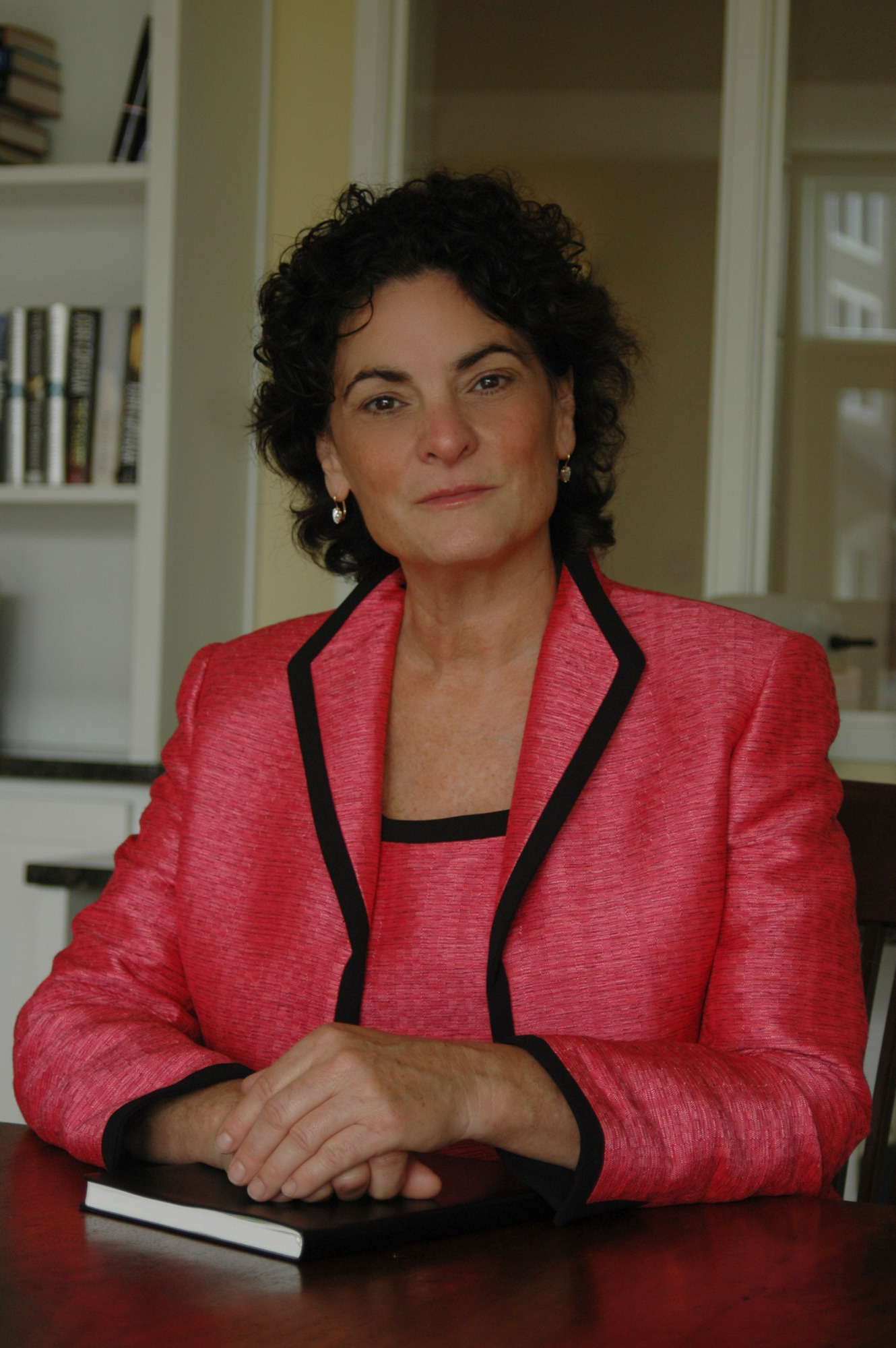
Attorney, women’s advocate and human resources consultant Gina Franklin counsels employers to “turn around” the assumption that alcohol is a bonding agent and a necessary source of creative inspiration at work.Gina_Franklin

“That’s the ‘Mad Men’ philosophy of life,” says Franklin, a senior associate at W.J. Flynn and Associates in Eagan, Minnesota. “We think it’s seriously dated.”

Franklin, like me, is an old-school feminist who would never blame women for harassment or assault. But we share the perhaps prudish and politically incorrect opinion that sobriety in professional settings is a protective tool.

As an HR coach, what would you say to Norwood Teague?

Now that he’s resigned, he needs to think about: “How do I address this so I can be employed again?” If I were his coach, I would say: “Go get an alcohol assessment and really learn if there is abuse or addiction. Put together a plan for how you’re going to better understand this. Have this be part of a life-changing event.” I think an employer would give some credit to the proactive nature of that.

Employers that cater to younger workers, especially, promote alcohol at workplace functions or after long days at the office as a well-deserved stress reliever.

If our clients have an occasion to provide alcohol at an event, we work with them not just around policy but the whole culture of consumption:

  • You can serve alcohol in limited amounts, such as two drink tickets per person.
  • Remind everybody of the organization’s harassment policies and code of conduct.
  • Provide food at the event. Stop any access to alcohol after dinner. Instead have a speaker or entertainment — and then provide cab rides home.Drinking at work

What role does alcohol play in sexual harassment?

Alcohol is a factor in the majority of these crimes. It goes almost hand in hand. Alcohol removes inhibitions, and it compromises judgment.

While I was in law school in the early 1980s, I had a public debate with my law professor: Is alcohol a mitigating factor when sentencing a sex crime? My response was: “No, it’s not a mitigating factor. The individual made a choice to consume to excess and his judgment was impaired.” I was unequivocal about it. If you use alcohol as a mitigation in sex crimes, then you’re always going to mitigate. Always.

Your daughters are 18 and 21. How do you caution these young women about mixing alcohol and work, without missing out on the networking and relationship-building that often happens at work-related events?

I have to think about that as a woman every day in my world, and both my daughters and my stepdaughters, who range from 28 to 38, ask me how I do it. I talk about compromise. If consumption of alcohol would compromise your thinking and decision-making and put you at risk, that’s not a good plan. There are men who would take advantage of that.

Since I quit drinking five years ago, I’ve noticed how often workplace socializing is tied to alcohol — and I’m increasingly ill at ease with the assumption that everybody drinks. How can employers support people who don’t drink, whether they’re recovering alcoholics or abstain for other reasons?

We advise employers to have non-alcoholic choices for employees, just as you’d have non-meat choices for meals. If I were the HR person, I would meet with any employee whom I knew was in recovery and develop strategies for how to navigate those events. I’d give that person advice and support.

The U of M incident — or multiple incidents — has helped many of us recognize the prevalence of sexual harassment, despite women’s gains in all sectors of society. Or is harassment tied more broadly to the prevalence of rape and domestic violence?

Sexual harassment was not a subject when I started in the workplace. I’m 62. I’m literally a grandmother in terms of the women’s movement and the subject of the relationship between the sexes. I founded a rape-crisis center in the 1970s as an undergraduate in Nebraska. It still serves victims of sexual assault, domestic abuse and child abuse.

For years now women have been coming forward to say: “No, we’re not going to tolerate sexual assault.” Prevention of sexual harassment — and recognition of harassment — evolved from that.