Leading with my left: an exercise in humility

Wisdom can come from unlikely places. The older I get, the more I recognize that as a piece of wisdom in and of itself.

Lately my learnings have come from a recurring shoulder injury that has me working to correct a weakness throughout the left side of my body. When I neglect my physical therapy exercises or allow ego to overtake common sense in my workouts, then the injury reasserts itself.

The discomfort has inspired me to break the habit of physically leading with — or favoring — my right side.

Quickly, without thinking, clasp your hands. If you are right handed, as I am, your right hand will fold over your left, with the right thumb on top. If you’re left handed, most likely the opposite will be true.

Back in my days as a fitness instructor, I would talk with my students about our tendency to lead with our dominant side whenever we are walking, weight lifting or simply crossing our arms or legs. That practice builds strength in one side of our bodies — and perpetuates weakness in the other.

Like any unconscious or unhealthy habit, favoring my right side has caught up with me in middle age. And so, as I work to reverse the practice, I’ve been pondering which habits of thinking — assumptions, judgments and beliefs — are similarly automatic.

Leading with my left

Regrets are all too common at this stage of middle age — the point at which we have “more yesterdays than tomorrows,” as Bill Clinton said at the Democratic National Convention earlier this week.No Regrets

  • One friend ruminates about why he has married two different women who have never measured up to a passionate love interest of his youth.
  • Many women regret the choices inherent in combining children and a career.
  • I’ve had to reconcile that I am too old to become a lawyer or a political reporter, knowing that I would have done well at either profession.

Leading with my left — developing new patterns of thinking — means I don’t allow myself to get stuck in the rut of regrets.

Leading with my left means I suppress my irritation when a friend who has depression doesn’t return my voicemail or text messages. Instead I talk to a man who has his depressive tendencies under control, and he suggests some kindhearted questions I might pose to her.

Leading with my left means trusting my gut — and my outrage — when a financial adviser with whom I had intended to invest my retirement savings tells me that my 26-year-old son lacks a “real job.” My son, a college graduate, works full time. He has health insurance and a 401(k) plan. He recently got promoted. He works hard at his craft.

But his job is at a brewery, and that apparently lacks cachet and aspiration for a woman who makes her living among society’s fortunate few. Her comment gnaws at me. “Is it important that your financial adviser shares your values?” I finally ask two friends.

Leading with my left means recognizing that I already know the answer. “All work is honorable,” I told my boys when they were young. I am proud of my son, and that’s the only message he will hear from me.

The underside of strength

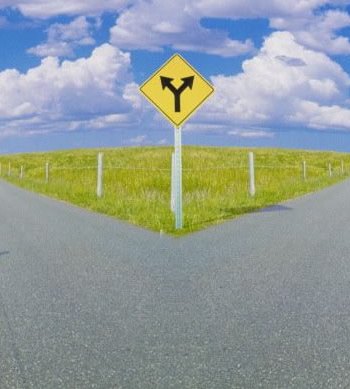
An industrial psychologist introduced me to the notion of a “shadow side” of our perceived strengths. In yoga, we call it the marriage of opposites: yin and yang. If one part of us dominates — whether it’s a character trait or one side of our body — we will eventually fall out of balance.

I’m an ENTJ in the Myers-Briggs Type Indicator (MBTI), a decisive personality type that gets a lot done, but sometimes at the expense of others. In the two years since I stepped away from management, I have learned to exert influence rather than exercise authority and to value collaboration more than control.

Leading with my left at work is not always easy, but the softening seems particularly suited to middle age. “As my energy started to change, the energy that I got back from other people started to change,” said former police officer and co-founder of the Center for Mindfulness and Justice Cheri Maples in a recent episode of On Being.

In the case of my 91-year-old father, leading with my left has meant becoming a more present daughter in the time that he has left. For years my dad and I have kept a respectful distance, despite our similar strengths and countervailing weaknesses:

  • A strong moral code that constructs rigid definitions of right and wrong.
  • A love of fitness and exercise that judges weight gain as lack of discipline.
  • A sense of duty and responsibility that leads us to rely on work for self-esteem and recognition.

I spent the first afternoon of my summer vacation helping Dad sort through a lifetime of his beloved books. As he and my stepmother prepared to leave their house for the security and convenience of a seniors’ apartment, I stepped forward for the one way I could help.

An English major in college, I love libraries and bookstores. I don’t own an e-reader, and it has never occurred to me to buy one. Sorting through and boxing up my father’s books allowed me insight into his thinking and character in a way that his stoic, taciturn nature would not allow.

Leading with my left, in the twilight of Dad’s life, means letting go: of the blame for circumstances that were not his fault, of the insecurity that said he never really loved me. Leading with my left means being, today, the daughter I wish I had been for decades — forgiving him, forgiving myself, for being human.


Becoming a non-drinker in a drinking world

Imagine that you’re a successful, middle-aged career person who has contracted late-onset diabetes.

Your new dietary regimen requires you to quit eating cake, formerly your favorite way to unwind after a long day at the office (with more frequent indulgences on weekends and vacations). You work hard to give up cake. You examine your character and compulsions, and you seek support from other diabetics to rid yourself of this once-satisfying habit that you recognize now as a fatal disease.

And yet, everywhere you turn — whether at Target or Cub Foods, at company parties or celebrations — cake is available. Cake is glorified. At work, cake is pressed on you as a key to networking, getting ahead and building relationships.

Welcome to the world of the high-functioning alcoholic — or problem drinker, if you prefer. Except that cake is a vodka gimlet and a glass or three of Chardonnay. Cake is the monthly “happy hour” your employer sponsors for exempt staff, the event you skip because you don’t want to feel removed or resentful. Cake is the predictable reward and the requisite joke (“man, do I need a big piece of cake”) after a project is completed, a deadline has been met.

Every adult eats cake. It is assumed. It is a given.

Shaken and stirred

For those of us who have chosen to quit drinking at middle age — due to addiction, long-term health or other reasons — the linkage of alcohol with work success and socializing can be daunting on the bad days, and merely tiresome on the best.

How do I explain my irregular attendance at the aptly named “Afterglow,” a convivial gathering at various local watering holes after the daylong meetings of Leadership Saint Paul? Billed as “a unique opportunity to connect with other leaders,” LSP is a competitive and prestigious program sponsored  by the Saint Paul Chamber of Commerce whose value can be traced as much to informal relationships as to the formal curriculum.

Informal business relationships often are constructed around alcohol’s power as a social lubricant. I get it. I remember how freeing it used to feel to drink with colleagues after work, to laugh and share our stories. Drinking was a lot of fun until it ceased to be fun, until it became a solitary escape from the pressures and perfectionism I placed upon myself.

Now, after six hard-won years of sobriety, I have less tolerance for the artificial connections and amped-up conversations that alcohol inspires. I don’t want to be the square, sipping a club soda or Diet Coke while others soften their edges with beer and wine. Neither do I want to seem standoffish or disapproving. So, with rare exception, I stay away from alcohol-infused business functions — or I make a token appearance and slip out.

Sometimes I contemplate a return to that bubble of instant warmth where walls melt and insecurities wash away. But the temptation is a siren song. I can’t go back there. I can’t have my cake and eat it, too.

Shaken and stirred

That chemical dependency runs in my family, and that I reached a point in middle age where my drinking scared me — those facts are my story, my reality and my problem. “I understood that it was not the world’s job to understand my disease,” one of the venerable recovery books says. “Rather it was my job to . . . not drink, no matter what.”

Few ordinary abstainers or normal drinkers realize, however, how much practice and commitment sobriety really takes.

This journey began for me at age 43 and consumed a lot of mental energy throughout my 40s. Finally, at 52, I conceded. I gave up and began the halting process of starting to define myself as a nondrinker.

It’s easy enough to stay away from bars (though I miss going out to hear music), and I enter liquor stores only when I want to buy a special gift. What’s harder to avoid are reminders of drinking in a society where alcohol is both romanticized and ubiquitous.

  • On Facebook: “Opened a bottle of wine and a can of Pringles,” writes a former colleague about her Memorial Day weekend at the lake. “If I am not careful they will both be gone in one sitting. Loving the day at the cabin!”
  • At my yoga studio: Two of my teachers at CorePower Yoga are recovering alcoholics. All of my instructors tout the physical and emotional benefits of yoga. Yet, no one sees the contradiction in the “Yoga & Wine” events that the studio markets to women, especially, as a way to pamper themselves and get away from it all. I thought yoga was about the discipline of being present.
  • In the media: The Star Tribune recently featured a collaboration between a yoga studio and a craft brewery with a headline claiming that “studies” confirm “exercise and drinking go together.” The journalist quoted no fitness experts and cited no academic evidence. Instead, she interviewed the young participants whose bodies still can take abuse and dressed it up as medical research. “Research suggests,” she wrote (emphasis mine), “that both activities can give people a feel-good buzz that gets stronger when they do them in succession.” Like hitting your head with a hammer after sex?

A better path

I recognized the weight of navigating a booze-soaked culture when I encountered an alcohol-free bar at the recent Great River Gathering in downtown St. Paul and breathed a sigh of joy and pure relief. “To promote a more inclusive environment this year, we’ve established a dry bar,” the program read. “No alcohol will be available at this location. Soda, coffee, and water will be available for purchase.”

Sold! How hard was that? Did my ability to get a club soda without staring at glistening bottles of wine impede the rights of drinkers lined up at the three other bars?

I’m not pushing for Prohibition. I don’t need you not to drink. In fact, I still serve beer and wine to guests in my home. I am simply asking you to acknowledge that not drinking, for me, takes effort — that a work-sanctioned “happy hour” is work.

So, join me in a soft drink, as my friend and colleague did at a financial-planning event for women, generously claiming that she was counting calories. Understand why I leave the party early or sometimes don’t show up at all.

Please don’t pity me. I’m not suffering. “I want to see life at its own speed,” NBA great Bill Russell once said about his refusal to use drugs. It’s an accurate explanation for my late-in-life sobriety; and life has never had so much clarity, or felt so good.

Note: Journalist and author Andy Steiner published a follow-up story in MinnPost about this blog post on June 15, 2016.

Women’s worldview at work shifts with age

Maybe it’s my status as the oldest person in my graduate school class — not by years, mind you, but by decades.

Maybe it was my conscious career choice at 56 to walk away from a well-compensated director-level position rather than risk a late-50s layoff in that organization’s uncertain, chaotic culture.

My current job provides a lower salary but far less stress — and that has allowed me to branch out and explore at a time of life when I finally have the freedom to do so.Worldview

Research and anecdotal evidence show that some professional women are leaving the work force deep into middle age for reasons that include disillusionment, early retirement and elder-care duties. Other career-oriented women in their 50s and early 60s are scaling back their careers, as I did, shedding their intense, single-minded focus as they would a wool blazer on a warm spring day.

  • “I find myself less ambitious by workplace standards — wanting to climb the corporate ladder — and more interested in doing work that is truly meaningful to me,” says a journalist, 64, whose children are older than some of her colleagues.
  • “I have definitely shifted gears in the last seven or eight years,” says a nonprofit manager, 55, who would like to write. “Now that my sons are mostly off on their own, I don’t feel the pressure to provide for them like I used to, which meant going for the more demanding, higher accountability positions. I like having time to do other things I enjoy.”
  • “Age both gives and limits options,” says a project manager who just turned 59. “As an empty nester whose step-kids have graduated from college and are married, I find that my husband’s and my significant expenses are behind us. There’s some freedom in that. At the same time, ageism is real. I would not want to be looking for a new job at my age.”

Do you consciously try to look younger?

My hair is finally turning gray, and I’m not sure I like either the expense or the ethic of maintaining “artificial auburn.”

Most respondents told me they do color their hair in order to appear younger at work. Others emphasized the importance of maintaining a wardrobe that defies stereotypes about their age. “I don’t wear things like flower-print shirts or tops with cats,” one woman says dryly.

“Looking younger is a tricky proposition, especially with women,” explains my 62-year-old neighbor, a well-coiffed Frenchwoman whose accent alone is elegant. “I dress to reflect that I have style but that I am not interested in looking 30.”

“I do worry about my looks,” says a friend and colleague, 57. “I feel young, but when I catch myself in the mirror on a day when I’m tired, I see an older woman, and I freak out. I fear others are judging me as not being in the flow of what is happening now.”

Seeking the perspectives of younger people helps some Baby Boomers stay current.

“I try to really listen to what younger generations do, say, think,” says a 55-year-old IT manager who oversees a young staff. “I like to know what they do for fun, how they’ve solved a problem, what they’re worried about. I think that keeps my thinking young.”

“Since I am somewhat slim and flat-chested, I don’t feel as if I am trying hard to appear young,” says a Chicago librarian, 54. “But because I have three youngish children, I have the vernacular of the young. That, more than my dressing, I think, makes me appear youthful.”

One 57-year-old entrepreneur maintains her vibrancy with daily meditation, healthful food and exercise. “I walk in a strong and confident manner,” she says.

Personally, I consider exercise the fountain of youth, and I am proud at 58 of being among the fittest people in my office.

How does aging benefit your career?

I inherited my work ethic — and perfectionism and sense of duty — from my father, a retired attorney and state senator who is now a relatively robust 90. I remember my dad’s exasperation in his 50s that his mind was less sharp, just as my own mental lapses now embarrass me.

Here is the key, the upside, the benefit to growing older: His younger law partners were turning to him for wisdom.

In a youth-obsessed culture, it is tempting to see middle age as an inevitably downhill slide, to experience it as a period of retrenchment and regret rather than of passion and possibilities. Regrets weigh on me in graduate school: Why didn’t I do this when I was younger?

Then I notice how I am relishing the endeavor — my desire to dig in and learn. My 30-something classmates with corporate jobs and small children are in school to get it done. The degree is a steppingstone in their careers.

“‘A’ is for anxiety, ‘B’ is for balance,’” a classmate told me recently, observing my meticulous note-taking and obvious efforts to earn the highest grade. A manager at 3M and the mother of a 2-year-old girl, she barrels through two classes a semester and contents herself with B’s.Fork in the Road

I want a more holistic experience, a theme I hear repeatedly in midlife women’s approach to life and work.

  • “I feel like I have a lot of information and expertise to share regarding aging, which is part of my career, and I am living the journey,” says an elder-care expert, 63, who is easing toward retirement by working part time.
  • “Work has become much less important in my life as I age, while at the same time, I moved into a position where that is OK,” says a former journalist, 56, who now works in communications for county government. “I am bringing skills to my current position that I gathered throughout my career, which are appreciated by those in my organization.”
  • “The 50s are a great age of coming into one’s own,” says an industrial psychologist who earned her master’s and Ph.D. while in her 20s. “I’m hitting my stride in so many ways. I’m doing work now that I could not have done even five years ago as a result of my cumulative knowledge, experience and expertise.”

Do you reveal your age at work?

Tellingly, out of 10 women who responded to my questions, the psychologist is the only one who willingly volunteers her age to colleagues and clients; unlike the others, she is self-employed and in a field where years of experience is highly valued.

Most said they wouldn’t lie if asked outright, but they don’t advertise their ages either. Being seen as overqualified or out of step with technology or “set in your ways,” as one woman put it, is too great a risk.

Then there’s the question of whether employers will invest in older workers: “Just recently I realized that there was probably no opportunity for a raise or promotion because they figure, accurately, that I’m unlikely to go to another job at this stage of my life,” says an academic editor, 62.

I consciously took a risk that my new employer would invest in me when I left the director-level job to return to school, launch a blog and care for my mother as she was dying. The pay cut was a blow to both my pocketbook and ego; the promise of my position growing into something larger is still a dream.

But here I am. I made the leap, and all I can do is move forward, keep learning, be present — and be grateful for knowing courageous women who refuse to let society define what “prime of life” means.