Category Archives: Life Purpose

Stay Cool, You Don’t Need Air-Conditioning

At night during the summer, my husband sets up a big metal box fan — yellow, decades old, with three speeds powered by three dusty blades — and blows it out the west-facing window in his upstairs den. Then he sucks in the cooler evening air from outdoors by closing every window in the house except three in the bedrooms and one in the living room (to please the dog who commandeers the couch).

This is our old-fashioned, climate-friendly version of air-conditioning, along with ceiling fans in the kitchen, the main bedroom and my home office, a north-facing spare bedroom where I sleep on hot nights because of the bed’s access to the open window. When we first moved to this old house in 2013, we occasionally used a portable air-conditioning unit in the front bedroom, but it was noisy and blocked the light during the day and kept waking me at night every time it clunked off and on. So, we hauled the dripping unit out to the boulevard, where someone quickly claimed it.

For them it was a find, like the perfectly good snow shovels I lugged home from an alley last spring. For me — raised in a household with open windows and floor fans, back when air-conditioning was a nonessential for the middle class — the portable unit symbolized the hedonistic tendencies of our self-absorbed culture. Doing without it was one small way to side with Mother Nature in a battle she inevitably will win.

Billboard at the corner of Grand and Fairview avenues in St. Paul

Where comfort counts

Air-conditioning is a luxury that the vast majority of Americans now judge to be a necessity, and far more of us, especially in Minnesota, could live without it. As a person who tolerates the heat fairly well, in part because I have trained myself to do it, I would welcome not having to shiver in every bus, grocery store, movie theater and office building — enduring this artificial, overcooled air because some HVAC company tells me it is civilized. A symbol of prosperity and progress.

That progress, unfortunately, is costing the planet — fueling the very climate crisis from which air-conditioning helps us hide.

Ninety percent of households in the United States have air-conditioning, compared with 60 percent in China, 16 percent in Mexico and 5 percent in India; versions of those data, from 2016, were cited again this July in news alerts about the record-breaking heat worldwide.

Indeed, air conditioning represents one of the most insidious challenges of climate change, and one of the most difficult technological problems to fix. The more the world warms, the more we’ll need cooling — not merely for comfort, but for health and survival in large parts of the world.

James Temple, MIT Technology Review, September 1, 2020

Summer in the city

On a cool Sunday afternoon, a comfortable 74 degrees, it’s easy to forget how daunting July 2023 has been. More than 90 million Americans were under heat alerts earlier this week, according to PBS NewsHour. The month itself was the hottest on human record.

I read about farmers trying to keep their animals cool in rural Minnesota; about a man who died at a bus stop in Phoenix, Arizona, where temperatures climbed to over 110 degrees for 27 days in a row; about wildfires blazing in Mediterranean countries. Closer to home, I smelled acrid air in my own yard from Canadian wildfires hundreds of miles north and saw more watering bags going around the thin-trunked saplings that the city planted on boulevards to replace sturdier trees lost to Emerald Ash Borer.

But still, I went outside during our recent record heat wave. I like the heat. I’m a lifelong Minnesotan. We wait for months, from late October until mid-April, for warm weather. Even on the afternoon when it was 96 degrees, with an excessive heat warning, I stood by my decision not to cave on air-conditioning, to cave in to the popular notion that we couldn’t live without it.

Front-page news in the Minneapolis-based Star Tribune on July 28, 2023

Years earlier, when we were selling the family home in Northfield, I wouldn’t budge when the Realtor said the house would move more quickly — and fetch a higher price — if we installed central air. My family had lived comfortably in the house for 20 years. “There’s always one hot week in July when we hang out in the basement,” I told her. “Otherwise, we have plenty of cross breezes and ceiling fans. Find buyers who are green.”

And that’s the point. Minnesotans readily adapt to changing seasons. We think nothing of living differently in the winter: reading more, wearing layers of clothing, making stews and soups, staying home at night with Netflix. Similarly, we can find novel and healthful ways to stay cool, if we resist or cannot afford the immediate relief of air conditioning.

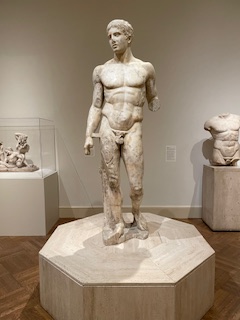
I sent my husband, who is less heat-tolerant than I am, to see Oppenheimer one evening this past week at our historic local movie theater. The next day, he wandered through the cool galleries at the Minneapolis Institute of Art.

There is a long history of industry-funded “deflection campaigns” aimed to divert attention from big polluters and place the burden on individuals.

Michael E. Mann, Time magazine, September 12, 2019

I chose to embrace the weather, as I do during the winter: biking to my errands with an extra side of water and sunscreen; reading on the porch at night and watching vehicles sealed up like tombs against the heat. Moving more slowly, giving myself permission to push away from the computer and relax, to call a friend. Like a snow day in July.

This heat wave, now over, was of our own making: our driving, our air-conditioning, our consumerism, our conveniences. Personal habit change won’t solve the climate crisis, it is said. But right here, today, surveying what little I can control: I see it as the only choice we have.

Take a Book, Share a Book: Make a world of difference

A transplant to the city after raising my sons in a small town, I measure the quality of my urban neighborhood in ways that a Zillow description likely would overlook. Shoveled sidewalks in the winter. Tended flower and vegetable gardens during the summer. Friendly people, of course, and Little Free Libraries.

The dinosaur decorations and reachable door handle make this box accessible for children.

The half-dozen free-book boxes that I encounter on my milelong walk to work speak to me of neighbors who not only like to read — a value instilled by both my parents — but who are generous and want to share ideas.

Owning and maintaining a Little Free Library is a rewarding hobby for parents who want to see others enjoy the books their children have outgrown or aging former English majors and empty nesters like me who have reached the point in life where our reading years are numbered. Why not pass along the many books I have collected over the years and ones that I will never read again?

In that spirit, here are rules — or tried-and-true suggestions — for launching your own public book box.

Rule 1: Make your book box official

“Little Free Library” has become a generic, all-inclusive term for any wooden or plastic box attached to a stand that holds giveaway books on a public sidewalk. In fact, just as we say Jell-O when referring to gelatin or Kleenex when we mean any brand of facial tissue, Little Free Library is a trademarked term, dating back to 2013. It also is a nonprofit organization and a brand that sports its own tagline: Take a Book. Share a Book.

I was put off, initially, by the expense of ordering a ready-made box or a build-your-own Little Free Library kit from the website; costs start at $260 for a box of unfinished wood and an additional $80 to $180 for the ground post. Instead my husband, a handy guy who likes to build things, constructed our book box out of salvaged lumber and a cottage window we were replacing in our house.

I didn’t realize that purchasing a structure from the Little Free Library organization would have netted a range of benefits — including access to a 13,000-person private Facebook group for Little Free Library Stewards and the option to buy deeply discounted books to keep the mix of offerings fresh and appealing. More important, the purchase would have enabled me to support a global organization, based in Hudson, Wisconsin, whose mission includes “championing diverse books,” “removing barriers to book access” and supplying stocked Little Free Library boxes to “high-need areas,” including Native communities.

Registering your homemade book box as a Little Free Library gives you a range of benefits and helps support literacy worldwide.

The board of directors models the diversity that the organization promotes and includes literacy experts, academics, and nonprofit and business leaders — book lovers, all.

Clearly, my $400 to $500 investment in official Little Free Library materials would have been money well spent. Turns out it wasn’t too late. After poking around the website, I figured out how to register my homemade box with the organization, which will put me on the Little Free Library map and get me a numbered “charter” sign for what I will soon, officially, be able to call my Little Free Library.

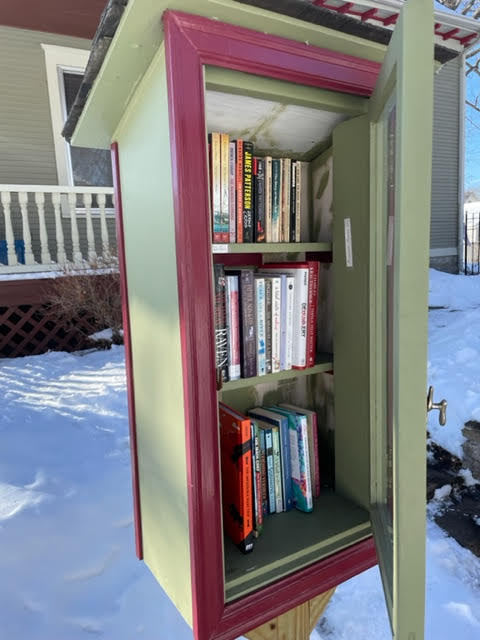
Soon to be an officially chartered Little Free Library, the book box that my husband built (painted to match our house) has become known in our neighborhood for its well-organized and diverse array of books.

Rule 2: Keep it up

I use metal bookends to keep the books upright in my library, and I straighten the books every day, sometimes rearranging them — a la the endcap displays at either end of grocery store aisles — to draw people’s attention to a good read that apparently has been overlooked. (Who wouldn’t benefit from Anne Lamott’s Plan B: Further Thoughts on Faith, for example, especially if they’ve already read Traveling Mercies?)

Because my library looks tended and cared for and ripe for exploration, it has become a true library, a neighborhood resource, a place where people stop by not only to find a good read but to donate good books: Behold the Dreamers by Imbolo Mbue and Small Great Things by Jodi Picoult were two recent contributions that I previously had enjoyed.

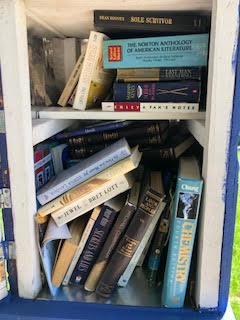
Messy shelves do not invite browsing.

I dog-walk through my neighborhood every morning, often deliberately coaxing my willful beasts down the blocks where I know Little Free Libraries stand. I’ve lost count of the number of times I have strolled past boxes that look appealing — their design mimics the architecture of the house or they’re painted a cheerful array of colors — only to find empty shelves, a disorganized mass of magazines or a shelf stocked two-deep with books so I can’t possibly see the contents while holding dog leashes.

So, I move on. Any library that is poorly stocked or is a public trash can for materials the owners otherwise would toss is not worth repeat visits.

Rule 3: Curate your selection

I have taken religious tracts (My Utmost for His Highest and Investing in God’s Business: The “How-to” of Smart Christian Giving) to book boxes at the Episcopal, Catholic and United Church of Christ churches in my neighborhood. I reluctantly recycled a Bible that was falling apart — holding off for a day to be sure it wasn’t a knee-jerk reaction to the forced churchgoing of my childhood, where I was always bored and eventually came to wonder (and then resent) why both God and the ministers were male.

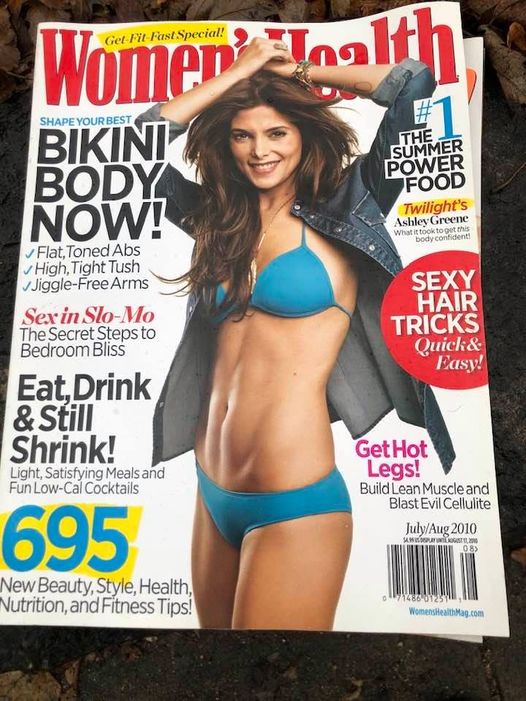
A neighbor once teased me about “censorship” after I posted on Facebook about recycling a Women’s Health magazine (“My Little Free Library, my rules”) showing an impossibly thin young woman and the headline: “Bikini Body Now.” It isn’t censorship, I shot back, it’s called curating — and, in fact, such discernment is essential to maintaining some measure of quality in the materials you showcase outside your home.

This image has an empty alt attribute; its file name is little-free-lib_1.jpg
This donation got tossed into my recycling bin. I spent too many years struggling with media-driven rules about women’s bodies to inflict this on a neighborhood girl.

I’ve rejected and recycled waterlogged novels, books with the covers held together by rubber bands, advanced uncorrected proofs, a dated state bicycle map, a Lutheran hymnal, romance novels, cookbooks from the ’90s and academic texts. A Little Free Library cannot be a dumping ground, especially if you want your neighbors to see your box as worthy of the literature and thought-provoking nonfiction — like Caste by Isabel Wilkerson, novels by Russell Banks and Jane Smiley, The Art of the Wasted Day by Patricia Hampl — that they have read and are paying forward.

A retired high school English teacher down the block makes that clear with this handwritten sign on her book box: Please respect the spirit of this Little Free Library and only put books in here that you have enjoyed and you believe someone else would, too. Do NOT put in books that you merely are trying to get rid of.

Rule 4: Commit to the investment

My younger son recently brought over a bag of books that he no longer wants; those are stacked in a corner of the living room, waiting for winter to pass and more walkers to be outside so we can refresh our book box selection. I recently brought home another copy of The Late Homecomer: A Hmong Family Memoir by Kao Kalia Yang that I grabbed from a table of free books at the university where I work.

That now sits on a kitchen shelf my husband and I have devoted to books-in-waiting for the Little Free Library. Goodwill stores have proven to be a worthwhile place to shop for $2 hardcovers and paperbacks for a buck.

Literacy is literally everywhere: This unregistered book box (not officially a Little Free Library) is at my favorite dog park, Battle Creek, in the Twin Cities.

During the pandemic, people have been raiding some of the book boxes in my neighborhood — “Little Free Library Shenanigans” was a recent headline on Nextdoor.com — and likely trying to sell the books at used bookstores. The problem is pervasive enough that it merited a story on the Little Free Library website, where Half-Price Books has declared it will never knowingly buy books filched from a free library.

Once my charter membership is official, and I become a “steward” of the Little Free Library ethos of generosity, I can order book labels or a rubber stamp that says, “Always a Gift; Never for Sale.”

That speaks to the true purpose of a public library and to the trust — in our neighbors, in all of humankind — that we Little Free Library stewards aim to instill in our communities.

The wisdom of, ‘Whatever’

My friend Connie, a retired executive, a Christian believer, a mother and grandmother, a considerate friend — a woman whose “lake cabin” is more elegant than any house I’ll ever own — is the last person I would expect to be dismissive or nonchalant.

But that is how I initially interpreted her answer when I asked how she had navigated the final year of her career, at an organization and in a job that were important to her. Whenever something bothered her, she said, when she felt slighted or overlooked, when she disagreed with a decision or a directive from her boss, she would shrug her shoulders and tell herself, Whatever.

The one-word toss-off — so unnatural to her, otherwise — gave Connie perspective, allowing her to see that she could not simultaneously step away and hang on, that she had given a year’s notice before retiring because she wanted to open the door for someone else. Someone different. Someone younger.

Whatever stays with me as I scan my sharp edges after 15 months of a frightening, constrictive pandemic. The principle applies not only to how I navigate the final years of my career but to aspects of life beyond work. Whatever is not: Fuck it! It’s not resentful or angry. It’s the Serenity Prayer, accepting all the slights and hurts, the aggravations and unexpected detours — “the things we cannot change.”

It is recognizing, as my husband says, that America already has too much contention, that I need not engage in every fight or always weigh in with my opinion. Sometimes, the silence can say more, at less cost.

Anger-infused wisdom

Twice in one day recently I had to stop myself from firing back angrily over email (both times with men, whom I rarely allow to gain the upper hand) when the responses to an innocuous request or an open dialogue came across as condescension or mansplaining. One colleague declared it was “not my first rodeo” after I asked him to take notes in a conference session I could not attend (a reasonable request, in my view, given my interest in the topic). Another man gibed that I had become a “convert to Hinduism” after I described the eight limbs of yoga in a conversation about yoga bans in public schools and pointed out to him that, however unwittingly, Alabama and other conservative southern states may grasp the holistic nature of the practice better than most Western fitness enthusiasts.

Both times I stepped back, literally walked away from the computer, and then flipped my irritation like a rock I had stumbled over in the woods. What was beneath it? What resentment would crawl out? “Whatever,” I said aloud, giving myself a pause to reconsider and later to examine how my sensitivities about other aspects of these relationships were fueling such a strong reaction.

Literary wisdom

Sometimes I wonder whether the book I happen to pick up is the one I am meant to be reading. Ideas and awakenings will grab me, ones that seem to be precisely what I need to hear at this time, in this place.

So it was with The Weekend by Charlotte Wood, an appealingly easy read, recommended by a friend, after nearly four months of textbooks in my spring semester graduate class. The story of three women in their early 70s mourning the death of a friend in their longtime foursome, the book described the softening judgments and hard realities of aging, showcasing a demographic often rendered invisible and inspiring this Boomer to highlight passages in multiple colors on her digital reader:

  • “Everybody hated old people now; it was acceptable, encouraged even, because of your paid-off mortgage and your free education and your ruination of the planet.”
  • “You had your ostensible life, going about the physical world, and then you had your other real, inner life — the realm of expression, where the important understandings, the real living, took place.”
  • “On these silent morning walks, her body was ageless, it had seen no degradation.”
  • “The moon appeared now and then between sweeping clouds, and in those moments of cold light, Wendy saw this: my life has not been what I believed it to be.”

I recommended The Weekend to my older sister, thanked my friend David for suggesting it, put it on my list for the next installation of my Annual Book Club — and then was caught short by a dismissive review on Goodreads: “the author was too bored of her own boring book to write an ending for any of the boring characters.” Whatever! The book spoke to me, and that’s what counts.

Animal wisdom

The older I get, the more I see how the wisdom of age is inspired by the wisdom of animals. It is my dogs fleeing to tight, confined spaces when an early-morning thunderstorm warns them to seek shelter. Or the cat, years ago, that pressed itself into the far corners of a closet until it could recover from a fight — the cat we rescued because the owners had declawed it but then left it outdoors to fend for itself.

Like those animals, I seek quiet as I grow older. More yoga, more reading, more breathwork, more stillness. I instinctively retreat from the strivings and drama of my youth — the aspirations at work, the loud, noisy parties, the exhilarating but exhausting relationships. Energy diminishes as we age, and I conserve mine for what matters most. For whatever appeals to me now.