Category Archives: Health and Wellness

Dry January: Don’t Confuse It with Sobriety

I had never paid attention to Dry January, now winding to a close as “Feb Fast” winds up, until a colleague reached out before the New Year to tell me he was “sober curious” and intended to stop drinking for a month. He had seen my reference in an earlier blog post to being sober and was looking for support and affirmation, which I happily provided.

That’s what those of us in the recovery community are called to do.

Since then, I’ve been awash in information about Dry January, from recipes for mocktails — my own go-to is orange juice and club soda — to guidance about how to “cut down” if you’d rather not quit outright (“Not Drunk, Not Dry,” a New York Times headline calls it) and what to tell people who wonder why you’re not drinking. Apparently “that’s my business” doesn’t suffice, especially at a work function.

“If you decide to quit alcohol for a month but still have the identity of a drinker, then any change can feel unsustainable.”

Amid all the podcasts and magazine articles and the interesting statistics — one third of adult Americans participate in “some form” of Dry January, according to Newsweek, while nearly half of young adults try to abstain — have come two serious, significant milestones:

  • The U.S. surgeon general issued a report in early January linking any use of alcohol to a greater risk for cancer. That led one wine aficionado (otherwise called an oenophile, which I won’t pretend I can pronounce) to decry the warning as a “very unnuanced, binary solution to what feels like a very nuanced problem.”
  • I celebrated 15 years of sobriety on January 10, 2025, a hard-won victory for which I am humbled and grateful — and, yes, not a little bit proud. Acknowledging and accepting myself as a problem drinker (say it, an alcoholic) remains a daily practice of outreach and introspection. And it is something entirely different than gritting your teeth and giving up alcohol for a month or a few weeks, or even a year. Trust me, I tried.

“If you decide to quit alcohol for a month but still have the identity of a ‘drinker’— physically, emotionally, mentally, spiritually and relationally — then any change can feel dissonant and unsustainable as we’re only addressing a part of the problem,” wrote psychologist Amanda Charles in an article a year ago about why Dry January often fails.

Well-intentioned, likely health-conscious people equate not drinking with sobriety when they toss around terms like “sober curious” and “sober-ish.” They’re not aiming to be sober, with the lifelong dedication that requires; they just want to feel better for a while: to clear their head, lose some weight, improve their sleep. I applaud their efforts, even as I know firsthand that some of these temporary teetotalers are deluding themselves, unwilling or unable to face a larger problem.
Photo by M.S. Meeuwesen on Unsplash

I first talked about my sobriety publicly back in 2016, when I published a blog post at six years sober. My mother, who had seen me through outpatient treatment at Hazelden in 2010, had died the year before, and though I shared the post on Facebook, I didn’t point other family members to it. If any of them read it, they never said anything.

This year, I wanted to be different. More open, less ashamed.

I texted my three surviving siblings on the morning of my 15th year anniversary (the fourth sibling, my older brother, died of acute cocaine toxicity back in 1988, a tragedy that underscores the importance of my sobriety). My younger brother and I exchanged texts about the distinction between being dry — or clean, the more common term for drug users who are abstaining — and sober. “Clean is not using,” he said, repeating what an acquaintance of his younger son had told him. “Sober is more about making good decisions, if I recall.”

“Yes,” I replied, “and following the steps” — meaning the 12 Steps of Alcoholics Anonymous, a worldwide society that is becoming less secretive in a digital, more enlightened age. “The steps,” I told him, “are about owning our own shit, helping others and recognizing what we can and can’t control.”

If you can’t control or stop your drinking, you will have to set aside your ego and ask for help.

My shorthand, somewhat crude description speaks to a more eloquent and essential truth: If you can’t control or stop your drinking, which I could not — despite all the self-discipline in other areas of my life — you will have to set aside your ego and ask for help. It’s both the hardest and the best decision I’ve ever made.

That is where AA comes into play. The 12 Steps require chronic alcohol abusers to examine why they drank, whom their drinking harmed (for years, I fooled myself that my consumption hurt only me, even though I didn’t get sober until my sons were 15 and 18) and how they will live a moral, more honest life. My favorite is Step 10 — “We continued to take personal inventory and when we were wrong promptly admitted it” — because it helps me try to be a better person every day.
Photo by Fabian Moller on Unsplash

When my older sister praised me for helping others, I explained that unity, service and recovery are the three pillars of AA: “The first word in the first step is ‘we.’ No one gets sober alone,” I said, “or at least I couldn’t.”

Rather than viewing that as weakness, we have to learn to see humility as a necessary strength. My sponsor put it this way during one of our weekly phone calls: “If we could have put the pause on our drinking, we would have,” she said. “The great, great joy is in the connections we are now able to make. We learn how to be vulnerable and share our beautiful brokenness.”

The gift of being sober is so much more than putting down the bottle, and it’s something that Dry January alone will never teach you.

Health Habits for Women to Practice as We Age

I was born with good health and have been blessed to have medical insurance and routine dental care throughout my life. Dad modeled daily exercise, Mom pushed us kids outside to play (likely because she craved peace and quiet), and both parents ensured we had bicycles and insisted we use them.

I thank them to this day that I still love to ride my bikes.

The habits I have built and the health I have sustained have served me well into my 60s. But it isn’t the decades-long practices — the balanced diet, the use of movement for both physical and emotional wellbeing — that are consuming me these days.

I am thinking instead about the physical changes that come with age, the need to work on bone density and balance, to guard my skin against the sun, to manage unexplained flareups in my hips, hands and feet. “Aging is not for the faint of heart,” my father used to say. (Actually, he said aging is not for “sissies,” but that word feels wrong today.)

So, at a time of life that requires equal doses of courage and self-confidence — and a commitment to spend more time on daily health habits — here are the practices I am working to develop.

ProTip #1: Hug your muscles to your bones.

I would hear this instruction in yoga classes, but I never quite grasped it till I was diagnosed with osteoporosis in November 2022, a blow that tossed me into old age without warning. Indeed, the bone-thinning disease that tends to strike women after menopause elicits sobering statistics:

  • Half of all women over 50 will break a bone because of osteoporosis, a “silent disease” that often is diagnosed only after a hip, wrist or other bone has broken.
  • Of the 10 million Americans who live with osteoporosis, 80% are women.
  • Caucasian and Asian American women are four times more likely to experience thinning bones than African American women and Latinas.

You can take medication for osteoporosis, and deal with the risks and side effects, but women can fight back in natural ways as well: eating more protein, taking Vitamin D3 supplements, lifting weights. In addition, I recommend a 12-pose yoga series designed by Dr. Loren Fishman and brought to light by New York Times writer Jane Brody in 2015.

Among the “side effects” of this prescription for osteoporosis, said Fishman, a physiatrist, in Brody’s “Personal Health” column, are “better posture, improved balance, enhanced coordination, greater range of motion, higher strength, reduced levels of anxiety and better gait.”

Kendra Fitzgerald’s version of the 12 poses on YouTube.

My sister found varieties of the 12 poses on YouTube, and after experimenting with several, I landed on the 20- and 29-minute versions by Kendra Fitzgerald. I’ve also strengthened my practice by taking “yoga for bone density” classes from certified instructors who have taught me the power of engaging muscles deeply while holding each pose (and who claim that the practice can improve your T-score).

Try it: Plant your feet on the floor. Root down through your heels and send that energy up your legs. Engage your thighs, your glutes, your abdominal muscles. Pull your shoulders down your back and radiate strength up your spine. Stand tall, sending your head toward the ceiling and pressing your fingertips toward the floor. Feel your strength as you hug your muscles to the bones.

ProTip #2: Employ your smartphone’s flashlight.

Twenty-five percent of older people — 65 and up, according to the Centers for Disease Control and Prevention (CDC) — fall at least once every year. And women are at greater risk. A weakened lower body, vision problems, a Vitamin D deficiency, impractical footwear, and home hazards such as throw rugs and lack of railings in bathrooms and on stairways are among the causes.

If you fall once, according to the CDC, you are twice as likely to fall again. Traumatic brain injury, broken bones and an increased fear of falling may result. People who feel uneasy on their feet are less likely to move around outdoors or to exercise at all — and, therefore, are more likely to become weak and isolated.

One solution? I turn on my iPhone flashlight both indoors and out, a tip from a young man who uses his phone’s flashlight when he’s crossing a street at dusk with his wife and children. I tried it walking home after dark when I still worked full time less than a mile from my home, scanning the sidewalk for uneven surfaces and tilting the light toward fast-moving vehicles as I approached a crosswalk. Now I use the flashlight when I get up before sunrise during a long Minnesota winter. It helps me navigate around houseplants, resting dogs and rocking chairs — as well as up and down the stairs — without waking my late-sleeping husband.

ProTip #3: Wear a funny hat.

Two age spots on the left side of my face came from years of commuting, a dermatologist told me, when the sun would shine hard through the driver’s door window. And to think I used to revel in the warmth.

A lover of stylish sunglasses, I also used to wonder why so many men wear baseball or bill caps. Now I get it. A bill cap keeps the sun out of your eyes and off your face. Even better are the hats that have a drawstring at the throat and a circular brim that shields the back of your neck as well.

In addition to applying sunscreen throughout the year — another dictate from the dermatologist and one of five skin-protection recommendations from the CDC — I cut my hair short so it looks halfway decent after a sunhat or bike helmet flattens it throughout the spring and summer. I bought my sunhat at REI. But instead of disparaging them as “old lady” hats, I wish I’d started wearing one when my skin was as dewy and wrinkle-free as the young models on this Sungrubbies site.

ProTip #4: Love your feet.

Time seems to speed up as we age, an aphorism cited so often that psychologists are studying whether it is perception or reality. Growing older is like a time machine that swirls you around in busyness for decades until it dumps you in your 60s, with more wrinkles, less ambition, a craving for sleep — and feet that, overnight, start to cramp and crack.

I was introduced to foot massage in a mat Pilates class after my osteoporosis diagnosis, where the teacher has us spend the first 5 minutes of every session rubbing lotion methodically on and between our toes, down the instep, up the outer edge, around the ball of the foot, over the heel. My feet tingle with pleasure, just as they do after I wince and roll barefoot over a spikey red plastic “peanut massage ball” that the Pilates teacher recommended.

“As you age, the muscle tissue in your feet can thin, and your nerves may not work effectively. This can lead to loss of feeling in your feet, [called] neuropathy,” says an article on footcare for seniors, which also instructs women — hooray! — to “avoid shoes that have high heels or pointy toes.”

The next steps? To stride toward the sunlight and shadows of old age, until the next physical and mental challenges present themselves.

The Big O has new meaning as women age

Since being diagnosed in November, days before Thanksgiving, I have taken a chalky white pill with a full glass of water every Thursday morning, on an empty stomach. Then I have stood or sat upright for an hour before enjoying my customary coffee with microwaved milk, so the medicine can be absorbed and won’t irritate the esophagus (my “food pipe”).

Initially, I was angry:

  • At a healthcare system that didn’t warn me years ago that bone density could be an issue for a woman who is white, thin, of northern European heritage, with a small frame and a mother who took Fosomax herself for years.
  • At a nurse practitioner who had seen me before my 65th birthday in July and never mentioned it was time for another bone density scan. I discovered that on my own while clicking through MyChart months later to verify an appointment and saw a notice that my scan was “overdue.”
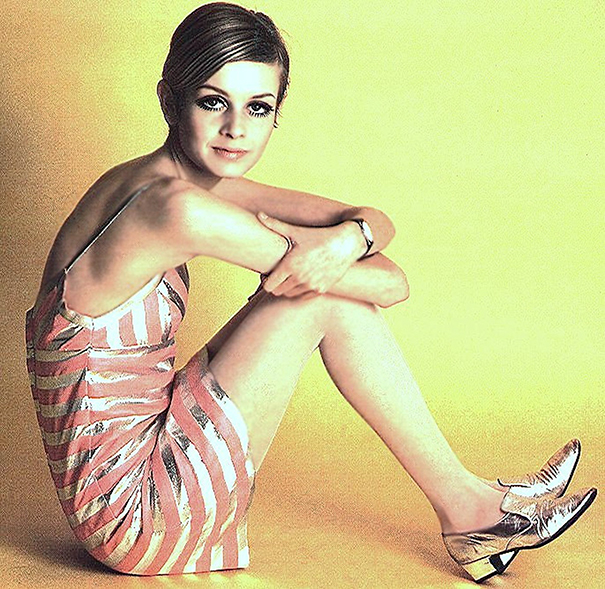
  • At a culture that pressured women to be model thin when I was young. Twiggy was a skinny, 16-year-old kid when the media started marketing her as the ideal body type for women. Even Gloria Steinem, for all her intellect and accomplishments, became the face of the 1970s-era women’s movement in part because she, too, was thin and pretty.

“I have to focus more on being strong than being thin,” I wrote on Facebook shortly after my diagnosis of thinning bones. Enough crowing about keeping a closet full of clothes from my 40s and 50s “because they still fit.” Or celebrating that I weigh less than I did when I got pregnant with my older son, who was born in 1990. Or preferencing cardio exercise, which gives me an emotional lift, over the tougher, more monotonous work of lifting weights.

One of my sisters was nurturing and supportive, texting or calling to offer tips about the benefits of Pilates or which calcium-rich foods to eat. (Who knew that ice cream, eggnog and fortified frozen waffles would make the list, alongside kale and broccoli?)

My oldest sister, the pragmatic one, issued a simple challenge: What are you going to do about it?

Name it, claim it

The word itself scares me. Osteoporosis conjures up images of an old, wizened woman whose upper back has curved into a question mark. My reluctance to name the disease, to say the word aloud, is both a symbol and a symptom of my denial. Just as I resisted the label alcoholic when I recognized in my early 40s that I needed to quit drinking, I now reference my “bone density issue.”

Osteoporosis is for old people; osteoporosis, like forgetfulness and a thickening middle, is for my late mother. Thinning bones don’t afflict people who are fit and who exercise as much as I do.

Or so I thought. Physically active throughout my life — a seasoned cyclist, a walker who averages 16,000 steps a day, a former aerobics instructor who still loves to take yoga classes — I was stunned that thinning bones could be a problem. When the nurse practitioner handed me a printout from Mayo Clinic at my follow-up appointment, I noted that none of the “lifestyle choices” that increase risk of osteoporosis apply to me:

  1. Sedentary lifestyle. I have a hard time sitting still. “You’re in fifth gear or asleep,” my husband likes to say.
  2. Excessive alcohol consumption. I haven’t had a drink since January 10, 2010.
  3. Tobacco use. I never could inhale.

“This is not your fault,” the nurse practitioner assured me after I told her I was scared. But the diagnosis, especially on the cusp of snow and ice season in Minnesota, felt like a slippery slide into old age — like “being suddenly Old and Fragile,” as one friend aptly put it.

How would I walk my dogs every morning when falling could more easily break my bones? Would I have to abandon biking come spring, a sport I have loved since I was 5, because a tumble could sideline me forever? Exercise and movement are my sanity, my way of coping with stress, my increasingly tenuous hold on independence, my illusion that I will be forever young.

As the shock has worn off, I have moved gradually toward acceptance, and into action. Do something now, or you’ll pay later. That much is clear.

Bone up

Watching my weight was something I could control in a world that (still) tries to control women’s bodies. Now, I apply that discipline to self-care for my bones.

One lesson I’ve learned already is to take charge of my own healthcare. In a system still exhausted and under-resourced from COVID, no doctor is going to walk me through this. Doing my own research and seeking support from friends and family members, including my weight-lifting sons, have pulled me out of the muck of fear and self-pity.

  • Thursday is Fosomax day, with a weekly reminder on my calendar. The hour of being upright and foregoing any nourishment but water is peaceful and productive quiet time.
  • I lift free weights two to three times a week and am relishing growing stronger.
  • I have started taking a Pilates Fusion class designed for people with arthritis and osteoporosis, with special emphasis on strengthening back, glute and abdominal muscles.
  • I no longer skip my daily calcium and Vitamin D3 supplements.

That my diagnosis came on the cusp of a major life change — a step away from a full-time career, and all the status and identity and financial security that brought me — has made osteoporosis seem both an indignity and oddly well timed, a gentle push into the next phase of life and a firm reminder to accept reality and deal with it.

“Everyone hopes to reach old age, but when it comes, most of us complain about it,” the Roman philosopher Cicero said. Had I not been searching the website for tips on healthy bones, I never would have stumbled upon “Lessons on Successful Aging,” derived from Cicero’s 2,000-year-old essay “On Old Age.”

Among the lessons relative to women at this later stage of life:

  1. A good old age begins in youth. I can wish that I had started lifting weights at a younger age, but I cannot change the habits or negligence of the past. All I can do is develop new patterns now.
  2. We can be active in old age, with limitations. Winter biking will never be a sport I’ll pursue, just as jogging outdoors in winter now seems foolhardy.
  3. Youth and old age differ. Longing for what was keeps us stuck in the past and blocks us from embracing the benefits of aging.

Osteoporosis, the Big O for older women, is my necessary reminder that good health is neither a given nor guaranteed.