Category Archives: Family

Lessons from Beyond: the Short, Sad Life of a Small Dog

I barely know the woman whose dog I agreed to foster so she could go to inpatient treatment for alcoholism. We have a good friend in common. I already own two dogs. So I impulsively said “yes” when she sent out an SOS e-mail to find a caregiver for Max, her mini-dachshund.

Three weeks later, Max is dead — by my decree — and I am left with an empty dog bed and the uncomfortable reality that doing the right thing is, often, a lonely enterprise.Max the Dog

Pets as playthings

I picked up Max at his suburban townhouse on a bitterly cold Thursday afternoon in February. His owner had been drinking. Bright-eyed and chatty, trying desperately to appear normal, she apologized for the messy living room and the urine stains on the carpet.

I collected Max’s things — a kennel, a tattered leash, a grocery bag full of canned dog food and pricey treats — and wished the owner well. I was eager to get out of there and get Max home.

I didn’t ask her about the peculiarities of mini-dachshunds. I didn’t know, for example, that they’re not supposed to climb stairs or jump on and off furniture, something my own robust dogs do routinely. All she told me was that Max hated the cold and that he loved to snuggle under blankets, contradicting the Wikipedia site that pronounced the breed “very active” and thus requiring “frequent walks.”

An inveterate exerciser, I envisioned getting this dog on the right path.

Only 5 or 6, Max had a swaying, tentative gait that suggested he was uneasy — or unfamiliar — with a simple walk. He laid in his bed for hours and seemed to be composed of what my son dubbed “flab and bones.” In fact, the slipped disc that paralyzed him, seemingly overnight, “is often caused by obesity,” the Wikipedia site says.

The pads of his feet were as pink as a baby’s bottom. When we’d lift him outside to pee — before the rear-end paralysis took away that function, too — Max would stand in the snow, frozen in place. I attached a leash to his collar once and he refused to move.

I reached the owner at her treatment facility in California prior to putting Max down, and she told me Max had been “horribly abused” when she rescued him at 4 years old. I didn’t want the details — visions of hind-end kicks have haunted me since I had the dog killed last Thursday — but I ask myself whether overfeeding and inactivity don’t constitute some form of abuse as well.

Bred to be hunters of small animals such as badgers and rats, dachshunds require muscle strength to support their long spines. But in an era when “sedentary” seems to define the human condition, dachshunds have become house dogs, playthings — dressed up in silly sweaters for their owners’ amusement.

“Loved for his long round body and cute stumpy legs,” one website reads, the dachshund nevertheless must be nurtured with fish oil and exercise and specific handling in order to remain healthy.

Maybe we need to enlarge the definition of animal cruelty: Is it only hitting? Starvation? Chaining a pet in a cold, dark basement? Or is it also ignorance and benign neglect?

Life’s lessons

Ultimately, Max’s death will matter only to the woman who adopted him and never got to say goodbye. But I’d like his life to stand for something. Maybe one day, the monsters who made his early years hell will reflect on their actions and feel regret. Maybe his owner will find the strength to stay sober because she’ll want to foster another dog

Maybe I’ll find the courage, finally, to do more than wring my hands and actually volunteer on behalf of abused and abandoned animals.

Unlike giving birth — which is painful, traumatic and yet joyous — witnessing death is just hard and mysterious, and very sad.

It’s my 98-year-old father-in-law thrashing in a hospital bed, hours before he died of pneumonia in the facility where he once was chief of staff. It’s my sons’ godmother, my sister-in-law, lying in a hospice and progressively losing the ability to talk or breathe.

And it’s Max, quietly curling up to die — not “going to sleep,” as we like to tell ourselves to sidestep the moral quandary — only seconds after the vet’s lethal injection. “Bless you,” I told her, “you have a hard job.”

“It’s not all puppies and kittens,” she replied.

A friend who used to work for the Animal Humane Society called to comfort me the next day. She quoted a former colleague who had euthanized many animals: “She told me it was the most important moment for an animal,” my friend said, “and it was her responsibility to give them comfort and dignity.”Countryside logo

My family did that for Max. Dr. Signe Wass of Countryside Animal Hospital did that for Max. And in her own way, his owner did that for Max, too. She rescued him, and loved him the best she could.

What Gen X Can Teach Boomers about Parenthood

At a time when the necessity and affordability of high-quality child care is back in the news, two Generation X mothers — educated, ambitious and deliberately underemployed — exemplify a model of work-family balance that provides a different solution to a persistent problem.

Who takes care of the kids when both parents work?

In the households of Julie Reiter and Liz Boyer, the answer is: It’s a family affair. “The most important job in the world,” as Chelsea Clinton recently described motherhood, is the work of mothers and fathers alike, in Reiter and Boyer’s respective marriages.

The “balance” in their families is less about women juggling responsibilities alone than it is both partners dancing daily through a life that is contradictory and complex, with trade-offs and rewards in equal measure.Juggling Woman

A recent conversation with these two Gen X moms convinces me they have learned from my workaholic generation — and that it’s not too late for us Baby Boomers to learn from them about priorities and possibilities, teamwork and trust.

Lesson 1: You can’t “have it all.”

Born between 1965 and 1980, Generation X was raised during what one analyst calls “one of the most blatantly anti-child phases in history,” when feminism, greater career opportunities and more access to birth control (and abortion) gave women a new range of options.

Gen X mothers are more skeptical than we were about the messages that society — and advertisers — are trying to sell them. (Remember the slim, sexy “24-hour woman” in the Enjoli perfume ad who brought home the bacon and fried it up in a pan?)

“You can do anything, but you can’t do everything,” says Boyer, 39, executive director of Macalester-Groveland Community Council in St. Paul and a Master of Science candidate in environmental studies. “You can be an astronaut, but then you can’t be home with your kids. You can be a lawyer, but then you can’t be PTA president.”

The mother of Ellie, 10, and Alex, 6, Boyer longed to be an at-home mom — a role that my generation shunned as old-fashioned and professionally limiting. But that dream was financially impossible given her husband’s career in education and nonprofits.

After spending two years “pissing and moaning” when Ellie was a baby, Boyer has made peace with having to be employed. “In retrospect, it’s made me a better mom to work part time all those years,” she says.

Having only recently started working full time, however, she acknowledges the career sacrifice she’s made, too: “I’d be at a different point in my career if I hadn’t had kids.”

Lesson 2: Share roles and responsibilities.

My husband and I used to call ourselves “Ozzie and Harriet in reverse,” with me as family breadwinner and him as self-described “Mr. Mom.” It was new wrapping on an old package that limited one partner’s family time and the other’s earning potential.

Now that our two sons are grown, I remember — and try not to regret — how much mental and emotional energy I gave to my career. When I wasn’t literally at the office, I often was thinking about work, or I was engaged in the freelance writing and aerobics teaching that helped me feed the family (and my ego).Gen X road sign

Reiter and Boyer, like other Gen X mothers, have a more fluid, seamless approach to life and work. They are present with their children, holistically, in a way that I couldn’t seem to manage. And while they care about their careers, work is not their first priority.

“I like to work hard. I love challenge,” says Reiter, 42, executive director of Union Park District Council in St. Paul and a Berkeley-educated attorney. “But I clearly don’t care about the career path, or I would have followed that route.”

Her husband jokingly calls her his “downwardly mobile wife.” Reiter was planning to practice in a prestigious downtown law firm when they met, and she still has more earning capacity than he does as a human resources specialist.

Today, they are partners in a shared endeavor to raise and support their son and daughter — Beyen, 8, and Beena, 7 — whom they adopted from Ethiopia as toddlers. Reiter’s husband works from home most days, giving her flexibility and him access to the children, and her office is two blocks away, allowing her to be home with the children after school and at dinnertime.

Lesson 3: Accept that life is unpredictable.

If I could do anything differently, I would worry less and enjoy the moment more. (My older sisters tell me that’s the benefit of being grandmothers.)

Between them, Boyer and Reiter have lived through job loss, pay cuts, ill children who spoke no English, arguments about whose turn it is to cook and buy groceries, and, currently, full-time jobs with tangible rewards but no benefits.

And yet: They laugh easily. They see the big picture. When Boyer was commuting from St. Paul to Chaska with a colicky baby at home who refused to take a bottle, she lamented to a friend that the life she’d created wasn’t working.

“You’ll keep tweaking things till it does work,” the woman told Boyer. “Everything will be alright in the end, and if it’s not alright, it’s not the end.”

Reiter’s mother was home full time until Julie was 15. “And she resents it to this day, the fact that she never had a life of her own,” Reiter says wistfully. “My mom says now: ‘It’s so good that the kids see you go off to meetings. It’s important for them to understand your work ethic.’”

She grins. “When we walk into the Neighborhood Café, my kids see people give me a hug and thank me for my work. I’m investing in this community, and it’s benefiting my family.”

Alzheimer’s: A Daughter’s Journey toward Acceptance

A faucet opened behind my eyes the day the neurologist told my sister and me that our mother had Alzheimer’s. I stared at him dumbly and just cried.

It wasn’t grief I was feeling — that would come later — but utter disbelief, and a childlike denial that any of this could be happening to her. To me. Despite my growing irritation with my mother’s neediness and forgetfulness, I couldn’t grasp that she would ever cease to be the generous, self-centered, loving, demanding, cunning, creative woman I had known.

Until she did. Nearly three years later, this is our story.

“Be a daughter”

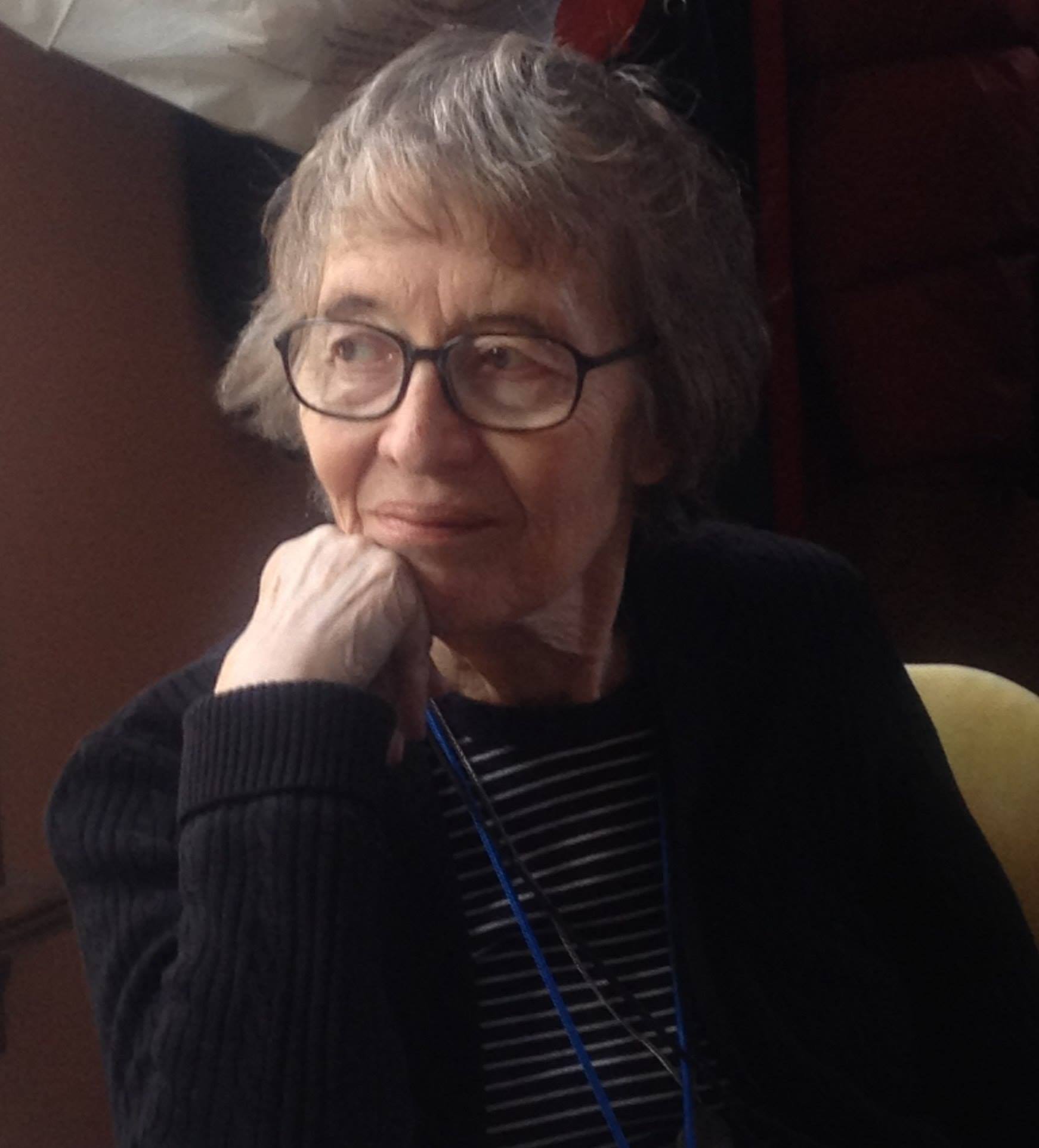
My mother, Audrie Gage

My mother, Audrie Gage

I visit my mother twice a week at her senior apartment, 3.1 miles from my house. (“It’s a 5K,” I like to tell her, even though she never asks me what that means.) I check her fridge for spoiled food. I drop her garbage down the chute. I vacuum the tiny white bits off the rug from the toilet paper she stuffs in her underpants to mask incontinence, a sign of middle-stage Alzheimer’s. I remind her to eat. I make her drink water.

The diagnosis came in February 2012. For some months afterward, Mom still did her own laundry and bought her own groceries. We went to our favorite coffee shop every Saturday morning, and then I’d leave her there (leave her!) to finish her muffin and visit the library across the street while I went off to my weekly women’s group.

More recently, as Mom has lost the ability to navigate her surroundings, I’ve picked her up every weekend and taken her wherever I need to go — to the bank, the hairdresser, the pharmacy, the dog park — on the assumption that the stimulation will be good for her.

What I haven’t done is be her daughter.

Only once since the diagnosis have I simply sat with my mother: watching TV together, eating cookies, applying lotion to the cracked soles of her feet. Never have I asked in anything more than perfunctory tones how she is doing or whether she understands that she has Alzheimer’s.

Even more out of character for me — a professional communicator, a former journalist — is that I no longer can engage her in conversation. Our once wide-ranging talks have narrowed to the same rote questions about her checkbook, her next meal and whether Hillary Rodham Clinton will run for president. (I occasionally remind her that she supported Obama over Hillary — and over my objections — back in 2008.)

“Don’t just be her caregiver. Be her daughter,” the manager of the senior housing complex told me shortly after Mom moved in. That requires a measure of patience and compassion I can’t access with any consistency.

Performing tasks, keeping her life organized, arranging for the health aide who now washes Mom’s hair and doles out her daily pills feeds my workaholic nature. It also keeps me from — dare I say it? — leaning in and having to face the hard truths of her decline. “Can you be in denial if you know you’re in denial?” I ask my friends, feigning an amusement I don’t feel.

If I stay within my comfort zone of competence, I can hold on to the belief that Mom will never slide into Alzheimer’s final stage — when she’s immobile, uncommunicative and unaware of who I am. The daughter who was her favorite, her baby girl.

“Are you my mother?”Mother Book

My mother was diagnosed with Alzheimer’s — the most common type of dementia — six weeks before her 86th birthday. Half of seniors over age 85 experience some form of dementia, a statistic that had me question whether the specialists at the University of Minnesota Memory Care Clinic weren’t just “medicalizing old age.”

That isn’t proving to be true. When my three siblings visit from their respective homes in San Francisco, Denver and Boston, they’re aghast at the changes they see in Mom: her growing confusion, her fixations, her toddler-like refusal to eat, which strikes me as her last-gasp effort at control.

Mom used to knit complex cabled sweaters. She took pride in following the news. She liked to read and walk, to see movies and plays, to travel and watch cop shows on TV. A pretty woman whose features were divvied up among her daughters, she liked to shop at Dayton’s and dress in style.

Our annual trips to New York during my early adolescence were lessons in both fashion and fine art. Thanks to her, I saw Katharine Hepburn, Ben Vereen, Lauren Bacall and James Stewart on Broadway. I heard Carmen at the Met. I took dance lessons at Luigi’s Jazz Centre and bought an outfit at Saks Fifth Avenue.

Today, I have to remind Mom to change her clothes. “It’s like you’re the mother now,” she says cheerfully when I instruct her to wear a long-sleeved shirt in November. A chronic complainer who nursed her grudges like a dry martini, Mom has mellowed as her brain has lost its “stickiness,” to quote the terse neurologist.

After tests betrayed the early-stage Alzheimer’s our mother had been hiding, the doctor told my sister Penny and me that we would feel the symptoms of the disease. “Your mother will be fine. She thinks she’s fine,” he said. “You’re the ones who will have trouble.”

Penny still can quote the word-association game the neurologist used to diagnose our mother:

  • River
  • Daughter
  • Table

He’d ask Mom to repeat the words every five minutes after he had distracted her with other conversation. It was a quiz, a trap, and we had to watch as she got snared. The clinic was by a river. She was at the appointment with her daughters. She was sitting at a table. “I’ll never forget those words,” my sister says.

“And acceptance is the answer”

It’s taken months for me to work up the nerve to write this essay, to see the underside of my moodiness and distance — a grownup child’s unwillingness to let go of her mom.

Even at a stage when she still recognizes me and remembers the basic outline of my life — that I have a husband and two grown sons and a profession — my mother has lost her innate maternal ability to comfort, to serve as refuge.

My mother cannot mother me. She is a noun now, not a verb. And when I allow myself to open the door that her diagnosis cracked and peer down the dark hallway — to wrestle with the fear and the denial, the anger and the injustice — then I recognize the emotions as the grief they truly are.

I miss my mother, and she’s never coming back.

Learn more: http://alzheimers.about.com/od/whatisalzheimer1/a/What-Is-Alzheimers-Disease.htm