Author Archives: Amy Gage

Unknown's avatar

About Amy Gage

A community relations director in higher education and mother of two adult sons, Amy Gage spent the first 20 years of her career as a journalist and public speaker in St. Paul and Minneapolis, Minnesota. The issues addressed in her award-winning newspaper column, "On Balance: Issues That Affect Work and Home," remain relevant today. In "The Middle Stages," she continues the vital conversation about women's work and lives, with a focus on the challenges and contradictions of aging, the mixed blessings of forsaking family time for the more immediate rewards of a career, and how middle-aged women can continue to forge full lives even as their priorities and sensibilities change.

5 Q’s: On How Life Integration Drives Success

“I like to challenge myself to take reasonable risks, and that can cause me to feel vulnerable,” says industrial-organizational psychologist Carol Lynn Courtney, Ph.D., a native of Buffalo, New York, whose leadership development and executive coaching business takes her throughout the country as well as to Ecuador, Turkey and elsewhere around the globe.

Placing herself in stressful and unfamiliar situations helps her better understand her clients, who include top leaders and mid-level managers in corporations, universities and nonprofits. “We ask people to change their behaviors every day,” says Courtney, president of Courtney Consulting Group in Minneapolis, “and that’s a scary thing for them.”

Courtney, 56, both busy and balanced — accomplished and yet accessibly down to earth —created a coaching model called “Life in the Center,” which she uses to guide her clients toward more integrated lives.

Recently, before her weekly saxophone lesson, she talked over a vegetarian dinner about how values and purpose, relationships, creativity, lifelong learning, purposeful investing, exercise and play all contribute to a vital and fulfilling career — as well as a meaningful life.

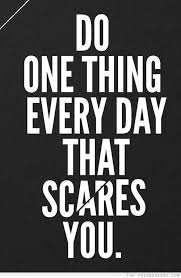
Eleanor Roosevelt

Why do you use the word integration rather than balance?

It’s not about life-work balance. You can never have life-work balance. A healthy life is about integrating all of your priorities and activities, and that practice may work differently on different days.

At my home office, for example, I can be writing a report and get up to play my sax for half an hour. That’s more difficult to do when I’m at my main office. Recently, I’ve tried to avoid scheduling any client meetings before 8:30 a.m. That allows me to exercise and meditate first thing in the morning, so when I show up for my clients, I am even more engaged.

I’m being intentional and deliberate: These practices are going to help me grow. The self-care and self-expression are just as important as the work I’m doing. In fact, they inform and improve the work. That’s why I call it life integration.

How does this play in the corporate world?

As an industrial psychologist, I’m dealing with the workplace and the challenges that my clients have at work. But I tell people that I work very holistically. There’s a vulnerability any time somebody puts themselves out there, to look at their work style, their strengths or blind spots. My clients’ work issues often have roots in other realms of their lives: physical, financial, emotional or social. Whether we like it or not, those issues can impact how we show up in the workplace.

You challenge yourself to “avoid becoming too comfortable or complacent.” Why continue to take risks at this stage of your life and career?

It keeps me honest. I ask my clients to do some pretty tough things. I could just say, “Well, go do this, make this change.” Instead I say: “You’re going to have to do this, and it’s going to be difficult. And you can get past the fear.”

At times, I’m scared when I get up onstage and play my saxophone — an instrument I didn’t pick up till my 40s — but once you do it, it’s like you’ve never been afraid. By doing the very thing that you’re nervous about, you get through it. You say: “OK, I did that. I accomplished that.” It’s a success, and not just from an ego point of view.

I find myself giggling and saying: How amazing! I was able to do this crazy thing — whether it was playing the sax with our band of I/O psychologists or bungee-jumping in South Africa or taking dance classes every week from a woman young enough to be my daughter.

You say that the decisions we make at midlife will affect the old age we’ll have. When did you recognize that in your own life?

Growing up, I was seeing people around me who gave up in their 40s, plus a lot of people in my family died in their 50s. Heart trouble, cancer, mental health issues — it’s all in my genes.

That impacted why I decided in college to become a vegetarian. I played sports during my undergraduate years at Wells, and only the salad bar would be left in the dining hall after soccer practice. I learned how to control the things I can: exercise, eating, emotional well-being.

Research now shows that if you hit age 50 without major health issues, you increase your chances to live to age 80. I see this with clients and the choices they make. Clients will say: “I’m going to retire and then travel.” Great! What kind of exercise are you doing? Because travel can be rigorous. I have experienced this firsthand.

My exercise — running, swimming, biking, kettlebell classes, kayaking, lifting weights — helps me play my sax better. Those practices aren’t distinct; they’re integrated.

How do the sax playing and the lessons at Zenon Dance Company up your game as an industrial psychologist?

The discipline I have in my work is the same discipline I bring to my sax playing and my other avocations. To play really well, you can’t be self-conscious. The more relaxed you are, the more in the moment you are, the better you’ll play. I’m still learning this.

Similarly, when I’m rolling around on the floor and jumping in dance classes with people 25 years younger than me, I have to trust my body. I have to let go! If you are nervous and your muscles tense up, you can’t move in a fluid way. As adults, we become more physically self-conscious. We brace ourselves when we think we are going to fall and end up becoming more vulnerable to getting hurt.

It’s a great analogy for life.

The work that I do coaching teams and executives on their performance is like music or dance or any physical exercise. Once you’ve mastered the foundational knowledge, it frees you up for the art of what you’re doing. I don’t sit there thinking: I’m using this theory. That’s second-nature by now. And so I’m free to work with the art of the person, to focus on the individual or team, and to see the nuances.

Learn more: To nominate yourself or someone else for a “5 Questions” interview in “The Middle Stages,” contact Amy Gage at agage1014@gmail.com.

How Shabbat Can Heal the Tyranny of Busyness

I attended my first Shabbat service on a recent Friday evening, surprising in its sense of joy and celebration. “We love to sing,” said the program for Temple Beth Shalom in Needham, Massachusetts, where my nephew, Eric Gage, on the cusp of 13, would become B’nei Mitzvah the next day.

I felt both eager and unprepared as I stepped into the reform temple, with its unfamiliar language and practices. My brother helped my sisters and me — raised Methodist, none of us regular church-goers — through the English translations of the Hebrew text. I struggled self-consciously with the left-to-right turning of the pages in the prayer book, before I finally sank into my pew and focused outward, upward.

“Our everyday lives are so busy,” the evening’s program read. “We invite you to relax and enjoy this time away from the quickened pace of the world outside these walls. Please enjoy the gift that is Shabbat by turning off your cell phone, Blackberry, iPhone or anything else that goes ‘buzz.’”

A sense of placekeep-calm-and-shabbat-shalom_SMALL

The word Shabbat literally means “ceasing” or “stopping,” a concept I am only beginning to grasp at middle age — and one made more difficult in a time when being digitally connected (always on, forever reachable) is expected, if not embraced.

“The Sabbath comes to us from the Jewish tradition. In the story of creation in Genesis, each of God’s six acts of creation is like an act in a play. And the climax is: God rests,” says a 2003 article from the UU World, the magazine (and now website and Twitter feed) of the Unitarian Universalist Association.

“It is the rests in the music that make the music,” says a friend of mine who became a UU minister in her 40s.

UUism is my adopted though ill-practiced faith, and I am turning to its teachings and seven principles more often as I discuss my concepts of God and religion with my 19-year-old son, a declared atheist. Absent a relationship with a UU congregation, however, I have lost my sense of the Sabbath, or Shabbat.

I have no place, no church, no sanctuary whose sanctity demands that I leave the buzzing iPhone at home and turn off the incessant buzzing in my brain. Sunday no longer is a special day, with its own quieter rhythms. I go to yoga early in the morning. My husband and I often take in a movie in the afternoon. Beyond that, it’s just another working day when I don’t have to don work clothes.

“Observing the Sabbath, observing a day of mindfulness, taking a real day off . . . call(s) for the intentional creation of sacred space and time,” says the same article in the UU World, a reprint of a sermon by the Reverend Amanda Aikman. “It takes a little discipline. It also calls us to overcome our fear of what we will find in the silence and the emptiness.”

‘Be more, do less’

In my ongoing quest for meaning at midlife — for a greater sense of purpose beyond my work and myself — I am turning to secular sources of inspiration that name the problem but seldom offer any lasting solution:

  • “Be more, do less,” a T-shirt at my yoga studio reads.
  • “We wear our busyness like a badge,” says Duluth, Minnesota–based yogi and teacher Deborah Adele in The Yamas & Niyamas: Exploring Yoga’s Ethical Practice. Describing Brachmacharya, the concept of non-excess, she notes how we Type A drivers tend to soothe ourselves with alcohol or food, shopping or sex, how we habitually overschedule our time. “My ego likes to feel important, and it doesn’t feel very important when I am resting,” Adele says.
  • “Weekends are awful for women who do too much,” says psychologist Anne Wilson Schaef in the handbook Meditations for Women Who Do Too Much. “We do not like the lack of schedule, and we feel lost without our work.”

I used to find sacred space and time on my daily dog walks in the natural lands around Northfield, Minnesota, where my husband and I raised our two sons. Now, in the city, surrounded by traffic and people, I struggle to recreate the sense of gratitude and connectedness that came upon me, unbidden, on those leisurely walks through uninhabited woods and prairies.

When I wrote the “Seeker’s Diary” column for the Minneapolis-based Star Tribune — visiting Baptist and Moravian and Buddhist and Jewish and Catholic and Lutheran houses of worship throughout the Twin Cities — I often envied the congregants’ sense of moral and spiritual certainty, even as I watched the traditions and customs from a distance.

More than anything, I envied them the luxury of being removed from the world. Isn’t that the very essence of carefree?

And so, because increasingly I crave the quiet, my choices are to return to a religious community or to practice and prioritize the Sabbath on my own.

“Walk slowly at night” and “unplug all your devices” are among the tips in a Time magazine cover story called “Finding God in the Dark,” about author and preacher Barbara Brown Taylor. A water-stained copy of the issue has sat near my bathtub for six months. Time to start reading.

Learn more: http://www.bbc.com/news/uk-29751577

Flexibility, Focus Ease Strain of Midlife Career Shifts

Sarah Berger, 47, insists she wasn’t afraid when she got downsized from her director-level job in early September — even though she is single and solely responsible for her mortgage and other household expenses. Even though it’s her second career transition in four years.

Even though — as is often said of women on the other side of 40 — she isn’t getting any younger.

“It doesn’t pay to panic,” Berger explains. And here’s where age and experience served her: “I was feeling confident about what I’d achieved. I felt I had something to offer.

“As soon as I got laid off, literally driving home, I already was putting together my list of people to call,” she says.

Berger began with the women in her book club. “These are professional, well-connected women who believe in lifting up others. So I knew that if I called on them, they would use their network to help me.”

A fund-raising professional, she landed an even better position in mid-October — six weeks to the day after her layoff.

“The networking for me was key,” says Berger, the new director of resource development and communications at Neighborhood House, a nonprofit with a 117-year tradition of serving immigrants, refugees and low-income populations in the Twin Cities.

LinkedIn cartoon

Purposeful connections

This so-called “hidden job market” — in which a matrix of personal and professional connections opens doors — accounts for up to 80 percent of new hires, according to Forbes magazine.

That’s why Cathy McLane, 52, began rebuilding her network a year ago when she decided to ease herself out of a role as marketing and communications director at a prestigious private school in suburban Minneapolis. McLane had been there 14 years and recognizes now that she “had clearly stayed too long.”

She was out of practice in the discipline of connecting with professional peers — and out of step with the digital ways networking is now conducted. “I didn’t realize how deep I’d gotten in my little rut, my happy rut,” she says.

McLane activated her social media presence, which now includes 379 connections on LinkedIn and 578 followers on Twitter, with a handle — @CathyConnects — that describes where she wants her career to grow.

And, because no Tweet beats a face-to-face meeting, she started calling on people in similar roles at health care organizations and in higher education (including me, during my years at St. Catherine University). “People warned me that the level of job I want will come through knowing someone who knows the hiring manager,” McLane explains.

She was businesslike, professional and prepared in her informational interviews. And, without fail, she observed three practices:

  • Ask your business contact who else you should meet.
  • Write a timely and specific “thank you” note.
  • Purposefully stay in touch. “Part of networking should be giving back,” McLane says. “You want to add value. So if I find a good article or blog or website, I send that out.”

‘The age thing’

Six months after leaving her job, McLane has yet to land an equivalent career position. She’s got a long-term contract doing project management and internal communications for Cargill, which she hopes will become the “seed client” of the business she is launching: Cathy Connects LLC.

The glass ceiling she hit during her job search is less about gender than age. “People don’t always want 20 years of experience,” McLane says, because it calls up all sorts of speculations and suspicions:

  • Will you demand a higher salary?
  • Will you be digitally savvy?
  • Can you keep pace with the speed of change in today’s workforce?
  • Will you stay in a position for which you’re clearly “over-qualified”?

Consultant Sue Plaster, a former communications and HR executive who herself was laid off at age 50, says the economy and “the age thing” hit middle-aged men and women equally hard, though women likely pay a higher price for looking older. “The self-confidence aspects of the job search are really challenging,” she says.

And so, three pieces of advice for people in a midlife career transition — from three women who have been there:

  • Plaster: “Invest in a professional headshot for LinkedIn that portrays you in a favorable way — not a glamour shot but no selfies either.”
  • McLane: “Take space, not time,” she says, quoting Karen Himle, the recently named vice president of corporate communications at Thrivent Financial. Rather than mindlessly filling up your calendar, “slow down and take space to reorient: What’s important? What makes you happy?”
  • Berger: “I did not say no to a coffee date, ever. My goal was to make one contact a day. Those professional networks are really important.”

Lesson learned: “I have yet to meet one person who’s transitioned who hasn’t landed in a good place. It’s how you approach life, your attitude,” concludes Cathy McLane.