
Author Archives: Amy Gage

Unknown's avatar

About Amy Gage

A community relations director in higher education and mother of two adult sons, Amy Gage spent the first 20 years of her career as a journalist and public speaker in St. Paul and Minneapolis, Minnesota. The issues addressed in her award-winning newspaper column, "On Balance: Issues That Affect Work and Home," remain relevant today. In "The Middle Stages," she continues the vital conversation about women's work and lives, with a focus on the challenges and contradictions of aging, the mixed blessings of forsaking family time for the more immediate rewards of a career, and how middle-aged women can continue to forge full lives even as their priorities and sensibilities change.

Executive Volunteers Bring Professional Moxie to Nonprofits

Back in 2006, when she was 52 years old, financial services executive Paula Meyer read a book that changed her life — and launched her into founding a nonprofit organization that is changing the world, one child at a time.

The book, Just Enough by Harvard University professors Laura Nash and Howard Stevenson, posits that the most balanced people among successful “high achievers” integrate four aspects of their lives: happiness, achievement, significance and legacy.

Meyer was happy and had achieved much in her career; her family and volunteer work added significance to her life. But legacy, “leaving something that endures after you are gone,” was not yet part of her personal and professional portfolio.

Then she went to Africa.Ngong-Road-Logo

There, in Nairobi, Kenya, Meyer saw such a depth of poverty and need — children orphaned because of AIDS, struggling to survive — that she was inspired to co-found Friends of Ngong Road along with Peter Ndungu, who was orphaned at age 11 in the slums of Nairobi.

The nonprofit organization, now eight years old, seeks to transform the lives of boys and girls equally through education, daily nutrition, caseworker support and an arts-and-crafts summer camp that gets the children out of subsistence living in tin shacks.

Its organizational structure and strong financials — a seven-member board of directors overseeing a $650,000 annual budget and a nearly million-dollar endowment fund — speak to Meyer’s current work as a board member for corporations such as Mutual of Omaha and her past executive positions at Piper Jaffray, Ameriprise Financial and SECURA Insurance.

Executive influence

The success of Friends of Ngong Road is told in Kenya through the obviously improved lives of the 350 smiling, well-nourished, neatly uniformed schoolchildren that the organization serves each year. Here in the United States, the story is about creative middle-aged executives following Meyer’s lead, putting their resources to greater use and transforming their own lives through social service.
Paula MeyerMeyer jokes that, at 60, she is past middle age. In fact, her decision to uproot her life — to leave a high-paying career at age 52 and donate her skills not toward charity but sustainable change — puts her squarely amid the trend to re-examine priorities at midlife, and, ultimately, to give back.

  • Management consultant and former professor William Bridges describes it in his popular business book Transitions as “the shift from the question of how to the question of why.” A careerist naturally moves from wanting to “demonstrate competence” in her or his field to “being motivated to find personal meaning in the work and its results.”
  • The “working retirement revolution” examined in March 2014 by Merrill Lynch and Age Wave notes a pattern of “re-engagement” among young retirees like Meyer. Among the four types of working retirees — many “motivated by important non-financial reasons” — are “caring contributors,” people with financial means who “seek to give back to their community or worthwhile causes.” They make up the largest percentage of working retirees, the study found.

The Friends of Ngong Road board is made up of current and retired senior executives, men and women like former Piper Jaffray executive Karen Bohn, 61, who organizes up to 20 home-based fundraising events a year.

“A lot of people in this 50- to 70-year-old cohort are no longer working full time for pay,” says Meyer. “They have a lot of experience, and they want to use their gifts to make the world a better place. This is not licking envelopes; it’s meaningful work. Our board does the scut work, but we also shape strategy.”

Board member Keith Kale, a former marketing executive at Pillsbury, oversees the newsletter and informative website. Tom Gleason, a retired IBM executive and former Boy Scouts leader, organizes Friends of Ngong Road’s weeklong summer camps in Nairobi.

Meyer and Bohn are the chief development officers, using Gleason’s online relationship-management tool to track some 500 individual contributors and sponsors. They identify top prospects and divvy up calls among the board, which meets semi-monthly.

Crafting solutionsKaren Bohn
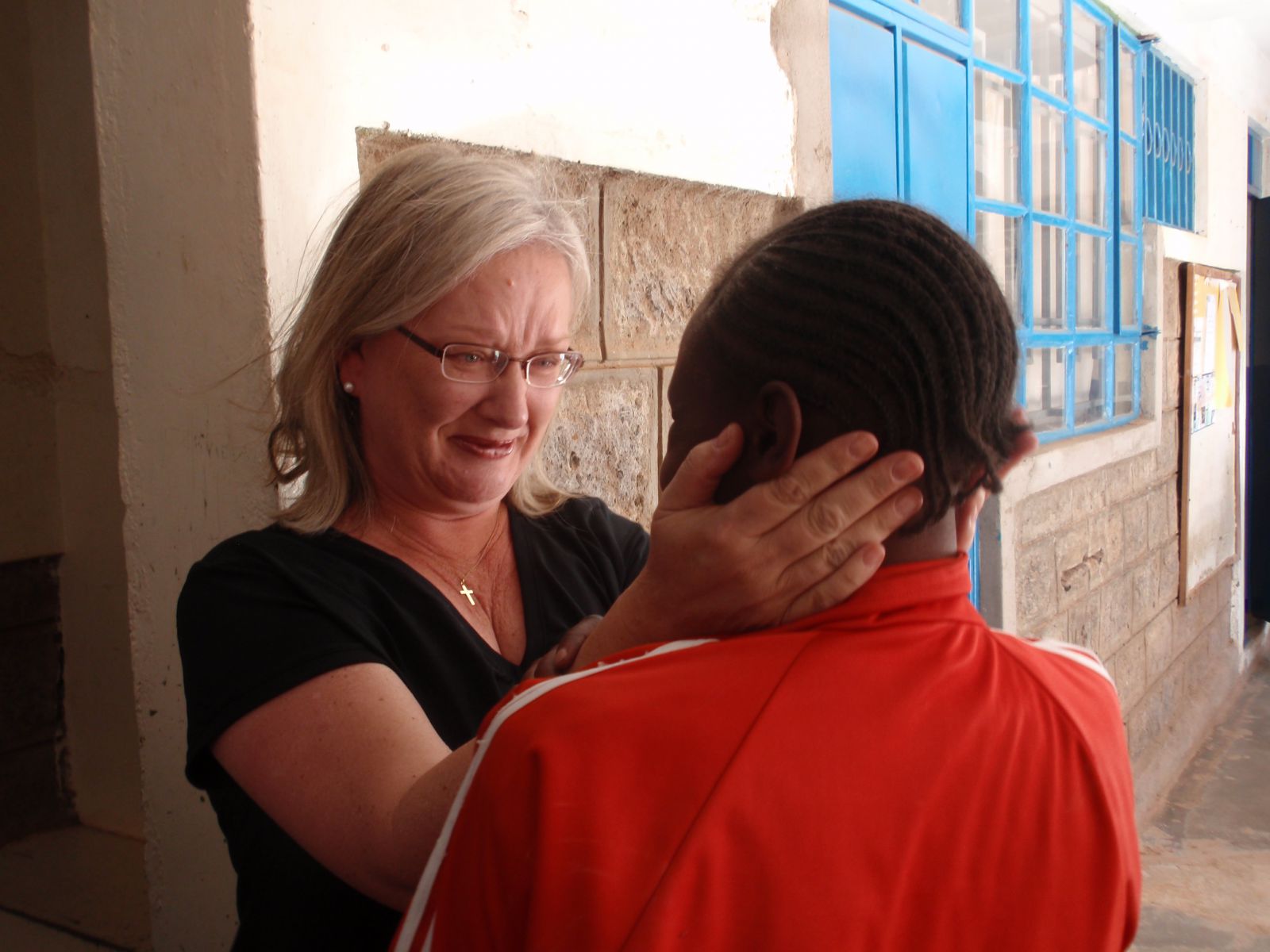
Bohn’s proudest achievement has been her “craft ladies” initiative, which yields about 5 percent of the organization’s annual revenue.

During a visit to Nairobi in 2009, she noticed two women who’d been waiting hours in line for free medical care. They were clutching ratty plastic bags — “the scourge of Africa,” Bohn says — out of which they pulled beautiful beaded bowls. Spotting opportunity, she and Meyer combined their Kenyan shillings and bought all of the bowls they could get their hands on.

Now, Bohn invests in about $10,000 worth of handcrafts every year and sells the bowls, jewelry and other colorful items for triple markup (“we’re shameless about it”) at the house parties she organizes. “These are our Girl Scouts cookies!” she declares.

The “craft ladies,” in turn, tithe 10 percent of their revenue back to Friends of Ngong Road. “It’s another example of something that I would not have thought of,” Meyer says. “Everyone on the board comes up with ideas. My approach is: ‘Feel free to add value!’”

Succession planning is becoming a priority. Only two of the seven board members are under age 50, and both Bohn and Meyer are realistic about the unpredictability that comes with age. The 18-hour one-way flight to Africa will become less palatable and physically less possible.

Meanwhile, as the board evaluates whether the nonprofit can be replicated in Bangladesh or India — and can become less volunteer-dependent in the United States — Meyer relishes working with creative professionals who have the means and the selflessness to offer children hope.

“It’s fun to create and work with great people,” she says, “but the most fun is going to Kenya and seeing the impact we have on children’s lives.”


Sit Still! Can a ‘Staycation’ Become a Daily Practice?

I skipped my company Christmas party this year — not a smart move for a new employee who hopes to grow her job and widen her influence at work.

It wasn’t because I’d had a lousy week and my boss had barked at me (though both are true). I just needed a night at home, alone, after six straight days of having e-mails, texts and virtual meetings intrude on weekend plans and overtake every evening.

My iPhone is running my life. More accurately, my connectivity-fueled agenda is my life, and the signs of that imbalance — inability to concentrate, a craving for constant movement and excitement, and, recently, the not-so-subtle suggestions from coworkers and friends that I seem hyper and wired — have me worried.

Which leads to less sleep and more caffeine.

What’s an over-achiever to do? What else? Draw up a list on the iPhone. Make a plan.

Power down

Love it, hate it

Lately I have been drawn to media reports about the downside of an internet-amplified, over-scheduled life:

  • Ever check your iPhone before and after a Sunday matinee? Or read e-mail on the sidelines of a soccer game? Me, too. In fact, the tools designed to keep us current and organized have stolen our leisure, according to a special report in The Chronicle of Higher Education on the cost of living in a state of fast-moving distraction.

“Plugged in 24/7/365, we are constantly struggling to keep up but are always falling further behind,” the Chronicle declares. “The faster we go, the less time we seem to have. As our lives speed up, stress increases, and anxiety trickles down from managers to workers, and parents to children.”

Read a book or a newspaper in its original form, he says, without the temptation to click through to related sites or articles on your portable device. Daydream. Sit still. (And do what?)

  • “The time I’ve spent going nowhere is going to sustain me much more than the time I’ve spent running around,” says travel writer Pico Iyer. He schedules some amount of downtime every day to reflect on and process his various experiences.

In an August 2014 TED talk called “The Art of Stillness,” Iyer described how Wired founding editor Kevin Kelly found the space and creativity to write his latest book by eliminating smart phones and television from his home. Take an “Internet Sabbath” at least one day a week, Iyer says, “in order to develop the perspective and sense of direction when you go online again.”

What is scary about stillness?

I’ve been taking stay-at-home vacations since before the shorthand, staycation, was even coined. My husband and I couldn’t afford to travel when we were raising our two sons. Plus, I enjoyed hanging out at our small-town home after daily commutes to the city.

When colleagues asked, “Where are you going?” my standard reply would be: “Off the clock.” Lately, I’ve amended that to “off the iPhone.”

Since finally buying a smart phone in May 2012, I’ve learned that a staycation is no vacation if I stay plugged in to office e-mail and my social media accounts. Nor is time off a break if I’m scheduled dawn to dusk with workouts, lunches, errands and appointments.

A Type A person tends to see weekends or vacations not as opportunities to relax and recharge but as prime time to get things done. And that’s OK, she tells herself, because the busyness is tied to her family and friends. Problem is, the deeper I get into middle age, the more I find that “always on” is not sustainable.

I want to live more in silence, not with Minnesota Public Radio on as background news and noise, not with music blaring while I clean or cook, but silence. Without distraction, with myself. I want more mental freedom, more unstructured moments to get lost in a book or in my thoughts.

I want to live more often without a schedule and the tools that tie me to it.

“Be curious,” one of my yoga instructors used to say. So, what would happen if:

  • I swore off caffeine for 24 hours?
  • I invited a friend out spontaneously?
  • I did yoga at home, instead of in a structured class, and followed wherever my mind and body took me?
  • I turned off my iPhone for an entire weekend?
  • I committed to focused reading time for a natural wind-down in the evening?
  • I explored the observation my mother made of me long ago: “You’re always on the go. What are you running from, I wonder?”

I won’t find the answer till I learn how to be still.

What an Atheist Is Teaching Me about the Nature of Faith

The day after Thanksgiving, my son and I talked about God and gratitude, religion and reason, faith and Ricky Gervais.

I knew the British comedian as the originator of The Office. Turns out he’s also a “pathological atheist,” according to former CNN talk-show host Piers Morgan, and a surprisingly articulate authority on the wisdom of living in the here and now.

“I get frustrated when people say that atheists live a less fulfilling life because they lack spirituality and they believe nothing comes after we die,” said my son, 19, a college sophomore and recently declared religious studies major.

“Ricky Gervais made the point —and somewhat facetiously, because he’s a comedian — that atheists have more to live for because they’re not spending their lives anticipating what comes afterward. So they want to make the most of what they have.”

And so commenced a conversation that held more meaning for me than the facile reminders of “gratitude” that every listserv and website I subscribe to threw at me in the days before Thanksgiving.

Christmas ChristiansXmas Tree

I regret that my husband and I didn’t raise our children with a stronger religious faith. They don’t know the Lord’s Prayer or a Thanksgiving grace or the traditional Christmas hymns, and I feel the loss of that during these frenetic five weeks we have come to call “the holidays.”

Baptized a Methodist (my childhood religion) and raised in a Unitarian Universalist fellowship during his elementary school years, Nate at 19 is now an atheist. He questions why I would pine for some shared, sentimental religious feeling that our family hasn’t earned.

“An atheist’s approach to the holidays isn’t that different from the average Christian’s approach,” he says. “Christians will just say grace before the meal. I think Christmas has been secularized in the majority of the United States. There are plenty of casual Christians and families that aren’t religious who celebrate Christmas for the sake of giving gifts and having a meal.”

Studies support his claim. According to the Pew Research “Religion and Public Life” project, 90 percent of Americans celebrate Christmas, but only half view it as “mostly” a religious holiday, and fully a third say it’s cultural — a chance to gather with friends and family.

My own family celebrated Thanksgiving this year at the home of non-religious friends. No one offered to lead a prayer before the meal, so I raised a toast to the cooks who had prepared two entrées, three desserts, four appetizers and more.

During our talk the next day I asked my son whether he prays, in any form.

“No, not prayer,” he said. “Because prayer implies something religious, and I’m not religious. It doesn’t mean I don’t hope for things. I hope that I’ll do well on my finals, but I’m certainly not going to pray to God to let me get an A.”

What about offering thanks to whomever or whatever may be guiding our lives?

“For the most part, I think gratitude is expressed in small moments on a day-to-day basis. You make me a sandwich and I say, ‘Thanks, Mom. That was nice of you to do.’ There are bigger things, like being grateful for the people in your life who are a constant, who are there through thick-and-thin.”

And whom you can love and honor, he contends, without attaching those feelings to religious faith. “I’m grateful for things that are tangible, as opposed to thanking God when there’s no apparent intervention on God’s part.”

An atheist explains

Nathaniel Gage Studer

Nathaniel Gage Studer

When I tell my son that I am “saddened” by his atheism, or find it to be a cynical choice at his age, he points out that this is a considered decision — not a failing or a whim — and that believers have no corner on moral virtue.

“If I was being very cynical,” he counters, “I’d say a lot of people weren’t fully educated in matters of religion. I think a lot of people just grew up in a church: ‘Well, it’s how I was raised, it’s what I’m going to stick with.’”

Schooled in the importance of what he calls religious literacy, Nate would choose Buddhism if he had to follow a particular practice. “But that’s true of many non-religious people,” he says. “Buddhism involves coming to terms with yourself and your surroundings, and involves less of the dogma that comes with other religions.”

However reasoned his choice, my son will have an uphill climb to convince anyone other than his mother that atheism makes sense. Americans overall regard atheists only slightly more warmly than they do Muslims and seven points below Mormons, according to a July 2014 study by Pew Research.

Black Protestants and older Americans hold atheists in especially low esteem.

Asked what frustrates him most about people’s misconceptions of atheists, Nate said it’s “the idea that every atheist hates religion and is against religion.” In fact, he says, knowledge of the world’s religions helps him understand other cultures and history’s course.

“Even though I’m not religious, I think it’s important that I understand how and why other people are religious. By being religiously literate, people can better understand what’s going on in the Middle East, why 9/11 happened — almost all that happens in the world.”

He challenges whether I, as an unchurched believer, am willing to learn more about what atheists do believe. I begin with Ricky Gervais’ distinction between spirituality and religion: “One is a very personal feeling, a journey, a hope, a need, a joy,” the comedian said on CNN last year, “and the other is an organized body that uses that for power and corruption, in many cases.”