
None of us saw this coming.
The morning after a presidential election that will go down in history for its sweeping affirmation of a “me first” brand of nationalist politics, I was doing what I do every morning: walking my two dogs. After crossing a busy street, the dogs were straining at their expandable leashes as we approached a person in a black trench coat.
“Two dogs behind you!” I yelled. As we passed the individual, I turned and explained, “We didn’t want to scare you.” And then, exhausted from a 15-hour shift as a poll worker the previous day and after a night when, again, I got too little sleep, I said: “It’s a dark morning today.”
The person, a young adult of indeterminate gender, looked over and apparently judged me to be safe. “I’m trans,” they said, “and I’m terrified.”
My eyes filled with tears as I put a gloved hand to my heart. “I’m so sorry,” I said. “I am so, so sorry.” As they moved on, I called out, “Be well,” and we exchanged a look of compassion and understanding that has been replicated many times in my liberal urban neighborhood during this awful, incomprehensible week.
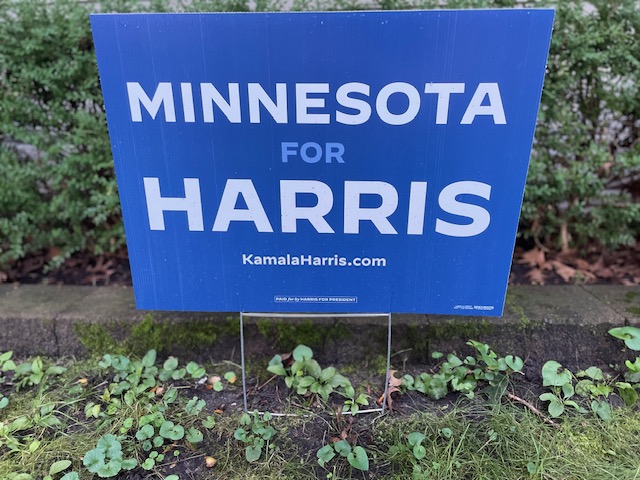

“I wouldn’t want this man for my neighbor, let alone my president,” said the owner of an antiques store two blocks from my house as he unlocked his front door. He told me he had read the Gettysburg Address right before the election and lamented that the days of a president with the intellect, humanity and foresight of Abraham Lincoln were clearly long past.
“Government of the people, by the people, for the people.” Indeed. We liberals and progressives misjudged what the people wanted.
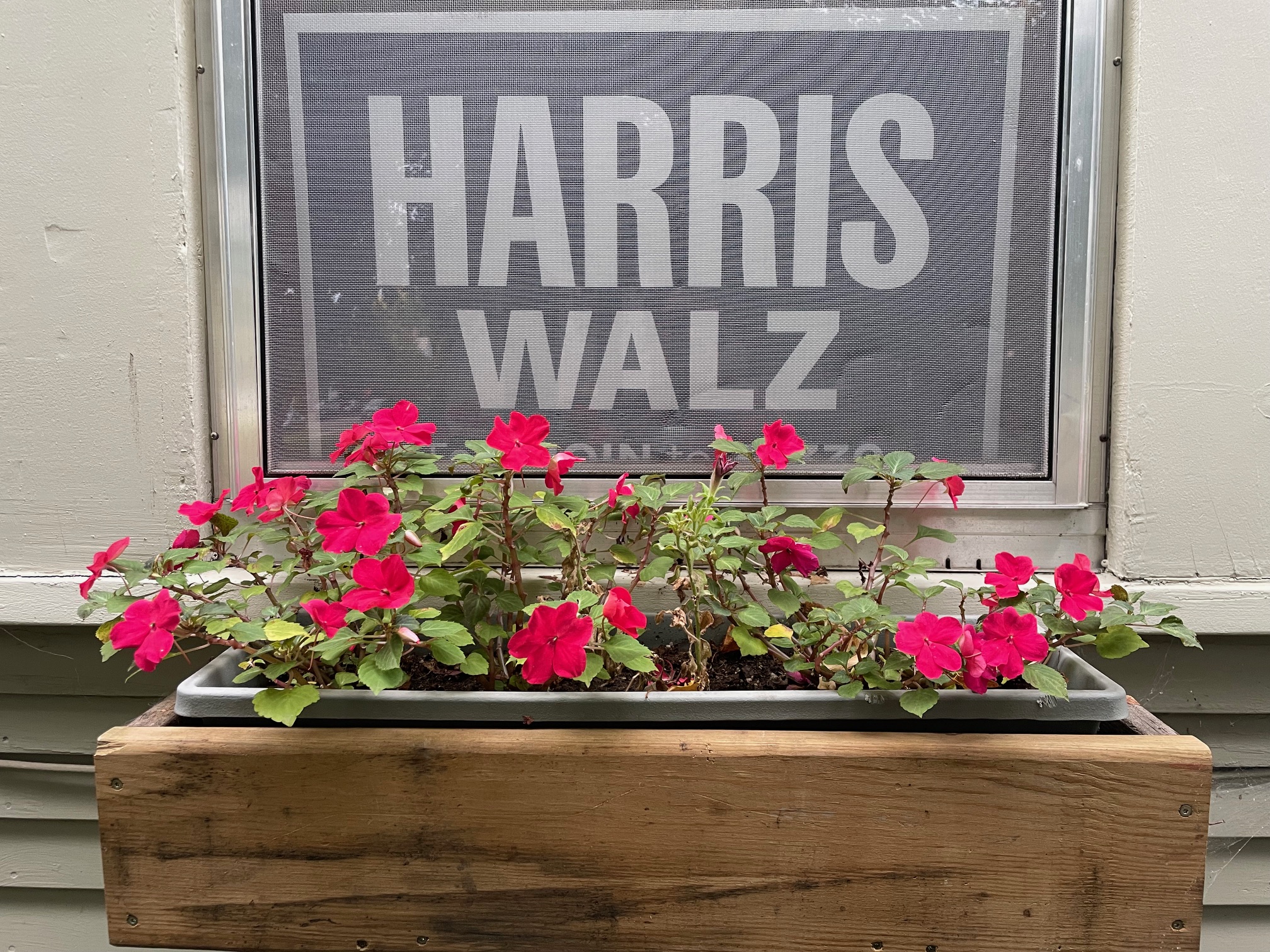
At my husband’s request, I returned the “No Project 2025” sign to my next-door neighbor, who had handmade a number of them for people’s yards. “I don’t want us to be a target,” my husband said, and I understood immediately. The Harris/Walz sign in our dining room window, however, remains. My virtue signaling, yes; my small rebellion.
On PBS NewsHour last night, which I watch every Friday for the analysis of journalists David Brooks and Jonathan Capehart, former anchor and sometime reporter Judy Woodruff checked in again with voters whom she had interviewed throughout the fall.
The economy and immigration were key themes, as they were among the majority of Americans who voted for Donald Trump, but identity politics and fear came up as well:
- A middle-aged Black man said when he woke up the day after the election, “it was a feeling of, ‘Here we go again.’ We’re moving back in time.”
- A young white man said he supported Trump because he is tired of being blamed. “Being male and white in recent years, we’ve been told that we’re the problem in society. . . . Everyone who’s oppressed, quote-unquote, is being oppressed by white men.” He said Trump ran against diversity, equity and inclusion (DEI) initiatives “meant to lower the amount of white men in any sphere.”
- A person who identifies as nonbinary, gave birth to a child and is married to a woman said they are “very concerned that legally my marriage may be dissolved” and that their wife ultimately could lose “legal rights to our son.”
- Reflecting my own identity, one woman described herself as “an older, post-menopausal, white, retired woman.” She may not personally feel the effects of changing social policies, she explained, but her friends’ transgender children and her married lesbian niece likely will.
These thoughts echo the conversations and text exchanges I have had throughout this week. When I told my friend David, a retired attorney, that the three liberal justices on the U.S. Supreme Court “better hang on by their toes,” he took a different view. Samuel Alito and Clarence Thomas, the two oldest conservative members of the high court’s six-person super majority, will retire “within two years,” he said, “while they still have a strong [U.S.] Senate.” Trump will appoint replacements “who are 40 years old,” cementing that super majority for decades.
Mary, a friend and former colleague whose family background mirrors mine, right down to our Republican attorney fathers, called the afternoon after the election while I was soothing myself in a bubble bath. “I’m white, straight, a legal citizen, non-trans, educated and in a good financial situation,” she told me. “I’m aware that others will suffer far more.”
My spiritual advisor, a socially liberal and politically active minister, put the same thought into stark historic terms: “This will be bad for others before it’s bad for us,” she said. “We have to be the good Germans now.”

It was such a hopeful 107 days. As a proud Minnesota DFLer, I reveled in Vice President Kamala Harris’ choice of Governor Tim Walz as her running mate in early August. The spirit of joy in the early days of their all-too-brief campaign (see my previous thoughts on President Joe Biden) was infectious and electrifying — and the prospect that Walz could introduce my state’s progressive agenda to the nation had me more optimistic than I have been since the Dobbs decision shut down women’s fundamental right to bodily autonomy in June 2022.
I am struggling to regain that optimism now. Some 53% of white women voted for Donald Trump, a convicted rapist whose political career should have ended when he bragged about grabbing women “by the pussy” back in 2016. His blatantly sexist (and racist and xenophobic) comments have only gotten more pronounced since then.
One conservative female columnist pushed back against those of us who would castigate white women for not caring enough about abortion rights or the significance of electing the country’s first female president, when, in fact, she said, Trump “spoke directly to voters’ top concerns.”
My top concern is short-term thinking. That the cost of a gallon of milk or a gallon of gas ultimately matters more than the loss of climate protections and democratic freedoms — including Trump’s promised mass deportations of “illegal aliens” and retribution against his “enemies,” and the threat of violence from conservative extremists when elections don’t go their way — is stunning to me. None of them has shouted the words “election fraud” this week!
On rising prices: I’d take the hit from any Trump supporter who called me privileged and middle-class, which both are true, if it weren’t for the photo of a jubilant, bejeweled blonde in West Palm Beach adorning that conservative writer’s column to illustrate the president-elect’s female support.
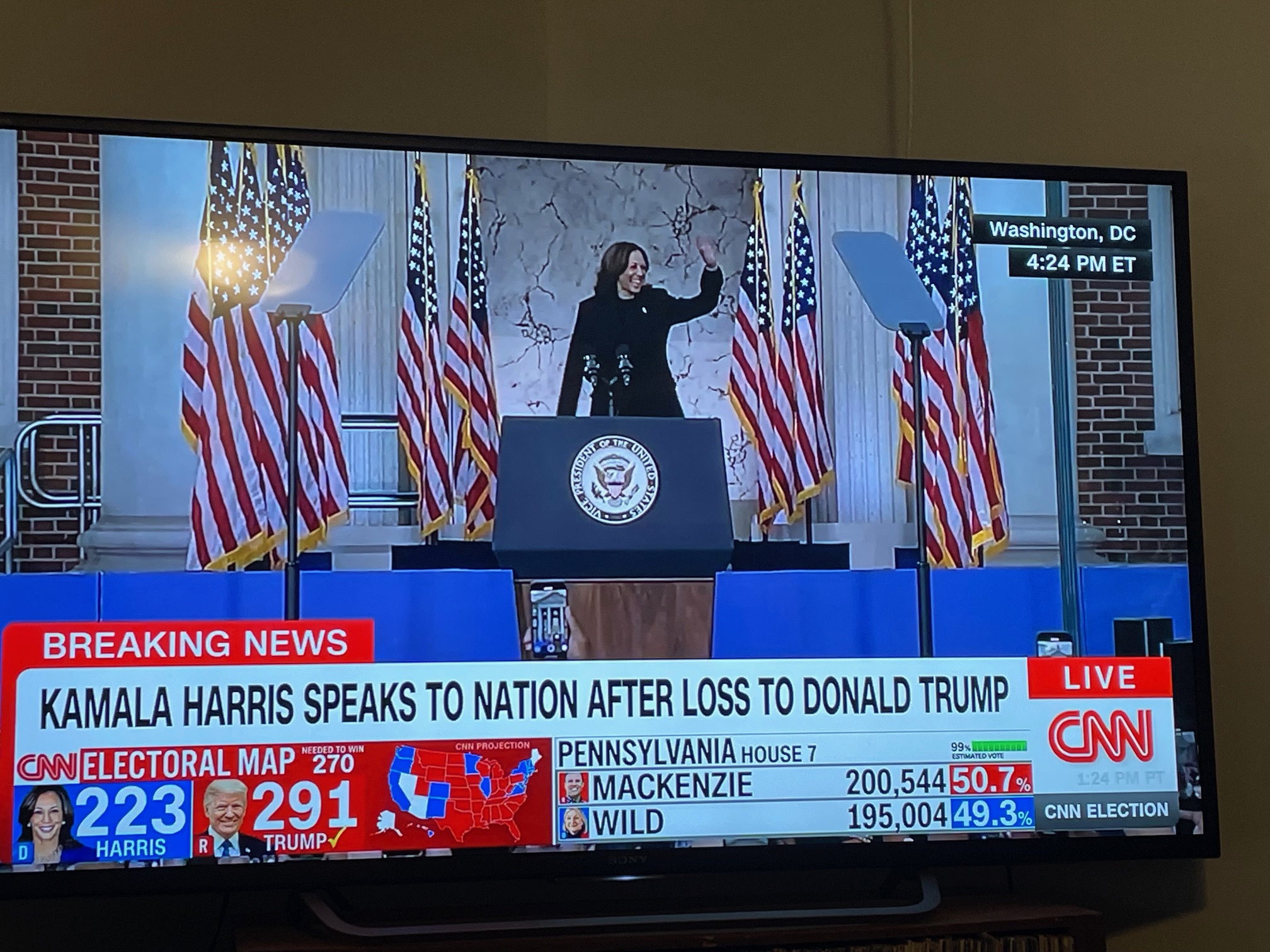
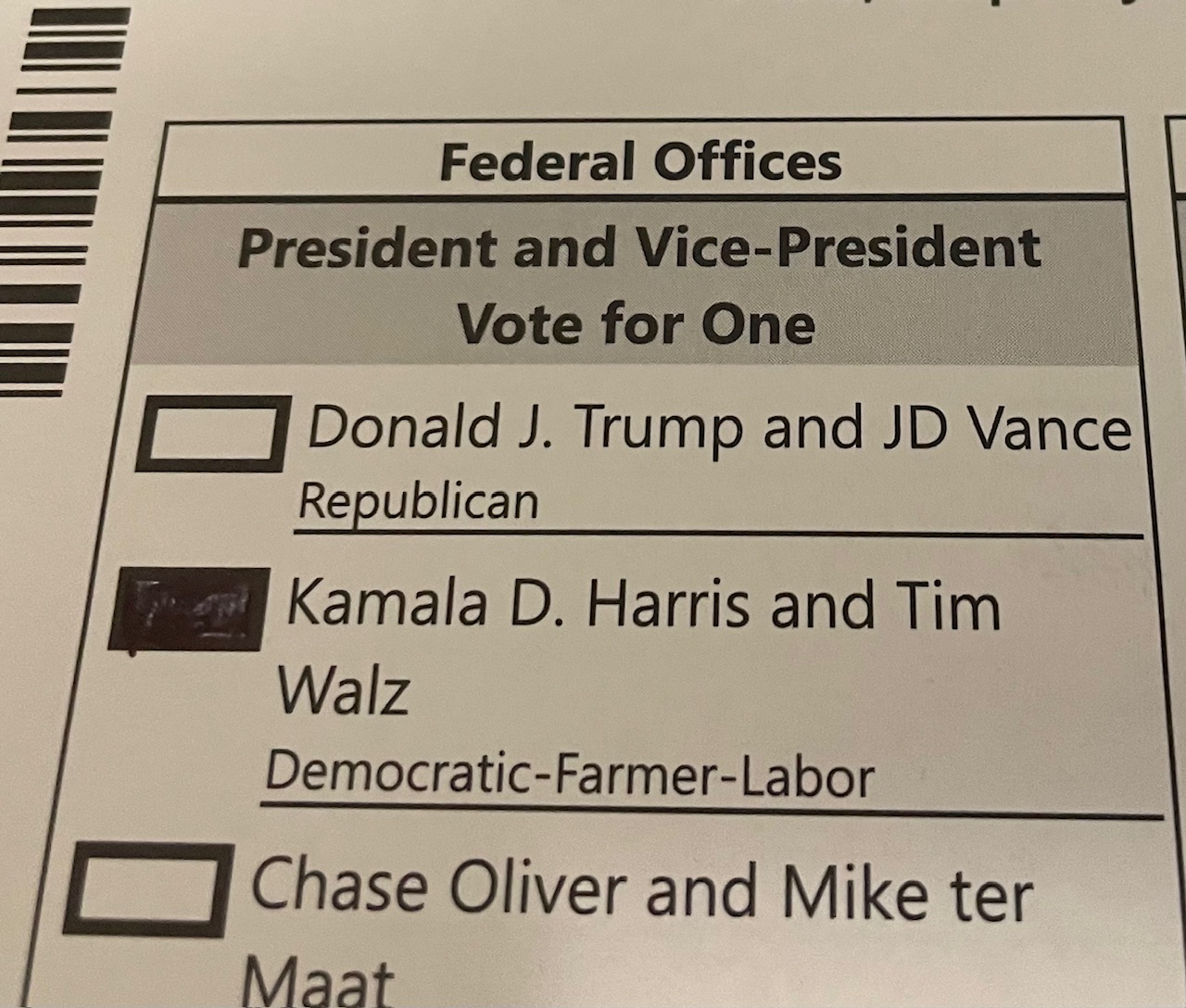
‘I don’t recognize the America I live in,” I wrote on Facebook on Wednesday, November 6. But here we are. He got elected, his coattails extending to Republican candidates across the country. My job now is to step out of the blue bubble that I live in, where 70 percent of voters in Ramsey County supported Harris/Walz, and start talking with — and listening to — people from the other side.
Among the folks who reached out to me that morning, after Wisconsin tipped the balance for a second Trump presidency, was my oldest friend, a woman I have known for 65 years. Janey was with me in the delivery room for the birth of each of my two sons. She held my mother’s hand and stroked her forehead in a memory-care center days before Mom died. Janey is as much a sister to me as my two older sisters.
Janey also is a Republican who voted for Trump, and we still love each other. “My hopes and prayers are we can come together as one nation that wants the best for our country,” she texted the morning after the election. “We can move on from this. We can be gracious to one another no matter which side of the aisle one belongs. We need to love and respect each other, and to understand we all come from different backgrounds and experiences.”
I do resolve to listen and learn, rather than blaming or pointing fingers. And I resolve to keep working for equity and human rights, just as I did this election cycle: door-knocking, phone banking, writing postcards. I owe that to my younger son, who yearns to have a child. I owe it to my older son, who has left the country. And I owe it to that trans neighbor walking down the street, facing a terror I cannot know.
We are here with you.
 The Middle Stages: Between Midlife and Old Age
Lovely, Amy, lovely. Thank you. We march on…❤️
LikeLike
Amy, thank you. You have such a tremendous ability to put into words what is in our hearts and minds. No matter how they explain it, I will still never understand why voters believe Trump will make life better. Please give Janey my best.
LikeLike
Thank you Amy. A very succinct and helpful essay on what we progressives are feeling. Foremost, I hope for two things: that the real media has the strength to call him out, continually, as he attempts to carry out his evil intentions; and, as Bob Woodward said yesterday, that we are able to keep him from precipitating a world war!
LikeLiked by 1 person
I am leaning the way you are. I feel obliged to “shut up and listen,” rather than rage against the mandate the winner was granted in this election. Our youngest, a freshman in college and first-time voter, was very distraught. Besides the self-soothing we’re all inclined to fall into, I suggested to him that we might also lean in to building relationships with our representatives, at all levels of government, starting with district and city councils. Citizenship doesn’t begin and end on the first Tuesday of November, but through the messy decision-making legislative process. That’s where we might find our agency, and that “all is not lost.”
LikeLiked by 1 person
Nicely done, Amy. I prefer to think that the Democrats lost the election more than the far right won. Someone said that the Democrats were once the party of the Farmer and the Laborer but that now they represent the Faculty Lounge. I’m very much at home in the faculty lounge, but clearly most Americans are put off by liberal political correctness that comes across as condescending and superior. Yes, that we’d put this man in office for four years because of the price of eggs is shocking to me, too. But I am starting to realize that I need to shut up and listen and learn. Deep down, I think most people are good and I hope we will be able to walk down this road together.
It was so fun to vote – I saw all my neighbors and the energy in that room was really positive. Thanks for all your good work!
LikeLike
Hi Amy,
I first read this about 24 hours ago. As I sit here, disheartened and disenchanted, I wrestle with both angry and apathy. The America I grew up in is slowly morphing into a new country. Like your friend Mary, I am one of the privileged white citizens, and I will not be as harmed as so many others. I keep coming back to your friend Janey. I applaud her outreach to you, with her message of coming together as a country, of loving and respecting each other. That’s how I was raised, and I’m sure you and Janey were, as well. And there was a time when I believed that was sown into the fabric of our country.
But how do I reconcile Janey’s sincere graciousness with the candidate and party she voted for? Can I do that? Because, in my view, everything before, during and after this election points in the opposite direction of love and respect.
Is she an outlier, like the pre-election Des Moines Register poll? Or are there others like her? More importantly, are there others like Janey in the City Councils, the School Board, the state legislatures, the courts and in Congress?
Because when I think of her candidate, love and respect are not words I think of.
LikeLiked by 1 person
Well written – thank you for sharing Amy. The work ahead continues.
We’re in this together,
JW
LikeLiked by 1 person